
Buick Enclave: Cylinder Head Overhaul
* PLEASE READ THIS FIRST *
NOTE: Examples used in this article are general in nature and do not necessarily relate to a specific engine or system. Illustrations and procedures have been chosen to guide mechanic through engine overhaul process. Descriptions of processes of cleaning, inspection, assembly and machine shop practice are included.
Always refer to appropriate engine overhaul article, if available, in the ENGINES section for complete overhaul procedures and specifications for the vehicle being repaired. When this general overhaul information is used during Buick Enclave engine service, it should be treated as supporting guidance only. Exact measurements, machining limits, valve spring specifications, fastener instructions, and assembly details must come from the correct engine-specific procedure.
CYLINDER HEAD DISASSEMBLY
NOTE: Examples used in this article are general in nature and do not necessarily relate to a specific engine or system. Illustrations and procedures have been chosen to guide mechanic through engine overhaul process. Descriptions of processes of cleaning, inspection, assembly and machine shop practice are included.
Always refer to appropriate engine overhaul article, if available, in the ENGINES section for complete overhaul procedures and specifications for the vehicle being repaired.
Mark valves for location. Using valve spring compressor, compress valve springs. Remove valve locks. Each valve, spring, retainer, lock, seat, and related component should be kept in order unless the service procedure specifically allows replacement or reorganization. Parts that have run together often develop matching wear patterns, and mixing them can lead to poor sealing, abnormal noise, or accelerated wear after reassembly.
Carefully release spring compressor. Remove retainer or rotator, valve spring, spring seat and valve. See Fig. 2. Release the compressor slowly and keep the spring assembly controlled until all tension is removed. Valve locks are small and can be easily lost, so place them in a marked container immediately after removal.
During disassembly, inspect each valve as it is removed. Look for burned edges, bent stems, heavy carbon, scoring, uneven face wear, damaged keeper grooves, or signs that the valve was not seating correctly. If the Buick Enclave engine had misfire, compression loss, coolant intrusion, or overheating symptoms, these observations can help confirm the root cause before parts are cleaned.
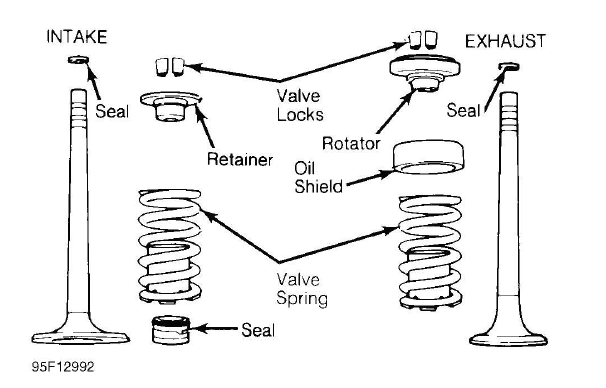
Fig. 2: Exploded View of Valve Assemblies
CYLINDER HEAD CLEANING & INSPECTION
NOTE: Examples used in this article are general in nature and do not necessarily relate to a specific engine or system. Illustrations and procedures have been chosen to guide mechanic through engine overhaul process. Descriptions of processes of cleaning, inspection, assembly and machine shop practice are included.
Always refer to appropriate engine overhaul article, if available, in the ENGINES section for complete overhaul procedures and specifications for the vehicle being repaired.
Clean cylinder head and valve components using approved cleaning methods. Inspect cylinder head for cracks, damage or warped gasket surface. Place straightedge across gasket surface. Determine clearance at center of straightedge. Measure across both diagonals, longitudinal center line and across cylinder head at several points. See Fig. 3. The head must be clean before this inspection is performed, because old gasket material, carbon, corrosion, or sealer residue can give a false measurement.
Use a precision straightedge and the correct feeler gauge for warpage checks. Move carefully across the head surface and record the highest reading rather than relying on a single point. Pay close attention to areas between cylinders, around coolant passages, and near combustion chambers, because heat and gasket failure often leave distortion or erosion in these locations.
On cast iron cylinder heads, if warpage exceeds.003" (.08 mm) in a 6" span, or.006" (.15 mm) over total length, cylinder head must be resurfaced. On most aluminum cylinder heads, if warpage exceeds.002" (.05 mm) in any area, cylinder head must be resurfaced. Warpage specification may vary by manufacturer. If warpage exceeds specification on some cylinder heads, cylinder head must be replaced.
Aluminum cylinder heads are especially sensitive to overheating and improper handling. If the Buick Enclave engine has been overheated, the head should be checked not only for surface warpage, but also for cracks, softened material, damaged valve seats, and coolant passage erosion. Resurfacing should only be performed when the remaining head thickness and surface finish will still meet the required specification.
Cylinder head thickness should be measured to determine amount of material which can be removed before replacement is required. Cylinder head thickness must not be less than the manufacturer's specification. Removing too much material can change compression ratio, valve timing relationship, intake manifold alignment, and sealing geometry.
If cylinder head required resurfacing, it may not align properly with intake manifold. On "V" type engines, misalignment is corrected by machining intake manifold surface that contacts cylinder head. Cylinder head may be machined on surface that contacts intake manifold. Using oil stone, remove burrs or scratches from all sealing surfaces.
After resurfacing or cleaning, inspect every sealing surface by sight and touch. Burrs, scratches, dents, corrosion pits, and leftover abrasive material can prevent a gasket from sealing correctly. Oil and coolant passages should be cleared with compressed air and suitable brushes so no debris remains inside the cylinder head before assembly.
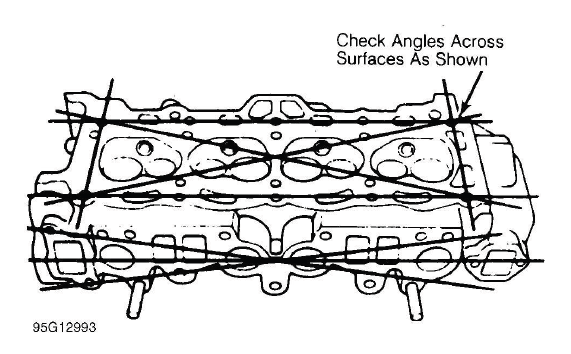
Fig. 3: Checking Cylinder Head for Warpage
VALVE SPRINGS
NOTE: Examples used in this article are general in nature and do not necessarily relate to a specific engine or system. Illustrations and procedures have been chosen to guide mechanic through engine overhaul process. Descriptions of processes of cleaning, inspection, assembly and machine shop practice are included.
Always refer to appropriate engine overhaul article, if available, in the ENGINES section for complete overhaul procedures and specifications for the vehicle being repaired.
Inspect valve springs for corroded or pitted valve spring surfaces which may lead to breakage. Polished spring ends caused by a rotating spring indicate that spring surge has occurred. Replace springs showing evidence of these conditions. A spring that looks only slightly damaged can still lose tension, break during operation, or allow valve float at higher engine speed.
Inspect valve springs for squareness using a 90-degree straightedge. See Fig. 4. Replace valve spring if out-of-square exceeds manufacturer's specification. A spring that is not square can side-load the valve stem, retainer, guide, or seal, creating uneven wear and poor valve control.
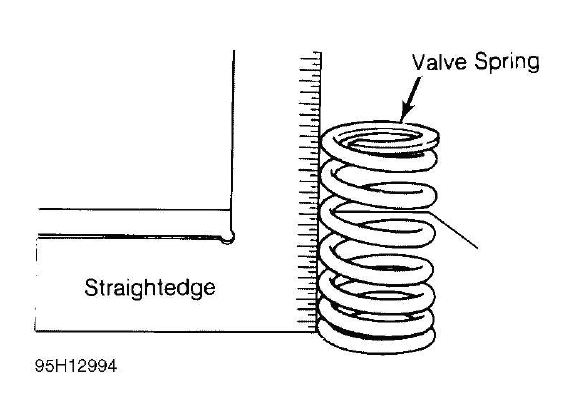
Fig. 4: Checking Valve Spring Squareness
Using vernier caliper, measure free length of all valve springs. Replace springs if not within specification. Free length alone does not prove a spring is good, but it is a useful first check. Springs that are shorter than specification may have lost tension from heat, age, or repeated compression cycles.
Using valve spring tester, test valve spring pressure at installed and compressed heights. See Fig. 5. This pressure test is more meaningful than appearance alone because it confirms whether the spring can control the valve at the required operating height.
Usually compressed height is installed height minus valve lift. Replace valve spring if not within specification. Springs should be evaluated as a set, especially if the engine has high mileage, valve train noise, valve float symptoms, or previous overheating. For a Buick Enclave cylinder head overhaul, weak or uneven spring pressure can affect idle quality, power, emissions performance, and long-term valve train durability.
Before reassembly, compare the spring seat, retainer, locks, and valve stem groove condition with the service requirements. Damaged retainers or worn locks can prevent proper spring retention even if the spring itself tests correctly. Clean all valve spring components thoroughly and keep them organized until the final assembly sequence begins.
It is recommended to replace all valve springs when overhauling cylinder head. Valve springs may need to be installed with color coded end or small coils at specified area according to manufacturer. Springs should not be judged by appearance alone, because loss of tension can occur even when the surface looks acceptable. During a cylinder head overhaul on a Buick Enclave, replacing the full spring set helps maintain even valve control across all cylinders and reduces the chance of future valve train noise, valve float, misfire, or uneven engine performance.
Before installation, compare each new spring with the original part and confirm the correct orientation. Some springs are progressive wound, color coded, or designed with a specific end facing the cylinder head or retainer. Installing a spring upside down or mixing unmatched parts can change installed height, pressure, and valve control. Always verify the correct placement before the valve locks are installed.
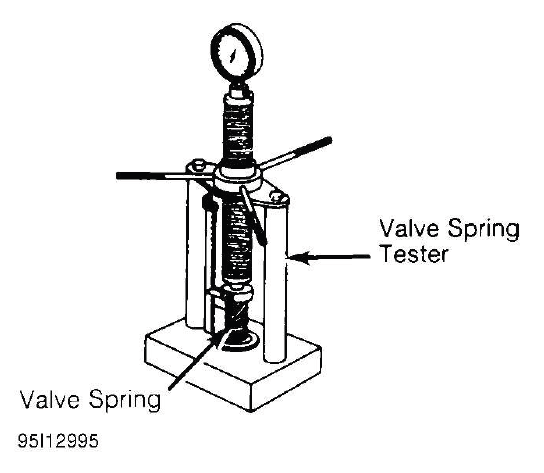
Fig. 5: Checking Valve Spring Pressure
VALVE GUIDE
NOTE: Examples used in this article are general in nature and do not necessarily relate to a specific engine or system. Illustrations and procedures have been chosen to guide mechanic through engine overhaul process. Descriptions of processes of cleaning, inspection, assembly and machine shop practice are included.
Always refer to appropriate engine overhaul article, if available, in the ENGINES section for complete overhaul procedures and specifications for the vehicle being repaired. Valve guide service must be matched to the exact cylinder head design, valve stem size, guide material, and factory clearance specification.
Measuring Valve Guide Clearance
Check valve stem-to-guide clearance. Ensure valve stem diameter is within specification. Install valve in valve guide. Install dial indicator assembly on cylinder head with tip resting against valve stem just above valve guide. See Fig. 6. This test shows how much side movement exists between the valve stem and guide. Excess clearance can allow oil consumption, valve noise, poor sealing, and uneven valve seat wear.
Before measuring, clean the valve stem and guide bore thoroughly. Carbon, varnish, oil sludge, or small abrasive particles can affect the reading and make a worn guide appear tighter than it really is. The valve stem should also be checked in several places with a micrometer, because a worn stem can create the same loose-fit condition as a worn guide.
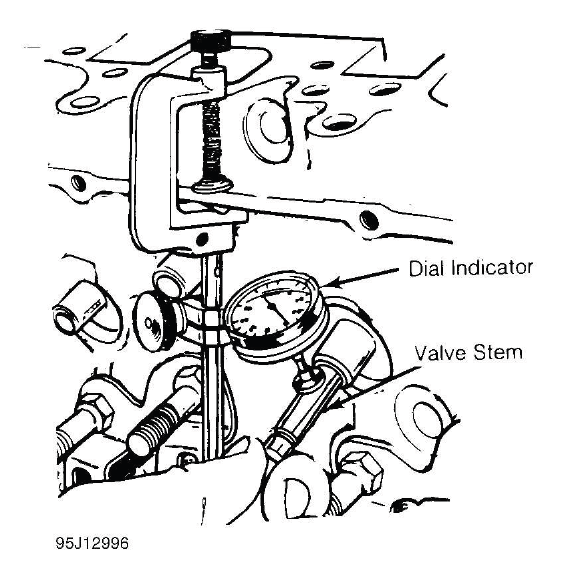
Fig. 6: Measuring Valve Stem-to-Guide Clearance
Lower valve approximately 1/16" below valve seat. Push valve stem against valve guide as far as possible. This places the valve in a position where stem movement can be measured without the valve face being held tightly against the seat.
Adjust dial indicator to zero. Push valve stem in opposite direction and note reading. Clearance must be within specification. Repeat the check carefully and compare the reading with the proper service limit. A single rushed measurement can lead to an incorrect repair decision, especially when the clearance is near the maximum allowed value.
If valve guide clearance exceeds specification, valves with oversize stems may be used and valve guides are reamed to larger size or valve guide must be replaced. On some applications, a false guide is installed, then reamed to proper specification. Valve guide reamer set is used to ream valve guide to obtain proper clearance for new valve.
For Buick Enclave cylinder head work, guide clearance should be evaluated together with valve stem condition, oil seal condition, valve seat contact, and any symptoms found before disassembly. Blue exhaust smoke, oil deposits on the valve, unstable compression, or uneven seat wear may all point toward guide or valve stem wear.
Reaming Valve Guide
Select proper reamer for size of valve stem. Reamer must be of proper length to provide clean cut through entire length of valve guide. Install reamer in valve guide and rotate to cut valve guide. See Fig. 7. The reamer must be kept straight and moved smoothly so the guide remains centered and round. Cutting at an angle can create poor stem support and prevent the valve from seating correctly.
Use cutting lubricant if specified and remove material gradually. Do not force the reamer through the guide, because chatter marks or an uneven bore can shorten valve and guide life. After reaming, clean the guide thoroughly with solvent, brushes, and compressed air so no metal chips remain inside the cylinder head.
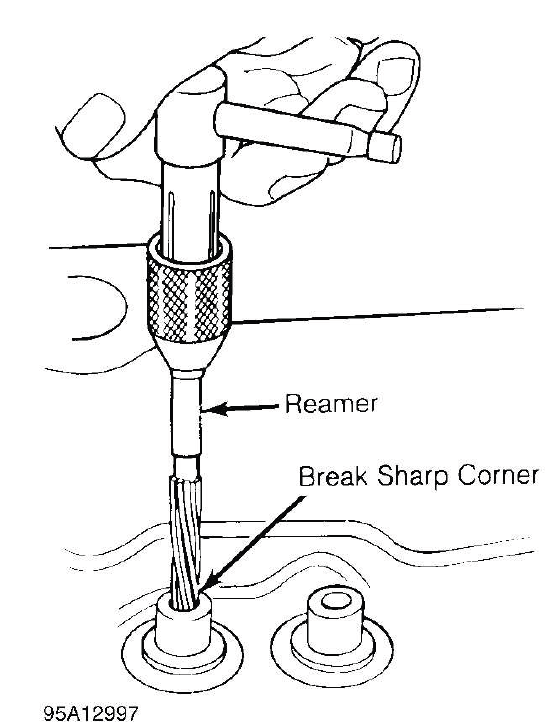
Fig. 7: Reaming Valve Guides
Replacing Valve Guide
Replace valve guide if clearance exceeds specification. Valve guides are either pressed, hammered or shrunk in place, depending upon cylinder head design and type of metal used. The correct method must be used because cylinder head material, guide material, and interference fit all affect how the new guide should be installed.
Remove valve guide from cylinder head by pressing or tapping on a stepped drift. See Fig. 8. Once valve guide is installed, distance from cylinder head to top of valve guide must be checked. This distance must be within specification. Incorrect guide height can affect valve spring clearance, seal position, retainer clearance, and valve motion.
Aluminum heads are often heated before installing valve guide. Valve guide is sometimes cooled in dry ice prior to installation. Combination of a heated cylinder head and cooled valve guide ensures a tight guide fit upon assembly. The new guide must be reamed to specification.
After the guide is installed and sized, inspect the valve movement in the guide before final seat work is performed. The valve should move freely without binding, but it should not have excessive side play. Any roughness, tight spot, or uneven movement should be corrected before valve seat machining or final assembly begins.
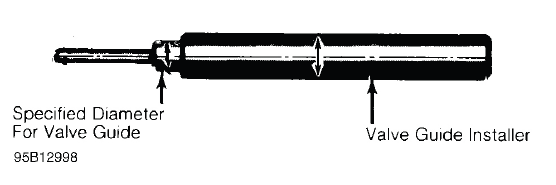
Fig. 8: Typical Valve Guide Remover & Installer
VALVES & VALVE SEATS
NOTE: Examples used in this article are general in nature and do not necessarily relate to a specific engine or system. Illustrations and procedures have been chosen to guide mechanic through engine overhaul process. Descriptions of processes of cleaning, inspection, assembly and machine shop practice are included.
Always refer to appropriate engine overhaul article, if available, in the ENGINES section for complete overhaul procedures and specifications for the vehicle being repaired.
Valve Grinding
Valve stem O.D. should be measured in several areas to indicate amount of wear. Replace valve if not within specification. Valve margin area should be measured to ensure that valve can be ground. See Fig. 9. A valve that is worn at the stem, face, margin, or keeper groove should not be reused simply because it can still be cleaned.
Measure each valve carefully and inspect the face for burning, pitting, grooves, cupping, or uneven contact. Also check the valve tip and keeper groove area for wear. If the valve does not meet specification, replacement is the safer repair because grinding cannot correct all types of damage.
If valve margin is less than specification, the valves will be burned. Valve must be replaced. Due to minimum margin dimensions during manufacture, some new type valves cannot be reground. Some manufacturers use stellite coated valves that must NOT be machined. Valves can only be lapped into valve seat.
Valve margin is important because it helps the valve transfer heat and resist burning. Removing too much material during grinding can make the edge too thin, which may cause early failure after the engine is placed back in service. On a Buick Enclave engine overhaul, valve refinishing should always be limited by the correct valve margin and material specification.
CAUTION: Some valves are sodium filled. Extreme care must be used when disposing of damaged or worn sodium-filled valves. Follow the proper disposal procedure and never cut, grind, weld, or expose sodium-filled valves to unsafe heat or uncontrolled handling.
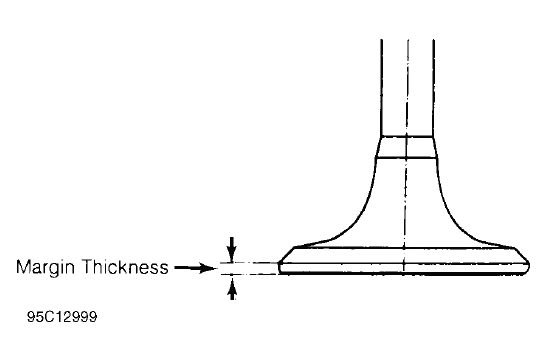
Fig. 9: Measuring Valve Head Margin
Resurface valve to proper angle specification using valve grinding machine. Follow manufacturer's instructions for valve grinding machine. Specifications may indicate a different valve face angle than seat angle. Measure valve margin after grinding. Replace valve if not within specification. Valve stem tip can be refinished using valve grinding machine.
After grinding, clean the valve thoroughly and inspect the contact pattern. The valve face should be smooth, even, and concentric. If the contact pattern is uneven, too wide, too narrow, or positioned incorrectly, the valve seat may need additional correction. Final valve-to-seat sealing should be checked before the cylinder head is assembled.
Valve stem tips should only be refinished within the allowed limit. Removing too much material from the tip can change valve train geometry, lifter preload, or lash adjustment. Once all valves are machined or replaced, keep them organized by cylinder and position so final assembly can be completed cleanly and accurately.
Valve Lapping
During valve lapping of recently designed valves, be sure to follow manufacturer's recommendations. Surface hardening and materials used with some valves do not permit lapping. Lapping process will remove excessive amounts of the hardened surface. If this hardened layer is damaged, the valve face may wear quickly, lose its sealing quality, or fail under normal engine heat and load.
Valve lapping is done to ensure adequate sealing between valve face and seat. Use either a hand drill or lapping stick with suction cup attached. The purpose is not to remove a large amount of metal, but to verify and improve the contact pattern between the valve and the seat. On a Buick Enclave cylinder head overhaul, lapping should be used carefully and only when the valve material, seat material, and service procedure allow it.
Moisten and attach suction cup to valve. Lubricate valve stem and guide. Apply a thin coat of fine valve grinding compound between valve and seat. Rotate lapping tool between the palms or with hand drill. Use light pressure and avoid aggressive cutting. Too much compound or excessive speed can widen the seat, damage the contact area, and make final sealing worse instead of better.
Lift valve upward off the seat and change position often. This is done to prevent grooving of valve seat. Lap valve until a smooth polished seat is obtained. Thoroughly clean grinding compound from components. Valve-to-valve seat concentricity should be checked. See VALVE SEAT CONCENTRICITY.
After lapping, clean the valve, guide, seat, and surrounding ports with great care. Grinding compound is abrasive and must not remain in the cylinder head. Any residue left behind can damage valve guides, valve stems, seats, piston rings, bearings, and oil passages once the engine is started. A clean contact pattern should appear even and continuous around the valve face.
CAUTION: Valve guides must be in good condition and free of carbon deposits prior to valve seat grinding. Some engines contain an induction hardened valve seat. Excessive material removal will damage valve seats.
Valve Seat Grinding
Select coarse stone of correct size and angle for seat to be ground. Ensure stone is true and has a smooth surface. Select correct size pilot for valve guide dimension. Install pilot in valve guide. Lightly lubricate pilot shaft. Install stone on pilot. Move stone off and on the seat approximately 2 times per second during grinding operation. The pilot must fit the guide correctly because the valve seat is cut in relation to the guide centerline. A loose or incorrect pilot can create an off-center seat that will not seal properly.
Select a fine stone to finish grinding operation. Various angle grinding stones are used to center and narrow the valve seat as required. See Fig. 10. The final seat should have the correct width, location, and surface finish. If the seat is too wide, it may collect heat and reduce sealing pressure. If it is too narrow, it may wear quickly or fail to transfer heat from the valve correctly.
Valve seat work should be performed slowly and checked often. Removing too much material can lower the valve too far into the cylinder head and change installed height, valve spring pressure, and valve train geometry. For Buick Enclave engine service, all seat grinding results should be compared with the exact specification before the head is assembled.
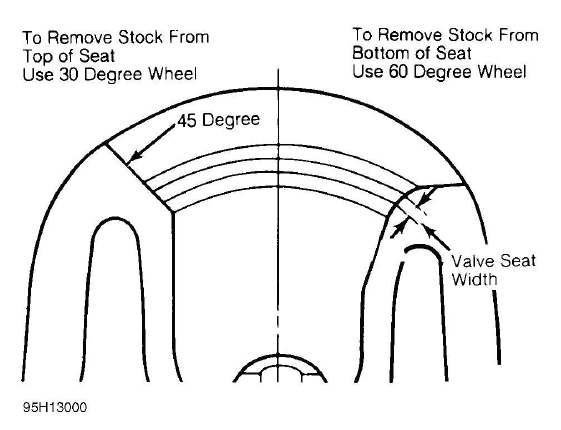
Fig. 10: Adjusting Valve Seat Width
Valve Seat Replacement
Replacement of valve seat inserts is done by cutting out the old insert and machining an oversize insert bore. This operation must be performed accurately because the replacement insert depends on the correct interference fit, bore finish, and depth. A loose insert can move during operation, while an insert installed too tightly or incorrectly may distort the surrounding head material.
Replacement oversize insert is usually cooled and the cylinder head is sometimes warmed. Valve seat is pressed into the head. This operation requires specialized machine shop equipment. After installation, the seat must be cut or ground to the proper angle and checked for concentricity with the valve guide. Seat replacement is not a cosmetic repair; it directly affects compression, valve cooling, combustion sealing, and long-term cylinder head reliability.
Valve Seat Concentricity
Using dial gauge, install gauge pilot in valve guide. Position gauge arm on the valve seat. Adjust dial indicator to zero. Rotate arm 360 degrees and note reading. Runout should not exceed specification. This check confirms whether the valve seat is centered around the valve guide. If runout is excessive, the valve may contact only part of the seat, causing leakage, hot spots, and uneven wear.
To check valve-to-valve seat concentricity, coat valve face lightly with Prussian Blue dye. Install valve and rotate it on valve seat. If pattern is even and entire seat is coated at valve contact point, valve is concentric with the valve seat. The contact mark should be continuous and correctly positioned on the valve face. A broken, uneven, or shifted pattern indicates that additional seat correction or component replacement may be needed.
Concentricity should be confirmed before final assembly because a valve can look clean and still fail to seal under compression. This is especially important after guide replacement, seat grinding, or valve replacement, where the relationship between the valve stem, guide, and seat may have changed.
CYLINDER HEAD REASSEMBLY
NOTE: Examples used in this article are general in nature and do not necessarily relate to a specific engine or system. Illustrations and procedures have been chosen to guide mechanic through engine overhaul process. Descriptions of processes of cleaning, inspection, assembly and machine shop practice are included.
Always refer to appropriate engine overhaul article, if available, in the ENGINES section for complete overhaul procedures and specifications for the vehicle being repaired. During Buick Enclave cylinder head reassembly, use this information only as a general process guide and follow the exact engine-specific service data for measurements, seal installation, spring orientation, and final assembly checks.
Valve Stem Installed Height
Valve stem installed height must be checked when new valves are installed or when valves or valve seats have been ground. Install valve in valve guide. Measure distance from tip of valve stem to spring seat. See Fig. 11. This measurement affects valve spring installed height, lifter preload, rocker geometry, and available valve travel.
Distance must be within specification to allow sufficient clearance for valve operation. If installed height is incorrect, the valve train may become noisy, the valve may not close properly, or the spring may operate outside its intended range. A small measurement error can cause problems once the engine reaches operating temperature.
Remove valve and grind valve stem tip if height exceeds specification. Valve tips are surface hardened. DO NOT remove more than.010" (.25 mm) from tip. Chamfer sharp edge of reground valve tip. Recheck valve stem installed height. Removing too much material from the stem tip can weaken the hardened surface and change valve train geometry beyond the correct range.
After the valve stem tip is corrected, inspect the contact surface for smoothness and confirm that the edge has been lightly chamfered. A sharp or rough edge can damage mating valve train components. Always remeasure after any material is removed, and do not assume the correction is acceptable without verification.
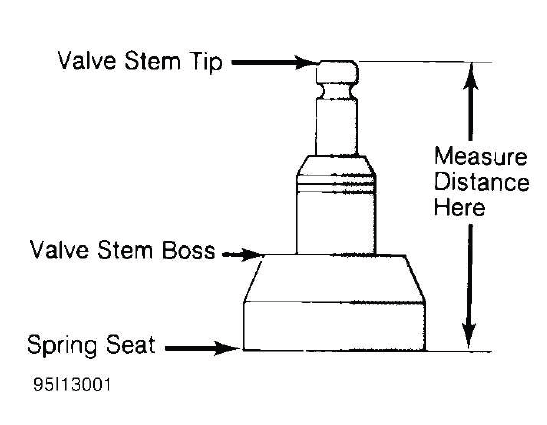
Fig. 11: Measuring Valve Stem Installed Height
VALVE STEM OIL SEALS
NOTE: Examples used in this article are general in nature and do not necessarily relate to a specific engine or system. Illustrations and procedures have been chosen to guide mechanic through engine overhaul process. Descriptions of processes of cleaning, inspection, assembly and machine shop practice are included.
Always refer to appropriate engine overhaul article, if available, in the ENGINES section for complete overhaul procedures and specifications for the vehicle being repaired.
Valve stem oil seals must be installed on valve stem. See Fig. 2. Seals are needed due to pressure differential at the ends of valve guides. Atmospheric pressure above intake guide, combined with manifold vacuum below guide, causes oil to be drawn into the cylinder. A correctly installed seal controls the amount of oil that reaches the valve stem and guide, reducing oil consumption while still allowing the guide to receive necessary lubrication.
Exhaust guides also have pressure differential created by exhaust gas flowing past the guide, creating a low pressure area. This low pressure area draws oil into the exhaust system. Worn, hardened, cracked, or incorrectly installed valve stem seals can lead to blue exhaust smoke, carbon deposits, oil usage, rough idle after start-up, and contamination of the exhaust stream.
When installing new valve stem oil seals, use the proper installer and protect the seal lip from sharp valve stem grooves. Do not push the seal on at an angle or strike it directly with a hard tool. The seal must sit at the correct depth and remain square on the guide. For a Buick Enclave cylinder head repair, replacing the seals during overhaul is a practical step because the cylinder head is already disassembled and access is open.
Some manufacturers require that special color code or specified height valve stem oil seal be installed in designated area. Seal color, height, and design can indicate the intended valve location or application, so the parts should be matched carefully before installation. Do not assume that all intake and exhaust seals are interchangeable. On a Buick Enclave cylinder head service, using the wrong seal style can affect oil control, valve guide lubrication, and long-term valve train reliability.
Replacement (On-Vehicle)
Mark rocker arm or overhead cam components for location. Remove rocker arm components or overhead cam components. Components must be installed in original location. Remove spark plugs. Valve stem oil seals may be replaced by holding valves against seats using air pressure. This method allows the seals to be serviced without removing the cylinder head, but it requires careful control of the valve position and constant air pressure in the cylinder.
Air pressure must be installed in cylinder using an adapter for spark plug hole. An adapter can be constructed by welding air hose connection to spark plug body with porcelain removed. The adapter must seal securely in the spark plug threads and connect safely to the air supply. Any air leak at the adapter can reduce pressure enough to let the valve drop away from the seat.
Rotate engine until piston is at top of stroke. Install adapter in spark plug hole. Apply a minimum of 140 psi (9.8 kg/cm2 ) line pressure to adapter. Air pressure should hold valve closed. If air pressure does not hold valve closed, check for damaged or bent valve. Cylinder head must be removed for service. Positioning the piston at the top of its stroke adds protection, because the valve has less distance to fall if air pressure is lost. Keep hands, tools, and loose clothing clear of moving components while rotating the engine.
Using valve spring compressor, compress valve springs. Remove valve locks. Carefully release spring compressor. Remove retainer or rotator and valve spring. Remove valve stem oil seal. Work slowly when releasing the compressor because the spring remains under load until fully relaxed. Keep the locks, retainers, rotators, and springs organized by valve location so the Buick Enclave valve train can be reassembled without mixing worn-in parts.
If oversize valves have been installed, oversize oil seals must be used. Coat valve stem with engine oil. Install protective sleeve over end of valve stem. Install new oil seal over valve stem and seat on valve guide. Remove protective sleeve. Install spring seat, valve spring and retainer or rotator. Compress spring and install valve locks. Remove spring compressor. Ensure valve locks are fully seated. The protective sleeve prevents the sharp keeper grooves from cutting the new seal lip during installation. A damaged seal may leak immediately, even if it appears correctly seated from the outside.
Install rocker arms or overhead cam components. Tighten all bolts to specification. Adjust valves if required. After the spring and locks are installed, lightly tap the retainer with a soft-faced tool if the procedure allows, then confirm the locks remain seated. Any lock that is not fully engaged can create serious valve train damage once the engine is started.
Remove adapter. Install spark plugs, valve cover and gasket. Use the correct spark plug torque and inspect the valve cover sealing surface before installation. After the repair, start the engine and check for oil leaks, abnormal valve train noise, rough idle, or smoke on start-up.
VALVE SPRING INSTALLED HEIGHT
NOTE: Examples used in this article are general in nature and do not necessarily relate to a specific engine or system. Illustrations and procedures have been chosen to guide mechanic through engine overhaul process. Descriptions of processes of cleaning, inspection, assembly and machine shop practice are included.
Always refer to appropriate engine overhaul article, if available, in the ENGINES section for complete overhaul procedures and specifications for the vehicle being repaired. Installed height specifications vary by engine design, valve spring type, valve seat depth, and retainer configuration, so the correct service data must be used before adding or removing shims.
Valve spring installed height should be checked during reassembly. Measure height from lower edge of valve spring to the upper edge. DO NOT include valve spring seat or retainer. Distance must be within specification. This measurement determines how much the spring is compressed when the valve is closed and directly affects spring pressure, valve control, and available travel.
If valves and/or seats have been ground, a valve spring shim may be required to correct spring height. See Fig. 12. Grinding the valve face or seat can change the valve's installed position, which changes spring height. If the installed height is too tall, spring pressure may be low. If it is too short, the spring may approach coil bind or apply excessive load to the valve train.
Measure each valve location separately rather than assuming all positions are the same. A cylinder head that has had seat work, valve replacement, or previous machining may show small height differences from one valve to another. During Buick Enclave engine overhaul work, this step helps keep valve action consistent across all cylinders.
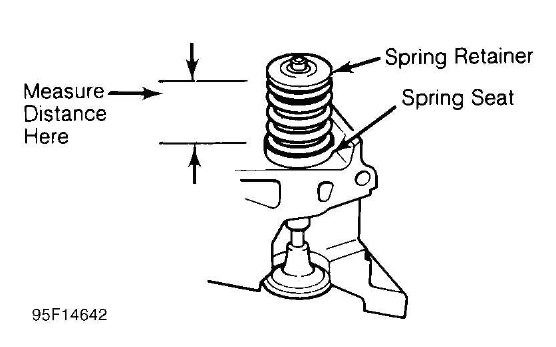
Fig. 12: Measuring Valve Spring Installed Height
ROCKER ARMS & ASSEMBLIES
NOTE: Examples used in this article are general in nature and do not necessarily relate to a specific engine or system. Illustrations and procedures have been chosen to guide mechanic through engine overhaul process. Descriptions of processes of cleaning, inspection, assembly and machine shop practice are included.
Always refer to appropriate engine overhaul article, if available, in the ENGINES section for complete overhaul procedures and specifications for the vehicle being repaired. Rocker arm design, lubrication path, bolt torque, and adjustment method can vary, so every inspection and installation step must match the engine being serviced.
Rocker Studs
Rocker studs are either threaded or pressed in place. Threaded studs are removed by locking 2 nuts on the stud. This allows the stud to be turned without gripping or damaging the threads used by the rocker arm hardware.
Unscrew the stud by turning the jam nut. Coat new stud threads with Loctite and install. Tighten to specification. The thread locking compound should be applied only as required and should not be allowed to enter oil passages or collect on seating surfaces. A stud that is not installed to the correct depth or torque can affect rocker arm geometry and valve operation.
Pressed-in stud can be removed using a stud puller. Ream stud bore to proper specification and press in a new oversize stud. Pressed-in studs are often replaced by cutting threads in the stud bore to accept a threaded stud. This type of repair must be done squarely to the original bore centerline. If the stud angle or height is incorrect, the rocker arm may not contact the valve tip properly and may wear the valve train unevenly.
Rocker Arms & Shafts
Mark rocker arms for location. Remove rocker arm retaining bolts. Remove rocker arms. Inspect rocker arms, shafts, bushings and pivot balls (if equipped) for excessive wear. Inspect rocker arms for wear in valve stem contact area. Measure rocker arm bushing I.D. Replace bushings if excessively worn.
Rocker arm parts should be kept in their original positions unless they are being replaced or the service procedure states otherwise. The contact surfaces between the rocker arm, valve stem, push rod, shaft, or pivot can develop a wear pattern over time. Mixing worn components may create ticking noise, side loading, poor oiling, or accelerated wear after assembly.
The rocker arm valve stem contact point may be reground, using special fixture for valve grinding machine.
Remove minimum amount of material as possible. Ensure all oil passages are clear. Install rocker arm components in original location. Ensure rocker arm is properly seated in push rod. Tighten bolts to specification. Adjust valves if required. See VALVE ADJUSTMENT.
After cleaning, blow through every rocker oil passage and inspect the outlet holes. A blocked passage can starve the rocker contact surface of oil and quickly damage the valve tip, push rod end, or shaft. When installing the rocker assembly on a Buick Enclave engine, confirm that each part sits flat, the push rod is centered in the rocker cup, and the valve end contacts the stem squarely.
PUSH RODS
NOTE: Examples used in this article are general in nature and do not necessarily relate to a specific engine or system. Illustrations and procedures have been chosen to guide mechanic through engine overhaul process. Descriptions of processes of cleaning, inspection, assembly and machine shop practice are included.
Always refer to appropriate engine overhaul article, if available, in the ENGINES section for complete overhaul procedures and specifications for the vehicle being repaired. Push rod length, straightness, end wear, and oil passage condition should be verified before the engine is assembled.
Push rods should be cleaned, inspected, and kept in order during service. Check each push rod for bending by rolling it on a clean, flat surface or by using the inspection method listed in the service procedure. Inspect both ends for scoring, pitting, mushrooming, or uneven wear. If the push rod is hollow, make sure the internal oil passage is open and free of sludge or metal debris.
A bent, restricted, or worn push rod can affect valve lift, lifter preload, oil delivery, and valve train noise. If the engine had a failed lifter, rocker arm wear, poor lubrication, or valve contact damage, the push rods should be checked very carefully before reuse. Reinstall only parts that meet specification and match the correct location for the engine.
Remove rocker arms. Mark push rods for location. Remove push rods. Push rods can be steel or aluminum, solid or hollow. Hollow push rods must be internally cleaned to ensure oil passage to rocker arms is cleaned. Keep each push rod in order as it is removed, because wear patterns can develop between the push rod, lifter, and rocker arm. Mixing parts during reassembly may create valve train noise, uneven wear, or poor oil delivery after the engine is started.
Check push rods for damage, such as loose ends on steel tipped aluminum types. Inspect the tips for pitting, mushrooming, scoring, heat discoloration, or signs that the push rod has not been rotating or seating correctly. If a push rod is hollow, blow through the internal oil passage and confirm that oil can flow freely from end to end.
Check push rod for straightness. Roll push rod on a flat surface. Using feeler gauge, check clearance at center. The surface used for this check must be clean and truly flat, because dirt or uneven workbench surfaces can make a straight push rod appear bent.
Replace push rod if bent. The push rod can also be supported at each end and rotated. A dial indicator is used to detect a bent area in the push rod. Even a slight bend can change valve lift, create side loading, and affect lifter preload. For Buick Enclave engine service, push rods should not be reused unless they are straight, clean, and free of end wear.
Lubricate ends of push rod and install push rod in original location. Ensure push rod is properly seated in lifter. The lower end must sit fully in the lifter cup, and the upper end must align correctly with the rocker arm. A push rod that is not seated can bend immediately when the engine is cranked or started.
Install rocker arm. Tighten bolts to specification. Adjust valves if required. See VALVE ADJUSTMENT. After installation, verify that the rocker arm sits squarely over the valve tip and push rod. Rotate the engine by hand if required by the service procedure to confirm that the valve train moves smoothly without binding.
LIFTERS
NOTE: Examples used in this article are general in nature and do not necessarily relate to a specific engine or system. Illustrations and procedures have been chosen to guide mechanic through engine overhaul process. Descriptions of processes of cleaning, inspection, assembly and machine shop practice are included.
Always refer to appropriate engine overhaul article, if available, in the ENGINES section for complete overhaul procedures and specifications for the vehicle being repaired. Lifter design, preload, lubrication requirements, and removal access can vary by engine, so the correct engine-specific procedure should be used before parts are replaced or adjusted.
Hydraulic Lifters
Before replacing a hydraulic lifter for noisy operation, ensure noise is not caused by worn rocker arms or valve tips. Also ensure sufficient oil pressure exists. Hydraulic lifters must be installed in original location. Remove rocker arm assembly and push rod. Mark components for location. Some applications require intake manifold, cylinder head or lifter cover removal. Remove lifter retainer plate (if used). To remove lifters, use a hydraulic lifter remover or magnet. Different type lifters are used. See Fig. 13.
Hydraulic lifter noise can be caused by more than the lifter itself. Low oil level, incorrect oil viscosity, aerated oil, restricted oil passages, worn cam lobes, damaged push rods, rocker wear, or poor oil pressure can all create similar symptoms. Before replacing lifters on a Buick Enclave, the lubrication system and related valve train parts should be checked so the same noise does not return after assembly.
On sticking lifters, disassemble and clean lifter. DO NOT mix lifter components or positions. Parts are selectfitted and are not interchangeable. Inspect all components for wear. Note amount of wear in lifter body-tocamshaft contact area. Surface must have smooth and convex contact face. If wear is apparent, carefully inspect cam lobe.
When a lifter is disassembled for cleaning, work on one lifter at a time and keep the internal parts together. The plunger, body, check valve, spring, and related pieces wear as a matched assembly. If parts are mixed, the lifter may leak down too quickly, pump up incorrectly, or fail to maintain proper valve train control.
Inspect push rod contact area and lifter body for scoring or signs of wear. If body is scored, inspect lifter bore for damage and lack of lubrication. On roller type lifters, inspect roller for flaking, pitting, loss of needle bearings and roughness during rotation.
Roller lifters should rotate smoothly without tight spots, looseness, clicking, or rough movement. Any damage to the roller or bearing area requires close inspection of the camshaft lobe because the two surfaces operate together. A damaged roller can quickly destroy a camshaft, and a damaged camshaft can ruin a new lifter.
Measure lifter body O.D. in several areas. Measure lifter bore I.D. Ensure components or oil clearance is within specification. Some models offer oversize lifters. Replace lifter if damaged.
Measure carefully and compare the readings with the correct specification. Too little clearance can cause sticking when the engine warms up, while too much clearance can reduce oil control and create noise. If the lifter bore is worn, scored, or out of round, replacing the lifter alone may not correct the concern.
If lifter check valve is not operating, obstructions may be preventing it from closing or valve spring may be broken. Clean or replace components as necessary. A check valve that does not seal correctly can allow the lifter to collapse under load, causing ticking, reduced valve lift, and unstable engine operation.
Check plunger operation. Plunger should drop to bottom of the body by its own weight when assembled dry. If plunger is not free, soak lifter in solvent to dissolve deposits. Do not force the plunger with sharp tools, because scratches or dents can prevent smooth movement and cause the lifter to stick again after installation.
Lifter leak-down test can be performed on lifter. Lifter must be filled with special test oil. New lifters contain special test oil. Using lifter leak-down tester, perform leak-down test following manufacturer's instructions. If leak-down time is not within specifications, replace lifter assembly.
A leak-down test helps confirm whether the lifter can hold pressure within the required range. A lifter that leaks down too fast may be noisy or fail to maintain valve lift. A lifter that leaks down too slowly may hold the valve slightly open under some conditions. Either condition can affect idle quality, compression, and long-term valve train performance.
Lifters should be soaked in clean engine oil several hours prior to installation. Coat lifter base, roller (if equipped) and lifter body with ample amount of Molykote or camshaft lubricant. See Fig. 13. Install lifter in original location. Install remaining components. Valve lash adjustment is not required on most hydraulic lifters.
Use clean oil and keep the lifters protected from dirt during installation. The base, roller, and body must be lubricated before first start-up because these parts carry high load immediately when the engine begins to rotate. During Buick Enclave engine overhaul work, careful lifter lubrication is one of the simplest ways to reduce dry-start wear.
Preload of hydraulic lifter is automatic. Some models may require adjustment. If adjustment is required, follow the exact procedure and do not tighten adjusters by feel. Incorrect preload can cause valve train noise, poor compression, rough running, or valve damage.
NOTE: Some manufacturers require that a crankcase conditioner be added to engine oil and engine operated for specified amount of time to aid in lifter break-in procedure if new lifters or camshaft are installed.
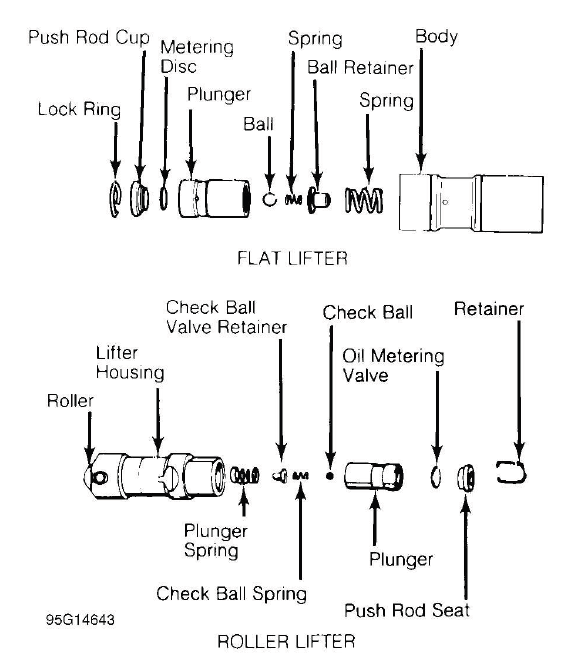
Fig. 13: Typical Hydraulic Valve Lifter Assemblies
Mechanical Lifters
Lifter assemblies must be installed in original locations. Remove rocker arm assembly and push rod. Mark components for location. Some applications require intake manifold or lifter cover removal. Remove lifter retainer plate (if used). To remove lifters, use lifter remover or magnet.
Mechanical lifters do not automatically compensate for clearance the same way hydraulic lifters do, so correct lash adjustment is especially important. Keep every lifter matched to its cam lobe unless new lifters and a compatible camshaft service procedure are being used.
Inspect push rod contact area and lifter body for scoring or signs of wear. If body is scored, inspect lifter bore for damage and lack of lubrication. Note amount of wear in lifter body-to-camshaft contact area. Surface must have smooth and convex contact face. If wear is apparent, carefully inspect cam lobe.
Look for a smooth, even wear pattern on the lifter face. Pitting, a flat wear pattern, edge damage, heat marks, or roughness can indicate poor lubrication, incorrect lash, weak oil supply, or camshaft damage. If one mechanical lifter shows abnormal wear, the matching cam lobe should be inspected before the engine is reassembled.
Coat lifter base, roller (if equipped) and lifter body with ample amount of Molykote or camshaft lubricant.
Install lifter in original location. Install remaining components. Tighten bolts to specification. Adjust valves. See VALVE ADJUSTMENT. After assembly, confirm that the valve lash is correct for the engine temperature and procedure being used. Recheck the adjustment if the service information requires a second inspection after initial operation.
