
Buick Enclave: Specifications, Diagnostic Information and Procedures
SPECIFICATIONS
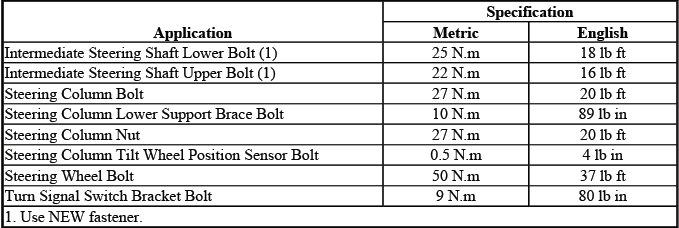
FASTENER TIGHTENING SPECIFICATIONS
Fastener Tightening Specifications
SCHEMATIC WIRING DIAGRAMS
STEERING WHEEL WIRING SCHEMATICS
Heated Steering Wheel
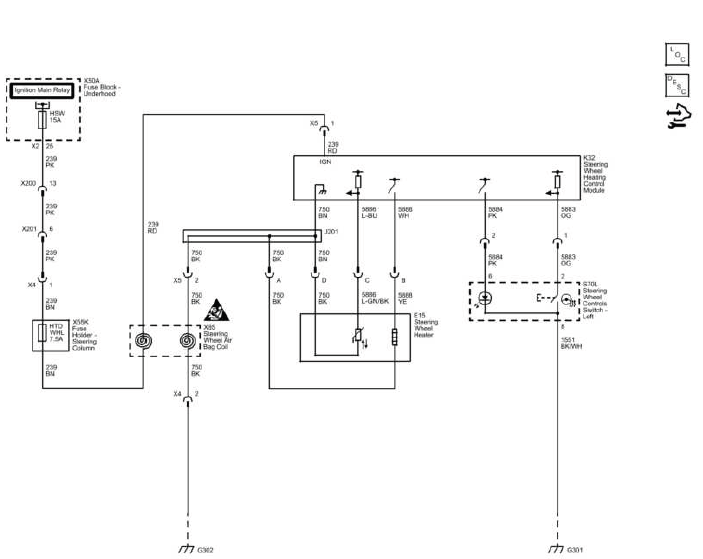
Fig. 1: NO CONTENT
TILT/TELESCOPING STEERING COLUMN WIRING SCHEMATICS
N38
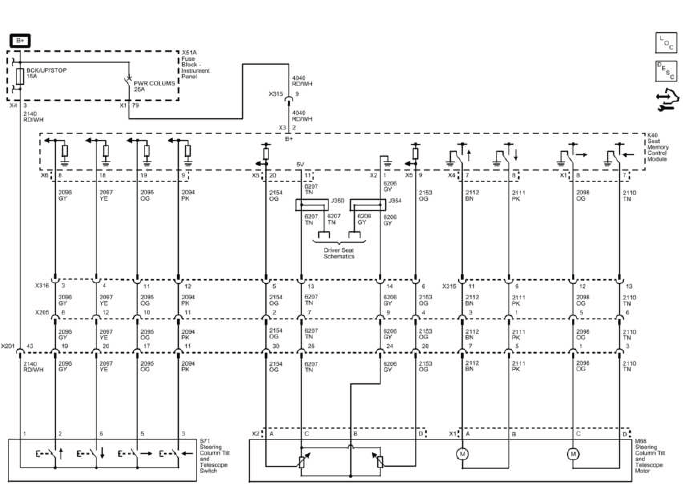
Fig. 2: NO CONTENT
DIAGNOSTIC INFORMATION AND PROCEDURES
DIAGNOSTIC CODE INDEX
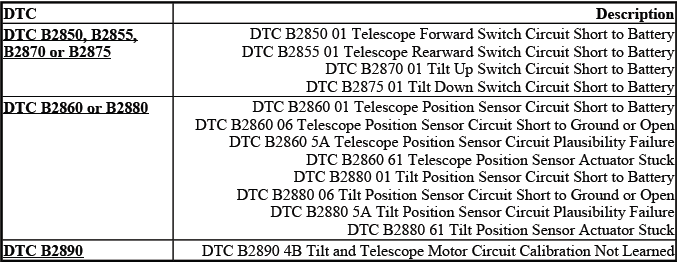
DTC B2850, B2855, B2870 OR B2875: TELESCOPE FORWARD/TILT SWITCH
Diagnostic Instructions
- Perform the Diagnostic System Check - Vehicle prior to using this diagnostic procedure. This confirms that the vehicle’s basic module communication and power conditions are suitable before focusing on the tilt or telescope switch circuit.
- Review Strategy Based Diagnosis for an overview of the diagnostic approach. This helps separate switch concerns, wiring faults, and module-related issues instead of replacing parts too early.
- Diagnostic Procedure Instructions provides an overview of each diagnostic category. Follow the test sequence in order so intermittent faults, shorts to voltage, open circuits, and poor connections are evaluated consistently.
DTC Descriptors
DTC B2850 01
- Telescope Forward Switch Circuit Short to Battery
DTC B2855 01
- Telescope Rearward Switch Circuit Short to Battery
DTC B2870 01
- Tilt Up Switch Circuit Short to Battery
DTC B2875 01
- Tilt Down Switch Circuit Short to Battery
Diagnostic Fault Information
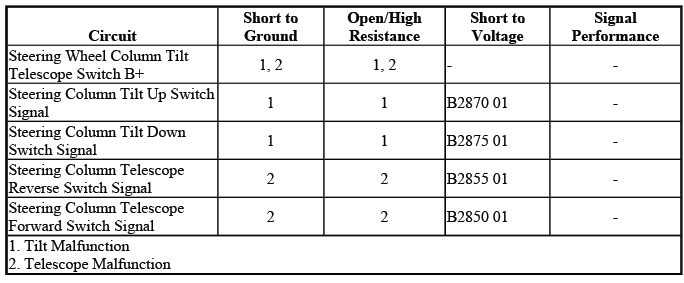
Circuit Description
The memory seat module (MSM) receives voltage inputs from the tilt/telescope switch according to the direction selected by the driver. When a tilt or telescope command is requested, the MSM responds by supplying battery voltage and ground to the appropriate motor control circuits. This allows the steering column to move forward, rearward, upward, or downward depending on the switch input.
In this circuit, the switch does not directly power the steering column motors. Instead, it sends command information to the MSM, and the module then controls motor operation. For the Buick Enclave steering wheel and column system, this design allows manual switch operation and memory recall functions to work through the same control strategy.
Conditions for Running the DTC
The ignition ON. With ignition power available, the MSM can monitor the tilt and telescope switch inputs and compare the requested switch state against expected steering column movement.
Conditions for Setting the DTC
The MSM detects a tilt or telescope switch input for more than 30 consecutive seconds after the tilt or telescope motor movement has stopped. This usually indicates that a switch input is stuck active, a signal circuit is shorted to voltage, or the MSM is seeing an input that does not match normal switch operation.
Action Taken When the DTC Sets
- The tilt or telescope motor will be deactivated. This prevents continued motor operation if the module believes a switch command is stuck or electrically shorted.
- Memory recall functions will be disabled. This protects the steering column from moving unexpectedly during memory position operation while the fault remains active.
Conditions for Clearing the DTC
- A current DTC will clear when the failed switch input is no longer active. Once the switch signal returns to the expected inactive state, the MSM can stop reporting the fault as current.
- A history DTC will clear after 100 ignition cycles. If the fault does not return during that period, the stored history record will be cleared by the module.
Diagnostic Aids
An intermittently stuck tilt or telescope switch may cause a DTC to set. The switch may feel normal during inspection but still remain electrically active at times because of internal wear, contamination, moisture, or binding in the switch mechanism.
When diagnosing these DTCs, do not overlook harness movement around the steering column. A wire that is rubbed, pinched, or pulled tight may create an intermittent short to voltage when the column is moved or when the driver adjusts the wheel position. Inspect connector fit, terminal tension, and any signs of previous repair before replacing the MSM or switch assembly.
Reference Information
Schematic Reference
Tilt/Telescoping Steering Column Schematics
Connector End View Reference
Component Connector End Views
Description and Operation
Steering Wheel and Column Description and Operation
Electrical Information Reference
- Circuit Testing
- Connector Repairs
- Testing for Intermittent Conditions and Poor Connections
- Wiring Repairs
Scan Tool Reference
Control Module References for scan tool information
Circuit/System Verification
Ignition ON, observe the appropriate scan tool Tilt or Telescope Switch parameter while cycling the tilt/telescope switch between states. The parameter should change between Inactive and Active. A clean change on the scan tool confirms that the MSM is seeing the switch request. If the parameter remains Active when the switch is released, or does not change when the switch is pressed, further circuit testing is required.
Cycle each direction of the switch separately and watch the scan tool response carefully. On a Buick Enclave equipped with a power tilt/telescoping column, one direction may fail while the other directions still operate normally, so each switch signal must be checked individually.
Circuit/System Testing
1. Ignition OFF, disconnect the harness connector at the tilt/telescope switch. Inspect the connector for loose terminals, bent pins, corrosion, moisture, or damage before beginning electrical testing.
2. Ignition ON, verify a test lamp illuminates between the B+ circuit terminal 1 and ground. The test lamp confirms that the switch has the required battery voltage feed.
- If the test lamp does not illuminate, test the B+ circuit for a short to ground or an open/high resistance. Repair the affected wiring or connection before continuing with switch or module replacement.
3. Verify the scan tool tilt switch and telescope switch parameters are Inactive. With the switch disconnected, the MSM should not detect an active switch command.
- If not the specified value, test the signal circuits listed below for a short to voltage. If the circuit tests normal, replace the MSM.
- Tilt Up Switch terminal 2
- Tilt Down Switch terminal 6
- Telescope Forward Switch terminal 3
- Telescope Rearward Switch terminal 5
A signal circuit that remains Active with the switch unplugged usually points to unwanted voltage on that circuit or an internal module concern. Testing the wiring before replacing the MSM helps avoid unnecessary module replacement.
4. Install a 3A fused jumper wire between the signal circuits listed below and the B+ circuit terminal 1. Verify the scan tool tilt switch and telescope switch parameters are Active. The fused jumper simulates a switch input and allows the circuit response to be checked without relying on the switch.
- Tilt Up Switch terminal 2
- Tilt Down Switch terminal 6
- Telescope Forward Switch terminal 3
- Telescope Rearward Switch terminal 5
- If not the specified value, test the appropriate signal circuit for a short to ground or an open/high resistance. If the circuit tests normal, replace the MSM.
If a jumper-applied signal does not change the scan tool parameter to Active, the signal circuit may be open, have excessive resistance, or be shorted to ground. Confirm the circuit condition with proper electrical testing before condemning the module.
5. If all circuits test normal, test or replace the tilt/telescope switch. A switch that sticks, has worn contacts, or gives an inconsistent output can set these DTCs even when the wiring and MSM are working correctly.
Component Testing
Tilt/Telescope Switch
1. Ignition OFF, disconnect the harness connector at the tilt/telescope switch. Perform the test with the connector separated so the switch can be evaluated independently from the MSM and vehicle wiring. Check the switch body for signs of damage, liquid contamination, binding, or a button that does not return fully to the released position.
2. Test for infinite resistance between the signal terminals listed below and the B+ terminal 1 with the switch in the neutral position. In the released position, none of these signal circuits should show continuity to the B+ feed. A reading lower than the specified range indicates that the switch may be internally shorted or stuck in an active state.
- Tilt Up Switch terminal 2
- Tilt Down Switch terminal 6
- Telescope Forward Switch terminal 3
- Telescope Rearward Switch terminal 5
- If less than the specified range, replace the steering column.
3. Test for less than 1 ohm between the B+ terminal 1 and the signal terminal 2 with the switch in the TILT UP position. This confirms that the tilt up contact closes properly when the driver requests upward column movement.
- If greater than the specified range, replace the steering column.
4. Test for less than 1 ohm between the B+ terminal 1 and the signal terminal 6 with the switch in the TILT DOWN position. The resistance should remain very low while the switch is held in this position, showing that the circuit can carry the command signal without excessive resistance.
- If greater than the specified range, replace the steering column.
5. Test for less than 1 ohm between the B+ terminal 1 and the signal terminal 5 with the switch in the TELESCOPE OUT position. This verifies the rearward or outward telescope command circuit through the switch contacts.
- If greater than the specified range, replace the steering column.
6. Test for less than 1 ohm between the B+ terminal 1 and the signal terminal 3 with the switch in the TELESCOPE IN position. A correct reading confirms that the telescope in command is being completed through the switch when requested.
- If greater than the specified range, replace the steering column.
Repair Instructions
Perform the Diagnostic Repair Verification after completing the diagnostic procedure. This final verification confirms that the switch input, steering column movement, memory seat module response, and scan tool data all return to normal operation after the repair.
- Steering Column Tilt Wheel and Telescope Switch Replacement
- Control Module References for MSM replacement, setup and programming
DTC B2860 OR B2880: TELESCOPE/TILT POSITION SENSOR
Diagnostic Instructions
- Perform the Diagnostic System Check - Vehicle prior to using this diagnostic procedure. This helps confirm that the control modules, battery voltage, communication circuits, and basic vehicle conditions are suitable for accurate diagnosis.
- Review Strategy Based Diagnosis for an overview of the diagnostic approach. Use the strategy to separate sensor signal faults, actuator faults, wiring issues, and module concerns before replacing components.
- Diagnostic Procedure Instructions provides an overview of each diagnostic category. Following the categories in order reduces the chance of overlooking an intermittent connection or a mechanical column concern.
DTC Descriptors
DTC B2860 01
- Telescope Position Sensor Circuit Short to Battery
DTC B2860 06
- Telescope Position Sensor Circuit Short to Ground or Open
DTC B2860 5A
- Telescope Position Sensor Circuit Plausibility Failure
DTC B2860 61
Telescope Position Sensor Actuator Stuck
DTC B2880 01
- Tilt Position Sensor Circuit Short to Battery
DTC B2880 06
- Tilt Position Sensor Circuit Short to Ground or Open
DTC B2880 5A
- Tilt Position Sensor Circuit Plausibility Failure
DTC B2880 61
- Tilt Position Sensor Actuator Stuck
Diagnostic Fault Information
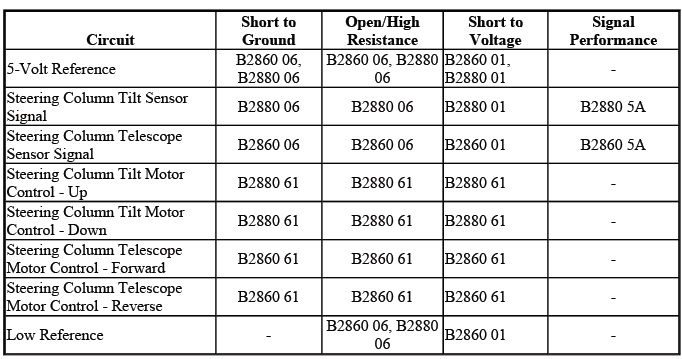
Circuit Description
The memory seat module (MSM) determines the steering column position by monitoring inputs from the tilt and telescope position sensors built into the tilt or telescope actuators. The MSM supplies a 5-volt reference and a low reference to the sensors, then reads the sensor signal circuit to determine where the column is positioned.
As the steering column moves, the sensor signal voltage should change smoothly within the expected operating range. On a Buick Enclave equipped with a power tilt and telescoping column, these sensor inputs allow the MSM to control column movement accurately and support memory recall functions. If the signal is too high, too low, stuck, or does not match the commanded movement, the MSM sets a related DTC.
Conditions for Running the DTC
Ignition ON. With the ignition on, the MSM can supply reference voltage, monitor the sensor circuits, and compare the reported steering column position against the commanded actuator movement.
Conditions for Setting the DTC
B2860 01
The steering column telescope sensor signal voltage is greater than 4.8 volts for more than 2 seconds. This indicates that the signal is above the normal range and may be shorted to voltage or affected by a sensor or circuit fault.
B2860 06
The steering column telescope sensor signal voltage is less than 0.2 volt for more than 2 seconds. This condition may be caused by a short to ground, an open circuit, poor terminal contact, or a failed sensor circuit.
B2860 5A
An incorrect steering column telescope sensor signal voltage is seen. The MSM identifies the signal as implausible when the value does not match the expected telescope position or movement pattern.
B2860 61
The steering column telescope sensor signal voltage does not change when the telescope actuator is commanded. This may indicate a stuck actuator, a mechanical binding condition, a failed position sensor, or a circuit that is not reporting movement back to the MSM.
B2880 01
The steering column tilt sensor signal voltage is greater than 4.8 volts for more than 2 seconds. This high-voltage condition suggests a short to battery or an abnormal sensor signal.
B2880 06
The steering column tilt sensor signal voltage is less than 0.2 volt for more than 2 seconds. This low-voltage condition may be related to a short to ground, open circuit, loose connector, or sensor failure.
B2880 5A
An incorrect steering column tilt sensor signal voltage is seen. The MSM sets this fault when the tilt sensor signal does not agree with the expected column position or operating logic.
B2880 61
The steering column tilt sensor signal voltage does not change when the tilt actuator is commanded. If the actuator is commanded but the feedback signal remains fixed, inspect for mechanical binding, actuator trouble, sensor failure, or damaged wiring.
Action Taken When the DTC Sets
Steering column tilt operations are suspended. The module disables movement to protect the column, actuator, and memory function from operating with unreliable position feedback.
Conditions for Clearing the DTC
- A current DTC will clear when the malfunction is no longer present. Once the signal returns to the expected range and the fault is not detected, the code can clear from current status.
- A history DTC will clear after 50 malfunction-free ignition cycles. If the concern does not return during that period, the module removes the stored history record.
Reference Information
Schematic Reference
Tilt/Telescoping Steering Column Schematics
Connector End View Reference
Component Connector End Views
Description and Operation
Steering Wheel and Column Description and Operation
Electrical Information Reference
- Circuit Testing
- Connector Repairs
- Testing for Intermittent Conditions and Poor Connections
- Wiring Repairs
Scan Tool Reference
Control Module References for scan tool information
Circuit/System Verification
1. Ignition ON, observe the scan tool Tilt Sensor and Telescope Sensor parameter. The readings should be between 0.2 and 4.8 volts. A value outside this range means the MSM is seeing a sensor signal that is too high, too low, open, shorted, or otherwise invalid.
- If not within the specified range, refer to Circuit/System Testing - Tilt/Telescope Sensor Circuit Malfunction.
While observing the scan tool, watch for a stable sensor value that changes logically when the column is moved. A signal that jumps, drops out, or stays fixed may point to a poor connection, damaged wiring, a worn sensor, or an actuator that is not moving the column as commanded.
2. Command the column to tilt up and down and telescope in and out using the tilt/telescope switch. The column should move in the commanded direction. The movement should be smooth, without hesitation, binding, clicking, or stopping before the commanded travel is complete.
- If the column does not operate as specified, refer to Circuit/System Testing - Tilt/Telescope Actuator Circuit Malfunction.
For Buick Enclave steering column diagnosis, always compare the physical column movement with the scan tool sensor data. If the column moves but the sensor value does not change, focus on the sensor signal circuit. If the sensor value changes but the column does not move, the actuator circuit or mechanical column assembly may be the source of the concern.
Circuit/System Testing
Telescope or Tilt Sensor Circuit Malfunction
1. Ignition OFF, disconnect the harness connector at the steering wheel tilt/telescope position sensor. Inspect the connector before testing for loose terminals, bent pins, corrosion, moisture, or any sign that the harness has been pulled tight around the steering column.
2. Ignition OFF, test for less than 2.0 ohms between the low reference circuit terminal B and ground. A low resistance reading confirms that the sensor has a clean low reference path back through the circuit.
- If greater than the specified range, test the low reference circuit for an open/high resistance. If the circuit tests normal, replace the MSM.
3. Ignition ON, test for 4.8-5.2 volts between the 5-volt reference circuit terminal C and ground. This reference voltage is supplied by the memory seat module and is required for the tilt or telescope sensor to report column position accurately.
- If less than the specified range, test the 5-volt reference circuit for a short to ground or an open/high resistance. If the circuit tests normal, replace the MSM.
- If greater than the specified range, test the 5-volt reference circuit for a short to voltage. If the circuit tests normal, replace the MSM.
4. Verify the scan tool Tilt Sensor and Telescope Sensor parameter is less than 0.2 volt. With the sensor disconnected, the scan tool value should drop low; a higher reading may indicate unwanted voltage on the signal circuit.
- If greater than the specified range, test the signal circuits listed below for a short to voltage. If the circuit tests normal, replace the MSM.
- Tilt Sensor terminal A
- Telescope Sensor terminal D
5. Install a 3A fused jumper wire between the signal circuits listed below and the 5-volt reference circuit terminal C. Verify the scan tool tilt sensor and telescope sensor parameter is greater than 4.8 volts. This jumper test simulates a high sensor signal and confirms whether the MSM can recognize the signal circuit correctly.
- Tilt Sensor terminal A
- Telescope Sensor terminal D
- If less than the specified range, test the appropriate signal circuit for a short to ground or an open/high resistance. If the circuit tests normal, replace the MSM.
6. If all circuits test normal, replace the steering column. On the Buick Enclave, the tilt and telescope position sensors are built into the actuator/column assembly, so a confirmed internal sensor fault requires column replacement rather than separate sensor service.
Tilt/Telescope Actuator Circuit Malfunction
1. Ignition OFF, disconnect the harness connector at the tilt/telescope actuator. Before connecting test equipment, check the actuator connector for spread terminals, damaged locks, corrosion, or evidence of overheating.
2. Install a test lamp between the control circuit terminals listed below of the tilt/telescope motor. The test lamp is used to confirm that the MSM can provide power and ground across the motor control circuits when a direction is commanded.
- Tilt Up/Tilt Down terminals 1 and 2
- Telescope Forward/Telescope Rearward terminals 1 and 2
3. Command the column to tilt up and down or telescope in and out using the tilt/telescope switch. The test lamp should illuminate with each command. The lamp should respond only when a command is made and should turn off when the switch is released.
- If the test lamp does not illuminate, test the appropriate tilt/telescope control circuits for a short to ground or an open/high resistance. If the circuits test normal, replace the MSM.
4. If all circuits test normal, replace the steering column. If voltage and ground control are present but the column actuator does not move, the fault is likely inside the column motor or mechanical actuator assembly.
Repair Instructions
Perform the Diagnostic Repair Verification after completing the diagnostic procedure. Confirm that the steering column moves smoothly in all tilt and telescope directions, that the scan tool parameters respond normally, and that no related DTC resets after the repair.
- Steering Column Replacement
- Control Module References for MSM replacement, setup and programming
DTC B2890: TILT AND TELESCOPE MOTOR CIRCUIT CALIBRATION NOT LEARNED
Diagnostic Instructions
- Perform the Diagnostic System Check - Vehicle prior to using this diagnostic procedure. This ensures that the vehicle has no broader communication, voltage, or module conditions that could affect calibration.
- Review Strategy Based Diagnosis for an overview of the diagnostic approach. The calibration fault should be handled as a learned-position concern before replacing mechanical parts.
- Diagnostic Procedure Instructions provides an overview of each diagnostic category. Follow the calibration and verification sequence carefully so the MSM can relearn the column travel limits correctly.
DTC Descriptor
DTC B2890 4B
- Tilt and Telescope Motor Circuit Calibration Not Learned
Circuit Description
The memory seat module MSM learns the tilt/telescope soft stops approximately 1.3 cm (0.5 in) before the mechanical ends of travel. These soft stops are used so the steering column stops before it reaches the hard mechanical limit in any direction. This reduces wear on the actuator, motor, gears, and column components.
The soft stop positions are initially programmed at the factory. They may need to be relearned if the MSM is replaced, if setup programming has been performed, or if the module no longer has valid learned travel data. For a Buick Enclave with power tilt and telescope steering column operation, learned soft stops are necessary for normal column movement and memory recall operation.
Conditions for Running the DTC
Ignition ON. With ignition power available, the MSM can monitor the steering column circuits and determine whether the required learned calibration data is present.
Conditions for Setting the DTC
The soft stops have not been learned. The MSM does not have valid tilt/telescope travel limit information, so it cannot safely command normal column movement.
Action Taken When the DTC Sets
- The tilt and telescope motors will be deactivated. This prevents the column from being driven into the mechanical stops without learned position limits.
- Memory recall functions will be disabled. Memory movement is not allowed until the module knows the proper soft stop positions.
Conditions for Clearing the DTC
- A current DTC will clear when the soft stops have been learned. Once the calibration procedure is completed successfully, the MSM can restore normal tilt and telescope control.
- A history DTC will clear after 100 ignition cycles. If the calibration fault does not return, the stored record will be removed by the module.
Reference Information
Schematic Reference
Tilt/Telescoping Steering Column Schematics
Connector End View Reference
Component Connector End Views
Description and Operation
Steering Wheel and Column Description and Operation
Electrical Information Reference
- Circuit Testing
- Connector Repairs
- Testing for Intermittent Conditions and Poor Connections
- Wiring Repairs
Scan Tool Reference
Control Module References for Scan Tool Information
Circuit/System Verification
1. Ignition ON, perform the scan tool Learn Column Soft Stops procedure. Refer to Telescoping Steering Column Calibration. During the learn procedure, make sure the battery voltage is stable and the column is free from obstruction or binding.
2. Operate the vehicle within the Conditions for Running and Setting. Verify DTC B2890 does not reset. The tilt and telescope functions should operate normally after the calibration has been learned.
- If the DTC resets, replace the MSM.
If the calibration completes but the code returns, verify that the correct setup and programming steps were performed before replacing the module. A failed or unprogrammed MSM may not retain the learned soft stop data.
Repair Instructions
Perform the Diagnostic Repair Verification after completing the diagnostic procedure. Confirm that the steering column moves through its expected travel range and stops smoothly before the mechanical end positions.
Control Module References for MSM replacement, setup and programming
SYMPTOMS - STEERING WHEEL AND COLUMN
Review the system description and operation in order to familiarize yourself with the system functions. Refer to Steering Wheel and Column Description and Operation. Understanding how the switch, MSM, sensors, actuators, and memory recall functions interact will make symptom diagnosis more accurate and prevent unnecessary replacement of the steering column assembly.
Visual/Physical Inspection
- Inspect for aftermarket devices which could affect the operation of the steering wheel and column. Added electronics, wiring modifications, steering wheel accessories, or poorly routed harnesses may interfere with column movement or module inputs.
- Inspect the easily accessible or visible system components for obvious damage or conditions which could cause the symptom. Look for loose connectors, pinched wiring, damaged trim, binding column covers, signs of impact, moisture intrusion, and any condition that could prevent smooth tilt or telescope movement.
For Buick Enclave steering wheel and column concerns, a careful visual inspection often saves diagnostic time. Many symptoms that appear electrical can be caused by a loose connector, restricted column movement, damaged harness routing, or a switch that does not fully return to neutral.
Symptoms List
Refer to a symptom diagnostic procedure from the following list in order to diagnose the symptom. Begin with the symptom that most closely matches the driver complaint, then confirm the condition with a visual inspection and scan tool data before replacing steering column components.
- Steering Column Tilt/Telescoping Malfunction
- Noise in Steering Column
- Steering Column Tilt Function Inoperative
- High Shift Effort
- Looseness in Steering Column
HEATED STEERING WHEEL INDICATOR MALFUNCTION
Diagnostic Instructions
- Perform the Diagnostic System Check - Vehicle prior to using this diagnostic procedure. This confirms that power, ground, module communication, and basic vehicle conditions are suitable before testing the heated steering wheel circuit.
- Review Strategy Based Diagnosis for an overview of the diagnostic approach. The indicator, switch, heating module, wiring, and wheel heating element should be evaluated logically rather than replacing parts based on the symptom alone.
- Diagnostic Procedure Instructions provides an overview of each diagnostic category. Follow the test steps in order so open circuits, high resistance, shorts, and module faults are separated correctly.
Diagnostic Fault Information
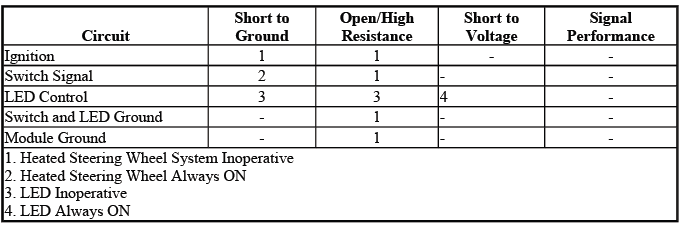
Circuit/System Description
The heated steering wheel system consists of a heated steering wheel, a heated steering wheel switch, and a steering wheel heat module. The heated steering wheel contains non-serviceable heating elements and a temperature sensor. These elements and the sensor are built into the steering wheel rim and are distributed around the wheel so heat is applied evenly to the grip area.
The heated steering wheel switch is located in the left steering wheel control switch assembly. The steering wheel heat module is located on the left side of the steering wheel center hub. When the switch is pressed, the switch signal circuit is grounded and the heat module turns the heated steering wheel on. The system then remains on until the customer turns it off. The wheel’s normal operating temperature is 32ºC (89.6ºF), and it typically takes approximately 3 to 4 minutes to reach that temperature.
The steering wheel may take longer to warm if the vehicle temperature is below -21ºC (-5.8ºF). The built-in temperature sensor sends feedback to the controller so the module can limit heat to the normal operating temperature. The wheel will not operate if the vehicle temperature is at or above 32ºC (89.6ºF). On a Buick Enclave, this control strategy helps prevent overheating while still allowing comfortable heating during cold-weather operation.
Reference Information
Schematic Reference
- Steering Wheel Schematics
- Cruise Control Schematics
Connector End View Reference
COMPONENT CONNECTOR END VIEWS - INDEX
Description and Operation
Steering Wheel and Column Description and Operation
Electrical Information Reference
- Testing for Intermittent Conditions and Poor Connections
- Circuit Testing
Circuit/System Verification
1. Ignition ON. With ignition power available, the heated steering wheel switch, indicator, and heat module can be checked under normal operating conditions.
2. Verify the S70L Steering Wheel Controls Switch - Left is OFF. The steering wheel heater indicator should not be illuminated and the left and right sides of the steering wheel should not be warm. This confirms that the heated steering wheel is not being commanded on when the switch is released.
The steering wheel is always warm
Refer to Heated Steering Wheel Malfunction. A wheel that heats when not commanded may indicate a stuck switch input, module fault, or a circuit that is unintentionally grounded.
The steering wheel does not become warm and the heater indicator is illuminated
Refer to Circuit/System Testing. In this condition, the module may be receiving the switch command, but the heating output, ground path, module operation, or internal wheel circuit may not be working correctly.
The steering wheel does not become warm and the heater indicator is not illuminated
3. Press and release the S70L Steering Wheel Controls Switch - Left. The steering wheel heater indicator should illuminate and the left and right sides of the steering wheel should become warm. Allow enough time for the wheel to begin warming, especially if the interior temperature is very low.
The steering wheel does not become warm
Refer to Heated Steering Wheel Malfunction. If the indicator operates but the wheel stays cold, inspect the heating module, wheel heater circuits, temperature sensor operation, and related wiring.
The steering wheel becomes warm and the heater indicator does not illuminate
Refer to Circuit/System Testing. This suggests that the heating function may be working while the indicator circuit or switch illumination feedback is not operating correctly.
The steering wheel becomes warm and the heater indicator illuminates
4. All OK. If the indicator illuminates properly, the steering wheel heats as expected, and the wheel turns off when commanded, the system is operating normally at the time of inspection.
Circuit/System Testing
1. Ignition OFF, disconnect the X5 in-line harness connector at the K32 Heated Steering Wheel Control Module. Inspect the connector for terminal damage, looseness, corrosion, moisture, or signs of overheating before electrical testing begins.
2. Test for less than 10 ohms between the ground circuit terminal 2 and ground. A good ground path is required for the heated steering wheel module to operate the indicator and heating function correctly.
If 10 ohms or greater
- Ignition OFF. Keep the circuit de-energized while checking resistance so the reading is accurate and the meter is protected.
- Test for less than 2 ohms in the ground circuit end to end.
- If 2 ohms or greater, repair the open/high resistance in the circuit.
- If less than 2 ohms, repair the open/high resistance in the ground connection.
If less than 10 ohms
3. Ignition ON. Restore ignition power so the ignition voltage circuit can be tested under operating conditions.
4. Verify a test lamp illuminates between the ignition voltage circuit terminal 1 and ground. The test lamp should light clearly, confirming that the K32 Heated Steering Wheel Control Module is receiving the required ignition feed.
If the test lamp does not illuminate and the circuit fuse is good
- Ignition OFF, remove the test lamp. This prevents accidental shorting while the circuit is checked end to end.
- Test for less than 2 ohms in the ignition circuit end to end.
- If less than 2 ohms, verify the fuse is OK and there is voltage at the fuse. Refer to Power Mode Mismatch.
- If 2 ohms or greater
- Verify the in-line fuse is OK and there is voltage at the fuse.
- If the in-line fuse is blown, replace the K32 Steering Wheel Heating Control Module.
- If the in-line fuse is OK, repair the open/high resistance in the circuit.
If the wiring checks good but voltage is still not available where expected, inspect for connector pin fit, backed-out terminals, or a power mode concern. On the Buick Enclave heated steering wheel circuit, an ignition feed fault can prevent the indicator and heating function from operating even when the switch itself is working.
If the test lamp does not illuminate and the circuit fuse is open
- Ignition OFF. Do not replace the fuse until the circuit has been checked for a short to ground.
- Test for infinite resistance between the ignition voltage circuit and ground.
- If less than infinite resistance, repair the short to ground on the circuit.
- If infinite resistance, replace the K32 Steering Wheel Heating Control Module.
A fuse that opens again after replacement usually indicates a shorted circuit or an internal module fault. Correct the cause before returning the heated steering wheel system to service.
If the test lamp illuminates
If the test lamp illuminates normally, the ignition voltage feed is present at the module connector. Continue diagnosis by checking the remaining control, indicator, switch signal, and heated wheel circuits as directed by the next procedure steps. This helps confirm whether the concern is in the K32 module, the S70L switch assembly, the steering wheel heating element, or the related harness routing through the steering wheel and column.
5. Ignition OFF, connect the X5 in-line harness connector. Disconnect the harness connector at the S70L Steering Wheel Controls Switch - Left. This restores the heated steering wheel control module connection while allowing the left steering wheel switch circuit to be checked separately.
6. Test for less than 10 ohms between the ground terminal 8 and ground. A low resistance reading confirms that the switch assembly has a usable ground path for the heated steering wheel indicator and switch operation.
If 10 ohms or greater
- Ignition OFF. Keep the circuit de-energized while resistance is being measured so the reading is accurate and the meter is protected.
- Test for less than 2 ohms in the ground circuit end to end.
- If 2 ohms or greater, repair the open/high resistance in the circuit.
- If less than 2 ohms, repair the open/high resistance in the ground connection.
If less than 10 ohms
7. Connect the harness connector at the S70L Steering Wheel Controls Switch - Left. Make sure the connector locks fully into place and that no terminals are pushed back in the connector body.
8. Disconnect the in-line connector at the S70L Steering Wheel Controls Switch - Left. This allows the indicator control circuit to be tested without relying on the switch command.
9. Install a 3A fused jumper wire between the indicator control circuit terminal 2 and B+. The fused jumper protects the circuit while applying voltage to check whether the indicator can illuminate.
10. Verify the heated steering wheel indicator is illuminated. If the indicator lights when voltage is applied directly through the test setup, the indicator circuit and lamp function are responding.
If the indicator does not illuminate
Replace the S70L Steering Wheel Controls Switch - Left. In this condition, the indicator circuit inside the switch assembly is not responding as expected.
If the indicator illuminates
11. Replace the K32 Steering Wheel Heating Control Module. If the indicator can be illuminated by the jumper but does not operate correctly through the module, the module is the likely source of the indicator control concern.
Repair Instructions
Perform the Diagnostic Repair Verification after completing the repair. Confirm that the heated steering wheel indicator turns on and off correctly and that the heated wheel operates as commanded before returning the Buick Enclave to service.
- Steering Wheel Control Switch Assembly Replacement (Traverse) and Steering Wheel Control Switch Assembly Replacement (Acadia/Enclave)
- Control Module References for heated steering wheel control module replacement, programming and setup.
HEATED STEERING WHEEL MALFUNCTION
Diagnostic Instructions
- Perform the Diagnostic System Check - Vehicle prior to using this diagnostic procedure. This verifies that the vehicle power mode, module communication, and related electrical systems are suitable for accurate heated steering wheel diagnosis.
- Review Strategy Based Diagnosis for an overview of the diagnostic approach. The concern may involve the switch, indicator, heating module, steering wheel heating element, temperature sensor, wiring, or connector condition.
- Diagnostic Procedure Instructions provides an overview of each diagnostic category. Follow the diagnostic steps in sequence so a wiring fault is not mistaken for a failed steering wheel assembly.
Diagnostic Fault Information
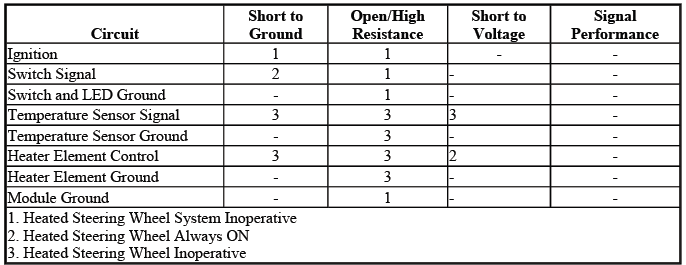
Circuit/System Description
The heated steering wheel system consists of a heated steering wheel, a heated steering wheel switch, and a steering wheel heat module. The heated steering wheel contains non-serviceable heating elements and a temperature sensor. These heating elements and the sensor are located around the entire rim of the steering wheel so the grip area can warm evenly during cold-weather operation.
The heated steering wheel switch is located in the left steering wheel control switch assembly. The steering wheel heat module is mounted on the left side of the steering wheel center hub. When the switch is pressed, the switch signal circuit is grounded, and the heat module turns the heated steering wheel on. The system remains on until the customer turns it off. The wheel’s normal operating temperature is 32ºC (89.6ºF), and the wheel takes approximately 3 to 4 minutes to reach the normal operating temperature under typical conditions.
The wheel will take longer to heat up if the vehicle temperature is below -21ºC (-5.8ºF). The built-in temperature sensor provides input to the controller so the heat module can limit the wheel to its normal operating temperature. The heated steering wheel will not operate if the vehicle temperature is at or above 32ºC (89.6ºF). On the Buick Enclave, this temperature control strategy helps prevent unnecessary heating while still providing steering wheel warmth when cabin conditions are cold enough.
Diagnostic Aids
- Before replacing the steering wheel for complaints of not getting hot enough, a reliable infrared temperature gun should be used to measure the temperature at several points around the rim. The steering wheel's normal operating temperature is 32ºC (89.6ºF) and takes approximately 10 min to reach that temperature. It may take up to 20 min for the normal operating temperature to stabilize within the steering wheel rim. There may be a spike in temperature during the first 3-4 min before it stabilizes at the normal operating temperature. The steering wheel will take longer to heat up if the vehicle temperature is below -21ºC (-5.8ºF). The steering wheel heater will not operate when the steering wheel temperature is above 32ºC (89.6ºF). Temperature measurement should be done carefully because a cold cabin, airflow from the HVAC system, or measuring the wrong area of the wheel can make a normal system appear weak.
- The infrared measurements are made at the rim (1) at the 3 and 9 o'clock positions of the steering wheel. These areas are used because they better represent the heated grip surface of the wheel.
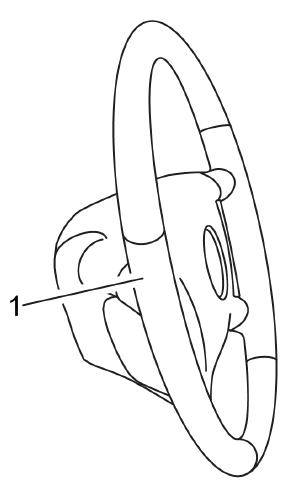
Fig. 3: Steering Wheel Rim Measurement Point
- The wood sections and the stitching are not heated. Temperature measurements should not be made on the face (1) to ensure accurate temperature readings. Measuring an unheated decorative surface may lead to an incorrect conclusion that the heated steering wheel is not reaching operating temperature.
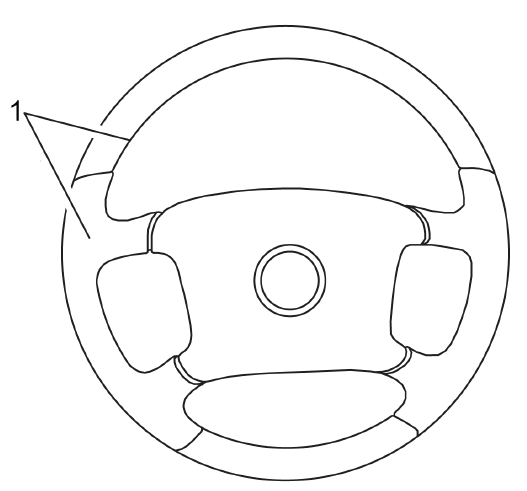
Fig. 4: Temperature Measurement Points
Reference Information
Schematic Reference
Steering Wheel Schematics
Connector End View Reference
COMPONENT CONNECTOR END VIEWS - INDEX
Description and Operation
Steering Wheel and Column Description and Operation
Electrical Information Reference
- Circuit Testing
- Connector Repairs
- Testing for Intermittent Conditions and Poor Connections
- Waterleak Test Preparation
Circuit/System Verification
Using an Infrared Temperature Gun
1. Engine running, all accessories OFF. This provides a stable electrical condition and reduces outside influence from other loads while the heated steering wheel is being checked.
2. Verify the steering wheel heater switch is OFF and the steering wheel heater indicator should not be illuminated. The steering wheel rim should not begin warming when the switch is off. If heat is present without a command, inspect for a stuck switch input, module fault, or wiring condition that is keeping the system active.
If the heater indicator is illuminated
Refer to Heated Steering Wheel Indicator Malfunction. If the indicator is on before the switch is commanded, the concern should be handled as an indicator or switch-control fault rather than a heating-performance concern.
If the heater indicator is not illuminated
3. Measure the temperature readings at the 3 and 9 o'clock positions on the steering wheel rim (1). These two points give a more accurate picture of the heated grip surface than measuring decorative trim, stitching, or the center face of the steering wheel.
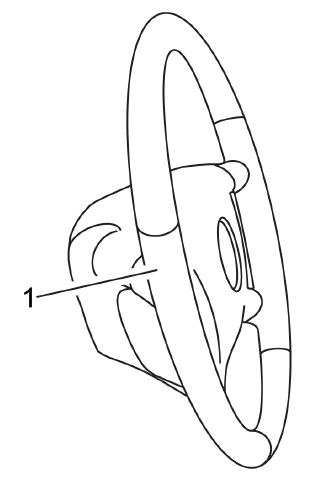
Fig. 5: Steering Wheel Rim Measurement Point
NOTE: The Infrared Temperature Gun should be within 50.8 mm (2 in) and parallel to the steering wheel rim when taking temperature readings.
4. Verify that the steering wheel temperature is 25ºC (77ºF) or below. Starting the test with the wheel cool enough helps confirm that any temperature rise is caused by the heated steering wheel system and not by cabin heat, sunlight, or recent operation.
If the steering wheel temperature is greater than 25ºC (77ºF)
Allow the steering wheel to cool before proceeding to the next step. Do not continue the heating-performance test until the rim temperature is within the required starting range.
If the steering wheel temperature is 25ºC (77ºF) or below
5. Press and release the steering wheel heater switch. The steering wheel heater indicator should illuminate. Allow the steering wheel to heat for a minimum of 10 min so that the temperature stabilizes. On a Buick Enclave, the rim may warm gradually, and a short check immediately after pressing the switch may not show the full operating temperature.
If the heater indicator does not illuminate
Refer to Heated Steering Wheel Indicator Malfunction. The system should not be judged for heating performance until the switch indicator concern is diagnosed.
If the heater indicator illuminates
6. Measure the temperature readings at the 3 and 9 o'clock positions on the steering wheel rim (1). Take both readings in the same manner as the initial measurement so the results can be compared accurately.
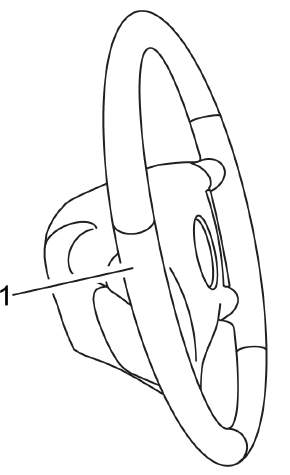
Fig. 6: Steering Wheel Rim Measurement Point
NOTE: The Infrared Temperature Gun should be within 50.8 mm (2 in) and parallel to the steering wheel rim when taking temperature readings.
7. Verify that the steering wheel temperature is greater than 28ºC (82.4ºF) within 20 min. This check allows enough time for the heating elements and the rim material to stabilize under normal operating conditions.
If after 20 minutes the measured temperature is less than 28ºC (82.4ºF)
Refer to Circuit/System Testing. A low temperature after the required warm-up time may indicate a circuit fault, heating module concern, internal steering wheel heater issue, temperature sensor problem, or poor connector condition.
If after 20 minutes the measured temperature is 28ºC (82.4ºF) or greater
8. All OK. If the temperature rises within the specified time and the indicator operates normally, the heated steering wheel system is functioning as designed at the time of inspection.
Circuit/System Testing
1. Ignition OFF, disconnect the X5 in-line harness connector at the K32 Heated Steering Wheel Control Module. Inspect the connector for loose terminals, corrosion, moisture, damage, or signs of overheating before performing electrical checks.
2. Test for less than 10 ohms between the ground terminal 2 and ground. A good ground path is required for the K32 module to operate the heated steering wheel and control the system correctly.
If 10 ohms or greater
- Ignition OFF. Keep the circuit powered down while measuring resistance so the test result is reliable.
- Test for less than 2 ohms in the ground circuit end to end.
- If 2 ohms or greater, repair the open/high resistance in the circuit.
- If less than 2 ohms, repair the open/high resistance in the ground connection.
If less than 10 ohms
3. Ignition ON. Restore ignition power so the feed circuit can be checked under operating conditions.
4. Verify a test lamp illuminates between the B+ terminal 1 and ground. The test lamp should light clearly, confirming that the module has the required voltage feed.
If the test lamp does not illuminate and the circuit fuse is good
- Ignition OFF, remove the test lamp. This prevents accidental shorting while the ignition circuit is checked end to end.
- Test for less than 2 ohms in the ignition circuit end to end.
- If less than 2 ohms, verify the fuse is OK and there is voltage at the fuse. Refer to Power Mode Mismatch.
- If 2 ohms or greater
- Verify the in-line fuse is OK and there is voltage at the fuse.
- If the in-line fuse is blown, replace the K32 Steering Wheel Heating Control Module.
- If the in-line fuse is OK, repair the open/high resistance in the circuit.
If the fuse is good but voltage does not reach the module, inspect the circuit for a damaged connector, poor terminal tension, repaired wiring, or a high-resistance point that may only fail under load.
If the test lamp does not illuminate and the circuit fuse is open
- Ignition OFF, remove the test lamp. Do not install a replacement fuse until the circuit has been checked for a short to ground.
- Test for infinite resistance between the ignition circuit and ground.
- If less than infinite resistance, repair the short to ground on the circuit.
- If infinite resistance, replace the K32 Steering Wheel Heating Control Module.
A fuse that opens again after replacement usually indicates a shorted circuit or an internal module fault. The cause must be corrected before the heated steering wheel system is returned to service.
If the test lamp illuminates
5. Ignition OFF, reconnect the in-line harness connector X5. Disconnect the harness connector at the S70L Steering Wheel Controls Switch - Left. This keeps the heating control module connected while allowing the left switch assembly signal and ground circuits to be tested separately.
6. Test for less than 10 ohms between the ground circuit terminal 8 and ground. This confirms that the switch assembly has a proper ground path for switch and indicator operation.
If 10 ohms or greater
- Ignition OFF. Keep the circuit de-energized during resistance testing.
- Test for less than 2 ohms in the ground circuit end to end.
- If 2 ohms or greater, repair the open/high resistance in the circuit.
- If less than 2 ohms, repair the open/high resistance in the ground connection.
If less than 10 ohms
7. Ignition ON. With the ground circuit verified, check the switch signal voltage under normal powered conditions.
8. Test for 4.5-5.5 V between the signal circuit terminal 2 and ground. This voltage range indicates that the K32 module is supplying the expected signal reference to the switch circuit.
If less than 4.5 V
- Ignition OFF, disconnect the in-line connector at the S70L Steering Wheel Controls Switch - Left.
- Test for infinite resistance between the signal circuit and ground.
- If less than infinite resistance, repair the short to ground on the circuit.
- If infinite resistance
- Test for less than 2 ohms in the signal circuit end to end.
- If 2 ohms or greater, repair the open/high resistance in the circuit.
- If less than 2 ohms, replace the K32 Steering Wheel Heating Control Module.
A low signal voltage can be caused by a short to ground, an open or high-resistance signal circuit, or a control module that cannot provide the correct signal voltage. On the Buick Enclave heated steering wheel system, this signal must be correct before switch operation can be judged accurately.
If 5.5 V or greater
- Ignition OFF, disconnect the in-line connector at the S70L Steering Wheel Controls Switch - Left.
- Test for less than 1 V between the signal circuit and ground.
- If 1 V or greater, repair the short to voltage on the circuit.
- If less than 1 V, replace the K32 Steering Wheel Heating Control Module.
A signal voltage above the expected range can indicate that the circuit is being pulled up by an unintended voltage source or that the module is not regulating the circuit correctly. Repair the circuit fault first if voltage remains present with the connector separated.
If within 4.5-5.5 V
9. Place the S70L Steering Wheel Controls Switch - Left in the OFF position. Make sure the switch is fully released and not partially depressed before checking resistance.
10. Test for infinite resistance between terminal 2 and terminal 8 at the S70L Steering Wheel Controls Switch - Left. With the switch OFF, the circuit should remain open and should not show continuity between the signal and ground terminals.
If less than infinite resistance
Replace the S70L Steering Wheel Controls Switch - Left. A resistance reading in the OFF position indicates that the switch may be internally shorted or not returning correctly.
If infinite resistance
11. Place the S70L Steering Wheel Controls Switch - Left in the ON position. Hold the switch in the commanded position long enough to get a stable meter reading.
12. Test for less than 2 ohms between terminal 2 and terminal 8. In the ON position, the switch should close the circuit with very low resistance so the K32 module can recognize the heated steering wheel request.
If 2 ohms or greater
Replace the S70L Steering Wheel Controls Switch - Left. High resistance in the ON position can prevent the heating module from seeing a clean switch command.
If less than 2 ohms
13. Ignition OFF, disconnect the in-line harness connector at the E15 Steering Wheel Heater. Inspect the connector for spread terminals, corrosion, moisture, overheating, or any sign that the harness has been strained inside the steering wheel area.
14. Test for less than 10 ohms between the ground circuit listed below and ground. A clean ground path is required for the steering wheel heater and temperature sensor circuits to operate correctly.
Terminal A at the K32 Steering Wheel Heating Control Module
Terminal D at the K32 Steering Wheel Heating Control Module
If 10 ohms or greater
Repair the open/high resistance in the circuit. A poor ground can cause weak heating, no heating, inaccurate temperature feedback, or intermittent heated steering wheel operation.
If less than 10 ohms
15. Test for 1.5-3.0 ohms between the control circuit terminal B and the ground circuit terminal A at the E15 Steering Wheel Heater. This resistance range checks the heating element circuit inside the steering wheel.
If not within the specified range
Replace the E15 Steering Wheel Heater. A reading outside the range may indicate an open heating element, excessive resistance, or an internal short in the heated wheel circuit.
If within the specified range
16. Test for 5024-104280 ohms between the signal circuit terminal C and the ground circuit terminal D at the E15 Steering Wheel Heater. This checks the temperature sensor circuit used by the module to monitor and limit steering wheel temperature.
If not within the specified range
Replace the E15 Steering Wheel Heater. A sensor resistance outside the specified range can prevent the module from controlling heat correctly.
If within the specified range
17. Replace the K32 Steering Wheel Heat Control Module. If the switch, ground, heater element, and temperature sensor circuits test within specification, the control module is the remaining likely source of the heated steering wheel malfunction on the Buick Enclave.
Repair Instructions
Perform the Diagnostic Repair Verification after completing the repair. Confirm that the indicator responds to the switch, the wheel begins warming at the correct rim areas, and the system shuts off as commanded.
- Steering Wheel Control Switch Assembly Replacement (Traverse) and Steering Wheel Control Switch Assembly Replacement (Acadia/Enclave)
- Steering Wheel Replacement
- Control Module References for heated steering wheel control module replacement, programming and setup.
STEERING COLUMN TILT/TELESCOPING MALFUNCTION
Diagnostic Instructions
- Perform the Diagnostic System Check - Vehicle prior to using this diagnostic procedure. This confirms that module communication, power mode, voltage supply, and related vehicle systems are functioning before focusing on the steering column.
- Review Strategy Based Diagnosis for an overview of the diagnostic approach. This helps separate switch input faults, actuator problems, sensor feedback faults, and memory seat module concerns.
- Diagnostic Procedure Instructions provides an overview of each diagnostic category. Follow the diagnostic path in order so wiring issues or intermittent connections are not missed.
Circuit Description
The memory seat module (MSM) receives voltage inputs from the tilt/telescope switch based on the position selected by the driver. The MSM then supplies battery voltage and ground to the tilt or telescope motor control circuits, depending on which direction of movement is requested.
The MSM determines the steering column position from the telescope position sensor built into the telescoping actuator. The module supplies a 5-volt reference and a low reference to the sensor, then monitors the steering column telescope sensor signal circuit to track column position. On a Buick Enclave equipped with a power tilt and telescoping column, this feedback is important for both manual movement and memory recall operation.
If the MSM receives the switch command but does not see the expected position change, the fault may be in the switch input, motor control circuit, actuator, sensor feedback circuit, or mechanical column movement. Diagnosis should confirm both the electrical command and the actual physical movement of the steering column.
Reference Information
Schematic Reference
Tilt/Telescoping Steering Column Schematics
Connector End View Reference
COMPONENT CONNECTOR END VIEWS - INDEX
Description and Operation
Steering Wheel and Column Description and Operation
Electrical Information Reference
- Circuit Testing
- Connector Repairs
- Testing for Intermittent Conditions and Poor Connections
- Wiring Repairs
Scan Tool Reference
Control Module References for scan tool information
Circuit/System Verification
1. Ignition ON, observe the scan tool Tilt Up Switch, Tilt Down Switch, Telescope Forward Switch and Telescope Rearward Switch parameters while cycling the tilt/telescope switch between the TILT UP, TILT DOWN, TELESCOPE IN and TELESCOPE OUT positions. The parameters should cycle between Inactive and Active. Each switch direction should be checked separately because one direction may fail while the remaining directions still respond normally.
- If any of the parameters do not cycle between the specified values, refer to Circuit/System Testing - Tilt/Telescope Switch Circuit Malfunction.
2. Observe the scan tool Tilt Sensor and Telescope Sensor parameter. The readings should be between 0.2 and 4.8 volts. A reading outside this range suggests that a sensor signal may be shorted, open, out of range, or not being interpreted correctly by the MSM.
- If not within the specified range, refer to Circuit/System Testing - Tilt/Telescope Sensor Circuit Malfunction.
3. Command the column to tilt up and down and telescope in and out using the tilt/telescope switch. The column should move in the commanded direction. Movement should be smooth and consistent, without binding, hesitation, clicking, or stopping before reaching the requested position.
- If the column does not operate as specified, refer to Circuit/System Testing - Tilt/Telescope Actuator Circuit Malfunction.
When verifying this system, compare what the scan tool reports with what the column actually does. If the switch parameters change but the column does not move, focus on the actuator and motor control circuits. If the column moves but the sensor readings do not change correctly, focus on the position sensor feedback circuits.
Circuit/System Testing
Tilt/Telescope Switch Circuit Malfunction
1. Ignition OFF, disconnect the harness connector at the tilt/telescope switch. Inspect the connector before testing for bent pins, backed-out terminals, loose terminal fit, corrosion, moisture, or harness damage around the steering column trim.
2. Ignition ON, verify a test lamp illuminates between the B+ circuit terminal 1 and ground. This confirms that the tilt/telescope switch has the required battery voltage feed for command input operation.
- If the test lamp does not illuminate, test the B+ circuit for a short to ground or an open/high resistance. Repair the power feed circuit before replacing the switch or MSM.
3. Verify the scan tool tilt switch and telescope switch parameters are Inactive. With the switch disconnected, the MSM should not detect an active tilt or telescope command.
- If not the specified value, test the signal circuit listed below for a short to voltage. If the circuit tests normal, replace the MSM.
- Tilt Up Switch terminal 2
- Tilt Down Switch terminal 6
- Telescope Forward Switch terminal 3
- Telescope Rearward Switch terminal 5
If any parameter remains Active while the switch is disconnected, the concern is not caused by the switch contacts. Check the related signal circuit for unwanted voltage, damaged wiring, or a module input fault before replacing components on the Buick Enclave steering column system.
4. Install a 3A fused jumper wire between the signal circuit listed below and the B+ circuit terminal 1. Use the fused jumper only as directed so the circuit is protected during the command simulation.
Verify the scan tool tilt switch and telescope switch parameters are Active. When the jumper is applied, the MSM should recognize the circuit as a valid switch request. If the scan tool value does not change, the signal circuit may be open, shorted to ground, or affected by high resistance.
- Tilt Up Switch terminal 2
- Tilt Down Switch terminal 6
- Telescope Forward Switch terminal 3
- Telescope Rearward Switch terminal 5
- If not the specified value, test the appropriate signal circuit for a short to ground or an open/high resistance. If the circuit tests normal, replace the MSM.
5. If all circuits test normal, test or replace the tilt/telescope switch. A switch that has worn contacts, internal sticking, liquid contamination, or poor return action can fail even when the wiring and module inputs test correctly.
Tilt/Telescope Sensor Circuit Malfunction
1. Ignition OFF, disconnect the harness connector at the steering wheel tilt/telescope position sensor. Before testing, inspect the connector for spread terminals, corrosion, moisture, poor terminal tension, or wiring that has been strained by steering column movement.
2. Ignition OFF, test for less than 2.0 ohms between the low reference circuit terminal B and ground. A low resistance reading confirms that the sensor has a clean low reference path back through the circuit.
- If greater than the specified range, test the low reference circuit for an open/high resistance. If the circuit tests normal, replace the MSM.
3. Ignition ON, test for 4.8-5.2 volts between the 5-volt reference circuit terminal C and ground. This voltage is supplied by the memory seat module and is needed for the position sensor to report tilt or telescope movement accurately.
- If less than the specified range, test the 5-volt reference circuit for a short to ground or an open/high resistance. If the circuit tests normal, replace the MSM.
- If greater than the specified range, test the 5-volt reference circuit for a short to voltage. If the circuit tests normal, replace the MSM.
4. Verify the scan tool tilt sensor and telescope sensor parameter is less than 0.2 volts. With the sensor disconnected, the signal should read low. A higher value may indicate unwanted voltage on the sensor signal circuit or an internal module concern.
- If greater than the specified range, test the signal circuit listed below for a short to voltage. If the circuit tests normal, replace the MSM.
- Tilt Sensor terminal A
- Telescope Sensor terminal D
5. Install a 3A fused jumper wire between the signal circuit listed below and the 5-volt reference circuit terminal C. Verify the scan tool tilt sensor and telescope sensor parameter is greater than 4.8 volts. This test raises the signal circuit to a known high value so the MSM response can be verified without relying on the sensor itself.
- Tilt Sensor terminal A
- Telescope Sensor terminal D
- If less than the specified range, test the appropriate signal circuit for a short to ground or an open/high resistance. If the circuit tests normal, replace the MSM.
6. If all circuits test normal, replace the steering column. On the Buick Enclave, the tilt and telescope position sensors are part of the steering column actuator assembly, so a confirmed internal sensor fault is repaired by replacing the column assembly rather than servicing the sensor separately.
Tilt/Telescope Actuator Circuit Malfunction
1. Ignition OFF, disconnect the harness connector at the tilt/telescope actuator. Inspect the connector and nearby wiring for loose terminals, damaged locks, pinched insulation, or any sign that the harness has been rubbing against the column structure.
2. Install a test lamp between the control circuit terminals listed below of the tilt/telescope motor. The lamp is used to confirm that the MSM can supply the required power and ground path across the motor control circuits when movement is requested.
- Tilt Up/Tilt Down terminals 1 and 2
- Telescope Forward/Telescope Rearward terminals 1 and 2
3. Command the column to tilt up and down or telescope in and out using the tilt/telescope switch. The test lamp should illuminate with each command. The lamp should respond only during the commanded movement and should turn off when the switch is released.
- If the test lamp does not illuminate, test the appropriate tilt/telescope control circuits for a short to ground or an open/high resistance. If the circuits test normal, replace the MSM.
4. If all circuits test normal, replace the steering column. If the module output and circuits are working but the column does not move, the actuator motor or internal mechanical column assembly is the likely cause of the concern.
Repair Instructions
Perform the Diagnostic Repair Verification after completing the diagnostic procedure. Confirm that the tilt and telescope functions operate in all directions, that scan tool parameters change correctly, and that no related DTC returns after the repair.
- Steering Column Replacement
- Steering Column Tilt Wheel and Telescope Switch Replacement
- Control Module References for MSM replacement, setup and programming
STEERING COLUMN TILT FUNCTION INOPERATIVE
Steering Column Tilt Function Inoperative
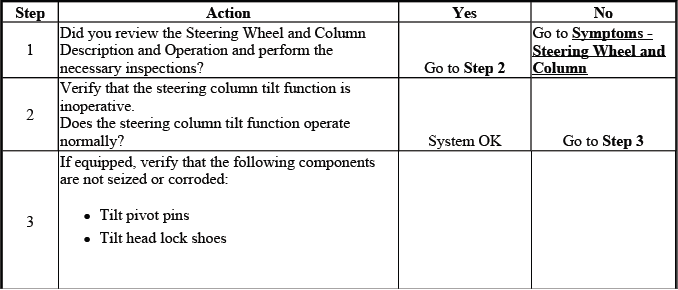
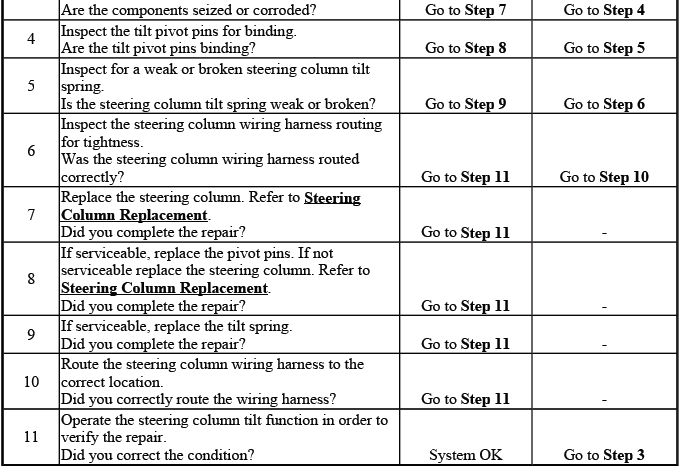
When the steering column tilt function is inoperative, verify both the electrical command and the physical movement of the column. A failed switch input, faulty MSM command, actuator circuit issue, position sensor fault, or mechanical binding in the column can all create a similar complaint. Check for trim interference, damaged column covers, restricted wiring, and any signs that the column has been forced beyond its normal travel.
NOISE IN STEERING COLUMN
Noise in Steering Column
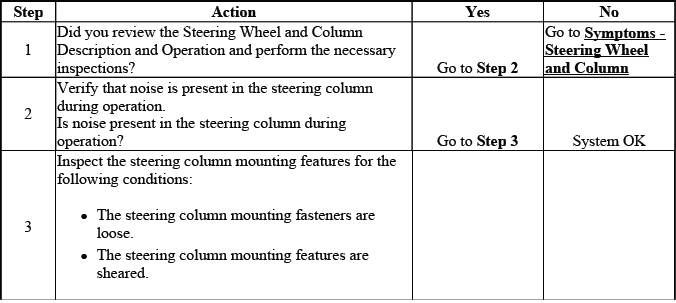
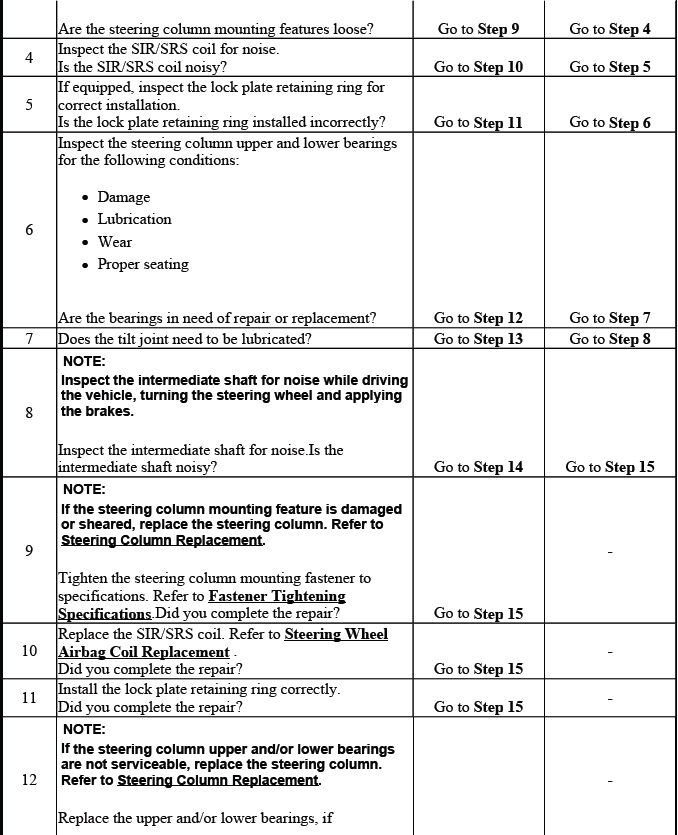
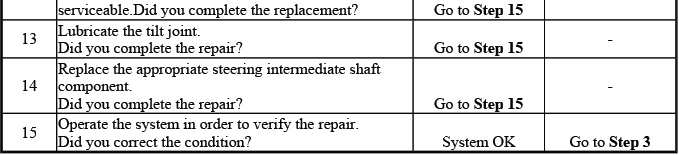
Noise in the steering column should be verified under the same conditions described by the driver. Turn the wheel slowly, move the tilt and telescope functions if equipped, and check for contact between trim panels, wiring, column covers, intermediate shaft components, and mounting hardware. A click, scrape, pop, or rattle may come from a loose fastener, dry contact point, damaged trim, worn column component, or a harness that is moving against the column during steering input.
HIGH SHIFT EFFORT
High Shift Effort
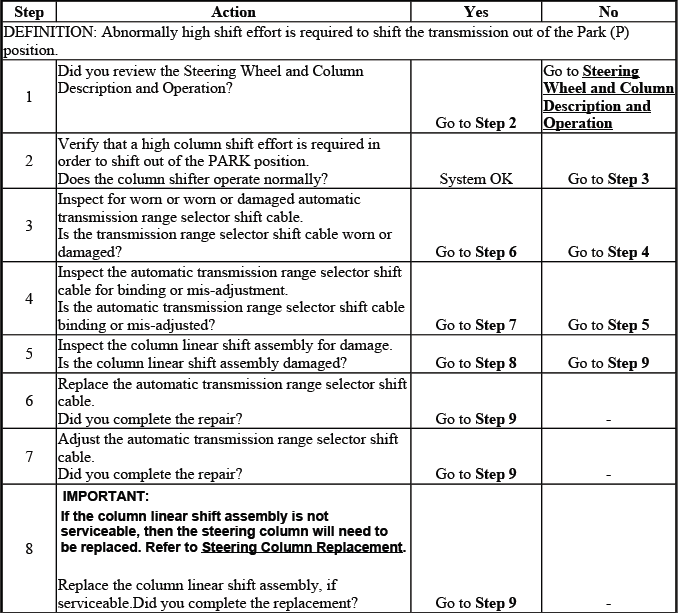

High shift effort may be related to steering column alignment, shift cable routing, column-mounted components, ignition lock interaction, or binding in the shift mechanism. Before replacing parts, inspect the visible linkage and column area for misrouting, damaged retainers, tight bends, poor adjustment, or interference from trim or aftermarket equipment.
LOOSENESS IN STEERING COLUMN
Looseness in Steering Column
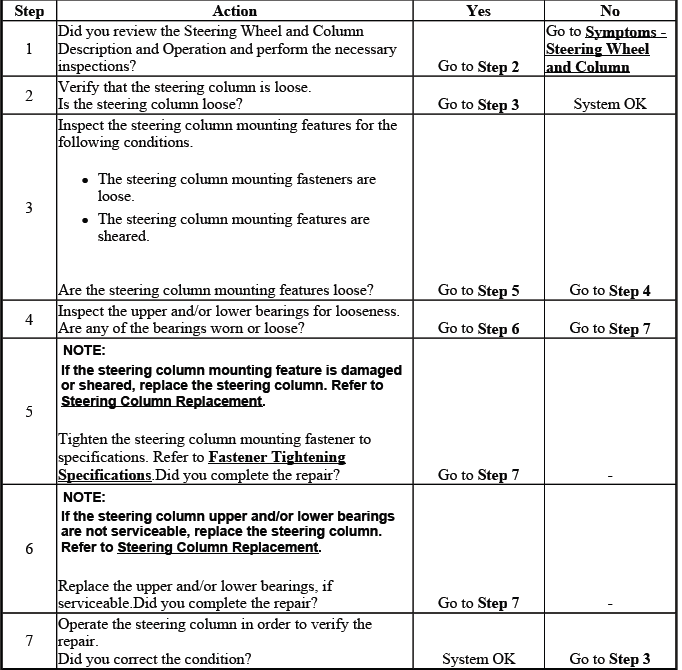
Looseness in the steering column should be checked with the vehicle stationary and the steering wheel held in several positions. Inspect the column mounting points, tilt mechanism, telescoping mechanism, intermediate shaft connection, steering wheel attachment, and related brackets. On a Buick Enclave, any looseness in the steering column area should be corrected before the vehicle is driven because movement in the column can affect steering feel, driver confidence, and noise complaints.
