Buick Enclave: Specifications, Diagnostic Information and Procedures
SPECIFICATIONS
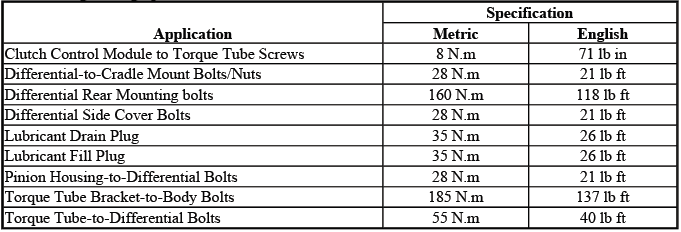
FASTENER TIGHTENING SPECIFICATIONS
Fastener Tightening Specifications
Fastener tightening specifications for the rear drive axle must be followed exactly during service. The rear axle assembly carries driveline load, reacts to torque changes, and supports several precision-mounted components, so incorrect fastener torque can lead to noise, movement, leaks, vibration, or premature component wear. Always use the specified values and tighten the hardware evenly where a bracket, carrier, or module is being secured.
DIFFERENTIAL CARRIER ASSEMBLY SPECIFICATIONS
Differential Carrier Assembly Specifications
The differential carrier assembly specifications provide the reference values needed when inspecting, replacing, or verifying the rear axle carrier. These specifications help confirm that the differential assembly is installed correctly and that the related components remain within the required service limits. On the Buick Enclave, accurate carrier service is important because the rear axle works together with the AWD system and must engage smoothly without harshness or abnormal noise.

ADHESIVES, FLUIDS, LUBRICANTS AND SEALERS
Adhesives, Fluids, Lubricants and Sealers
Use the approved adhesives, fluids, lubricants, and sealers listed for the rear drive axle system. Correct fluid and sealing materials protect bearings, gears, clutch components, seals, and machined surfaces from wear or leakage. Substituting the wrong lubricant or sealer can affect clutch operation, temperature control, sealing quality, and long-term axle durability.

SCHEMATIC WIRING DIAGRAMS
REAR AXLE WIRING SCHEMATICS
MH6
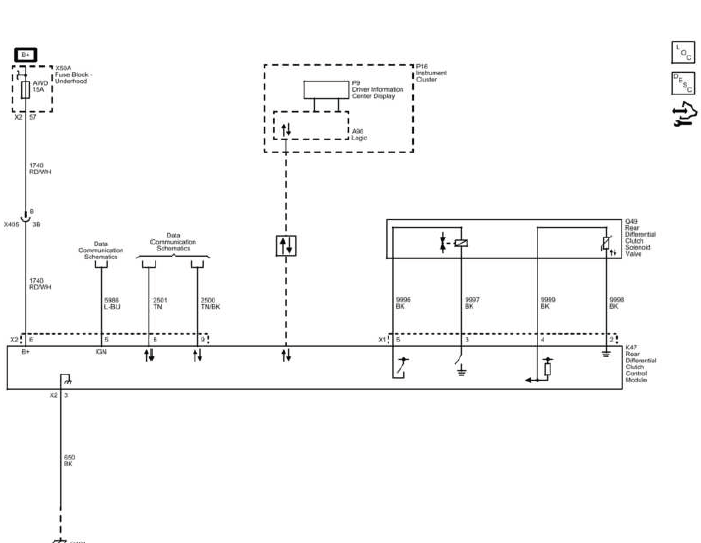
Fig. 1: MH6 Wiring Schematics
The rear axle wiring schematic should be used when tracing control, power, ground, and signal circuits for the rear differential clutch control system. A wiring concern can create the same customer complaint as a failed mechanical component, so the circuit layout should be checked before replacing major axle parts.
DIAGNOSTIC INFORMATION AND PROCEDURES
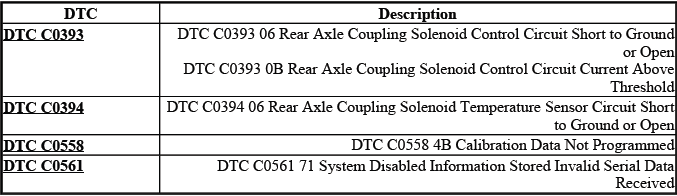
DIAGNOSTIC CODE INDEX
DTC C0393: REAR AXLE COUPLING SOLENOID
Diagnostic Instructions
- Perform the Diagnostic System Check - Vehicle before using this diagnostic procedure. This confirms that the vehicle-level scan and module communication checks have already been completed.
- Review Strategy Based Diagnosis for an overview of the diagnostic approach. This helps separate a wiring fault, module concern, or rear axle clutch assembly problem before parts are replaced.
- Diagnostic Procedure Instructions provides an overview of each diagnostic category and should be used as the guide for test order, circuit checks, and repair verification.
DTC Descriptors
DTC C0393 06
- Rear Axle Coupling Solenoid Control Circuit Short to Ground or Open
DTC C0393 0B
- Rear Axle Coupling Solenoid Control Circuit Current Above Threshold
Diagnostic Fault Information

Circuit/System Description
The rear differential clutch control module (CCM) provides power and ground switching circuits to the rear axle coupling solenoid. The solenoid receives current from the CCM through a PWM low-side driver. That electrical command is converted into clutch torque, allowing torque to be transferred to the rear tires when all wheel drive operation is requested.
In simple terms, the CCM decides when rear drive assistance is needed and controls the solenoid to manage clutch engagement. If the control circuit is open, shorted to ground, shorted to voltage, or drawing current outside the expected range, the module may disable AWD operation to protect the system and prevent unpredictable rear axle engagement.
Conditions for Running the DTC
Ignition ON. The module must be powered and able to monitor the rear axle coupling solenoid control circuits before the diagnostic can run.
Conditions for Setting the DTC
C0393 06
- An open is detected on the high or low solenoid circuits.
- A short to ground is detected on the high or low solenoid circuit.
C0393 0B
A short to voltage is detected on the high or low solenoid circuit. This means the circuit is seeing voltage where the module does not expect it, which can cause the current level to rise beyond the normal operating threshold.
Action Taken When the DTC Sets
One or more of the following actions may occur:
- All Wheel Drive Off (AWD Disabled), DIC message
- Service All Wheel Drive (Service AWD), DIC message
When this DTC sets on the Buick Enclave, the driver may notice that AWD assistance is reduced or unavailable. The vehicle may continue to drive normally in many conditions, but the rear drive function may be disabled until the electrical or solenoid fault is corrected.
Conditions for Clearing the DTC
- The condition for the DTC is no longer present.
- The DTC is not detected in 40 consecutive drive cycles.
Reference Information
Schematic Reference
Rear Axle Schematics
Connector End View Reference
COMPONENT CONNECTOR END VIEWS - INDEX
Description and Operation
Rear Drive Axle Description and Operation
Electrical Information Reference
- Circuit Testing
- Connector Repairs
- Testing for Intermittent Conditions and Poor Connections
- Wiring Repairs
Scan Tool Reference
Control Module References for scan tool information
Use these references when checking connector pin locations, circuit routing, module information, and scan tool data. Intermittent rear axle faults are often caused by poor terminal contact, moisture intrusion, damaged wiring near the underbody, or connector tension, so the electrical references are just as important as the component replacement procedure.
Circuit/System Testing
1. Ignition OFF, disconnect the X1 harness connector at the rear differential clutch control module. Disconnecting the module isolates the circuit so the control wires can be tested without module influence.
2. Ignition ON, verify a test lamp does not illuminate between the control circuit terminals listed below and ground:
- terminal 5
- terminal 3
- If the test lamp illuminates, test the appropriate control circuit for a short to voltage. A lamp that lights during this check means the circuit is receiving voltage when it should not.
3. Ignition OFF, test for infinite resistance between the control circuit terminals listed below and ground:
- terminal 5
- terminal 3
- If less than the specified value, test the appropriate control circuit for a short to ground. Any measurable path to ground can prevent proper solenoid control.
4. Test for less than 5 ohms between the control circuit terminal 5 and control circuit terminal 3.
- If greater than 5 ohms, test both control circuits for an open/high resistance and repair as necessary. High resistance can reduce current flow and make the solenoid respond incorrectly.
- If 5 ohms or less, replace the differential clutch drum assembly. This result points away from an open circuit and toward an internal solenoid or clutch drum assembly concern.
5. With a scan tool, clear DTCs and retest vehicle.
- If the DTC returns, replace the K47 Rear Differential Clutch Control Module.
- If the DTC does not return, all OK.
After testing, make sure the harness connector is fully seated and that the wiring is routed away from sharp edges, exhaust heat, moving driveline parts, or areas where water and road debris can collect.
Repair Instructions
Perform the Diagnostic Repair Verification after completing the diagnostic procedure. The repair should not be considered complete until the DTC is cleared, the system is retested, and the rear axle control module no longer detects the fault.
- Differential Clutch Drum Assembly Replacement
- Control Module References for CCM replacement, setup and programming
DTC C0394: REAR AXLE COUPLING SOLENOID TEMPERATURE SENSOR
Diagnostic Instructions
- Perform the Diagnostic System Check - Vehicle before using this diagnostic procedure.
- Review Strategy Based Diagnosis for an overview of the diagnostic approach.
- Diagnostic Procedure Instructions provides an overview of each diagnostic category.
DTC Descriptor
DTC C0394 06
- Rear Axle Coupling Solenoid Temperature Sensor Circuit Short to Ground or Open
Diagnostic Fault Information

Circuit/System Description
The rear differential clutch control module (CCM) provides power and ground circuits to the temperature sensor. The sensor allows the module to monitor thermal conditions in the rear axle coupling area. When the module determines that temperature has moved beyond its allowable limits, the CCM may temporarily disable the rear drive system to protect the clutch components and related electronics.
For the Buick Enclave rear drive axle system, this temperature input is important because AWD operation can generate heat during clutch engagement, especially under repeated low-traction events or heavy load. If the temperature sensor circuit is open, shorted to ground, or unable to report accurately, the CCM may lose the information it needs to protect the rear drive system and may set DTC C0394.
Conditions for Running the DTC
The ignition is ON. The rear differential clutch control module must be powered before it can monitor the temperature sensor circuit and decide whether the signal is within the expected range.
Conditions for Setting the DTC
An open circuit or a short to ground is detected on the temperature sensor circuits. When this happens, the module can no longer rely on the temperature input from the rear axle coupling area, so it treats the signal as invalid and stores the fault.
Action Taken When the DTC Sets
One or more of the following actions may occur:
- All Wheel Drive Off (AWD Disabled), DIC message
- Service All Wheel Drive (Service AWD), DIC message
When this code is active on the Buick Enclave, the AWD system may be limited or disabled to protect the rear drive components from operating without reliable temperature feedback.
Conditions for Clearing the DTC
- The condition for the DTC is no longer present.
- The DTC is not detected in 40 consecutive drive cycles.
Reference Information
Schematic Reference
Rear Axle Schematics
Connector End View Reference
COMPONENT CONNECTOR END VIEWS - INDEX
Description and Operation
Rear Drive Axle Description and Operation
Electrical Information Reference
- Circuit Testing
- Connector Repairs
- Testing for Intermittent Conditions and Poor Connections
- Wiring Repairs
Scan Tool Reference
Control Module References for scan tool information
Use the reference information to confirm connector locations, circuit routing, terminal identification, and module service requirements before replacing parts. A poor connection, damaged terminal, rubbed wire, or moisture in the connector can create the same fault behavior as a failed temperature sensor circuit inside the clutch assembly.
Circuit/System Testing
1. Ignition OFF, disconnect the X1 harness connector at the rear differential clutch control module. This separates the module from the circuit so the signal and low reference paths can be checked without module influence.
2. Ignition ON, verify a test lamp does not illuminate between the signal circuit terminal 2 and ground:
- If the test lamp illuminates, test the signal circuit for a short to voltage. A lamp that lights during this check means voltage is present where the sensor signal circuit should not be powered in that manner.
3. Ignition OFF, test for infinite resistance between the signal circuit terminal 2 and ground:
- If less than the specified value, test the signal circuit for a short to ground. If the circuit tests normal, replace the clutch assembly. A ground path on this circuit can pull the sensor signal low and make the module interpret the temperature reading as invalid.
4. Test for 310-113K ohms between the signal circuit terminal 2 and the low reference circuit terminal 4.
- If less than the specified range, test both circuits for a short together. If the circuits test normal, replace the differential clutch drum assembly.
- If greater than the specified range, test both circuits for an open/high resistance. If the circuits test normal, replace the differential clutch drum assembly.
This resistance check helps separate a wiring concern from an internal sensor or clutch drum assembly problem. On the Buick Enclave rear axle system, the temperature sensor reading must stay within a believable range so the CCM can protect the coupling during AWD operation.
5. If all circuits test normal, replace the rear differential clutch control module. When the wiring and clutch drum assembly test correctly but the fault remains, the module may no longer be interpreting the sensor circuit properly.
Repair Instructions
Perform the Diagnostic Repair Verification after completing the diagnostic procedure. The repair should be confirmed with a scan tool, a DTC clear, and a retest to make sure the fault does not return under the proper enabling conditions.
- Differential Clutch Drum Assembly Replacement
- Control Module References for rear differential clutch control module replacement, setup and programming
DTC C0558: CALIBRATION DATA NOT PROGRAMMED
Diagnostic Instructions
- Perform the Diagnostic System Check - Vehicle prior to using this diagnostic procedure. This confirms that the main vehicle systems and module communication are suitable for diagnosis.
- Review Strategy Based Diagnosis for an overview of the diagnostic approach. This code is related to programming and calibration data, so the diagnostic path is different from a basic wiring failure.
- Diagnostic Procedure Instructions provides an overview of each diagnostic category and helps ensure that verification, programming, and repair confirmation are performed in the correct order.
DTC Descriptor
DTC C0558 4B
- Calibration Data Not Programmed
Circuit/System Description
The rear differential clutch control module (CCM) must have the correct calibration data, including the matching ID, stored in memory from the AWD coupling control. This calibration is part of the programming that allows the module to perform all wheel drive functions correctly.
In practical terms, the CCM needs to know the correct software and identification information for the rear drive system it is controlling. If the calibration is missing, incomplete, or does not match the required data, the module may not allow normal AWD operation.
Conditions for Running the DTC
Ignition voltage is greater than 9 volts. The module needs adequate system voltage before it can verify whether its calibration data is present and valid.
Conditions for Setting the DTC
The calibration data, including the matching ID of the CCM, is not programmed or is incorrectly programmed. This can occur after module replacement, incorrect setup, failed programming, or a programming event that did not complete properly.
Action Taken When the DTC Sets
One or more of the following actions may occur:
- All Wheel Drive Off (AWD Disabled), DIC message
- Service All Wheel Drive (Service AWD), DIC message
On the Buick Enclave, this code does not necessarily mean the rear axle hardware has failed. It often points to a setup, calibration, or module programming issue that must be corrected before the AWD system can operate normally.
Conditions for Clearing the DTC
- The condition for the DTC is no longer present.
- The DTC is not detected in 40 consecutive drive cycles.
Reference Information
Schematic Reference
Rear Axle Schematics
Connector End View Reference
COMPONENT CONNECTOR END VIEWS - INDEX
Description and Operation
Rear Drive Axle Description and Operation
Electrical Information Reference
- Circuit Testing
- Connector Repairs
- Testing for Intermittent Conditions and Poor Connections
- Wiring Repairs
Scan Tool Reference
Control Module References for scan tool information
Circuit/System Verification
Verify that DTC C0558 is not set. The module should contain the correct calibration and matching ID before further rear axle diagnosis is performed.
- If the DTC is set, calibrate the CCM. If the DTC resets, replace the CCM. A code that returns after calibration usually indicates that the module cannot store or use the required programming data correctly.
Repair Instructions
Perform the Diagnostic Repair Verification after completing the diagnostic procedure. After programming or replacement, confirm that the CCM communicates correctly, that no calibration-related code returns, and that the AWD messages are no longer displayed.
Control Module References for CCM replacement, setup and programming
DTC C0561: SYSTEM DISABLED INFORMATION STORED INVALID SERIAL DATA RECEIVED
Diagnostic Instructions
- Perform the Diagnostic System Check - Vehicle prior to using this diagnostic procedure. Since this DTC involves serial data, the communication network and related modules should be checked before focusing only on the rear differential clutch control module.
- Review Strategy Based Diagnosis for an overview of the diagnostic approach. This helps determine whether the fault is caused by a message problem, another module, or a rear drive system response to invalid information.
- Diagnostic Procedure Instructions provides an overview of each diagnostic category and should be used to guide the order of scan tool checks, module communication tests, and verification steps.
DTC Descriptor
DTC C0561 71
- System Disabled Information Stored Invalid Serial Data Received
Circuit/System Description
The rear differential clutch control module (CCM) receives serial data messages from other modules that are needed to perform all wheel drive functions. These messages may include vehicle operating information used to decide when rear drive assistance should be enabled, limited, or disabled.
The CCM does not operate the rear drive axle in isolation. It depends on valid information from other control modules, such as the ECM or EBCM. If that information is missing, incorrect, or not believable, the CCM may disable AWD operation to prevent improper clutch engagement.
Conditions for Running the DTC
Ignition voltage is greater than 9.5 volts. The communication network and related modules must be powered well enough for the CCM to monitor incoming serial data.
Conditions for Setting the DTC
The CCM receives an invalid message from the ECM or EBCM over serial data, which causes the CCM to deactivate. The module stores the information because the rear drive system cannot make reliable AWD decisions when the required data is not valid.
Action Taken When the DTC Sets
One or more of the following actions may occur:
- All Wheel Drive Off (AWD Disabled), DIC message.
- Service All Wheel Drive (Service AWD), DIC message.
For a Buick Enclave with DTC C0561, the rear axle control module may be reacting to information coming from another system rather than reporting a direct rear axle mechanical failure. This is why network, ECM, EBCM, and related DTCs should be reviewed before replacing rear drive axle components.
Conditions for Clearing the DTC
- The condition for the DTC is no longer present.
- The DTC is not detected in 40 consecutive drive cycles.
Diagnostic Aids
DTC C0561 should be treated as a communication-related symptom, not as direct proof that the rear differential clutch control module has failed. This code indicates that the CCM received invalid serial data from the ECM or EBCM, and the AWD system was disabled because the information needed for rear drive control could not be trusted.
On the Buick Enclave, this type of code often points the diagnosis toward another control module, a network message concern, or a related system fault rather than the rear axle hardware itself. Before replacing the CCM, check for ECM, EBCM, ABS, traction control, or communication DTCs that may explain why the CCM received invalid data.
Reference Information
Schematic Reference
Rear Axle Schematics
Connector End View Reference
COMPONENT CONNECTOR END VIEWS - INDEX
Description and Operation
Rear Drive Axle Description and Operation
Electrical Information Reference
- Circuit Testing
- Connector Repairs
- Testing for Intermittent Conditions and Poor Connections
- Wiring Repairs
Scan Tool Reference
Control Module References for scan tool information
The reference information should be used to confirm circuit routing, connector locations, module communication data, and scan tool access before any major component is replaced. A serial data concern can be misleading because the module reporting the code may only be reacting to bad information from another system.
Circuit/System Verification
Verify that no DTCs are set in the ECM or EBCM. These modules provide information needed by the CCM for AWD operation, so their faults should be addressed first.
- If DTCs are set, refer to Diagnostic Trouble Code (DTC) List - Vehicle. Repair those related codes before continuing rear differential diagnosis, then clear the codes and retest the system.
SYMPTOMS - REAR DIFFERENTIAL CARRIER
Strategy Based Diagnostics
Review the system operation before starting diagnosis so the normal rear drive axle function is clearly understood. Refer to Rear Drive Axle Description and Operation and Transfer Case Description and Operation. A rear differential concern should be approached in a logical order rather than by guessing at parts, because noises, leaks, vibration, and AWD complaints can come from several connected systems.
Strategy based diagnostics gives a consistent path for finding the actual cause of the condition. Start with the customer complaint, verify the symptom, check the basic mechanical and electrical conditions, and then move into the specific diagnostic chart that matches the concern. This prevents unnecessary replacement of the rear differential carrier when the cause may be a tire size mismatch, low lubricant level, transfer case issue, ABS-related disable command, or wiring fault.
Visual/Physical Inspection
- Inspect for aftermarket devices that could affect vehicle or AWD operation. Refer to Checking Aftermarket Accessories. Added electronics, altered wiring, non-factory driveline parts, or incorrect tire combinations can interfere with normal system behavior.
- Inspect the easily accessible or visible system components for obvious damage or conditions that could cause the symptom. Look for leaks, loose connectors, damaged harness routing, broken brackets, impact marks, worn mounts, and signs of overheating or contamination.
- Check for the correct lubricant level and the proper viscosity. Incorrect fluid level or the wrong lubricant can cause noise, clutch operation problems, heat buildup, and accelerated wear inside the rear differential carrier.
- Verify the exact operating conditions under which the concern exists. Note vehicle speed, road surface, load, ambient temperature, acceleration or deceleration, turning direction, and whether the noise occurs hot, cold, or only after extended driving.
- Compare the driving characteristics or sounds, if applicable, to a known good vehicle and make sure a normal operating sound is not being mistaken for a fault. Some light driveline engagement sounds can be normal, while harsh clunks, grinding, rumble, or repeatable vibration need further diagnosis.
- Inspect all-wheel drive activation and operation. Refer to All-Wheel Drive (AWD) System
- Functional Inspection.
- Factors that may contribute to an inoperative rear differential include:
- Low gear oil levels
- Differential inoperative due to anti-lock brake system (ABS) function
- Inoperative powertrain control module (PCM) and/or wiring system
- A mini-spare or different size tire installed
- A fluid over-temperature condition
- An inoperative or "stuck" clutch pump check valve
- A defective rear differential assembly
- An inoperative transfer case assembly
On the Buick Enclave, tire size and tire circumference are especially important during rear drive axle diagnosis. A mini-spare, mismatched tire, or unevenly worn tires can change wheel speed relationships and make the AWD system respond differently than expected.
Intermittent
Test the vehicle under the same conditions reported by the customer in order to verify that the system is operating properly. Intermittent rear axle symptoms may only appear after the fluid is warm, during a specific turning maneuver, on a rough road, or under a certain throttle load.
Symptom List
Use the symptom diagnostic procedure that best matches the verified condition:
- Symptoms - Vehicle
- All-Wheel Drive (AWD) System Functional Inspection
- Noisy in Drive
- Noisy When Coasting
- Intermittent Noise
- Constant Noise
- Noisy on Turns
- Rear Differential Carrier Leak Diagnosis
ALL-WHEEL DRIVE (AWD) SYSTEM FUNCTIONAL INSPECTION
Functional Test
Rear axle activation and operation may be checked by positioning all four wheels off the ground, starting the vehicle, fully applying the parking brake, and selecting the drive position. This test allows the technician to observe rear wheel response while the AWD system is commanded under controlled conditions.
CAUTION: Avoid rear differential damage. Do not exceed 20 percent accelerator pedal application or apply throttle for more than 5 seconds while the parking brake is applied. Excessive throttle against the applied parking brake can overheat or overload rear driveline components.
Lightly depress the accelerator pedal while watching the rear wheels. The rear wheels should rotate slightly as the driveline winds up. This movement indicates that the all wheel drive (AWD) system is functioning and that torque is being transferred through the rear drive system.
If the rear wheels do not respond as expected, stop the test and continue diagnosis through scan tool data, DTC checks, electrical testing, and mechanical inspection. Do not continue applying throttle in an attempt to force rear axle engagement.
NOISY IN DRIVE
Noisy in Drive
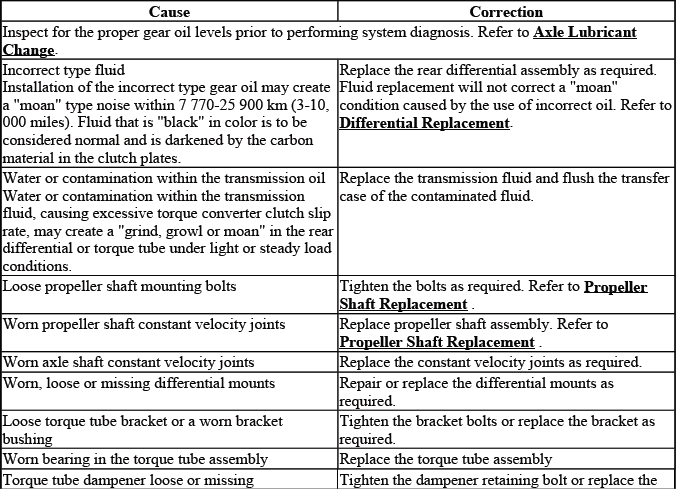
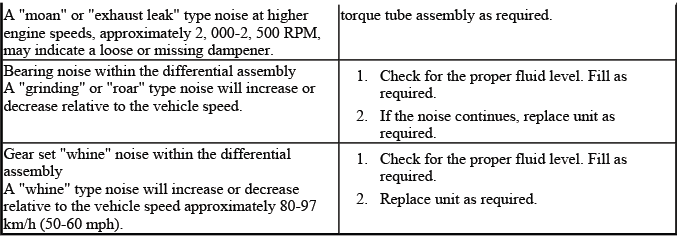
A noise that appears while driving under load can come from the rear differential carrier, propeller shaft, transfer case, wheel bearings, tires, or mounting components. Verify whether the sound changes with throttle input, road speed, gear selection, or vehicle load before identifying the rear axle as the cause.
NOISY WHEN COASTING
Noisy When Coasting
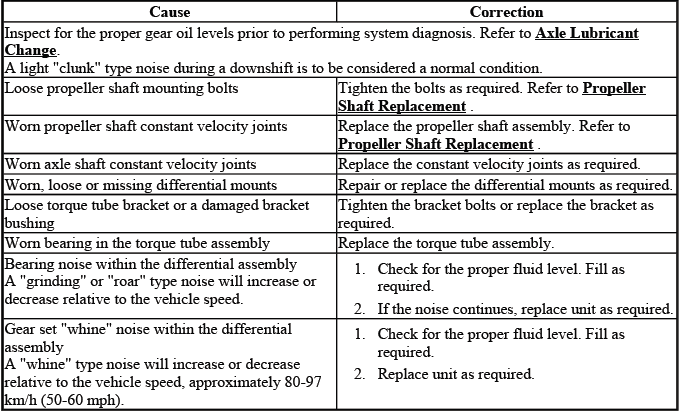
A noise that is most noticeable during coast or deceleration may point to a different load path than a noise heard during acceleration. Gear contact, bearing preload, rear differential carrier condition, propeller shaft angle, and driveline backlash should all be considered when the complaint is tied to coasting.
INTERMITTENT NOISE
Intermittent Noise
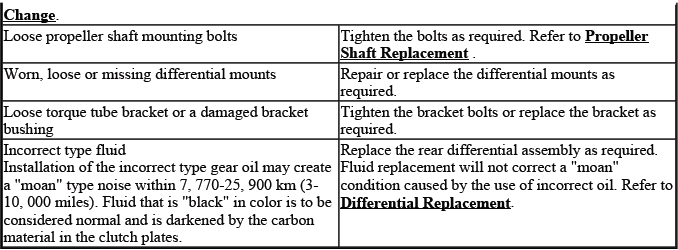
Intermittent rear axle noise can be difficult to isolate because it may depend on temperature, road surface, suspension position, or AWD engagement. Recreate the condition as closely as possible and avoid replacing parts based only on a short or incomplete road test.

CONSTANT NOISE
Constant Noise
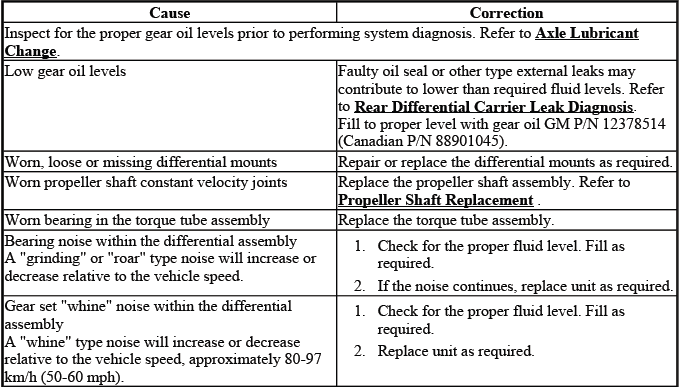
A constant noise usually follows road speed or driveline speed and may stay present during acceleration, cruise, and coast. In this case, compare the sound location carefully and check tires, wheel bearings, propeller shaft components, differential fluid condition, and carrier assembly mounting before making a final repair decision.
NOISY ON TURNS
Noisy on Turns
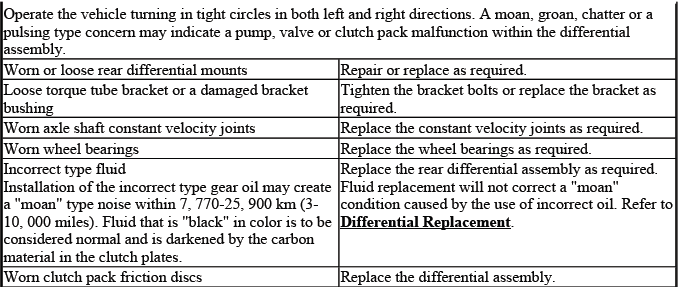
Noise on turns may be related to differential operation, AWD clutch behavior, tire mismatch, axle components, suspension loading, or wheel bearing changes under side load. On the Buick Enclave, note whether the noise occurs during left turns, right turns, tight parking maneuvers, or only after the vehicle has been driven long enough for the rear axle fluid to warm up.

REAR DIFFERENTIAL CARRIER LEAK DIAGNOSIS
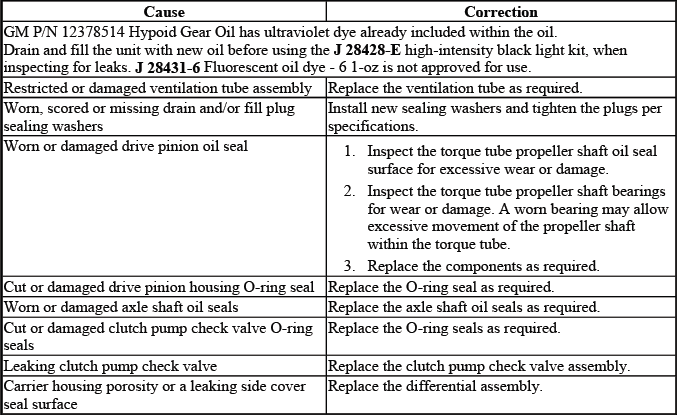
Rear Differential Carrier Leak Diagnosis
Rear differential carrier leak diagnosis should begin with a clean housing and a careful inspection of the suspected leak path. Fluid may travel along the housing, bracket, seal area, or underbody before it drips, so the wettest point is not always the original source. Check the cover, seals, vent, drain or fill plug areas, axle openings, and nearby fasteners before replacing parts.
After cleaning, operate the vehicle long enough to confirm the source of the leak. A small seep may require time to reappear, while an active leak may show quickly around a seal or gasket surface. Correct lubricant level should also be verified after the repair, because low fluid can lead to noise, heat, and rear differential carrier damage.