
Buick Enclave: Repair Instructions
EXHAUST MANIFOLD REPLACEMENT - LEFT SIDE
Removal Procedure
WARNING: Refer to Exhaust Service Warning.
WARNING: Refer to Protective Goggles and Glove Warning.
Before beginning removal, make sure the exhaust system has cooled sufficiently and that the vehicle is safely supported. Exhaust components can retain heat for a long time after the engine has been running, and working around manifold hardware, oxygen sensors, and catalytic converter connections requires care to avoid burns, damaged threads, or broken fasteners.
1. Remove the exhaust manifold heat shield. Refer to Exhaust Manifold Heat Shield Replacement - Left Side. The heat shield must be removed carefully so the surrounding components, mounting points, and shield fasteners are not bent or damaged during service.
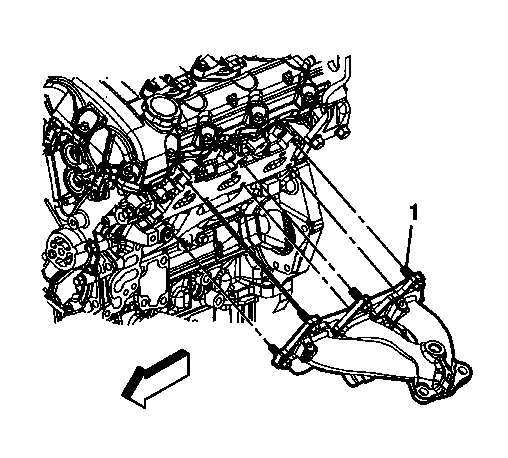
Fig. 1: Identifying Left Side Exhaust Manifold Bolts
2. Remove the oil level indicator. Refer to Oil Level Indicator Tube Replacement. Removing the indicator and tube as required provides the working clearance needed around the left side exhaust manifold area.
3. Remove the catalytic converter. Refer to Catalytic Converter Replacement - Left Side. This step allows the manifold to be separated from the exhaust system without forcing the converter or stressing the adjoining pipe connections.
4. Remove the exhaust manifold bolts (1). Loosen the fasteners evenly and inspect them for corrosion, thread damage, stretching, or signs that replacement hardware may be required.
5. Remove the exhaust manifold and gasket. Discard the gasket. Once the manifold is removed, inspect the sealing surfaces on the cylinder head and manifold for carbon tracking, warping, cracks, or old gasket material that could prevent a proper seal during installation.
NOTE: Do not reuse the gasket.
6. Remove the heated oxygen sensor (1) from the exhaust manifold. Handle the sensor carefully and avoid dropping it, contaminating the sensing tip, or twisting the wiring. The heated oxygen sensor is important for fuel control and emissions performance on the Buick Enclave.
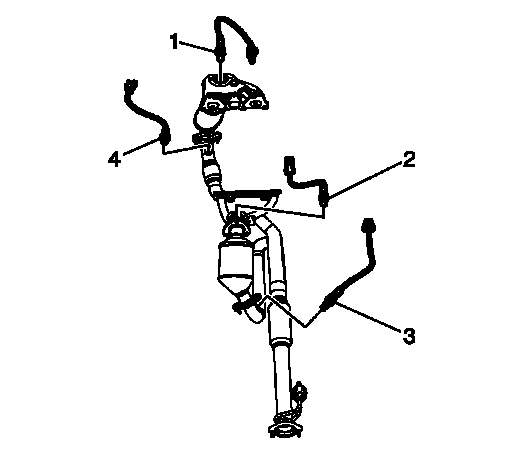
Fig. 2: Identifying Heated Oxygen Sensors & Exhaust Manifold
Installation Procedure
NOTE: A special anti-seize compound is used in the HO2S threads. The compound consists of liquid graphite and glass beads. The graphite tends to burn away, but the glass beads remain, making the sensor easier to remove. New or service replacement sensors have the compound applied to the threads. If the sensor is removed from an exhaust component and if for any reason the sensor is to be reinstalled, the threads must have anti-seize compound applied before the reinstallation.
1. If reinstalling the old sensor, coat the threads with anti-seize compound GM P/N 12377953 or equivalent. Apply the compound only to the threads and keep it away from the sensor tip so the sensor can read exhaust oxygen content correctly.
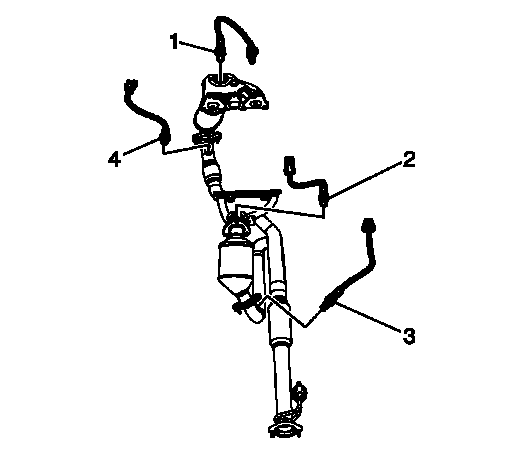
Fig. 3: Identifying Heated Oxygen Sensors & Exhaust Manifold
2. Install the HO2S (1) to the exhaust manifold. Start the sensor by hand to avoid cross-threading, then tighten it to specification.
CAUTION: Refer to Fastener Caution.
Tighten
- Tighten the sensor to 42 N.m (31 lb ft).
3. Install one exhaust manifold bolt (1) to the exhaust manifold. This bolt helps position the new gasket and manifold during installation and reduces the chance of misalignment at the cylinder head.
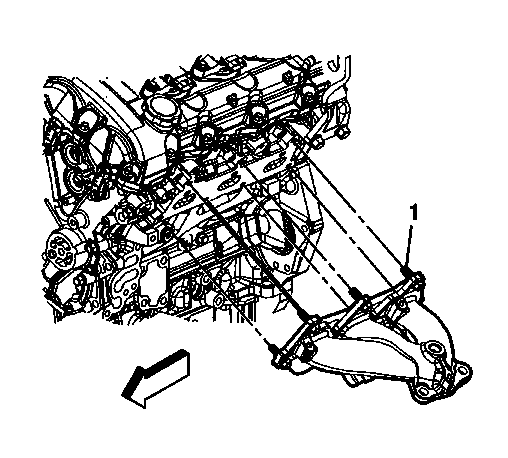
Fig. 4: Identifying Left Side Exhaust Manifold Bolts
4. Install the NEW exhaust manifold gasket onto the exhaust manifold and bolt. Make sure the gasket is correctly oriented and fully seated before the manifold is placed against the cylinder head.
5. Install the exhaust manifold with the gasket to the cylinder head and the catalytic converter. Align the manifold carefully so the gasket does not shift, fold, or become pinched between the sealing surfaces.
6. Install the remaining exhaust manifold bolts. Start all bolts by hand before tightening so the manifold seats evenly and the bolt threads are not damaged.
Tighten
- Tighten the bolts to 20 N.m (15 lb ft).
7. Install the catalytic converter. Refer to Catalytic Converter Replacement - Left Side. Confirm that the converter connection is aligned and that any related seals or fasteners are installed correctly.
8. Install the oil level indicator. Refer to Oil Level Indicator Tube Replacement. After installation, confirm that the indicator is fully seated and that the tube is not contacting hot or moving components.
9. Install the exhaust manifold heat shield. Refer to Exhaust Manifold Heat Shield Replacement - Left Side. The shield should be secure and correctly positioned to protect nearby components from exhaust heat.
After installation, inspect the left side exhaust manifold area for proper clearance, secure wiring, correct sensor routing, and any possible exhaust leak points. When the Buick Enclave is started after repair, listen for ticking, hissing, or abnormal exhaust noise that could indicate a sealing concern.
EXHAUST MANIFOLD REPLACEMENT - RIGHT SIDE
Removal Procedure
WARNING: Refer to Exhaust Service Warning.
WARNING: Refer to Protective Goggles and Glove Warning.
The right side exhaust manifold should be removed only after the exhaust system is cool enough to work around safely. Because exhaust fasteners are exposed to high heat and corrosion, use care when loosening bolts and avoid forcing parts that may be stuck or heat-cycled.
1. Remove the catalytic converter. Refer to Catalytic Converter Replacement - Right Side. Removing the converter provides access and prevents unnecessary stress on the exhaust connection while the manifold is being removed.
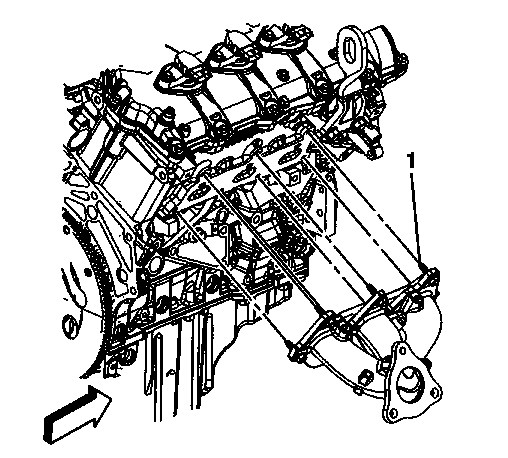
Fig. 5: Identifying Exhaust Manifold Bolts
2. Remove the exhaust manifold heat shield. Refer to Exhaust Manifold Heat Shield Replacement - Right Side. Inspect the heat shield for cracks, loose mounting points, or deformation while it is removed.
3. Remove the exhaust manifold bolts (1). If resistance is excessive, inspect for corrosion or thread binding before continuing so the bolt does not break in the cylinder head.
4. Remove the exhaust manifold and gasket out from vehicle. Discard the gasket. Clean and inspect the sealing surfaces before the new gasket is installed.
NOTE: Do not reuse the gasket.
Installation Procedure
1. Install one exhaust manifold bolt (1) to the exhaust manifold. This helps hold the gasket and manifold in position during initial placement.
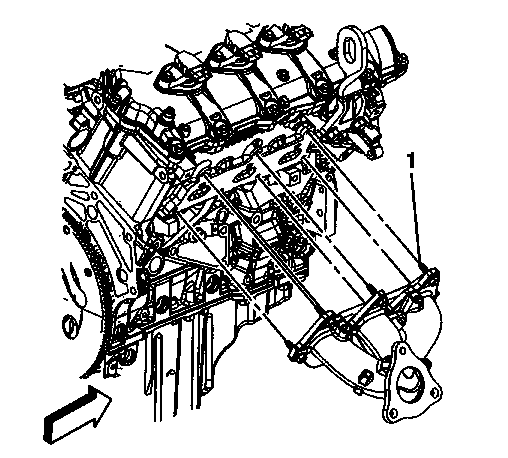
Fig. 6: Identifying Exhaust Manifold Bolts
2. Install the NEW exhaust manifold gasket onto the cylinder head and bolt. Verify that the gasket is aligned with the ports and bolt openings before the manifold is fully seated.
3. Install the exhaust manifold with gasket to the catalytic converter and the cylinder head. Avoid pulling the converter or manifold into position with the bolts, because this can damage the gasket or create stress at the joint.
4. Install the exhaust manifold bolts. Start each bolt by hand first, then tighten evenly to help the manifold seat squarely against the cylinder head.
CAUTION: Refer to Fastener Caution.
Tighten
- Tighten the bolts to 20 N.m (15 lb ft).
5. Install the exhaust manifold heat shield. Refer to Exhaust Manifold Heat Shield Replacement - Right Side. Make sure the shield does not contact the manifold, body, wiring, or nearby components in a way that could cause rattling.
6. Install the catalytic converter. Refer to Catalytic Converter Replacement - Right Side. After installation, check all related joints and fasteners for correct fit and clearance.
Once the repair is complete, start the engine and inspect for exhaust leaks, abnormal noise, or contact between the exhaust system and surrounding components. A properly installed manifold helps maintain quiet operation, emissions performance, and exhaust flow on the Buick Enclave.
CATALYTIC CONVERTER REPLACEMENT - LEFT SIDE
Removal Procedure
WARNING: Refer to Exhaust Service Warning.
WARNING: Refer to Protective Goggles and Glove Warning.
The catalytic converter operates at very high temperatures and is part of the emissions system. Allow enough cooling time before service, and handle the converter carefully to avoid damaging the shell, flanges, brace, oxygen sensor wiring, or sealing surfaces.
1. Remove the exhaust manifold heat shield. Refer to Exhaust Manifold Heat Shield Replacement - Left Side. Removing the heat shield gives better access to the converter-to-manifold connection and related fasteners.
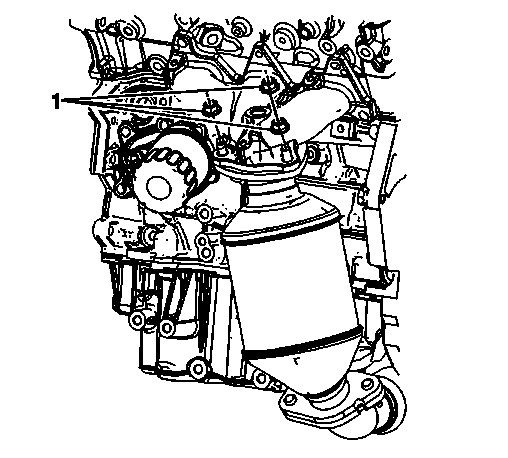
Fig. 7: Identifying Catalytic Converter Bolts
2. Remove the catalytic converter to exhaust manifold nuts (1). Inspect the nuts and studs for corrosion or thread damage, since these parts are exposed to high heat and may require replacement if damaged.
3. Remove the exhaust flexible pipe. Refer to Exhaust Flexible Pipe Replacement. The flexible pipe should be handled carefully because twisting or overbending can shorten its service life.
4. Remove the catalytic converter brace bolt (2). The brace supports the converter and helps control movement caused by engine vibration and exhaust system expansion.
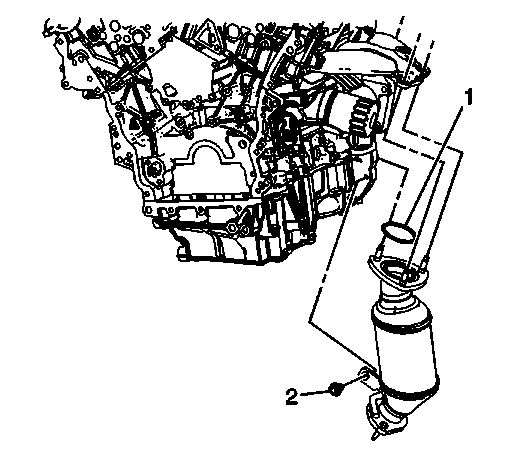
Fig. 8: Identifying Catalytic Converter Brace Bolt
5. Remove the catalytic converter from the exhaust manifold. Support the converter during removal so its weight does not damage the flange, brace, or adjoining exhaust components.
6. Remove and discard the catalytic converter to exhaust manifold seal (1). A used seal may not compress correctly during reassembly and can lead to exhaust leakage, odor, noise, or incorrect sensor readings.
Installation Procedure
1. Install a NEW exhaust manifold seal (1) onto the catalytic converter. Make sure the seal is correctly positioned and not damaged before the converter is installed.
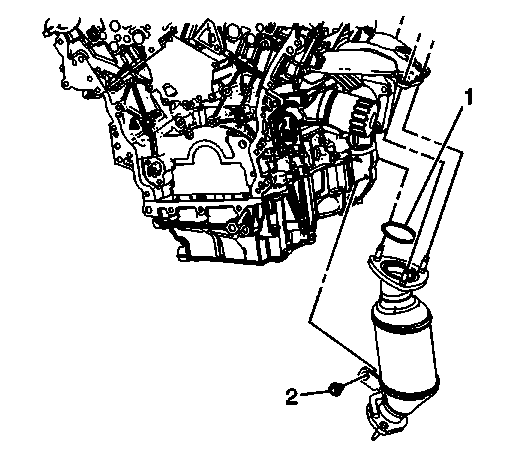
Fig. 9: Identifying Catalytic Converter Brace Bolt
2. Install the catalytic converter to the exhaust manifold. Align the converter carefully with the manifold so the new seal seats evenly and the flange is not forced into position.
3. Install the catalytic converter brace bolt (2). The brace should be tightened only after the converter is correctly aligned so it supports the assembly without creating unwanted stress.
CAUTION: Refer to Fastener Caution.
Tighten
- Tighten the bolt to 50 N.m (37 lb ft).
After tightening, verify that the catalytic converter is secure, the flexible pipe is not twisted, and the exhaust system has proper clearance from the body, heat shields, wiring, and nearby components. Start the engine and check for leaks around the converter-to-manifold connection before returning the Buick Enclave to service.
4. Install the exhaust flexible pipe. Refer to Exhaust Flexible Pipe Replacement. Make sure the flexible section is aligned without twisting, stretching, or forcing it into position. The flexible pipe is designed to absorb normal engine movement and exhaust system vibration, so incorrect alignment can shorten its service life or create unwanted noise.
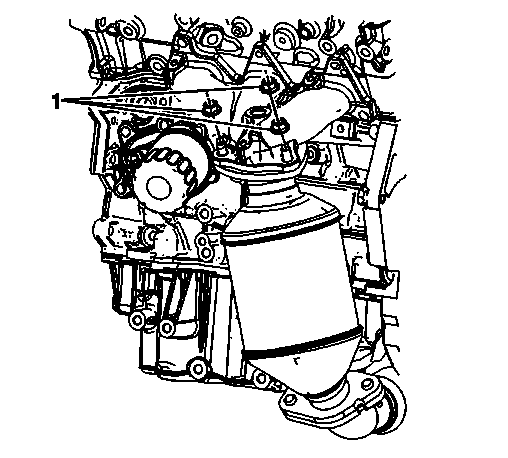
Fig. 10: Identifying Catalytic Converter Bolts
5. Install the catalytic converter to exhaust manifold nuts (1). Start the nuts by hand first to avoid damaging the threads, then tighten them evenly so the seal seats squarely between the converter and manifold.
Tighten
- Tighten the nuts to 50 N.m (37 lb ft).
6. Install the exhaust manifold heat shield. Refer to Exhaust Manifold Heat Shield Replacement - Left Side. Confirm that the shield is fully seated, securely fastened, and not contacting the converter, manifold, wiring, or nearby components in a way that could cause a rattle.
CATALYTIC CONVERTER REPLACEMENT - RIGHT SIDE
Removal Procedure
WARNING: Refer to Exhaust Service Warning.
WARNING: Refer to Protective Goggles and Glove Warning.
Before removing the right side catalytic converter, allow the exhaust system to cool and make sure the vehicle is safely supported. Catalytic converters retain heat after engine operation, and the fasteners may be tight from repeated heat cycles, corrosion, or exposure to road debris.
1. If equipped with all wheel drive (AWD), remove the transfer case. Refer to Transfer Case Assembly Replacement. Removing the transfer case, where required, provides the clearance needed to service the right side converter without damaging surrounding components.
2. Remove the exhaust flexible pipe. Refer to Exhaust Flexible Pipe Replacement. Support the pipe as it is removed so it does not hang by the flex section or place stress on the remaining exhaust joints.
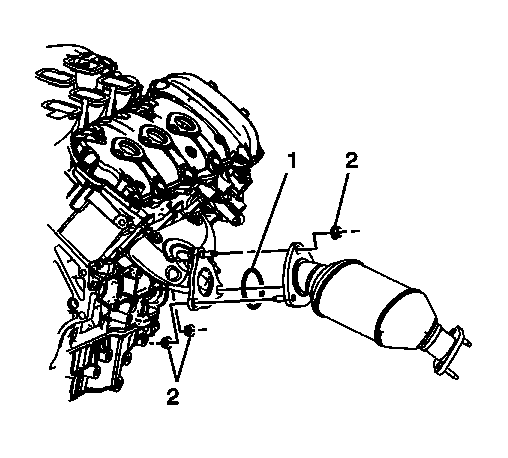
Fig. 11: Identifying Catalytic Converter To Exhaust Manifold Nuts
3. Remove the catalytic converter to exhaust manifold nuts (2). Inspect the nuts and studs for damaged threads, corrosion, or signs of stretching before reuse.
4. Remove the catalytic converter from the exhaust manifold. Keep the converter supported during removal so the flange, oxygen sensor wiring, and surrounding exhaust parts are not damaged.
5. Remove and discard the catalytic converter to exhaust manifold seal (1). The old seal should not be reused because it may not compress correctly during installation and can cause exhaust leakage, odor, noise, or incorrect sensor readings.
Installation Procedure
1. Install a NEW catalytic converter to exhaust manifold seal (1) onto the catalytic converter. Make sure the seal is clean, undamaged, and seated in the correct position before the converter is fitted to the manifold.
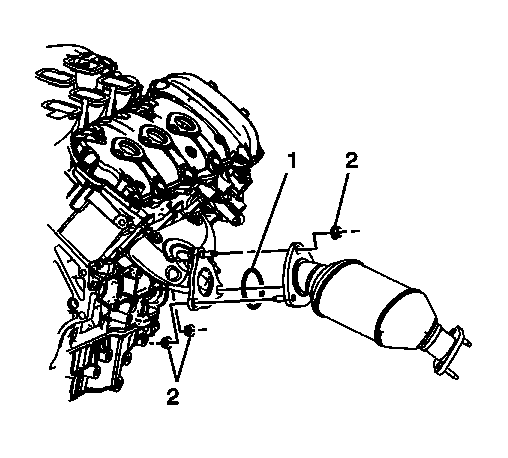
Fig. 12: Identifying Catalytic Converter To Exhaust Manifold Nuts
2. Install the catalytic converter to the exhaust manifold. Align the converter carefully with the manifold so the new seal is not pinched, shifted, or crushed unevenly.
3. Install the catalytic converter to exhaust manifold nuts (2). Start the nuts by hand, then tighten them evenly to help maintain a proper seal at the converter-to-manifold connection.
CAUTION: Refer to Fastener Caution.
Tighten
- Tighten the nuts to 50 N.m (37 lb ft).
4. If equipped with all wheel drive (AWD), install the transfer case. Refer to Transfer Case Assembly Replacement. After installation, verify that all related components have proper clearance and that no wiring, lines, or brackets were disturbed during service.
5. Install the exhaust flexible pipe. Refer to Exhaust Flexible Pipe Replacement. Check that the pipe is installed without twist or preload. A properly aligned flexible pipe helps reduce vibration transfer through the exhaust system of the Buick Enclave.
THREE-WAY CATALYTIC CONVERTER REPLACEMENT (LLT)
The three-way catalytic converter is part of the emissions control system and is designed to help reduce harmful exhaust gases before they exit the vehicle. When servicing this component, handle it carefully and avoid impact damage to the shell, flanges, sensor areas, and internal catalyst structure.
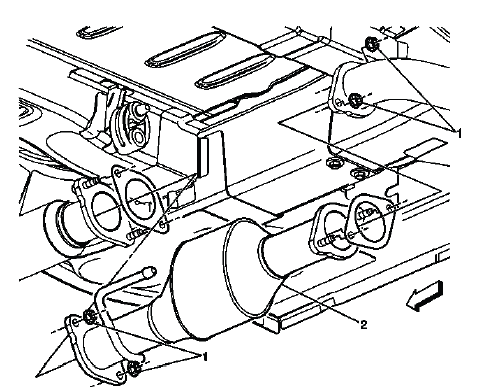
Fig. 13: View Of Three-Way Catalytic Converter (With LLT)
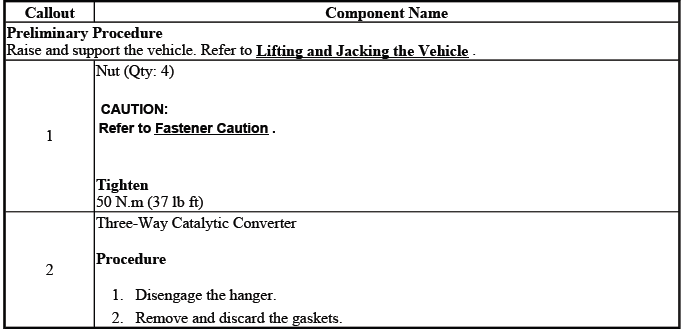
Three-Way Catalytic Converter Replacement (LLT)
Follow the service chart for the correct removal and installation sequence. Converter replacement should include inspection of seals, fasteners, heat shields, oxygen sensor routing, exhaust alignment, and any related components that may affect emissions performance or exhaust noise.
EXHAUST MUFFLER REPLACEMENT (NB5)
Removal Procedure
The muffler assembly is large and should be handled with care during removal. Use an assistant when instructed, because allowing the muffler to drop or twist can damage the exhaust flexible pipe, hangers, underbody components, or mounting points.
1. Raise and support the vehicle. Refer to Lifting and Jacking the Vehicle. The vehicle must be stable and properly supported before any underbody exhaust work begins.
2. Remove the three way catalytic converter to muffler pipe nuts (1). If the fasteners are corroded or difficult to remove, use care to avoid damaging the studs or flange surfaces.
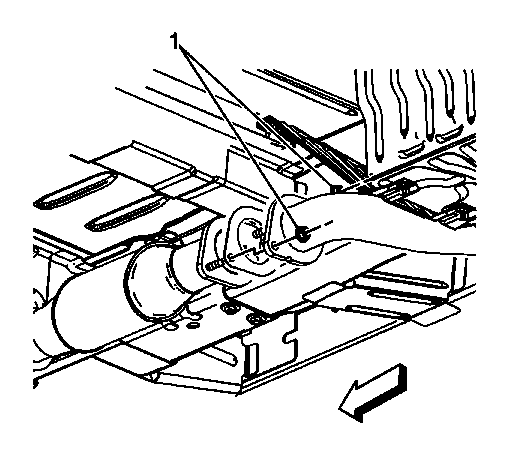
Fig. 14: Identifying Three Way Catalytic Converter-To-Muffler Pipe Nuts
3. With the aid of an assistant, separate the rubber insulators from the exhaust underbody hangers (1). Support the muffler while the insulators are removed so the exhaust assembly does not swing or place stress on the remaining connection.
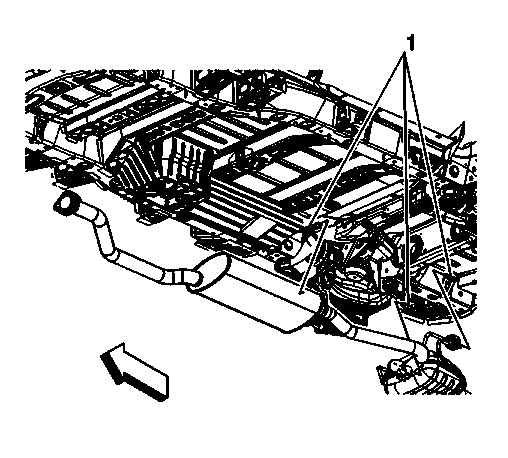
Fig. 15: Identifying Exhaust Underbody Hangers
4. With the aid of an assistant, remove the muffler assembly from the exhaust flexible pipe and the vehicle. Lower the assembly carefully and avoid scraping the muffler, outlets, or pipe ends against the underbody.
Installation Procedure
1. With the aid of an assistant, install the muffler assembly to the vehicle and the exhaust flexible pipe. Position the muffler so the pipe connection, hanger locations, and underbody clearances line up naturally before tightening the hardware.
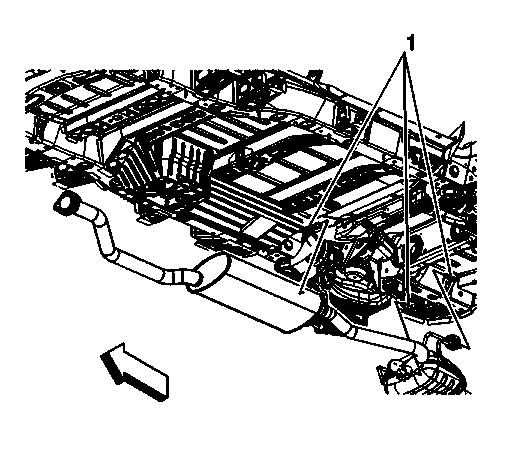
Fig. 16: Identifying Exhaust Underbody Hangers
2. With the aid of an assistant, install the rubber insulators to the exhaust underbody hangers (1). Make sure each insulator is fully seated and not torn, stretched, or twisted. Worn rubber insulators can allow the exhaust system to contact the body and create noise.
3. Install the three way catalytic converter to muffler piper nuts (1) and tighten to 50 N.m (37 lb ft). Tighten the connection evenly so the joint seals correctly and the muffler remains properly aligned.
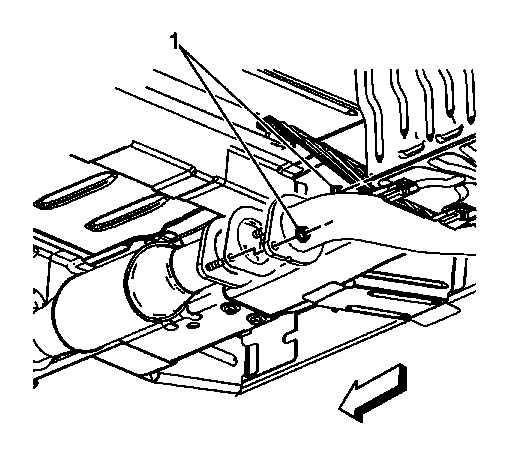
Fig. 17: Identifying Three Way Catalytic Converter-To-Muffler Pipe Nuts
4. Lower the vehicle. After lowering, start the engine and listen for exhaust leaks, rattles, or contact between the exhaust system and the body. A correctly installed muffler should sit evenly in the underbody hangers and maintain proper clearance during engine movement.
EXHAUST MUFFLER REPLACEMENT (NEA/NED OR N10)
Removal Procedure
This muffler configuration uses multiple underbody hanger points, so the assembly should be supported before the rubber insulators are separated. Working with an assistant helps prevent the muffler from shifting suddenly during removal.
1. Raise and support the vehicle. Refer to Lifting and Jacking the Vehicle. Make sure the Buick Enclave is lifted on approved points and remains stable throughout the procedure.
2. Remove the three way catalytic converter to muffler pipe nuts (1). Inspect the joint for rust, damaged sealing surfaces, or hardware that may need replacement during reassembly.
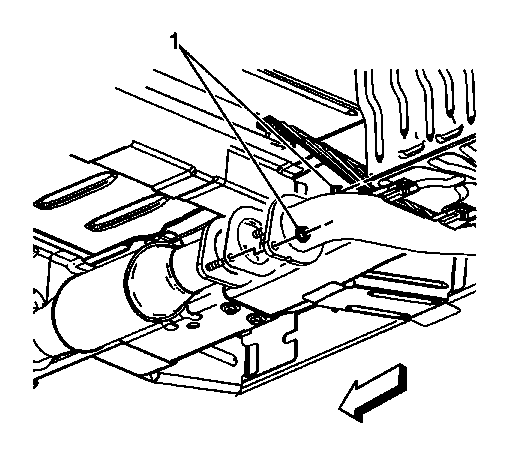
Fig. 18: Identifying Three Way Catalytic Converter-To-Muffler Pipe Nuts
3. With the aid of an assistant, separate the rubber insulators from the exhaust underbody hangers (1, 2 and 3). Keep the assembly supported as each hanger is released so the weight of the muffler does not pull on the flexible pipe or contact nearby parts.
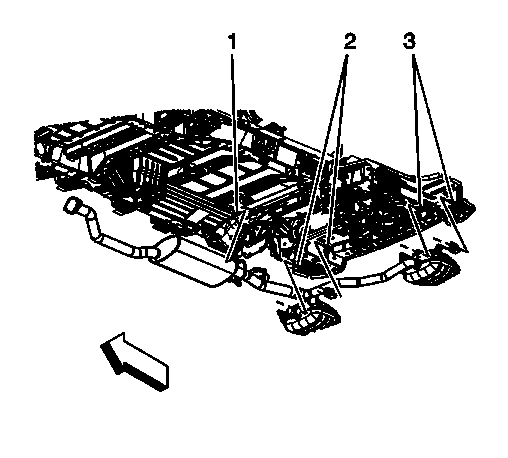
Fig. 19: Identifying Exhaust Underbody Hangers
4. With the aid of an assistant, remove the muffler assembly from the exhaust flexible pipe and the vehicle. Move the assembly out carefully, watching for the rear fascia, suspension parts, heat shields, and pipe ends.
Installation Procedure
1. With the aid of an assistant, install the muffler assembly to the vehicle and the exhaust flexible pipe. Align the muffler naturally with the pipe connection and all hanger locations before tightening any fasteners.
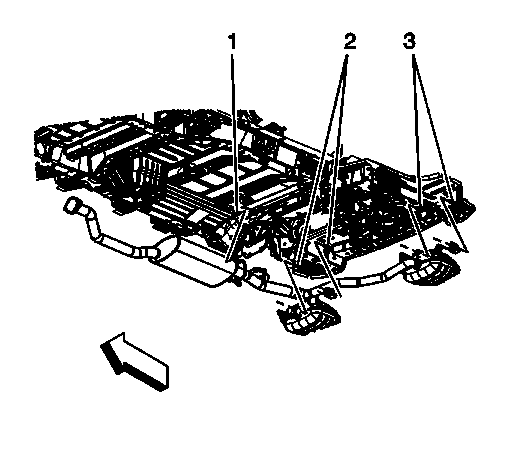
Fig. 20: Identifying Exhaust Underbody Hangers
2. With the aid of an assistant, install the rubber insulators to the exhaust underbody hangers (1, 2 and 3). Confirm that the insulators are seated fully and that the muffler hangs evenly without pulling to one side.
3. Install the three way catalytic converter to muffler pipe nuts (1) and tighten to 50 N.m (37 lb ft). An even, properly tightened joint helps prevent exhaust leakage and keeps the system from moving during driving.
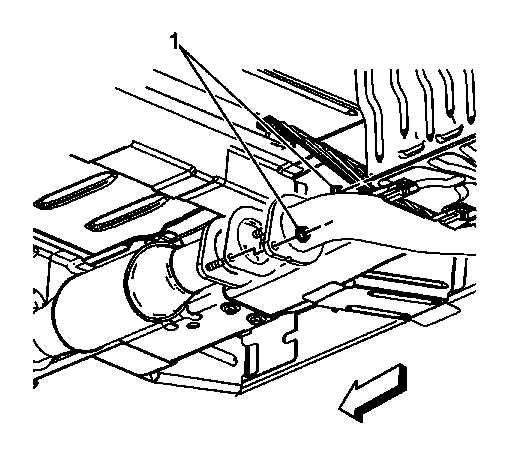
Fig. 21: Identifying Three Way Catalytic Converter-To-Muffler Pipe Nuts
4. Lower the vehicle. After installation, inspect the exhaust tips, muffler body, hangers, flexible pipe, and heat shields for correct clearance. Start the engine and confirm that no exhaust leak, rattle, buzz, or body contact is present.
EXHAUST FLEXIBLE PIPE REPLACEMENT
The exhaust flexible pipe helps absorb normal engine movement and vibration so the exhaust system is not rigidly stressed during acceleration, deceleration, shifting, or road movement. A damaged flexible pipe can cause exhaust noise, leakage, vibration, odor, or movement at nearby joints.
When replacing the flexible pipe, avoid bending it sharply, twisting it during installation, or forcing the exhaust system into position with the fasteners. The pipe should sit naturally between the connected components, with the exhaust system properly supported by its hangers.
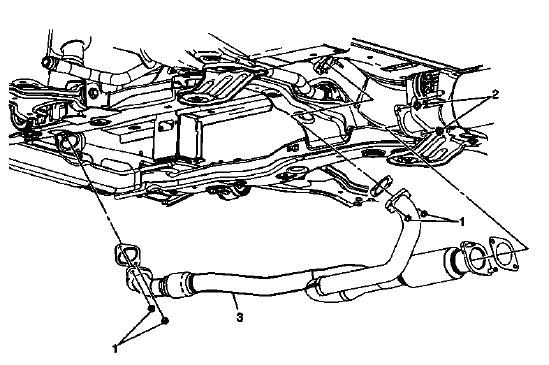
Fig. 22: Identifying Exhaust Flexible Pipe
Exhaust Flexible Pipe Replacement
Follow the service procedure carefully and replace any required seals, gaskets, or hardware. After installation, check for leaks at both ends of the pipe, confirm proper hanger alignment, and verify that the flexible section is not stretched or compressed. On the Buick Enclave, correct flexible pipe installation helps maintain quiet operation and reduces stress on the rest of the exhaust system.
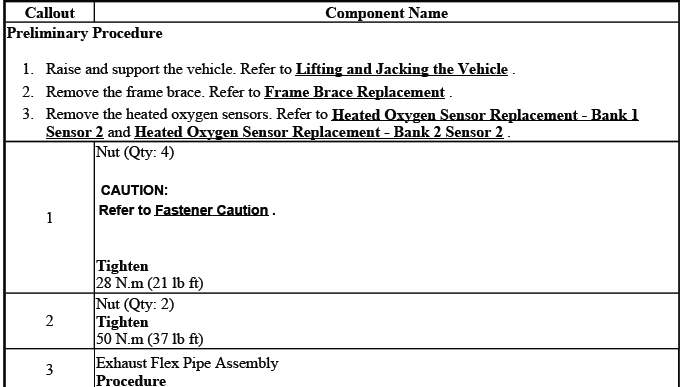

EXHAUST MANIFOLD LOWER HEAT SHIELD REPLACEMENT
Removal Procedure
The exhaust manifold lower heat shield helps protect nearby parts from the high temperatures produced by the exhaust manifold and related components. Before removing the shield, allow the exhaust system to cool and confirm that the vehicle is properly supported. A damaged, loose, or missing heat shield can lead to excess heat exposure, rattling, or possible damage to surrounding components.
1. Raise and suitably support the vehicle. Refer to Lifting and Jacking the Vehicle. Use the approved lift points and make sure the vehicle is stable before working underneath it.
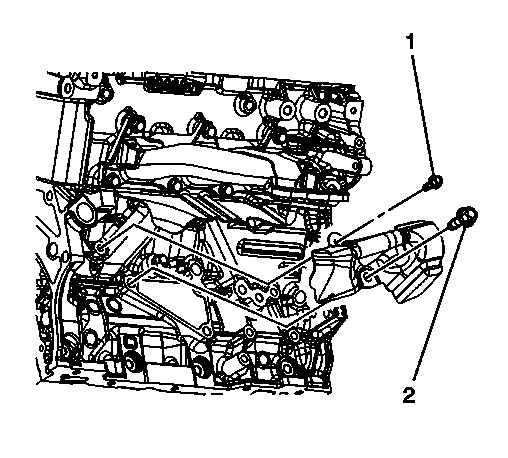
Fig. 23: Identifying Exhaust Manifold Lower Heat Shield Bolts
2. Remove the exhaust manifold lower heat shield bolts (1, 2). Keep track of the bolt locations because the fasteners may have different tightening specifications during installation.
3. Remove the exhaust manifold lower heat shield. Inspect the shield for cracks, distortion, corrosion, broken mounting holes, or contact marks that may have caused noise while the Buick Enclave was operating.
Installation Procedure
1. Position the exhaust manifold lower heat shield to the engine. Make sure it sits naturally in place and does not press against the manifold, wiring, hoses, brackets, or other nearby parts.
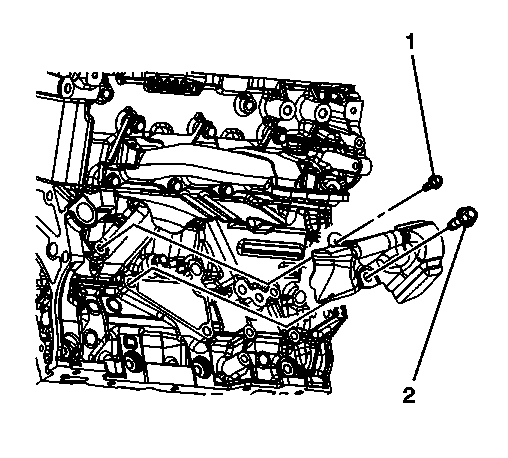
Fig. 24: Identifying Exhaust Manifold Lower Heat Shield Bolts
2. Install the exhaust manifold lower heat shield bolts (1, 2). Tighten bolt (1) to 10 N.m (89 lb in) and tighten bolt (2) to 50 N.m (37 lb ft). Tighten the bolts to specification only; overtightening can damage the shield, fastener threads, or mounting points.
CAUTION: Refer to Fastener Caution.
3. Lower the vehicle. After lowering, listen for abnormal rattles during engine operation and confirm that the heat shield remains secure.
EXHAUST MANIFOLD HEAT SHIELD REPLACEMENT - RIGHT SIDE
Removal Procedure
WARNING: Refer to Protective Goggles and Glove Warning.
WARNING: Refer to Exhaust Service Warning.
The right side exhaust manifold heat shield should be handled carefully because it protects nearby components from exhaust heat and also helps reduce heat transfer into surrounding areas. Work only when the exhaust system has cooled enough to service safely.
1. Remove the heated oxygen sensor (HO2S). Refer to Heated Oxygen Sensor Replacement - Bank 1 Sensor 1. Disconnect and remove the sensor carefully to avoid damaging the threads, connector, or wiring pigtail.
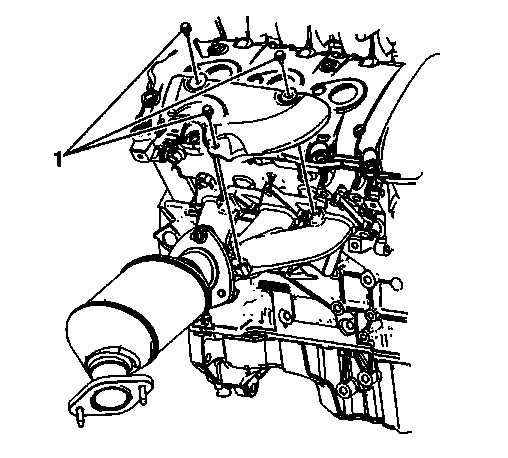
Fig. 25: Identifying Exhaust Manifold Heat Shield Bolts - Right Side
2. Remove the exhaust flexible pipe. Refer to Exhaust Flexible Pipe Replacement. Support the pipe during removal so the flexible section is not twisted, stretched, or allowed to hang under its own weight.
3. Remove the exhaust manifold heat shield bolts (1). Inspect the bolts for corrosion, damaged threads, or signs of heat-related wear before reuse.
4. Remove the exhaust manifold heat shield. Check the shield for cracks, loose edges, deformation, or rub marks that could cause a buzz or rattle after installation.
Installation Procedure
1. Install the exhaust manifold heat shield. Position it so it covers the intended area and maintains proper clearance from the manifold, sensor wiring, exhaust pipe, and nearby engine components.
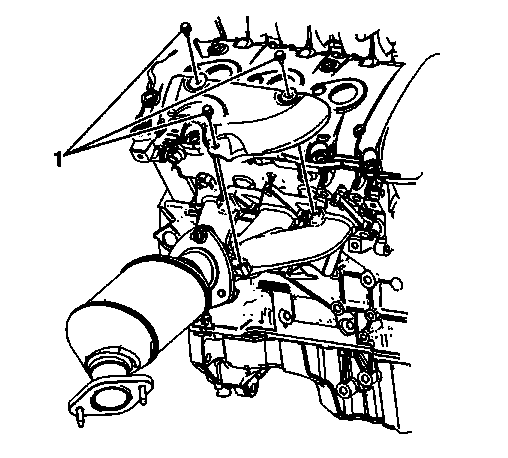
Fig. 26: Identifying Exhaust Manifold Heat Shield Bolts - Right Side
2. Install the exhaust manifold heat shield bolts (1) and tighten to 10 N.m (89 lb in). Tightening the bolts evenly helps prevent shield distortion and reduces the chance of future exhaust-related rattles.
CAUTION: Refer to Fastener Caution.
3. Install the exhaust flexible pipe. Refer to Exhaust Flexible Pipe Replacement. Confirm that the pipe is aligned naturally and that the flexible section is not under preload.
4. Install the HO2S. Refer to Heated Oxygen Sensor Replacement - Bank 1 Sensor 1. Route the sensor wiring correctly and keep it away from hot exhaust surfaces or moving components.
EXHAUST MANIFOLD HEAT SHIELD REPLACEMENT - LEFT SIDE
Removal Procedure
WARNING: Refer to Protective Goggles and Glove Warning.
WARNING: Refer to Exhaust Service Warning.
The left side exhaust manifold heat shield must be removed with attention to the heated oxygen sensor wiring and nearby harness routing. The shield should not be forced over the sensor pigtail because damaged wiring can affect sensor operation and engine control.
1. Remove the fuel injector sight shield. Refer to Fuel Injector Sight Shield Replacement. This provides access to the wiring and upper engine area needed for the procedure.
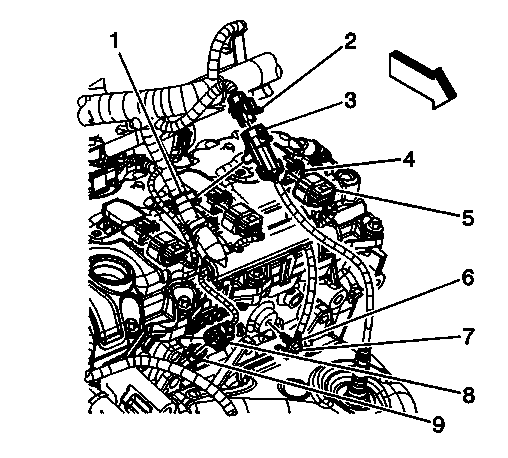
Fig. 27: Identifying Engine Wiring Harness Electrical Connector
2. Disconnect the engine wiring harness electrical connector (2) from the heated oxygen sensor (HO2S) electrical connector (3). Release the connector carefully and avoid pulling directly on the wires.
3. Remove the HO2S electrical connector retainer from the engine wiring harness clip (1). This allows the pigtail to move enough for the heat shield to be removed without straining the harness.
4. Remove the exhaust manifold heat shield bolts (1). Note the bolt positions and inspect the fasteners for damaged threads or corrosion.
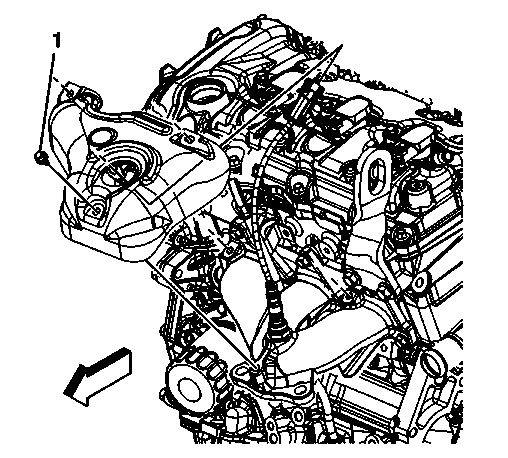
Fig. 28: Identifying Exhaust Manifold Heat Shield Bolts - Left Side
5. Remove the exhaust manifold heat shield, sliding the shield up over the HO2S pigtail. Move the shield slowly so the wiring insulation, connector, and retainer are not damaged.
Installation Procedure
1. Install the exhaust manifold heat shield, sliding the shield down over the HO2S pigtail. Make sure the shield does not pinch, scrape, or pull the sensor wiring during installation.
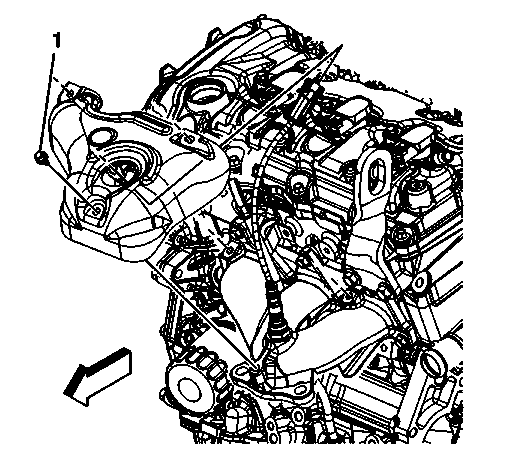
Fig. 29: Identifying Exhaust Manifold Heat Shield Bolts - Left Side
2. Install the exhaust manifold heat shield bolts (1) and tighten to 10 N.m (89 lb in). Correct torque is important because a loose heat shield can rattle, while excessive torque can distort the shield or damage the mounting points.
CAUTION: Refer to Fastener Caution.
3. Connect the engine wiring harness electrical connector (2) to the HO2S electrical connector (3). Confirm that the connector locks securely and that the wiring is routed away from the exhaust manifold.
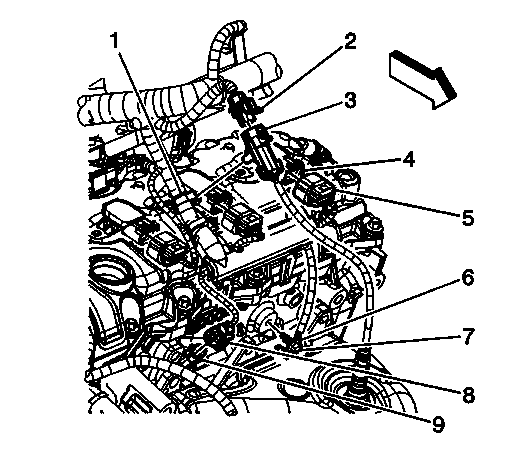
Fig. 30: Identifying Engine Wiring Harness Electrical Connector
4. Install the HO2S electrical connector retainer to the wiring harness clip (1). The retainer should hold the connector firmly so vibration and heat do not allow the wiring to contact hot exhaust components.
5. Install the fuel injector sight shield. Refer to Fuel Injector Sight Shield Replacement. After reassembly, verify that all covers, connectors, retainers, and heat shields are correctly installed on the Buick Enclave before starting the engine.
EXHAUST MUFFLER HEAT SHIELD REPLACEMENT
Removal Procedure
The exhaust muffler heat shields protect the floor panel and surrounding underbody areas from muffler heat. These shields should be kept in place and properly secured because missing or loose shields can increase cabin heat, create rattles, or allow nearby materials to be exposed to higher temperatures than intended.
1. Remove the muffler assembly. Refer to Exhaust Muffler Replacement (NB5) and Exhaust Muffler Replacement (NEA/NED or N10). Support the muffler properly during removal to avoid damaging the exhaust pipe, hangers, or heat shields.
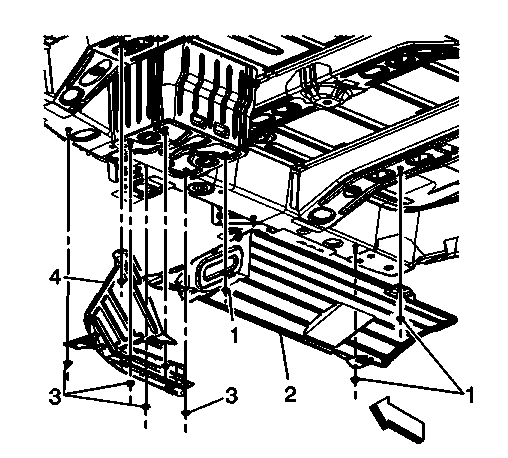
Fig. 31: Identifying Exhaust Muffler Heat Shield
2. Remove the exhaust muffler front heat shield nuts (3). If the nuts are corroded, remove them carefully so the studs or floor panel mounting points are not damaged.
3. Remove the exhaust muffler front heat shield (4). Inspect the shield for cracks, loose edges, impact damage, or signs of heat discoloration.
4. Remove the exhaust muffler heat shield nuts (1). Keep the mounting hardware organized for inspection and reinstallation.
5. Remove the exhaust muffler heat shield (2). Check the surrounding floor panel area for corrosion, missing insulation, or contact marks from a loose shield.
Installation Procedure
1. Position the exhaust muffler heat shield (2) to the floor panel. The shield should sit flat against its mounting area and should not be bent into contact with the muffler or exhaust pipe.
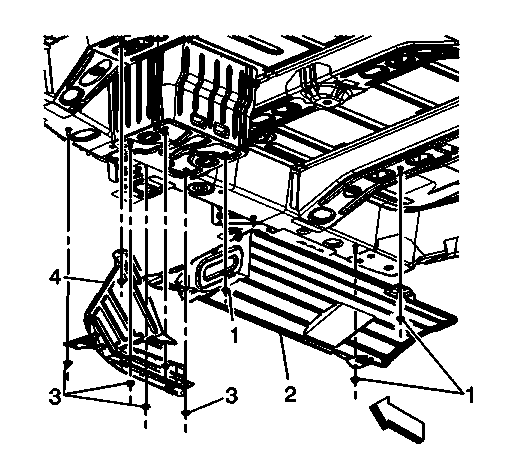
Fig. 32: Identifying Exhaust Muffler Heat Shield
2. Install the exhaust muffler heat shield nuts (1). Start the nuts by hand to make sure they thread correctly before tightening.
CAUTION: Refer to Fastener Caution.
Tighten
- Tighten the nuts to 9 N.m (80 lb in).
3. Position the exhaust muffler front heat shield (4) to the floor panel. Align the shield with the mounting studs and make sure it does not overlap or interfere with the rear shield.
4. Install the exhaust muffler front heat shield nuts (3). Tighten the fasteners evenly so the shield remains secure and does not vibrate against the floor panel.
Tighten
- Tighten the nuts to 9 N.m (80 lb in).
5. Install the muffler assembly. Refer to Exhaust Muffler Replacement (NB5) and Exhaust Muffler Replacement (NEA/NED or N10). After installation, check that the muffler, hangers, heat shields, and exhaust pipes have proper clearance. Start the engine and listen for rattles, buzzing, or exhaust contact under the vehicle.
