
Buick Enclave: Engine Coolant
The cooling system in the vehicle is filled with DEX-COOL® engine coolant. This coolant is designed to remain in the vehicle for 5 years or 240 000 km (150,000 mi), whichever occurs first, when the system is properly maintained and no contamination or coolant loss has occurred.
Engine coolant performs several important jobs at the same time. It transfers heat away from the engine, helps prevent freezing in cold weather, raises boiling protection in hot conditions, and protects internal metal surfaces from rust and corrosion. For the Buick Enclave cooling system to work correctly, the coolant must be the proper type, the correct mixture, and at the proper level.
The following information explains how the cooling system works, how to check the coolant level, and how to add coolant when the level is low. If there is a problem with engine overheating, see Engine Overheating.
What to Use
 WARNING
Adding only plain water or some other liquid to the cooling system can be dangerous. Plain water and other liquids can boil before the proper coolant mixture will.
The coolant warning system is set for the proper coolant mixture.
With plain water or the wrong mixture, the engine could get too hot but you would not get the overheat warning. The engine could catch fire and you or others could be burned. Use a 50/50 mixture of clean, drinkable water and DEX-COOL coolant.
Plain water does not provide the corrosion protection, freeze protection, or boiling protection required by the engine. Other liquids may react poorly with the coolant already in the system or may leave deposits inside the radiator and heater core. For this reason, only the correct mixture should be used when topping off or refilling the system.
Use a 50/50 mixture of clean, drinkable water and DEX-COOL coolant. If this mixture is used, nothing else needs to be added. The correct mixture is important because it allows the cooling system to protect the engine in both cold and hot operating conditions.
This mixture:
► Gives freezing protection down to −37°C (−34°F), outside temperature.
► Gives boiling protection up to 129°C (265°F), engine temperature.
► Protects against rust and corrosion.
► Will not damage aluminum parts.
► Helps keep the proper engine temperature.
These benefits depend on the mixture being correct. Too much water reduces freeze and boil protection, while too much coolant concentrate can reduce heat transfer and make the system less efficient. The goal is a balanced 50/50 mixture that provides stable cooling performance during normal driving and under more demanding conditions.
Notice: If an improper coolant mixture is used, the engine could overheat and be badly damaged.
The repair cost would not be covered by the vehicle warranty.
Too much water in the mixture can freeze and crack the engine, radiator, heater core, and other parts.
Notice: If extra inhibitors and/or additives are used in the vehicle's cooling system, the vehicle could be damaged.
Use only the proper mixture of the engine coolant listed in this manual for the cooling system.
See Recommended Fluids and Lubricants for more information.
Do not add stop-leak products, sealers, rust inhibitors, or other chemical additives unless they are specifically approved for this vehicle and cooling system. Many universal additives can restrict small passages, affect coolant flow, damage seals, or reduce the ability of the system to transfer heat.
Never dispose of engine coolant by putting it in the trash, pouring it on the ground, or releasing it into sewers, streams, storm drains, or bodies of water. Engine coolant is harmful to people, animals, and the environment, and used coolant must be handled responsibly.
Have the coolant changed by an authorized service center familiar with legal requirements regarding used coolant disposal. This helps protect the environment and your health while also ensuring that the Buick Enclave receives the correct coolant type and service procedure.
Checking Coolant
The vehicle must be parked on a level surface when checking the coolant level. A sloped driveway or uneven parking area can give a false reading and may cause the coolant level in the recovery tank to appear higher or lower than it actually is.
Check to see if coolant is visible in the coolant recovery tank. If the coolant inside the coolant recovery tank is boiling, do not do anything else until it cools down. Opening or disturbing the system while coolant is boiling can allow hot liquid or steam to escape.
If coolant is visible but the coolant level is not at or above the FULL COLD mark, add a 50/50 mixture of clean, drinkable water and DEX-COOL coolant at the coolant recovery tank, but be sure the cooling system is cool before this is done. See Cooling System for more information.
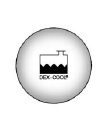
The coolant recovery tank cap has this symbol on it.
When the engine is cold, the coolant level should be at or above the FULL COLD line marked on the recovery tank. This mark is intended for checking the level when the coolant has cooled and the system is no longer expanded from heat.
When the engine is hot, the level could be higher than the FULL COLD line. This can be normal because coolant expands as temperature rises. If the coolant is below the FULL COLD line when the engine is hot, there could be a leak in the cooling system or the system may have been losing coolant over time.
If the coolant is low, add the correct coolant mixture or take the vehicle to a dealer or qualified service center for inspection. Repeatedly adding coolant without finding the cause of the loss is not a proper repair. The system should be checked for leaks, pressure loss, damaged hoses, a weak cap, or other issues.
How to Add Coolant to the Recovery Tank
WARNING
You can be burned if you spill coolant on hot engine parts.
Coolant contains ethylene glycol and it will burn if the engine parts are hot enough. Do not spill coolant on a hot engine.
Before adding coolant, make sure the engine has cooled sufficiently. Pour slowly and carefully to avoid spilling coolant on belts, pulleys, the exhaust area, electrical connectors, or hot engine surfaces. Wipe up any spilled coolant and keep it away from children and pets.
Notice: This vehicle has a specific coolant fill procedure.
Failure to follow this procedure could cause the engine to overheat and be severely damaged.
If coolant is needed, add the proper DEX-COOL coolant mixture at the coolant recovery tank. Do not overfill the tank. Filling above the recommended level can cause coolant to be pushed out as the system heats and expands.
How to Add Coolant to the Radiator
WARNING
An electric engine cooling fan under the hood can start up even when the engine is not running and can cause injury.
Keep hands, clothing, and tools away from any underhood electric fan.
WARNING
Steam and scalding liquids from a hot cooling system can blow out and burn you badly. They are under pressure, and if you turn the surge tank pressure cap—even a little—they can come out at high speed. Never turn the cap when the cooling system, including the surge tank pressure cap, is hot. Wait for the cooling system and surge tank pressure cap to cool if you ever have to turn the pressure cap.
The radiator should only be opened when the system is completely cool. A hot cooling system is pressurized, and even a small turn of the pressure cap can release steam or boiling coolant with enough force to cause serious burns. Waiting until the upper radiator hose is cool to the touch is an important safety step.
If coolant is needed, add the proper mixture directly to the radiator, but be sure the cooling system is cool before this is done.
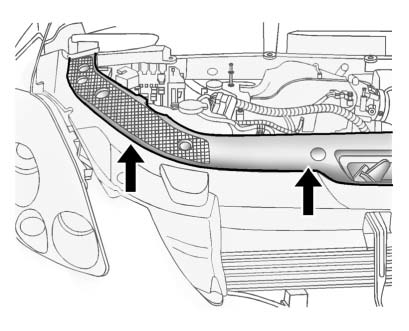
1. Detach the fasteners and lift off the panel that covers the radiator cap.
Remove the panel carefully and place the fasteners where they will not be lost. This cover helps protect the radiator cap area and should be reinstalled properly after the coolant service procedure is complete.
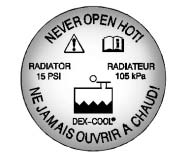
2. Remove the radiator pressure cap only when the cooling system, including the upper radiator hose, is no longer hot.
Turn the pressure cap slowly counterclockwise about one full turn. Do not press down aggressively or remove it quickly. This slow movement helps release any remaining pressure in a controlled way.
If a hiss is heard, wait for that sound to stop. A hiss means there is still pressure left in the system. Continue only after the pressure has been released and the system is safe to open.
3. Keep turning the pressure cap slowly and remove it.
4. Fill the radiator to the base of the filler neck with the proper DEX-COOL coolant mixture.
Add coolant gradually so air can escape from the filler neck. Filling too quickly can trap air pockets, which may reduce cooling performance and may cause the level to drop after the engine runs.
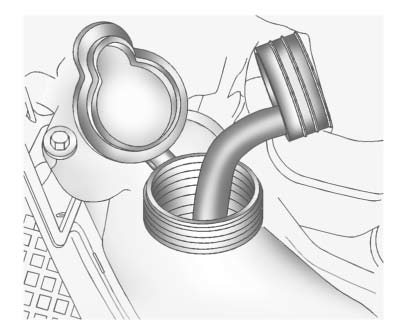
5. Fill the coolant recovery tank to the FULL COLD mark.
6. Reinstall the cap on the coolant recovery tank but leave the radiator pressure cap off.
7. Start the engine and let it run until the upper radiator hose feels warm. Any time during this procedure, watch out for the engine cooling fans.
As the engine warms, coolant begins circulating and the thermostat opens. The coolant level in the radiator filler neck may drop as trapped air moves through the system. Stay clear of moving fans and hot components while observing the coolant level.
8. If the coolant level inside the radiator filler neck is low, add more of the proper DEX-COOL coolant mixture through the filler neck until the level is back up to the base of the filler neck.
9. Replace the pressure cap.
Be sure to secure it tightly. A loose or improperly installed pressure cap can allow coolant to escape, reduce system pressure, and cause the engine to run hotter than intended.
At any time during this procedure, if coolant begins to flow out of the filler neck, reinstall the pressure cap. Do not continue adding coolant once the system begins pushing coolant out, because this can indicate that the level has reached the proper point or that the coolant is expanding as the engine warms.
Notice: If the pressure cap is not tightly installed, coolant loss and possible engine damage may occur. Be sure the cap is properly and tightly secured.
After the procedure is complete and the engine has cooled again, recheck the coolant recovery tank level. The level should be at or above the FULL COLD mark when cold. If the level drops again, if overheating occurs, or if coolant odor or leakage is noticed, the cooling system should be inspected before the Buick Enclave is driven for an extended distance.
