
Buick Enclave: Engine Overheating. Overheated Engine Protection Operating Mode. Power Steering Fluid
Engine Overheating
The vehicle is equipped with several warning systems designed to alert the driver if the engine temperature rises above the normal operating range. These warnings should always be taken seriously, because continued driving with an overheated engine can lead to severe engine damage, coolant loss, or a hazardous underhood condition.
In the Buick Enclave, engine temperature information is shown through the engine coolant temperature gauge on the instrument panel cluster. This gauge gives the driver a visual indication of whether the engine is operating within the expected temperature range or moving toward an overheated condition.
See Engine Coolant Temperature Gauge.
The vehicle may also display ENGINE OVERHEATED IDLE ENGINE and ENGINE OVERHEATED STOP ENGINE messages in the Driver Information Center (DIC). These messages are intended to give clear instructions based on the severity of the overheating condition. See Engine Cooling System Messages.
If one of these warnings appears, you may choose not to lift the hood and instead request service assistance immediately. This is often the safest decision, especially if steam, coolant odor, visible leakage, or unusual engine behavior is present.
See Roadside Assistance Program (U.S. and Canada) or Roadside Assistance Program (Mexico).
If you do decide to lift the hood, first make sure the vehicle is parked on a level surface, away from traffic, and in a safe location. Shift into P (Park), set the parking brake, and allow the engine area to settle before inspecting anything under the hood.
Then check to see if the engine cooling fans are running. If the engine is overheating, both fans should normally be operating to help pull air through the radiator. If the fans are not running, do not continue to operate the engine. Have the vehicle inspected and serviced, because the cooling system may not be able to control engine temperature properly.
Notice: Engine damage from running the engine without coolant is not covered by the warranty.
Notice: If the engine catches fire while driving with no coolant, the vehicle can be badly damaged.
The costly repairs would not be covered by the vehicle warranty. See Overheated Engine Protection Operating Mode for information on driving to a safe place in an emergency.
Never continue driving simply because the vehicle still seems to move normally. An overheated engine can quickly progress from a warning condition to serious internal damage. Low coolant, a failed hose, a stuck thermostat, a damaged radiator, or a fan problem can all cause the engine temperature to rise beyond the safe range.
If Steam Is Coming from the Engine Compartment
 WARNING
Steam from an overheated engine can burn you badly, even if you just open the hood. Stay away from the engine if you see or hear steam coming from it. Turn it off and get everyone away from the vehicle until it cools down.
Wait until there is no sign of steam or coolant before you open the hood.
Steam means that hot coolant or vapor may be escaping under pressure. Opening the hood too soon can expose you to scalding liquid, hot vapor, or a sudden release from the cooling system. Keep passengers and bystanders away from the front of the vehicle until the engine compartment has cooled.
If you keep driving when the vehicle's engine is overheated, the liquids in it can catch fire.
You or others could be badly burned. Stop the engine if it overheats, and get out of the vehicle until the engine is cool.
See Overheated Engine Protection Operating Mode for information on driving to a safe place in an emergency.
When steam is visible or audible, do not attempt to add coolant, remove a cap, touch hoses, or inspect the radiator area. The safest action is to shut the engine off, move away from the vehicle, and allow the system to cool completely before any inspection or service is attempted.
If No Steam Is Coming from the Engine Compartment
If an engine overheat warning is displayed but no steam can be seen or heard, the problem may not be immediately severe. In some driving situations, the engine temperature can rise temporarily because of heavy load, hot weather, restricted airflow, or long periods of idling.
Sometimes the engine can get too hot when the vehicle:
► Climbs a long hill on a hot day.
► Stops after high-speed driving.
► Idles for long periods in traffic.
► Tows a trailer or carries a heavy load.
If the overheat warning is displayed with no sign of steam, take the following steps carefully:
1. Turn the air conditioning off. This reduces the load on the engine and cooling system.
2. Turn the heater on to the highest temperature and to the highest fan speed. Open the windows as necessary. This allows the heater core to help remove heat from the engine coolant, although the cabin may become very warm.
3. If in a traffic jam, shift to N (Neutral); otherwise, shift to the highest gear while driving — D (Drive) or L (Low), depending on the driving condition and road speed.
If the temperature gauge is no longer in the overheat zone or an overheat warning no longer displays, the vehicle can be driven. Continue to drive slowly for about 10 minutes while maintaining a safe distance from the vehicle ahead. Avoid hard acceleration, steep climbs, towing, or stop-and-go driving until the temperature remains stable.
If the warning does not come back on, continue to drive normally, but pay attention to the gauge and any new warning messages. If the Buick Enclave overheats again, the cooling system should be checked before the vehicle is driven further.
If the warning continues, pull over, stop, and park the vehicle right away. Do not try to force the vehicle to continue operating if the warning remains active.
If there is no sign of steam, idle the engine for three minutes while parked. Watch the temperature gauge and any DIC messages. If the warning is still displayed, turn off the engine until it cools down. Also, see “Overheated Engine Protection Operating Mode” next in this section.
Overheated Engine Protection Operating Mode
This emergency operating mode allows the vehicle to be driven a limited distance to a safe place during an urgent overheating situation. If an overheated engine condition exists, the system may activate a protection strategy that alternates firing groups of cylinders. This helps reduce heat generation and may help prevent immediate engine damage while the driver moves the vehicle out of danger.
In this mode, there is a significant loss of power and engine performance. The vehicle may respond more slowly to the accelerator, acceleration may feel weak, and normal driving performance should not be expected. The temperature gauge will continue to indicate that an overheat condition exists.
This mode is intended only for emergency movement to a safe location, not for normal driving. Driving extended distances and/or towing a trailer while the overheated engine protection operating mode is active should be avoided. The Buick Enclave should be stopped as soon as it is safe to do so, and the cause of the overheating should be corrected before continued use.
Notice: After driving in the overheated engine protection operating mode, to avoid engine damage, allow the engine to cool before attempting any repair.
The engine oil will be severely degraded. Repair the cause of coolant loss, change the oil and reset the oil life system.
See Engine Oil.
After this mode has been used, the engine should not be treated as if nothing happened. Overheating can reduce the protective qualities of engine oil, stress gaskets and seals, and expose cooling system parts to abnormal temperatures. The source of coolant loss or overheating must be repaired, the engine oil should be changed as directed, and the oil life system should be reset after the required service is completed.
Power Steering Fluid
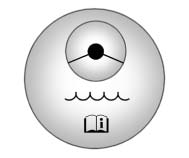
The power steering fluid reservoir is located under the engine cover on the passenger side of the vehicle.
See Engine Compartment Overview for the exact reservoir location.
The power steering system uses hydraulic fluid to help reduce steering effort, especially during low-speed maneuvers such as parking, turning into a driveway, or making tight turns. Keeping the proper fluid level helps the system operate smoothly and helps protect the pump, hoses, seals, and steering gear from damage.
When to Check Power Steering Fluid
It is not necessary to check the power steering fluid on a regular schedule unless you suspect there is a leak in the system or you hear an unusual noise. A whining sound, increased steering effort, fluid spots under the vehicle, or a burning fluid odor may indicate that the fluid level is low or that the system needs inspection.
A fluid loss in this system could indicate a problem. Have the system inspected and repaired. Simply adding fluid may temporarily raise the level, but it will not fix a leaking hose, damaged seal, worn pump, or loose connection.
How to Check Power Steering Fluid
To check the power steering fluid:
1. Turn the key off and let the engine compartment cool down.
2. Remove the engine cover.
See Engine Cover.
3. Wipe the cap and the top of the reservoir clean. This helps prevent dirt or debris from entering the system when the cap is removed.
4. Unscrew the cap and wipe the dipstick with a clean rag.
5. Replace the cap and completely tighten it. The cap must be seated correctly so the dipstick reading is accurate.
6. Remove the cap again and look at the fluid level on the dipstick.
The fluid level should be somewhere between the MAX and MIN line on the dipstick at room temperature. If the fluid is on or below the MIN line, add fluid close to the MAX line. Do not overfill the reservoir, because excess fluid may expand when warm and could be pushed out of the system.
Use care when checking or adding fluid. Power steering fluid spilled on hot engine components can create odor, smoke, or residue. Wipe away any spills and reinstall the cap securely when the check is complete.
What to Use
To determine what kind of fluid to use, see Recommended Fluids and Lubricants. Always use the proper fluid.
The correct fluid is important because the steering pump, internal seals, hoses, and steering components are designed for a specific fluid type. Using the wrong fluid can affect steering feel, cause noise, damage seals, or shorten the life of the system.
Notice: Use of the incorrect fluid may damage the vehicle and the damages may not be covered by the vehicle's warranty. Always use the correct fluid listed in Recommended Fluids and Lubricants.
If the power steering fluid in the Buick Enclave repeatedly drops below the proper range, the system should be inspected before more serious steering problems develop. Reliable steering assistance is essential for safe handling, especially at low speeds and during parking maneuvers.
