
Buick Enclave: Washer Fluid. Brakes. Brake Fluid
Washer Fluid
What to Use
When adding windshield washer fluid, always read and follow the manufacturer's instructions before use. Washer fluids are not all the same, and some products are designed for warm weather only, while others are formulated to resist freezing in colder climates. If the vehicle will be operated in an area where temperatures may fall below freezing, use a washer fluid that clearly states it provides sufficient freeze protection.
Proper washer fluid helps keep the windshield clear of dust, road film, insects, salt spray, and light grime. In the Buick Enclave, good visibility is an important part of safe driving, especially during rain, snow, winter road treatment, or highway travel where dirt can quickly build up on the glass.
Adding Washer Fluid
When the windshield washer fluid reservoir is low, a WASHER FLUID LOW ADD FLUID message will be displayed on the Driver Information Center (DIC). This message is a reminder that the washer system may soon be unable to clean the windshield properly. See Washer Fluid Messages for more information.
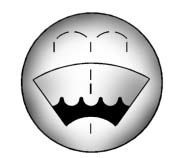
Open the cap with the washer symbol on it. Add washer fluid until the tank is full. See Engine Compartment Overview for the reservoir location.
Pour the fluid slowly to avoid spills, and make sure the cap is closed securely after filling. A loose cap can allow dirt or moisture to enter the reservoir, which may reduce washer system performance or clog the washer nozzles over time.
Notice. When using concentrated washer fluid, follow the manufacturer's instructions for adding water.
► Do not mix water with ready-to-use washer fluid.
Water can cause the solution to freeze and damage the washer fluid tank and other parts of the washer system.
Also, water does not clean as well as washer fluid.
Ready-to-use washer fluid is already mixed for proper cleaning and temperature protection. Adding extra water can weaken the formula, reduce its ability to remove road film, and increase the chance of freezing in the reservoir, hoses, pump, or spray nozzles.
► Fill the washer fluid tank only three-quarters full when it is very cold. This allows for fluid expansion if freezing occurs, which could damage the tank if it is completely full.
Cold weather can cause liquid expansion if the fluid begins to freeze. Leaving some space in the tank helps reduce pressure on the reservoir and related parts.
► Do not use engine coolant (antifreeze) in the windshield washer. It can damage the windshield washer system and paint.
Engine coolant is not a substitute for washer fluid. It can leave an oily film on the windshield, reduce visibility, damage painted surfaces, and harm washer system components. Only use fluid intended for windshield washer systems.
Brakes
This vehicle has disc brakes. Disc brake systems are designed to provide strong, controlled stopping power by using brake pads that press against brake rotors when the brake pedal is applied.
The brake system on the Buick Enclave is one of the most important safety systems on the vehicle. Its condition affects stopping distance, pedal feel, steering stability during braking, and overall driver confidence in everyday traffic and emergency situations.
Disc brake pads have built-in wear indicators that make a high-pitched warning sound when the brake pads are worn and new pads are needed. This sound is designed to alert the driver before the brake pads wear too far and cause additional damage to the brake rotors or other components.
The sound can come and go or be heard all the time the vehicle is moving, except when applying the brake pedal firmly. In some cases, the sound may be more noticeable at low speeds, during light braking, or when driving near walls or other surfaces that reflect the noise.
 WARNING
The brake wear warning sound means that soon the brakes will not work well. That could lead to a crash. When the brake wear warning sound is heard, have the vehicle serviced.
Notice: Continuing to drive with worn-out brake pads could result in costly brake repair.
Driving with worn brake pads can allow metal-to-metal contact between brake components. This can damage the rotors, increase stopping distance, create vibration, and make the repair more expensive than a normal brake pad replacement.
Some driving conditions or climates can cause a brake squeal when the brakes are first applied or lightly applied. This does not always mean something is wrong with the brakes. Moisture, dust, road salt, cold temperatures, or light surface rust on the rotors can sometimes create temporary noise that goes away after a few normal stops.
However, brake noise that continues, becomes louder, is joined by grinding, or is accompanied by vibration, pulling, reduced braking power, or a low brake pedal should be checked by a qualified technician.
Properly torqued wheel nuts are necessary to help prevent brake pulsation. When tires are rotated, inspect the brake pads for wear and evenly tighten the wheel nuts in the proper sequence to the torque specifications in Capacities and Specifications.
Unevenly tightened wheel nuts can place stress on the brake rotor and may contribute to pedal pulsation or vibration while braking. Correct torque and proper tightening sequence are important after tire rotation, wheel removal, or brake service.
Brake linings should always be replaced as complete axle sets. Replacing only one side can create uneven braking, pulling, noise, or differences in brake response between the left and right wheels.
Brake Pedal Travel
See your dealer if the brake pedal does not return to normal height, or if there is a rapid increase in pedal travel. This could be a sign that brake service might be required.
A brake pedal that feels soft, sinks too far, feels unusually low, or changes suddenly should not be ignored. These symptoms may indicate air in the hydraulic system, fluid loss, worn parts, or another condition that can affect braking performance.
Brake Adjustment
Every time the brakes are applied, with or without the vehicle moving, the brakes adjust for wear. This automatic adjustment helps maintain proper brake operation as the friction material gradually wears during normal driving.
Replacing Brake System Parts
The braking system on a vehicle is complex. Its many parts have to be of top quality and work well together if the vehicle is to have really good braking. The vehicle was designed and tested with top-quality brake parts. When parts of the braking system are replaced, be sure to get new, approved replacement parts.
Using correct replacement parts helps preserve the braking balance, pedal feel, stopping performance, and durability originally engineered for the vehicle. Brake pads, rotors, calipers, hydraulic components, hoses, and related hardware must all match the requirements of the system.
If this is not done, the brakes might not work properly. For example, installing disc brake pads that are wrong for the vehicle can change the balance between the front and rear brakes — for the worse.
The braking performance expected can change in many other ways if the wrong replacement brake parts are installed. Incorrect parts may cause noise, vibration, premature wear, reduced stopping power, uneven braking, or damage to other components. For a Buick Enclave, approved parts and proper installation are essential for dependable braking.
Brake Fluid
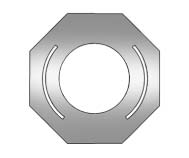
The brake master cylinder reservoir is filled with DOT 3 brake fluid as indicated on the reservoir cap.
See Engine Compartment Overview for the location of the reservoir.
Brake fluid transfers force from the brake pedal through the hydraulic system to the brakes at the wheels. Because this fluid is part of the hydraulic braking system, the correct level and correct fluid type are both critical for safe operation.
There are only two reasons why the brake fluid level in the reservoir might go down:
► The brake fluid level goes down because of normal brake lining wear. When new linings are installed, the fluid level goes back up.
► A fluid leak in the brake hydraulic system can also cause a low fluid level. Have the brake hydraulic system fixed, since a leak means that sooner or later the brakes will not work well.
As brake pads wear, the caliper pistons move outward, and the fluid level in the reservoir may gradually drop. This can be normal within limits. A sudden drop, repeated low level, or visible wetness near brake lines, calipers, hoses, or the master cylinder should be treated as a warning sign.
Do not top off the brake fluid.
Adding fluid does not correct a leak. If fluid is added when the linings are worn, there will be too much fluid when new brake linings are installed. Add or remove brake fluid, as necessary, only when work is done on the brake hydraulic system.
Overfilling the reservoir can create problems later during brake service. When new brake pads are installed and the caliper pistons are pushed back into position, the fluid level naturally rises. If the reservoir has been topped off unnecessarily, fluid may overflow.
WARNING
If too much brake fluid is added, it can spill on the engine and burn, if the engine is hot enough.
You or others could be burned, and the vehicle could be damaged. Add brake fluid only when work is done on the brake hydraulic system.
Brake fluid should be handled carefully. It can damage painted surfaces and may create a hazard if spilled near hot parts. If any fluid is spilled, it should be cleaned immediately using the proper method for the affected surface.
When the brake fluid falls to a low level, the brake warning light comes on. See Brake System Warning Light.
A low brake fluid warning should be investigated right away. The Buick Enclave should not be driven normally if there is reason to believe the hydraulic brake system is leaking or the brake pedal feel has changed.
What to Add
Use only new DOT 3 brake fluid from a sealed container.
See Recommended Fluids and Lubricants.
Brake fluid absorbs moisture from the air over time, so fluid from an old or previously opened container may not provide the same protection or performance as new fluid from a sealed container. Moisture-contaminated brake fluid can reduce boiling protection and may contribute to internal corrosion.
Always clean the brake fluid reservoir cap and the area around the cap before removing it. This helps keep dirt from entering the reservoir.
Dirt, dust, or debris inside the brake hydraulic system can damage precision components and affect braking performance. Keeping the reservoir area clean before opening the cap is a simple but important service step.
WARNING
With the wrong kind of fluid in the brake hydraulic system, the brakes might not work well.
This could cause a crash. Always use the proper brake fluid.
Notice. Using the wrong fluid can badly damage brake hydraulic system parts.
For example, just a few drops of mineral-based oil, such as engine oil, in the brake hydraulic system can damage brake hydraulic system parts so badly that they will have to be replaced.
Do not let someone put in the wrong kind of fluid.
Brake hydraulic systems are designed for a specific type of brake fluid. Mineral-based oils, power steering fluid, transmission fluid, engine oil, or other incorrect liquids can swell seals, damage rubber parts, and cause brake failure. Even a small amount of the wrong fluid can require major system repairs.
► If brake fluid is spilled on the vehicle's painted surfaces, the paint finish can be damaged. Be careful not to spill brake fluid on the vehicle. If you do, wash it off immediately.
Brake fluid can attack paint quickly. If it contacts the bodywork, rinse the area immediately with clean water and avoid rubbing the surface while fluid is still present. Careful handling helps protect both the finish and the brake system of the Buick Enclave.
