
Buick Enclave: Towing Equipment
Hitches
It is important to have the correct hitch equipment. Crosswinds, large trucks passing by, rough roads, uneven pavement, and emergency maneuvers are a few reasons why the right hitch is needed. A proper hitch helps maintain trailer alignment and supports more predictable handling.
► The rear bumper on the vehicle is not intended for hitches.Do not attach rental hitches or other bumper-type hitches to it. Use only a frame-mounted hitch that does not attach to the bumper. The hitch should be rated for the load and installed according to the correct specifications.
► Will any holes be made in the body of the vehicle when the trailer hitch is installed? If so, then be sure to seal the holes when the hitch is removed. If the holes are not sealed, dirt, water, and deadly carbon monoxide (CO) from the exhaust may get into the vehicle. See Engine Exhaust .Any hitch installation should protect the vehicle body and electrical systems. Poor installation can lead to corrosion, water entry, exhaust intrusion, wiring problems, or structural damage. For the Buick Enclave, towing equipment should be installed by a dealer or qualified trailering service center whenever possible.
Weight-Distributing Hitches and Weight Carrying Hitches
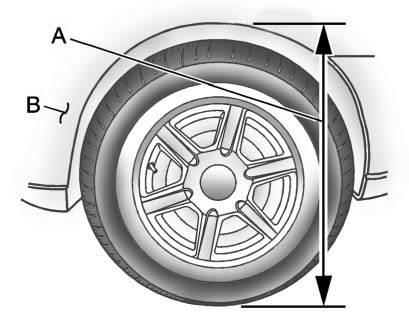
A. Body-to-Ground Distance
B. Front of Vehicle
When using a weight-distributing hitch, the hitch must be adjusted so that the distance (A) remains the same both before and after coupling the trailer to the tow vehicle.
This adjustment helps keep the vehicle attitude close to normal and supports more balanced handling. If the rear of the vehicle drops too much or the front rises after the trailer is connected, steering response, headlamp aim, braking balance, and tire loading can be affected.
A weight-carrying hitch supports the trailer tongue weight directly at the hitch point. A weight-distributing hitch uses spring bars or similar equipment to help distribute part of that load more evenly between the vehicle and trailer axles. The correct type depends on trailer weight, tongue weight, and the towing equipment recommended for the vehicle.
Safety Chains
Always attach chains between the vehicle and the trailer. Cross the safety chains under the tongue of the trailer to help prevent the tongue from contacting the road if it becomes separated from the hitch.
Always leave just enough slack so the rig can turn. Never allow safety chains to drag on the ground.
Safety chains should be strong enough for the trailer and connected to the proper attachment points, not to removable or weak parts of the hitch assembly. Check them before every trip, especially after loading the trailer or making tight turns.
Trailer Brakes
► A loaded trailer that weighs more than 450 kg (1,000 lbs) needs to have its own brake system that is adequate for the weight of the trailer. Be sure to read and follow the instructions for the trailer brakes so they are installed, adjusted, and maintained properly.Because the vehicle has antilock brakes, do not try to tap into the vehicle's hydraulic brake system.
If you do, both brake systems will not work well, or at all.
Trailer brakes reduce the braking load on the vehicle and help the trailer remain more stable during stops. Poorly adjusted or non-working trailer brakes can increase stopping distance, overheat the vehicle brakes, and make the trailer push the vehicle during downhill braking.
Before towing with the Buick Enclave, test the trailer brake operation in a safe area at low speed. The trailer should brake smoothly without grabbing, locking, or pushing the vehicle forward.
Trailer Wiring Harness
Basic Trailer Wiring
The trailer wiring harness, with a seven-pin connector, is located at the rear of the vehicle and is tied to the vehicle's frame. The harness connector can be plugged into a seven-pin universal heavy-duty trailer connector available through your dealer.
A properly connected trailer wiring harness is necessary for lighting, brake signal operation, reverse lamps, battery feed, and trailer brake function where equipped. Inspect the connector for corrosion, bent pins, loose fit, or damaged wiring before towing.
The seven-wire harness contains the following trailer circuits:
► Yellow: Left Stop/Turn Signal► Dark Green: Right Stop/Turn Signal
► Brown: Taillamps
► Black: Ground
► Light Green: Back-up Lamps
► Red/Black: Battery Feed
► Dark Blue: Trailer Brake
*The fuse for this circuit is installed in the underhood electrical center, but the wires are not connected.
They should be connected by your dealer or a qualified service center.
If the back-up lamp circuit is not functional, contact your dealer.
If a remote non-vehicle battery is being charged, press the Tow/Haul mode switch located on the center console near the climate controls.
This will boost the vehicle system voltage and properly charge the battery. If the trailer is too light for Tow/Haul mode, turn on the headlamps, non-HID only, as a second way to boost the vehicle system and charge the battery.
After connecting the trailer, check all lights before driving. Confirm left turn, right turn, brake lamps, taillamps, reverse lamps if equipped, and trailer brake response. A lighting or ground problem can create unsafe conditions for the driver and other road users.
Electric Trailer Brake Control Wiring Provisions
These wiring provisions for an electric trailer brake controller are included with the vehicle as part of the trailer wiring package.
The instrument panel contains blunt cut wires behind the steering column for the electric trailer brake controller. The harness contains the following wires:
► Red/Black: Power Supply► White: Brake Switch Signal
► Gray: Illumination
► Dark Blue: Trailer Brake Signal
► Black: Ground
The electric trailer brake controller should be installed by your dealer or a qualified service center.
Correct installation is important because the trailer brake controller must communicate properly with the trailer braking system and respond predictably to driver braking. Incorrect wiring can cause weak braking, sudden brake application, no trailer braking, or electrical damage.
For safe towing, the Buick Enclave should be equipped with the proper hitch, working wiring, correct safety chains, suitable trailer brakes, and carefully verified weight ratings. Towing equipment is not just an accessory; it is part of the complete towing safety system.
