
Buick Enclave: Tire Changing
Removing Tools
The tools needed to remove the spare tire are located in the storage compartment on the driver side, at the rear of the vehicle. Before beginning, make sure the vehicle is parked in a safe, level area, the hazard warning flashers are on, and passengers are away from traffic.
The tool storage area is designed so the jack, wrench, and related equipment stay secured while driving but can still be reached when a tire must be changed. In the Buick Enclave, taking the tools out in the correct order helps prevent damage to the storage trim and makes the tire-changing process easier to follow.
1. Open the jack storage compartment by pulling on the latch tab, located toward the rear of the vehicle, and pulling the cover off.
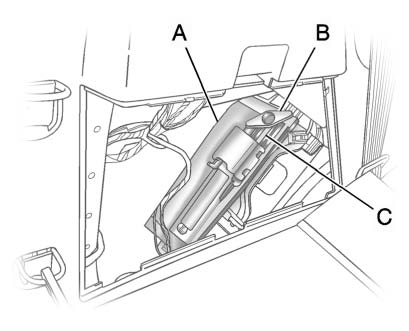
A. Tool Bag
B. Wing Bolt
C. Jack
2. Remove the wing bolt (B) by turning it counterclockwise.
Set the wing bolt aside where it will not roll away. You will need it later when returning the jack and tool bag to the storage compartment.
3. Push the jack (C) up out of the holding bracket and remove the tool bag (A).
The jack may fit tightly in its bracket, so lift it evenly and avoid forcing it against the surrounding trim. Remove the tool bag carefully and check that the wrench is inside before continuing.
4. Turn the jack on its side, with the bottom facing toward you.
5. Pull the jack straight out, bottom first.
Keeping the jack aligned while removing it helps prevent it from catching on the bracket or storage opening.
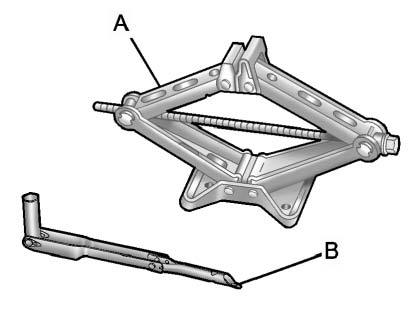
A. Jack
B. Wrench (Three-Piece Shown, One-Piece Similar)
The tools you will be using include the jack (A) and wrench (B). Before placing the jack near the vehicle, confirm that the wrench fits the jack mechanism and the wheel nuts. If any tool appears damaged, missing, or badly corroded, do not attempt to lift the vehicle until the correct equipment is available.
Removing the Spare Tire
The compact spare tire is located under the vehicle, in front of the rear bumper. See Compact Spare Tire for more information.
The spare tire is held by a hoist system and retainer. Work slowly when lowering it, and keep your feet clear of the tire as it comes down. The tire should lower smoothly; if it does not, stop and inspect the hoist access before continuing.
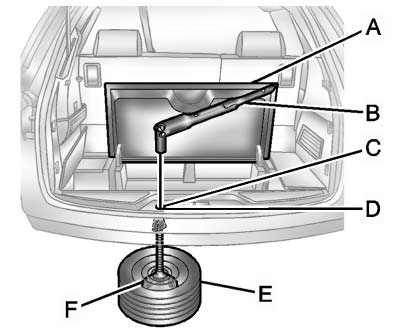
A. Rear Convenience Center
B. Wrench (Three-Piece Shown, One-Piece Similar)
C. Carpet Cutout
D. Hoist Shaft
E. Compact Spare Tire
F. Retainer
1. Open the storage compartment door of the convenience center (A) that is nearest the liftgate.
2. Open the carpet cutout (C) that is located through the hole of the storage compartment.
Fold the carpet cutout back far enough to clearly access the hoist shaft. Make sure the wrench is fully seated before turning it so the shaft is not rounded or damaged.
3. Attach the wrench (B) into the hoist shaft (D).
4. Turn the wrench (B) counterclockwise to lower the spare tire (E) to the ground.
Continue turning the wrench until the spare tire can be pulled out from under the vehicle.
Do not stop as soon as the tire touches the ground. Continue lowering until there is enough slack in the cable to pull the tire out and remove the retainer without fighting against tension.
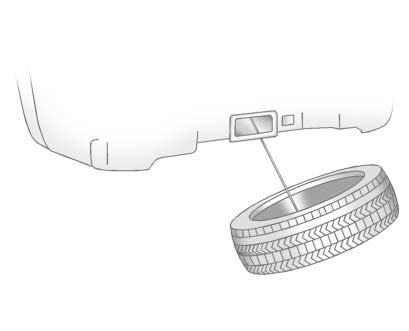
5. Tilt the retainer and slip it through the wheel opening to remove the spare tire from the cable.
Move the retainer through the wheel opening at an angle. If it does not pass through easily, lower the cable a little more and try again without forcing it against the wheel.
6. Turn the wrench clockwise to raise the cable back up after removing the spare tire.
Raising the cable after the spare tire is removed helps keep the hoist cable and retainer from hanging loose under the vehicle while the tire is being changed.
Do not store a full-size or a flat road tire under the vehicle.
See “Storing the Spare Tire” and “Storing the Flat Tire” later in this section.
Removing the Flat Tire and Installing the Spare Tire
1. Do a safety check before proceeding. See If a Tire Goes Flat for more information.
Look around the vehicle before loosening the wheel. Confirm that the parking brake is set, the transmission is in P (Park), the ground is firm, and wheel blocks are positioned as described in the flat tire section. Do not continue if the vehicle is on soft ground, a steep shoulder, or too close to traffic.
2. If the vehicle has a wheel cover, loosen the plastic nut caps with the wheel wrench. They will not come off. Then, using the flat end of the wheel wrench, pry along the edge of the cover until it comes off. Be careful; the edges may be sharp. Do not try to remove the cover with your bare hands.
Work around the cover gradually instead of prying hard in one spot. This helps reduce the chance of cracking the cover or bending its retaining points.
Store the wheel cover securely in the rear of the vehicle until you have the flat tire repaired or replaced.
If the vehicle has aluminum wheels, remove the wheel nut caps using the wheel wrench.
Place the caps in a safe location so they are not lost. Small trim pieces can roll under the vehicle or into roadside debris if they are set down carelessly.
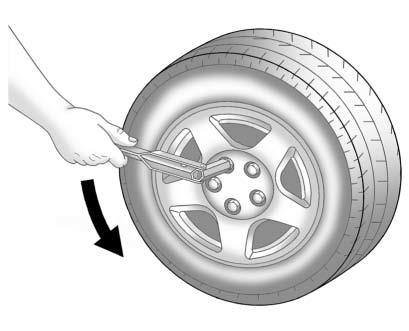
3. Loosen the wheel nuts — but do not remove them — using the wrench. For wheels with a wheel lock key, use the wheel lock key between the lock nut and wrench. The key is supplied in the front passenger door pocket.
Loosen the wheel nuts while the tire is still on the ground. The weight of the vehicle helps keep the wheel from turning while you break the nuts loose. Turn each nut only enough to loosen it; final removal should be done after the vehicle has been raised.
Notice: If this vehicle has wheel locks and an impact wrench is used to remove the wheel nuts, the lock nut or wheel lock key could be damaged. Do not use an impact wrench to remove the wheel nuts if this vehicle has wheel locks.
Use steady hand pressure with the wheel wrench. A wheel lock key can be damaged by sudden impact force, and a damaged key may make it difficult to remove the locked wheel nut at the roadside.
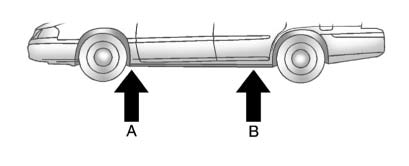
4. To identify the appropriate jacking location, find the triangle (A) about 30.5 cm (12 in) from the front tire or (B) about 27 cm (10.5 in) from the rear tire.
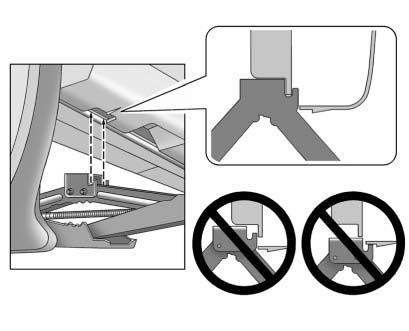
The triangle is located near each wheel on the vehicle's exterior.
The triangle marker helps guide the jack to the correct lift area. Do not guess at the lifting point or place the jack under suspension arms, the rear axle control arms, body panels, or plastic trim. The jack must contact the correct reinforced location.
Notice: If a jack is used to raise the vehicle without positioning it correctly, the vehicle could be damaged. When raising the vehicle on a jack, avoid contact with the rear axle control arms.
5. Attach the wrench to the jack, and turn the wrench clockwise to raise the jack head 7.6 cm (3 in).
Raising the jack head slightly before positioning it can make it easier to align the lift head with the correct jacking point. Make sure the jack base sits flat on the ground.
6. Do not raise the vehicle yet.
Put the compact spare tire near you.
Keep the spare tire within reach before the vehicle is lifted. Once the flat tire is removed, the vehicle should not remain on the jack longer than necessary.
 WARNING
Getting under a vehicle when it is jacked up is dangerous. If the vehicle slips off the jack, you could be badly injured or killed.
Never get under a vehicle when it is supported only by a jack.
The jack supplied with the Buick Enclave is for changing a tire only. It is not a support stand and should never be used for inspections or repairs underneath the vehicle.
WARNING
Raising the vehicle with the jack improperly positioned can damage the vehicle and even make the vehicle fall. To help avoid personal injury and vehicle damage, be sure to fit the jack lift head into the proper location before raising the vehicle.
Before lifting, look again at the jack head, the jacking point, and the jack base. The jack should be straight, stable, and centered under the correct location. If it begins to lean, lower it and reposition it before continuing.
7. Raise the vehicle by turning the wrench clockwise in the jack.
Raise the vehicle far enough off the ground so that there is enough room for the spare tire to fit under the wheel well.
Do not raise the vehicle higher than needed. Extra height can make the vehicle less stable on the jack, especially outdoors where the ground may not be perfectly level.
8. Remove all the wheel nuts and the flat tire.
Pull the flat tire straight toward you. If it sticks to the hub because of rust or dirt, do not kick the vehicle or shake it while it is on the jack. Work carefully and keep your body clear of the wheel opening.
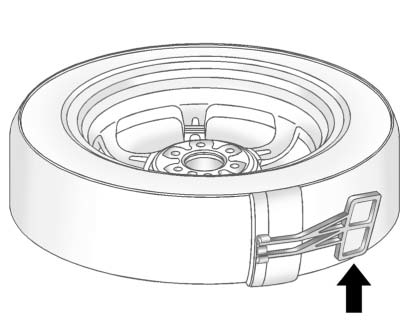
9. Remove the plastic spare tire heat shield by pulling the rubber latch. Store the plastic spare tire heat shield. See “Storing the Spare Tire” later in this section for more information.
Keep the heat shield with the other tire-changing equipment so it can be reinstalled or stored as directed later. Do not leave it loose under the vehicle or on the roadside.
WARNING
Rust or dirt on a wheel, or on the parts to which it is fastened, can make wheel nuts become loose after time. The wheel could come off and cause an accident. When changing a wheel, remove any rust or dirt from places where the wheel attaches to the vehicle.
In an emergency, a cloth or a paper towel can be used; however, use a scraper or wire brush later to remove all rust or dirt.
Clean the wheel mounting surface as well as possible before installing the spare. The wheel should sit flat against the hub. Debris trapped between the wheel and hub can lead to vibration, uneven clamping, or loose wheel nuts after driving.
WARNING
Never use oil or grease on bolts or nuts because the nuts might come loose. The vehicle's wheel could fall off, causing a crash.
Install wheel nuts dry unless the service information specifically states otherwise. Oil or grease can change the clamping force and make the torque reading misleading. For a Buick Enclave tire change, clean threads and correct tightening are much safer than lubricated wheel hardware.
10. Remove any rust or dirt from the wheel bolts, mounting surfaces, and spare wheel.
Before placing the spare tire on the hub, take a moment to clean the contact areas as well as possible. The wheel should sit flat against the mounting surface, with no packed dirt, rust flakes, gravel, or debris trapped between the wheel and hub. Even a small amount of buildup can keep the wheel from clamping evenly.
11. Place the spare tire on the wheel mounting surface.
Lift the spare tire carefully and line up the wheel holes with the wheel bolts. Push the wheel straight onto the mounting surface rather than letting it hang at an angle. On the Buick Enclave, the compact spare should be seated squarely before the nuts are started by hand.
12. Put the nuts on by hand by turning them clockwise until the wheel is held against the mounting surface. Make sure the rounded end is toward the wheel.
Start every wheel nut by hand first. This helps prevent cross-threading and makes it easier to feel whether each nut is going on smoothly. Do not use the wrench to force a nut that does not turn easily by hand; remove it, check the threads, and start again.
13. Lower the vehicle by attaching the wrench to the jack and turning the wrench counterclockwise. Lower the jack completely.
Lower the vehicle slowly and keep clear of the wheel opening as the tire contacts the ground. Once the vehicle is fully lowered and the jack is no longer supporting weight, remove the jack from under the vehicle.
WARNING
Wheel nuts that are improperly or incorrectly tightened can cause the wheels to become loose or come off. The wheel nuts should be tightened with a torque wrench to the proper torque specification after replacing. Follow the torque specification supplied by the aftermarket manufacturer when using accessory locking wheel nuts. See Capacities and Specifications for original equipment wheel nut torque specifications.
Wheel nut tightening is not just a final step; it is what secures the wheel to the vehicle. After a roadside tire change, the wheel nuts should be tightened to specification with a torque wrench as soon as possible. If locking wheel nuts are installed, use the correct key and follow the manufacturer’s torque instructions.
Notice: Improperly tightened wheel nuts can lead to brake pulsation and rotor damage.
To avoid expensive brake repairs, evenly tighten the wheel nuts in the proper sequence and to the proper torque specification.
See Capacities and Specifications for the wheel nut torque specification.
Uneven tightening can distort the brake rotor or leave the wheel clamped unevenly. Tightening the nuts in the correct pattern helps spread clamping force across the wheel face and hub.
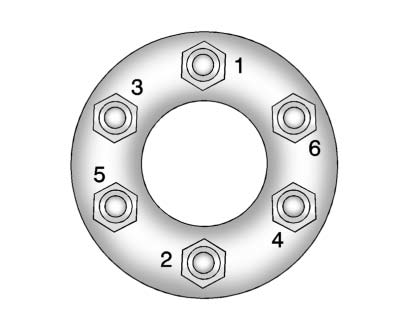
14. Tighten the wheel nuts firmly in a crisscross sequence, as shown.
Move from one nut to the opposite nut rather than tightening around the circle in order. This crisscross pattern helps pull the wheel evenly against the mounting surface. After driving a short distance, have the wheel nut torque checked with the proper tool.
Notice: Wheel covers will not fit on the vehicle's compact spare.
If you try to put a wheel cover on the compact spare, the cover or the spare could be damaged.
The compact spare is not shaped or sized for the regular wheel cover. Store the wheel cover or center cap safely until the full-size tire is repaired or replaced and installed back on the vehicle.
Storing the Spare Tire
WARNING
The underbody-mounted spare tire needs to be stored with the valve stem pointing down.
If the spare tire is stored with the valve stem pointing upwards, the secondary latch will not work properly and the spare tire could loosen and suddenly fall from the vehicle. If this happened when the vehicle was being driven, the tire might contact a person or another vehicle, causing injury and damage to itself. Be sure the underbody-mounted spare tire is stored with the valve stem pointing down.
The valve stem direction matters because the spare tire hoist and secondary latch are designed to hold the tire in a specific orientation. If the spare is placed the wrong way, it may not lock into the storage position as intended.
WARNING
Storing a jack, a tire, or other equipment in the passenger compartment of the vehicle could cause injury. In a sudden stop or collision, loose equipment could strike someone. Store all these in the proper place.
Loose tire-changing equipment can move with significant force during sudden braking or a collision. The jack, wrench, cable, heat shield, and tire should all be returned to their assigned storage locations before the Buick Enclave is driven again.
To store the spare tire:
1. Lay the compact spare tire near the rear of the vehicle with the valve stem down.
Position the tire close enough to the hoist cable so the retainer can pass through the wheel without pulling the cable sideways.
2. Reinstall the plastic spare tire heat shield on the compact spare tire.
The heat shield should sit in its intended place before the tire is raised. Do not leave it loose in the cargo area or under the vehicle.
3. Slide the cable retainer through the center of the wheel and start to raise the compact spare tire.
Make sure the retainer is fully seated across the underside of the wheel.
If the retainer is not centered, lower the tire again and reposition it. The retainer should lie flat enough to hold the wheel securely as the cable tightens.
4. When the compact spare tire is almost in the stored position, turn the tire so the valve is toward the rear of the vehicle.
This position helps when checking the air pressure in the compact spare tire.
Keeping the valve accessible makes future pressure checks much easier. The compact spare needs the correct pressure to be useful in an emergency.
5. Raise the tire fully against the underside of the vehicle.
Continue turning the wrench until you feel more than two clicks.
This indicates that the compact spare tire is secure and the cable is tight. The spare tire hoist cannot be overtightened.
Do not stop before the clicks are felt. The tire should be pulled firmly against the underside of the vehicle and should not hang loosely from the cable.
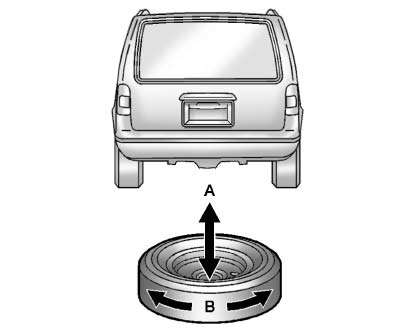
6. Make sure the tire is stored securely. Push, pull (A), and then try to turn (B) the tire. If the tire moves, use the wrench to tighten the cable.
Check the stored spare from more than one direction. If it shifts, rattles, rotates freely, or drops slightly, raise it again until the cable is tight and the tire no longer moves.
Storing the Flat Tire
1. Remove the cable package from the jack storage area.
2. Remove the small center cap by tapping the back of the cap with the extension of the shaft, if the vehicle has aluminum wheels.
Tap gently from the back side so the cap comes out without cracking or scratching the finished surface. Store the cap where it will not be stepped on or lost.
3. Put the flat tire in the rear storage area with the valve stem pointing toward the rear of the vehicle.
The flat tire should be placed so it rests securely and does not interfere with the liftgate closing. Keep the valve stem direction as described so the cable can be routed correctly.
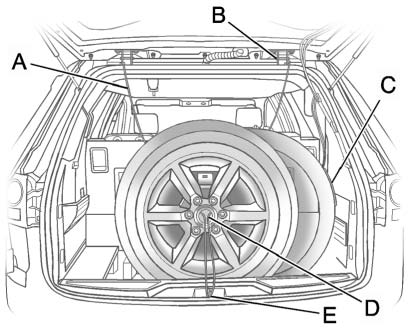
A. Cable
B. Liftgate Hinges
C. Spare Tire Heat Shield
D. Center of the Wheel
E. Door Striker
4. Pull the cable (A) through the door striker (E), the center of the wheel (D), and the plastic spare tire heat shield (C), as shown.
Route the cable cleanly through the wheel center and striker area. Make sure it is not twisted, trapped under the tire, or caught on trim pieces.
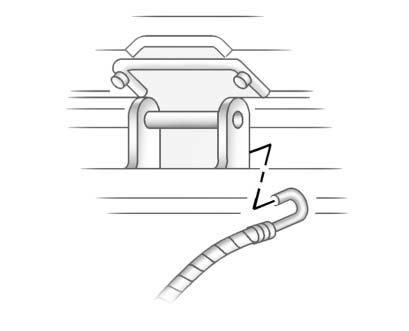
5. Hook the cable onto the outside portion of the liftgate hinges (B).
6. Hook the other end of the cable onto the outside portion of the liftgate hinge on the other side of the vehicle.
7. Pull on the cable to make sure it is secure.
Both ends of the cable should be seated on the hinge areas before the liftgate is closed. A quick pull helps confirm that the cable has not slipped off or been placed on the wrong side of the hinge.
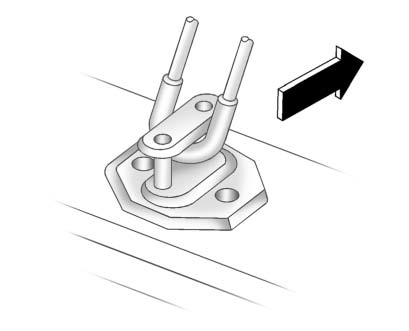
8. Make sure the metal tube is centered at the striker. Push the tube toward the front of the vehicle.
9. Close the liftgate and make sure it is latched properly.
Close the liftgate carefully and watch for any resistance. If the liftgate does not latch normally, reopen it and check the tire position, cable routing, and metal tube placement before trying again. Do not force the liftgate shut.
Storing the Tools
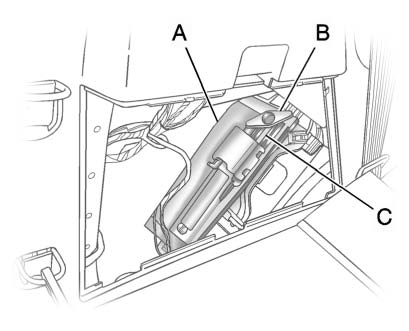
A. Tool Bag
B. Wing Bolt
C. Jack
Put back all tools as they were stored in the jack storage compartment and put the compartment cover back on.
1. Ensure that the bottom of the jack is facing toward you.
2. Replace the tool bag (A).
3. Turn the jack (C) on its side and place it down on the holding bracket.
4. Reinstall the wing bolt (B) by turning clockwise.
Tighten the wing bolt enough to hold the jack and tools securely, but do not force it. The goal is to prevent movement and rattling while keeping the equipment easy to remove the next time it is needed.
5. To replace the cover, line up the tab at the front of the cover with the notch in the cover opening.
Push the cover in place and make sure that the rear clips are in the slots, then push the cover closed.
The cover should sit flush with the surrounding trim. If it does not close cleanly, check that the jack, tool bag, and wing bolt are positioned the same way they were before removal.
Store the center cap or the plastic bolt-on wheel covers until a full-size tire is put back on the vehicle. When you replace the compact spare with a full-size tire, reinstall the bolt-on wheel covers or the center cap.
Hand-tighten them over the wheel nuts, using the wrench.
After the flat tire has been repaired or replaced, return the full-size wheel to the Buick Enclave and restore the spare tire, tools, cover, and trim pieces to their original locations. A quick final check helps ensure nothing is loose in the rear storage area before normal driving resumes.
