
Buick Enclave: Tachometer. Fuel Gauge. Engine Coolant Temperature Gauge
Tachometer
The tachometer displays engine speed in revolutions per minute (rpm). This information helps the driver understand how fast the engine is operating during acceleration, cruising, or shifting conditions.
Fuel Gauge
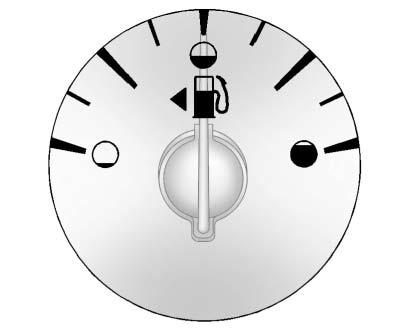
Metric
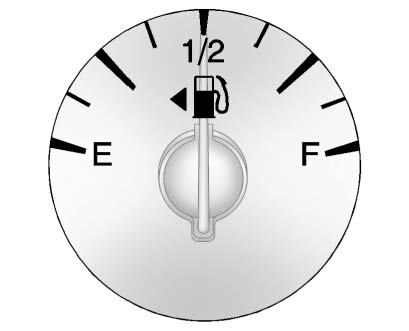
English
When the ignition is on, the fuel gauge shows approximately how much fuel remains in the fuel tank.
An arrow on the fuel gauge indicates which side of the vehicle the fuel door is located on, helping the driver position the vehicle correctly at a fuel pump.
The gauge will indicate empty before the vehicle is completely out of fuel. When the gauge approaches empty, the fuel tank should be filled as soon as practical.
When the fuel level is low, the FUEL LEVEL LOW message appears on the Driver Information Center (DIC). For more information, see Fuel System Messages.
The following situations can occur during normal fuel gauge operation. These conditions do not indicate a problem with the fuel gauge:
► At a gas station, the fuel pump may shut off before the gauge reads full.
► It may take slightly more or slightly less fuel to fill the tank than the fuel gauge seemed to indicate. For example, the gauge may show the tank as half full, but filling it may require a little more or less than half of the tank’s capacity.
► The gauge may move slightly while turning a corner, accelerating, braking, or driving on uneven roads.
► The gauge returns to empty when the ignition is turned off.
Engine Coolant Temperature Gauge
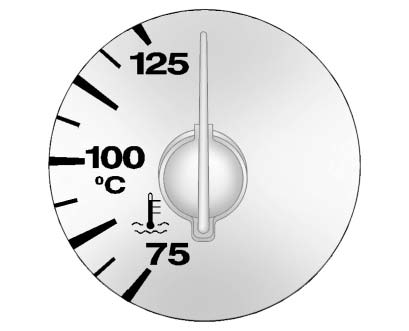
Metric
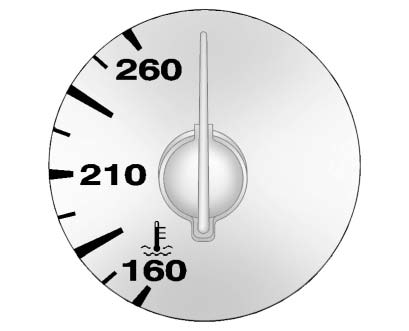
English
This gauge shows the engine coolant temperature. Under normal driving conditions, the gauge should generally read 100°C (210°F) or less.
If the gauge pointer moves near 125°C (260°F), the engine is too hot and should be treated as an overheating condition.
This means the engine coolant has overheated. If the Buick Enclave has been operating under normal driving conditions and this occurs, pull off the road safely, stop the vehicle, and turn off the engine as soon as possible.
See Engine Overheating for more information.
