
Buick Enclave: Specifications, Diagnostic Information and Procedures
SPECIFICATIONS
FASTENER TIGHTENING SPECIFICATIONS
Fastener Tightening Specifications
Fastener tightening specifications for the wheel drive shafts must be followed exactly during service. These shafts transmit torque through joints that operate at changing angles, so loose or over-tightened hardware can lead to noise, vibration, joint stress, seal damage, or premature bearing wear. Always tighten the related fasteners to the listed values and avoid guessing by feel on driveline components.

ADHESIVES, FLUIDS, LUBRICANTS AND SEALERS
Adhesives, Fluids, Lubricants and Sealers
Use the approved adhesives, fluids, lubricants, and sealers listed for the wheel drive shaft service procedures. The correct materials help protect splines, seals, boots, retaining hardware, and joint assemblies from wear or contamination. Using an incorrect lubricant or sealer can shorten joint life, affect boot sealing, or make future service more difficult.

COMPONENT LOCATOR
FRONT WHEEL DRIVE SHAFT DISASSEMBLED VIEWS
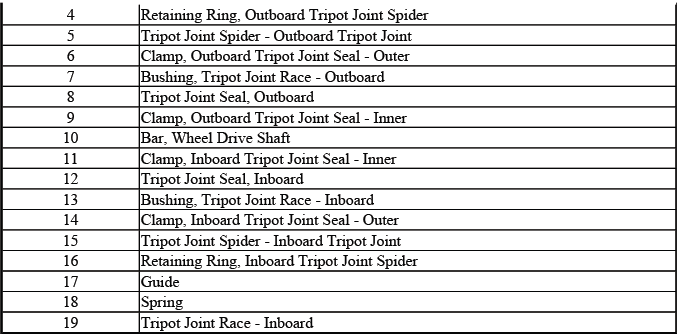
The front wheel drive shaft disassembled views identify the major parts used in the shaft assembly, including the shaft bar, inboard joint, outboard constant velocity joint, boots, clamps, retainers, and related hardware. These views are useful when comparing removed parts, confirming orientation, or checking that the correct components are being installed.
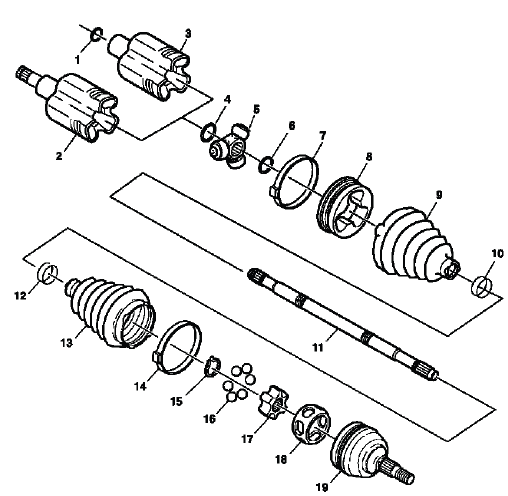
Fig. 1: Identifying Wheel Drive Shaft Components
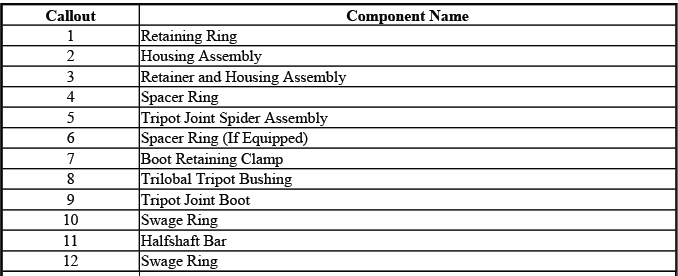
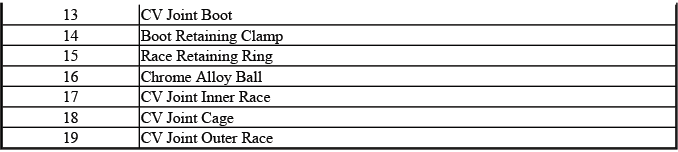
REAR WHEEL DRIVE SHAFT DISASSEMBLED VIEWS
The rear wheel drive shaft disassembled views show the relationship between the rear axle shaft components, joint assemblies, seals, boots, clamps, and retaining parts. For AWD-equipped Buick Enclave models, these views help separate a rear shaft concern from a rear differential, wheel bearing, suspension, or tire-related complaint.
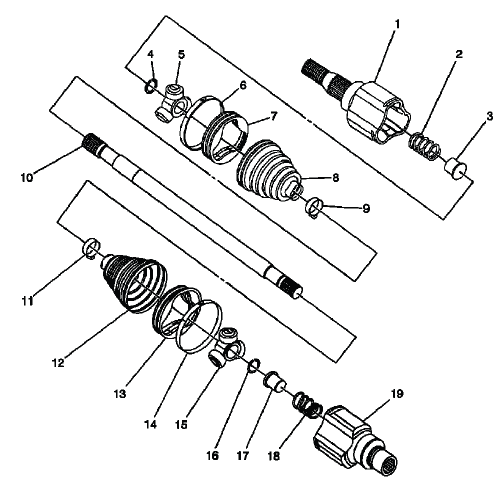
Fig. 2: Wheel Drive Shafts Disassembled Views - Rear

DIAGNOSTIC INFORMATION AND PROCEDURES
CLICK NOISE IN TURNS
A worn or damaged constant velocity joint may create a repeated clicking noise during turns. The sound is often easier to hear when the vehicle is turning and accelerating at the same time, because the joint is carrying torque while operating at an angle. This clicking usually comes from wear or damage inside the CV joint bearings and races.
In most cases, the damage begins after lubricating grease escapes from the joint or road debris enters through a damaged boot. Once the grease is lost, the joint can wear quickly because the bearing surfaces no longer have the protection they need. Dirt, water, and grit inside the joint can speed up the wear and make the clicking become louder over time.
Carefully inspect the wheel drive shaft seals, also called boots, for cuts, tears, splitting, loose clamps, grease trails, or any other damage that could allow lubricant to escape. A small opening in the boot can be enough to ruin the joint in a short period of driving. On the Buick Enclave, grease thrown onto nearby suspension or brake components is a strong clue that the boot or clamp has failed.
If the boots do not show signs of lubricant loss or visible damage, remove the wheel drive shaft from the vehicle and rotate the constant velocity joint in a circular motion. The joint should move smoothly and evenly, without a tight spot, roughness, clicking, or hesitation. If binding or rough movement is felt during this inspection, the constant velocity joint requires replacement.
CLUNK WHEN ACCELERATING FROM COAST
A clunk noise when accelerating from coast or from a standing start may be caused by a worn or damaged wheel drive shaft cross groove joint. This type of noise usually appears when torque is suddenly reapplied after the driveline has been unloaded, such as when the driver moves from coasting back into acceleration.
The common cause of cross groove joint damage is loss of lubricating grease, contamination inside the joint, or both. This often happens after the cross groove joint seal boot is torn, cut, loose at the clamp, or otherwise damaged. Once contamination enters the joint, the internal surfaces can wear unevenly and create a knock, clunk, or harsh take-up sensation.
Inspect the wheel drive shaft cross groove seal boot closely for cuts, tears, cracking, loose clamps, grease leakage, or signs that dirt has entered the joint area. If the seals appear intact, remove the wheel drive shaft from the vehicle and inspect the cross groove joint directly. Rotate the joint in a circular motion while keeping the assembly controlled.
Do not allow the cross groove spider to become disengaged from the race housing, because damage to the cross groove joint can occur. The joint movement should be smooth, controlled, and even through its range. If binding, roughness, or impeded motion is felt, the cross groove joint requires replacement.
CLUNK NOISE WHEN ACCELERATING DURING TURNS
A clunk noise that occurs while accelerating during a turn may be caused by wear or damage in the inboard and outboard joints working together. During turning, the drive shaft joints operate at changing angles, and acceleration adds load through the shaft. If one or both joints have internal wear, the noise may appear only under that combined condition.
Inspect the joint seals, or boots, for cuts, tears, cracks, grease leakage, loose clamps, or signs of contamination. Damaged joint seals can allow lubricant to leak out and foreign material to enter the joint. The loss of lubricant, combined with grit or moisture inside the joint, can damage the internal bearing surfaces and make the shaft noisy under load.
If the boots are not damaged, remove the wheel drive shaft from the vehicle and rotate the joints in a circular motion. Do not allow the tripot spider to become disengaged from the housing or race. The movement of each joint should feel smooth and even, without binding, rough spots, excessive looseness, or restricted travel.
For Buick Enclave wheel drive shaft diagnosis, pay attention to when the clunk occurs. A noise during straight-line acceleration may point to a different joint or mount than a noise that appears only during turns. If the joints show binding or inhibited movement during inspection, the affected joint requires replacement.
SHUDDER OR VIBRATION DURING ACCELERATION
A shudder or vibration during acceleration can be caused by several conditions, including wheel drive shaft joint wear, inner joint binding, shaft imbalance, engine or transmission mount movement, tire or wheel issues, or another driveline concern. Before condemning the shaft, verify the operating conditions that create the vibration, such as speed range, throttle load, road surface, turning angle, and whether the concern occurs hot or cold.
In order to diagnose a shudder or vibration during acceleration, refer to Diagnostic System Check - Vehicle. A complete vehicle-level check helps avoid replacing a wheel drive shaft when the actual cause is a related suspension, mount, tire, transmission, or rear driveline issue.
