
Buick Enclave: Tire Inspection. Tire Rotation. When It Is Time for New Tires
Tire Inspection
We recommend that the tires, including the spare tire if the vehicle has one, be inspected for signs of wear, aging, or damage at least once a month. A careful tire inspection helps identify problems before they affect handling, braking, ride comfort, or overall road safety.
On the Buick Enclave, tire condition is especially important because the tires support the vehicle’s weight, maintain road contact, absorb road impacts, and help provide predictable steering and braking performance. Even when the vehicle feels normal, a tire may have damage that is not obvious from a quick glance.
During inspection, look closely at the tread surface, sidewalls, valve stems, and the area around the bead where the tire meets the wheel. Check for uneven tread wear, cracking, cuts, punctures, bulges, embedded objects, exposed cords, or any sign that the tire has been weakened.
Replace the tire if:
► The indicators at three or more places around the tire can be seen.
► There is cord or fabric showing through the tire's rubber.
► The tread or sidewall is cracked, cut, or snagged deep enough to show cord or fabric.
► The tire has a bump, bulge, or split.
► The tire has a puncture, cut, or other damage that cannot be repaired well because of the size or location of the damage.
A tire with visible cord, a sidewall bulge, deep cracking, or damage near the shoulder or sidewall should not be treated as a minor issue. These conditions may indicate internal tire damage or structural weakness. If there is any doubt about whether a tire is safe, have it inspected by a dealer or authorized tire service center before continuing to drive.
Tire Rotation
Tires should be rotated every 12 000 km (7,500 mi).
See Maintenance Schedule.
Tires are rotated to help achieve uniform wear for all tires. Because front and rear tires can wear at different rates, regular rotation helps extend tire life and maintain more consistent traction, ride quality, and handling.
The first rotation is the most important. Early tire wear patterns can develop quickly, and rotating the tires on schedule helps prevent one pair of tires from wearing much faster than the others.
Any time unusual wear is noticed, rotate the tires as soon as possible and check the wheel alignment. Also check for damaged tires or wheels.
Uneven wear can be caused by incorrect tire pressure, poor alignment, worn suspension parts, improper wheel balance, aggressive driving, road impacts, or a bent wheel. Rotation may help even out normal wear, but it will not correct an underlying mechanical problem.
See When It Is Time for New Tires and Wheel Replacement.
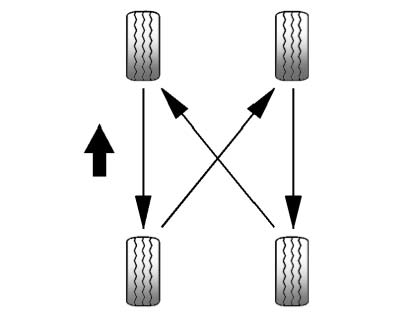
Use this rotation pattern when rotating the tires.
If the vehicle has a compact spare tire, do not include it in the tire rotation. A compact spare is intended only for temporary emergency use and is not designed to match the regular road tires for long-term driving or normal rotation patterns.
Adjust the front and rear tires to the recommended inflation pressure on the Tire and Loading Information label after the tires have been rotated.
See Tire Pressure and Vehicle Load Limits.
Reset the Tire Pressure Monitor System. See Tire Pressure Monitor Operation.
After tire rotation, the TPMS must correctly recognize the new tire positions so pressure information is displayed accurately. This is especially important when the system identifies a specific tire with low pressure.
Check that all wheel nuts are properly tightened. See “Wheel Nut Torque” under Capacities and Specifications.
Correct wheel nut torque is critical after any wheel removal. Wheel nuts that are too loose can allow the wheel to move, while over-tightened nuts can damage studs, distort brake rotors, or make future service more difficult.
 WARNING
Rust or dirt on a wheel, or on the parts to which it is fastened, can make wheel nuts become loose after time. The wheel could come off and cause an accident. When changing a wheel, remove any rust or dirt from places where the wheel attaches to the vehicle.
In an emergency, a cloth or a paper towel can be used; however, use a scraper or wire brush later to remove all rust or dirt.
Clean contact surfaces allow the wheel to sit flat against the hub. If rust, dirt, paint buildup, or debris remains between the wheel and hub, the wheel may not clamp evenly, which can lead to vibration, loosening, or unsafe wheel attachment.
Lightly coat the center of the wheel hub with wheel bearing grease after a wheel change or tire rotation to prevent corrosion or rust build-up.
Do not get grease on the flat wheel mounting surface or on the wheel nuts or bolts. Grease in the wrong location can affect clamping force and may cause inaccurate torque readings.
Check that the spare tire, if the vehicle has one, is stored properly. Push, pull, and then try to rotate or turn the tire. If it moves, tighten the cable. See Tire Changing.
For the Buick Enclave, a properly secured spare tire helps prevent noise, movement, damage to the storage mechanism, and possible safety issues while driving.
When It Is Time for New Tires
Factors such as maintenance, temperatures, driving speeds, vehicle loading, and road conditions affect the wear rate of the tires. Tire life can vary greatly depending on how the vehicle is driven, where it is driven, how often tire pressure is checked, and whether tire rotation and alignment are maintained.
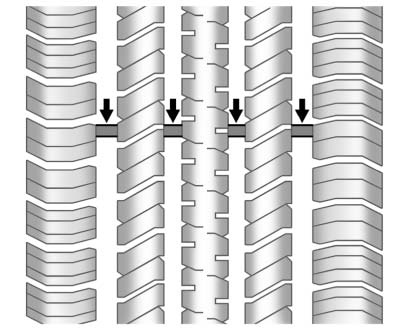
Treadwear indicators are one way to tell when it is time for new tires.
Treadwear indicators appear when the tires have only 1.6 mm (1/16 in) or less of tread remaining. See Tire Inspection and Tire Rotation for more information.
When these indicators become visible across the tread, the tire has reached the minimum tread depth and should be replaced. At this point, wet-road traction, braking performance, and resistance to hydroplaning can be significantly reduced.
Do not wait for every part of the tire to look completely worn. If wear bars are visible in several locations, if tread depth is low, or if the tire shows uneven wear that exposes one area more than another, replacement should be considered promptly.
The rubber in tires ages over time.
This also applies to the spare tire, if the vehicle has one, even if it is never used. Multiple conditions, including temperature, loading conditions, sunlight exposure, storage environment, and inflation pressure maintenance, affect how fast aging takes place.
Tires will typically need to be replaced due to wear before they need to be replaced due to age. However, age-related cracking, hardening, or sidewall deterioration can make a tire unsafe even if tread depth still appears acceptable. Consult the tire manufacturer for more information on when tires should be replaced.
When replacing tires on the Buick Enclave, use tires that meet the correct size, load rating, speed rating, and performance requirements for the vehicle. Matching the correct specifications helps preserve the intended handling, braking, ride quality, and load-carrying capability.
Vehicle Storage
Tires age when stored normally mounted on a parked vehicle. Park a vehicle that will be stored for at least a month in a cool, dry, clean area away from direct sunlight to slow aging. This area should be free of grease, gasoline, or other substances that can deteriorate rubber.
Heat, sunlight, petroleum products, ozone, and long periods of weight resting on one section of the tire can speed up tire aging. A proper storage location helps reduce cracking and helps preserve the condition of the rubber.
Parking for an extended period can cause flat spots on the tires that may result in vibrations while driving. When storing a vehicle for at least a month, remove the tires or raise the vehicle to reduce the weight from the tires.
If the vehicle has been stored for a long period, inspect all tires carefully before driving. Check pressure, tread condition, sidewalls, valve stems, and any signs of flat spotting or cracking. Safe tires help the Buick Enclave return to normal driving with better stability and confidence.
