Buick Enclave: Description and Operation
WHEEL DRIVE SHAFTS DESCRIPTION AND OPERATION (FRONT)
Front wheel drive axles are flexible drive assemblies designed to transfer engine and transaxle torque to the front wheels while allowing the suspension and steering system to move through their normal operating ranges.
On the Buick Enclave, the front wheel drive axle assembly is built around several key components that work together as one moving unit:
- A front wheel drive shaft tri-pot joint, also referred to as the inner joint
- A front wheel drive shaft constant velocity joint, also referred to as the outer joint
- A front wheel drive shaft that connects both joint assemblies
The front wheel drive shaft links the tri-pot inner joint to the constant velocity outer joint. This connection allows torque to pass from the transaxle to the wheel hub while maintaining smooth movement as the wheel angle and suspension height change.
The front wheel drive shaft tri-pot joint is fully flexible and is also capable of moving in and out. This axial movement is necessary because the distance between the transaxle and the wheel hub changes slightly as the suspension travels upward and downward.
The front wheel drive shaft constant velocity joint is also flexible, but it is not designed to move in and out. Its main purpose is to allow angular movement at the wheel end while keeping torque delivery smooth during steering and road movement.
Boots (Seals) And Clamps
The front wheel drive shaft constant velocity joint and the front wheel drive shaft tri-pot joint use boots, also called seals, made from thermoplastic material. This material is flexible enough to follow joint movement while remaining resistant to grease, temperature changes, road splash, and normal axle operation.
The clamps used on the front wheel drive axle are made from stainless steel. Their role is to hold each boot tightly against the joint housing and the shaft without allowing grease to escape or contamination to enter.
The boot, or seal, provides the following functions:
- It protects the internal parts of the front wheel drive shaft constant velocity joint and the front wheel drive shaft tri-pot joint.
The boot helps protect the grease from several common sources of damage:
- Harmful atmospheric conditions, including extreme temperatures and ozone exposure
- Foreign material, including dirt, road grit, moisture, and water
- It allows angular movement and axial movement of the front wheel drive shaft tri-pot joint.
- It allows angular movement of the front wheel drive shaft constant velocity joint.
IMPORTANT: Protect the boots (seals) from sharp tools and from the sharp edges of the surrounding components. Any damage to the boots (seals) or the clamps will result in leakage. Leakage will allow water to leak into the front wheel drive shaft tri-pot joint and the front wheel drive shaft constant velocity joints.
Leakage will also allow grease to leak out of the front wheel drive shaft tri-pot joints and the front wheel drive shaft constant velocity joints. Leakage may cause noisy front wheel drive axle operation and eventual failure of the internal components.
The clamps create a leak-resistant connection for the front wheel drive shaft tri-pot joint and the front wheel drive shaft constant velocity joint at two main sealing points:
- The housing
- The front wheel drive shaft
Thermoplastic boot material performs well during normal driving and normal axle movement. It is made to flex repeatedly while holding lubricant around the joint. However, it is not intended to withstand careless handling or direct contact with sharp metal edges.
The material can be damaged by the following conditions:
- Abusive handling during removal, installation, or inspection
- Damage from sharp objects, including pointed tools, pry bars, cutters, or sharp edges on surrounding vehicle components
Front Wheel Drive Shaft Tri-pot Joint (Inner Joint)
The front wheel drive shaft tri-pot joint uses a tri-pot design without an over-extension limitation retainer. This design gives the inner joint the freedom to plunge in and out as the suspension geometry changes.
For vehicles equipped with an automatic transmission, the joint arrangement is constructed as follows:
- The left front wheel drive axle has a female spline. This female spline fits over a stub shaft that protrudes from the transaxle.
- The right front wheel drive axle has a male spline. The right front wheel drive axle uses barrel type snap rings to interlock with the transaxle gears and hold the axle in its installed position.
Because the inner joint manages both angle change and plunge movement, clean grease and an intact seal are especially important. If the boot leaks, the joint can lose lubrication, collect debris, and develop vibration or noise under acceleration.
Front Wheel Drive Shaft Constant Velocity Joint (Outer Joint)
The front wheel drive shaft constant velocity joint uses the Rzeppa joint design. This type of joint is well suited for the outer wheel end because it can transmit torque smoothly at changing steering angles.
The shaft end that mates with the knuckle and hub has a helical spline. The helical spline creates a tight, press-type fit when the axle is installed into the hub assembly.
This design helps prevent end play between the hub bearing and the front wheel drive axle. On a Buick Enclave front drivetrain, reducing end play is important for smooth torque transfer, stable wheel bearing support, and quiet operation during turning and acceleration.
WHEEL DRIVE SHAFTS DESCRIPTION AND OPERATION (REAR)
The rear wheel drive axles are flexible assemblies designed to transfer driving force to the rear wheels while allowing the rear suspension to move through its travel range.
The rear wheel drive axles consist of the following components:
- Two wheel drive shaft constant velocity (CV) joints, one inner and one outer
- A wheel drive shaft connecting the CV joints
The wheel drive shaft connects the two wheel drive shaft CV joints and carries torque between them. Each joint must move smoothly so the axle can operate without binding as the suspension angle changes.
The rear wheel drive shaft CV joints are fully flexible. Unlike a front inner tri-pot joint, both rear wheel drive shaft CV joints are not designed to move in and out. Their function is mainly angular movement, not axial plunge.
Boots And Clamps
The rear wheel drive shaft CV joint boots on the wheel drive axle are made of thermoplastic material. These boots hold lubricant around the joint and shield the internal parts from road contamination.
The clamps on the rear wheel drive axle boots are made of stainless steel. They apply a firm sealing load at the boot ends so the grease remains inside the joint housing during normal axle rotation and suspension movement.
The boots provide the following functions:
- They protect the internal parts of the wheel drive shaft CV joints.
The boots protect the grease from the following sources of damage:
- Harmful atmospheric conditions, such as extreme temperatures or ozone gas
- Foreign material, such as dirt, sand, road salt, and water
- They allow the angular and axial movement required by the rear wheel drive shaft joints during vehicle operation.
NOTE: Protect the boots from sharp tools and from the sharp edges of the surrounding components.
NOTE: Any damage to the boots or the clamps will result in leakage. Leakage will allow water to leak into the rear wheel drive shaft CV joints. Damage will also allow grease to leak out of the wheel drive shaft CV joints. Leakage and the loss of grease may cause noisy wheel drive shaft CV operation and eventual failure of the internal components.
The clamps provide a leak proof connection for the wheel drive shaft CV joints at the following locations:
- The CV housing
- The wheel drive shaft
The thermoplastic material is durable under normal operating conditions, but it can be damaged if it is handled roughly or contacted by sharp tools. A small cut, puncture, or poorly seated clamp can quickly lead to grease loss and contamination.
The material is not strong enough to withstand the following conditions:
- Abusive handling
- Damage from sharp objects, such as tools or sharp edges of the surrounding vehicle components
Rear Wheel Drive Shaft Constant Velocity Joints
The rear wheel drive shaft constant velocity joints are made with the Rzeppa design. The shaft end that mates with the knuckle hub uses a helical spline, which provides a tight press-type fit. This design prevents end play between the hub and the wheel drive shaft, helping the Buick Enclave maintain smooth rear axle operation under load.
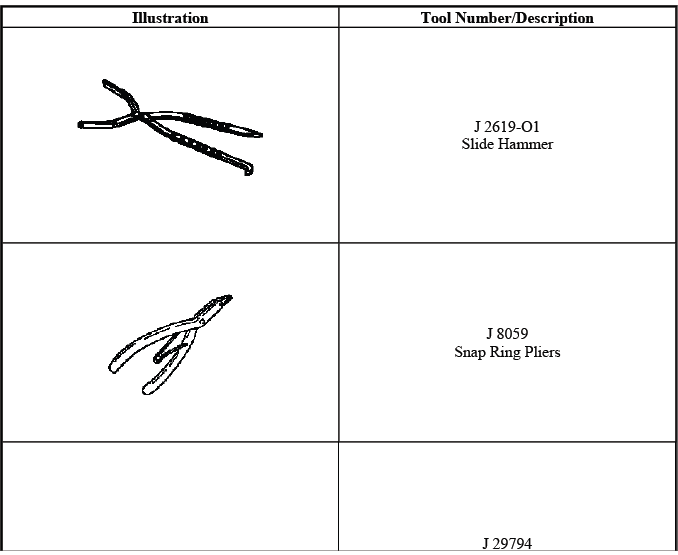
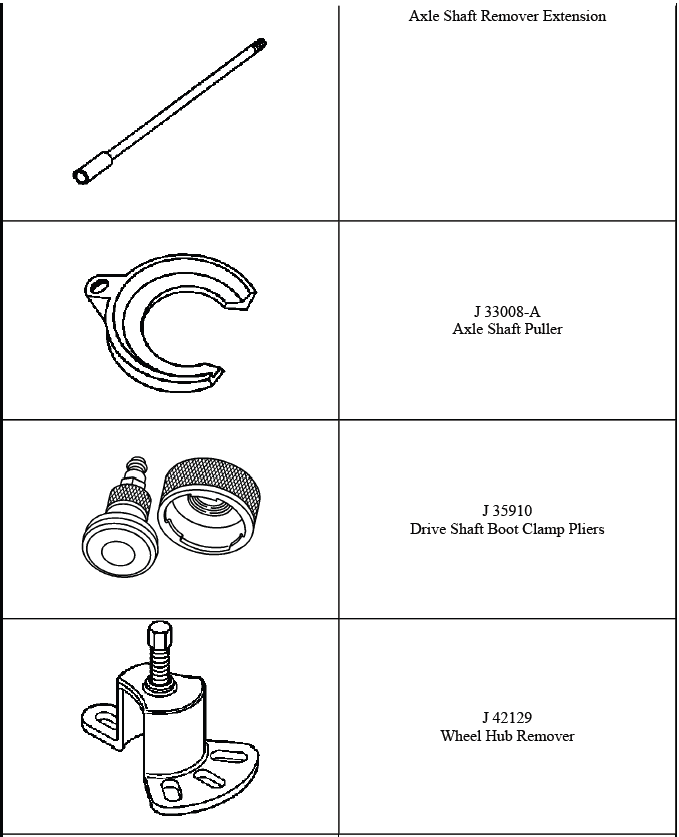
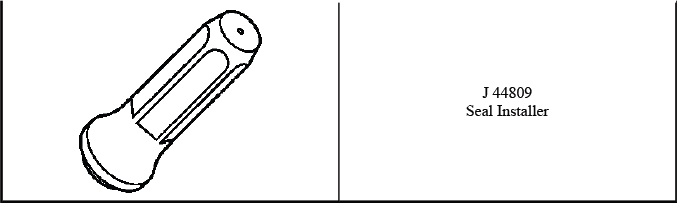
SPECIAL TOOLS AND EQUIPMENT
SPECIAL TOOLS