
Buick Enclave: Repair Instructions
FRONT DISC BRAKE PADS REPLACEMENT
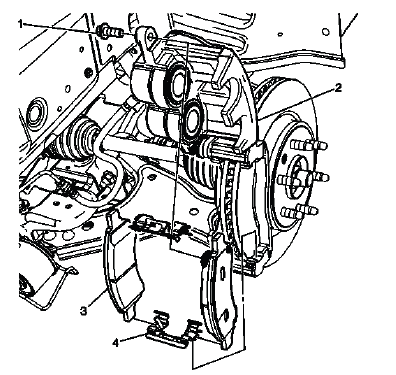
Fig. 12: View Of Front Disc Brake Pads
Front Disc Brake Pads Replacement
Front disc brake pad replacement should be performed with attention to pad position, hardware condition, caliper movement, and rotor surface condition. The pads must seat correctly in the caliper bracket and move smoothly on the hardware without binding. Before installation is completed, inspect the rotor faces, caliper guide pins, pad shims, and brake hose routing so the new pads are not installed over an existing problem.
On the Buick Enclave, front brake pad service should also include checking for uneven inner and outer pad wear. Uneven wear may indicate a sticking caliper piston, dry guide pins, corroded pad hardware, or a rotor surface concern that should be corrected before the vehicle is returned to service.
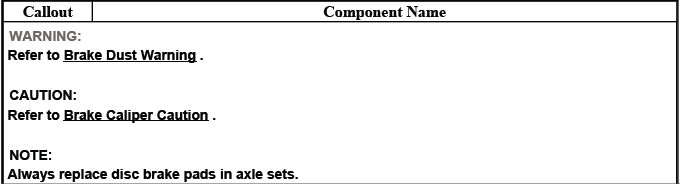
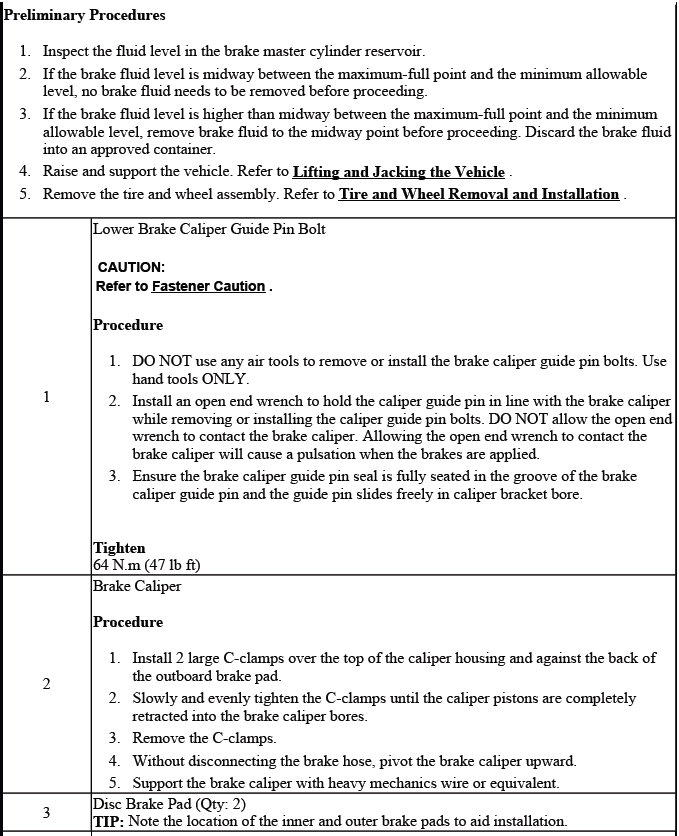
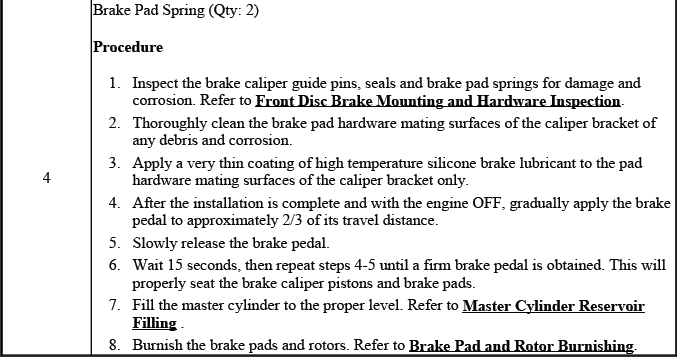
REAR DISC BRAKE PADS REPLACEMENT
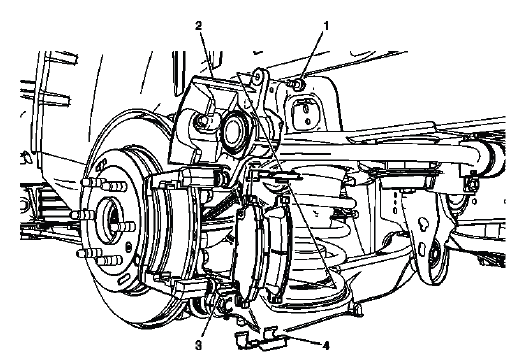
Fig. 13: Identifying Rear Disc Brake Pads
Rear Disc Brake Pads Replacement
Rear disc brake pad replacement follows the same basic service approach as the front, but the rear brake components should be inspected carefully for drag, uneven wear, corrosion around the bracket, and proper caliper slide movement. Rear pads that do not release smoothly can overheat the rotor and create noise, vibration, or premature wear.
For the Buick Enclave, rear brake pad service should include checking the pad contact points in the bracket and confirming that the pads are held firmly while still sliding freely. New pads should never be forced into a corroded bracket, because tight pad fit can cause brake drag shortly after the repair.
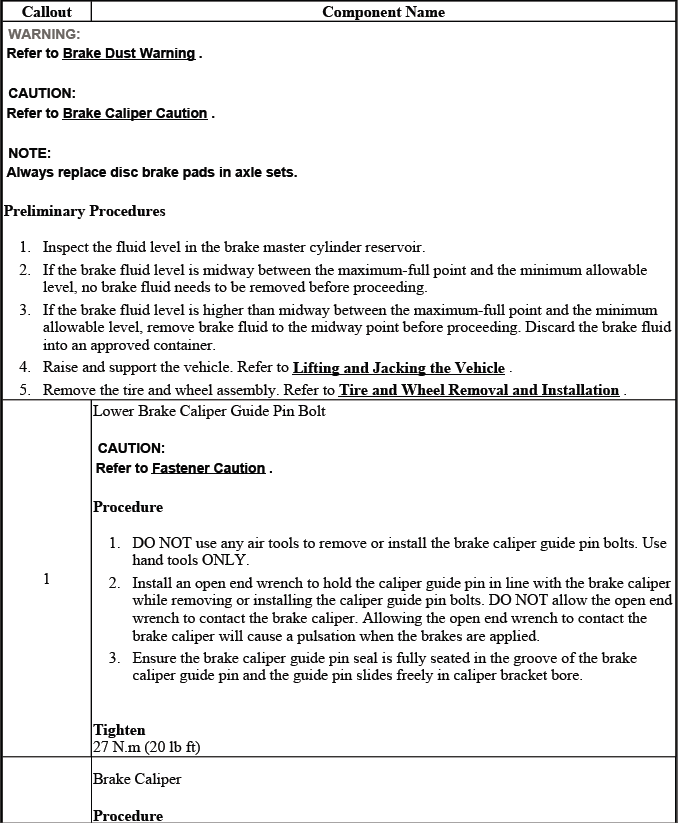
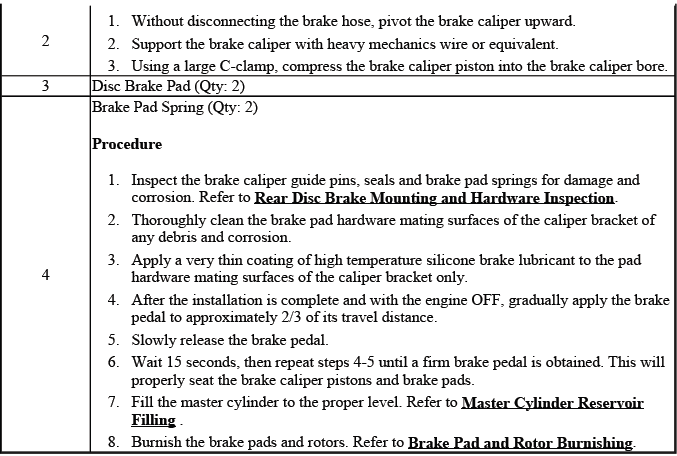
BRAKE PAD AND ROTOR BURNISHING
WARNING: Road test a vehicle under safe conditions and while obeying all traffic laws. Do not attempt any maneuvers that could jeopardize vehicle control.
Failure to adhere to these precautions could lead to serious personal injury and vehicle damage.
Burnishing the brake pads and brake rotors is necessary to prepare the braking surfaces after disc brake service. This process helps the new or refinished surfaces establish a controlled contact pattern, improves brake feel, and reduces the chance of noise or uneven pad transfer during early operation.
This procedure should be performed whenever the disc brake rotors have been refinished or replaced, and/or whenever the disc brake pads have been replaced. Skipping the burnishing process may result in inconsistent pedal feel, light brake noise, or reduced braking smoothness during the first driving cycles after service.
1. Select a smooth road with little or no traffic. Choose a safe area where repeated controlled stops can be made without interfering with other vehicles.
2. Accelerate the vehicle to 48 km/h (30 mph). Keep the vehicle under control and maintain awareness of road conditions before each braking event.
NOTE: Use care to avoid overheating the brakes while performing this step. Overheating new pads and rotors too early can glaze the friction material and reduce brake performance.
3. Using moderate to firm pressure, apply the brakes to bring the vehicle to a stop. Do not allow the brakes to lock. The goal is to build an even transfer layer between the pads and rotors, not to perform panic stops.
4. Repeat steps 2 and 3 until approximately 20 stops have been completed. Allow sufficient cooling periods between stops in order to properly burnish the brake pads and rotors. On the Buick Enclave, a careful burnishing procedure helps the disc brake system settle in smoothly after pad or rotor service.
FRONT BRAKE CALIPER REPLACEMENT
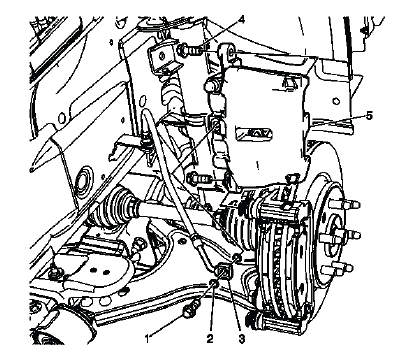
Fig. 14: View Of Front Brake Caliper
Front Brake Caliper Replacement
Front brake caliper replacement may be required if the caliper housing is damaged, the piston is seized, the dust boot is torn, or brake fluid leakage is present. Before replacement, confirm that the issue is not caused by guide pin binding, restricted brake hose flow, damaged pad hardware, or corrosion in the caliper bracket.
When installing a front caliper, the brake hose must be positioned correctly and the caliper must sit squarely on the bracket. After the hydraulic connection has been disturbed, the brake system must be bled according to the proper service procedure and the pedal feel must be verified before road testing.
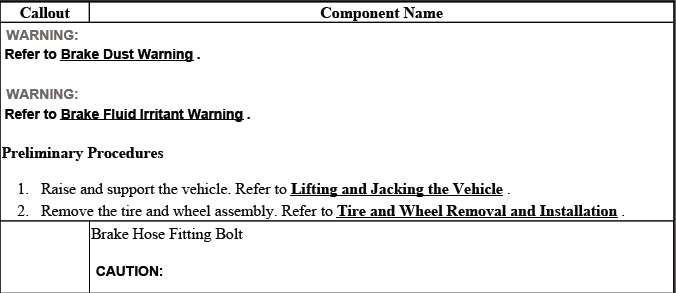
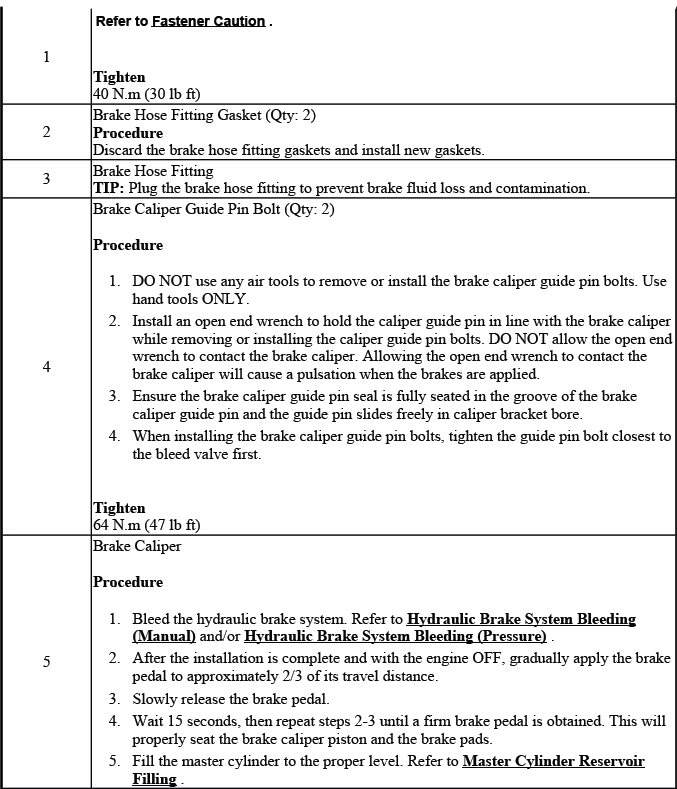
REAR BRAKE CALIPER REPLACEMENT
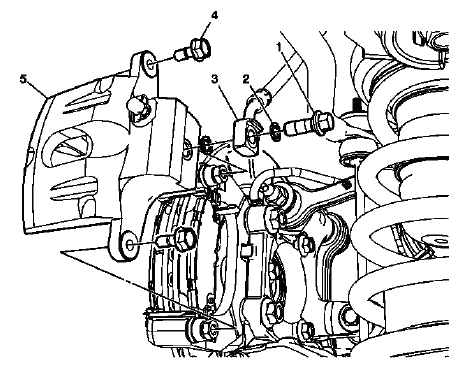
Fig. 15: Identifying Rear Brake Caliper
Rear Brake Caliper Replacement
Rear brake caliper replacement should be considered when the piston does not retract smoothly, brake fluid leakage is visible, the caliper body is damaged, or the rear brake pads show abnormal wear that cannot be corrected through hardware service alone. The replacement caliper must be installed without twisting the brake hose or placing strain on the hydraulic line.
After rear caliper replacement on the Buick Enclave, check the brake pedal feel, inspect for leaks, and confirm that the rear pads release properly. A dragging rear caliper can create heat, odor, rotor discoloration, and premature pad wear if the repair is not verified carefully.
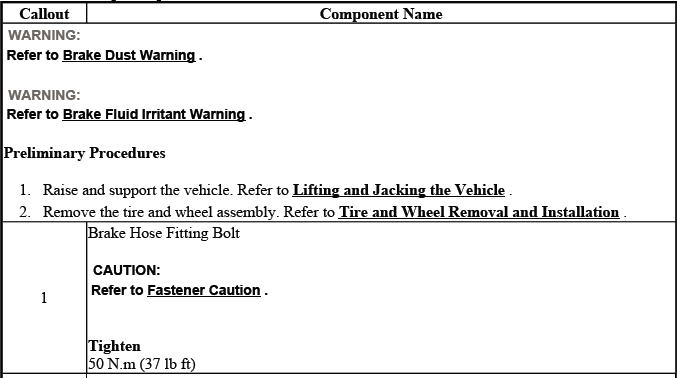
FRONT BRAKE CALIPER HARDWARE REPLACEMENT
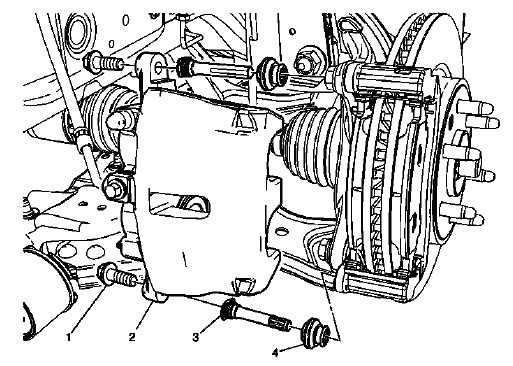
Fig. 16: Identifying Front Disc Brake Hardware
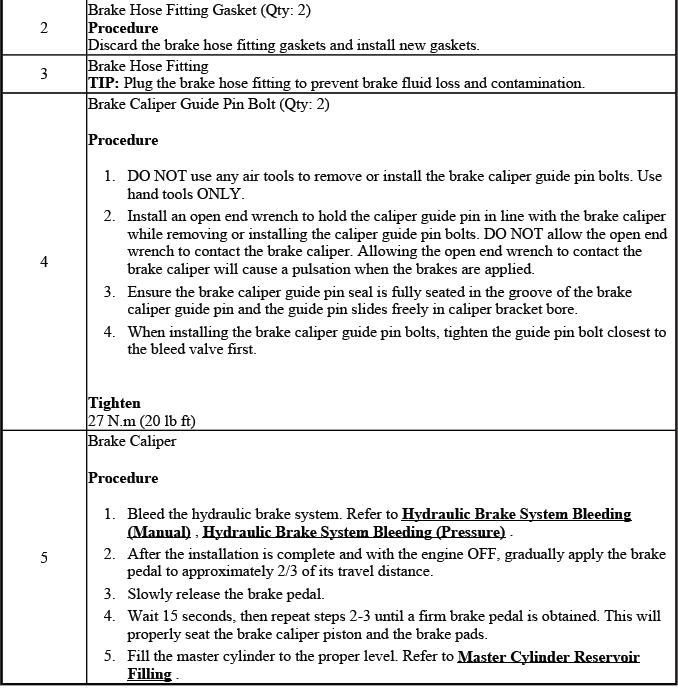
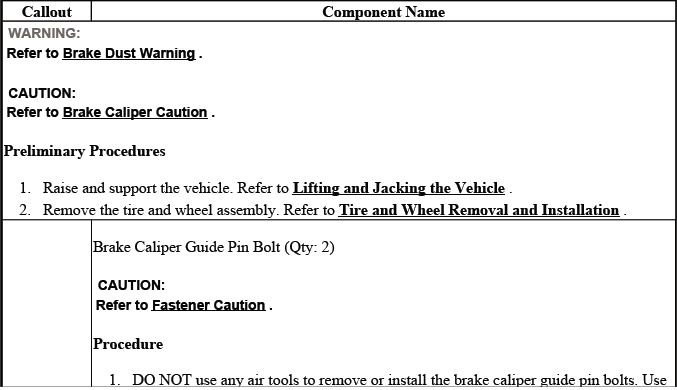
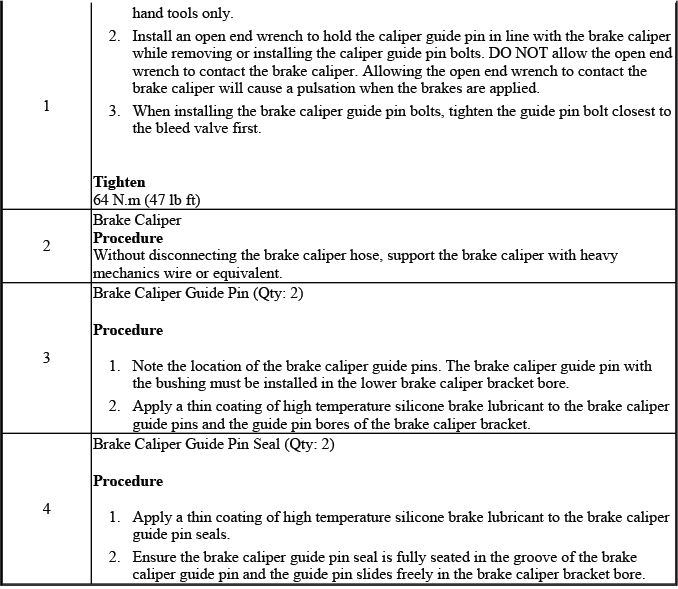
Front Brake Caliper Hardware Replacement
Front brake caliper hardware replacement is necessary when guide pins, boots, clips, shims, or pad contact hardware are worn, corroded, loose, bent, or damaged. Hardware condition directly affects pad movement, caliper release, brake noise, and even pad wear. New pads installed with poor hardware may quickly develop the same noise or wear pattern that existed before the repair.
The guide pins should move freely and should be protected by intact boots. If the boots are torn or missing, moisture and debris can enter the sliding area and cause the pins to seize. Clean contact surfaces and properly seated hardware help the front disc brakes operate quietly and consistently.
REAR BRAKE CALIPER HARDWARE REPLACEMENT
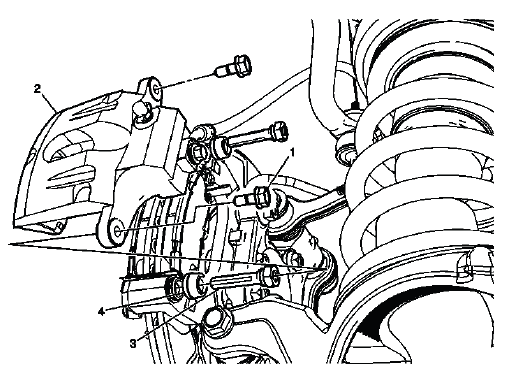
Fig. 17: View Of Rear Disc Brake Hardware
Rear Brake Caliper Hardware Replacement
Rear brake caliper hardware should be replaced whenever the pads do not slide smoothly, the retaining clips are loose, the boots are cracked, or the guide pins show corrosion or binding. Rear brake hardware is often exposed to water, road salt, and debris, so careful inspection is important during every pad or rotor service.
Correct rear hardware installation helps prevent pad rattle, uneven brake wear, rear brake drag, and noise during low-speed stops. Before final assembly, make sure the pads are secure in the bracket and that the caliper can move through its normal slide range without resistance.
FRONT BRAKE CALIPER BRACKET REPLACEMENT
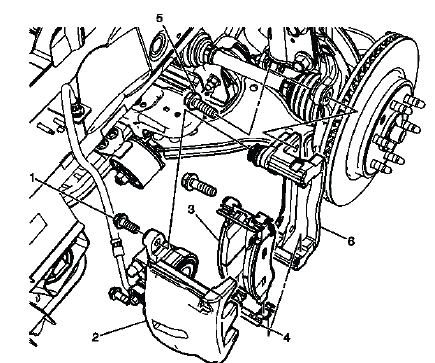
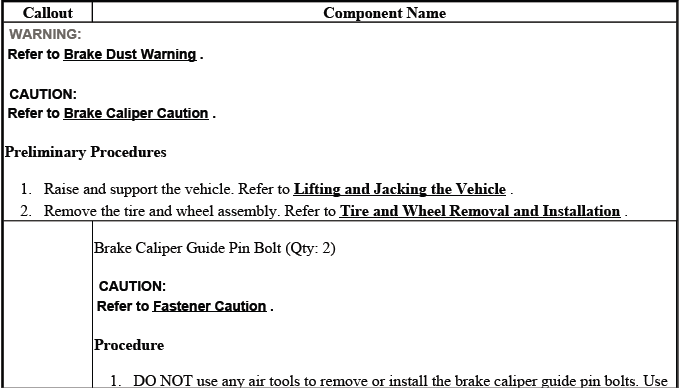
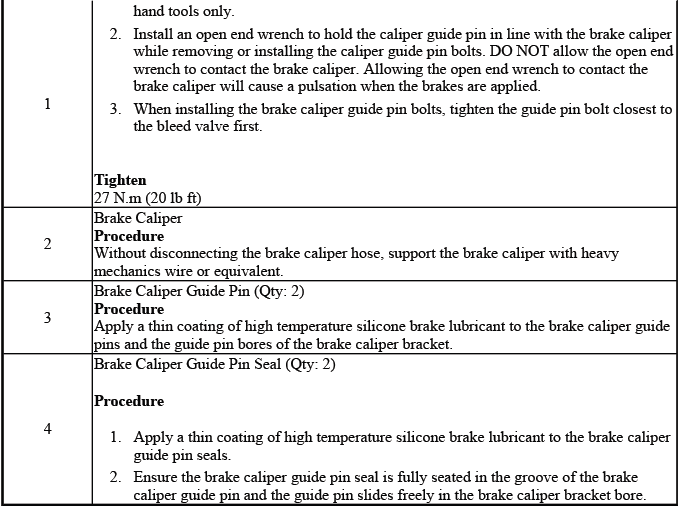
Fig. 18: View Of Front Brake Caliper Bracket
Front Brake Caliper Bracket Replacement
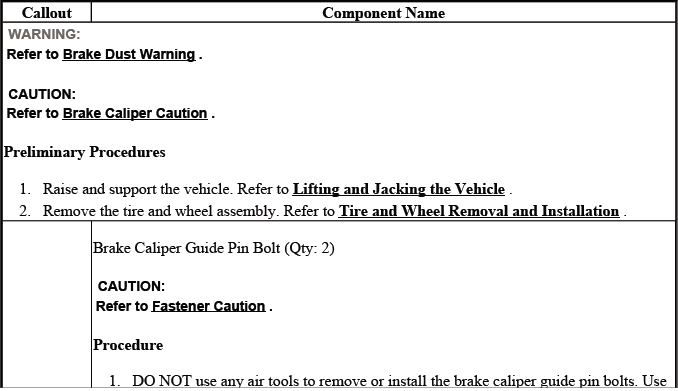
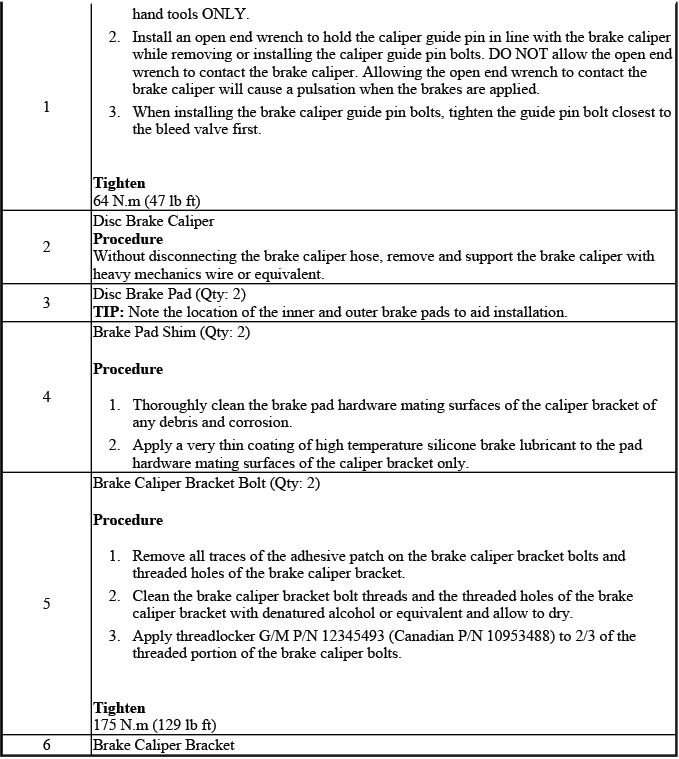
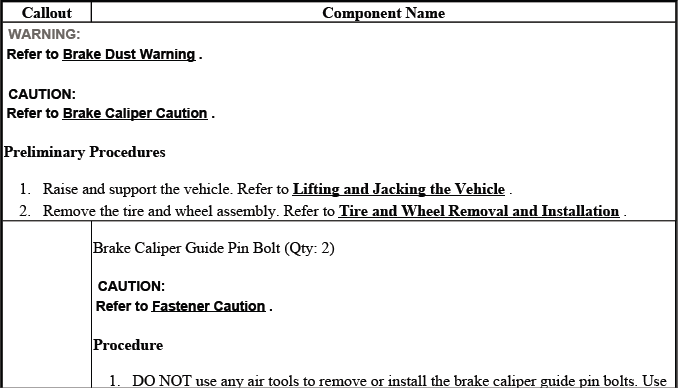
The front brake caliper bracket supports the pads and provides the mounting point for the caliper guide pins. Replacement may be required if the bracket is bent, cracked, heavily corroded, damaged at the pad contact points, or unable to hold the guide hardware correctly. A damaged bracket can cause pad binding, uneven wear, brake pull, or noise.
When replacing the front caliper bracket, the mounting surface should be clean and the fasteners should be tightened to the specified torque. The pads must fit the new bracket correctly and slide without sticking. This is especially important on the Buick Enclave because improper bracket condition can create repeat brake concerns even after pads and rotors have been replaced.
REAR BRAKE CALIPER BRACKET REPLACEMENT
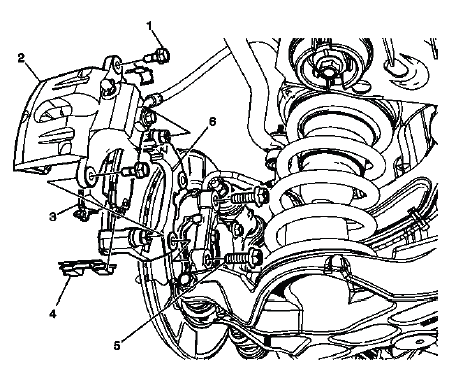
Fig. 19: View Of Rear Brake Caliper Bracket
Rear Brake Caliper Bracket Replacement
The rear brake caliper bracket must hold the pads securely while allowing them to move correctly during brake application and release. If the bracket is bent, corroded, cracked, or worn at the pad contact areas, the rear pads may bind or sit unevenly against the rotor.
During replacement, inspect the guide pin bores, mounting surfaces, and pad hardware fit. The bracket should be installed squarely, and the rear brake pads should be checked for free movement before the caliper is secured. A careful final check helps prevent rear brake drag, scraping noise, and uneven pad wear.
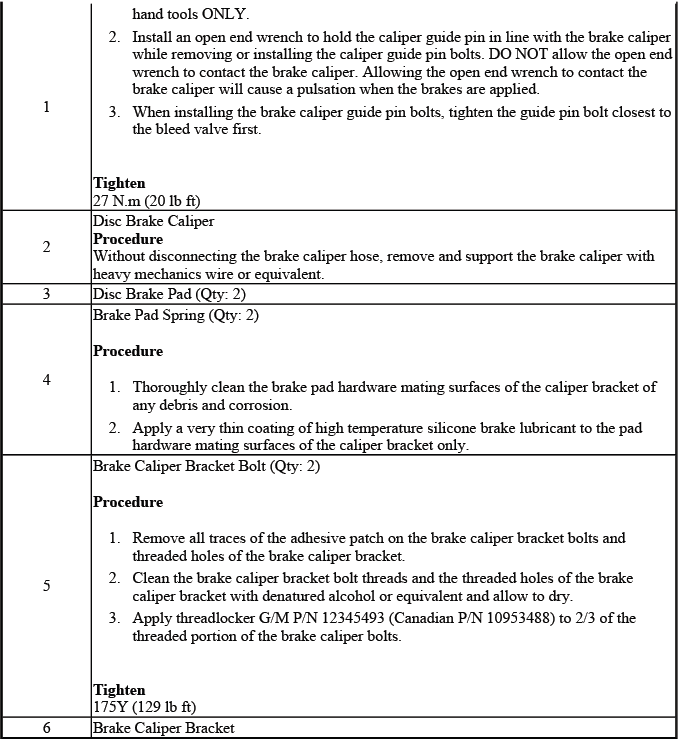
FRONT BRAKE ROTOR REPLACEMENT
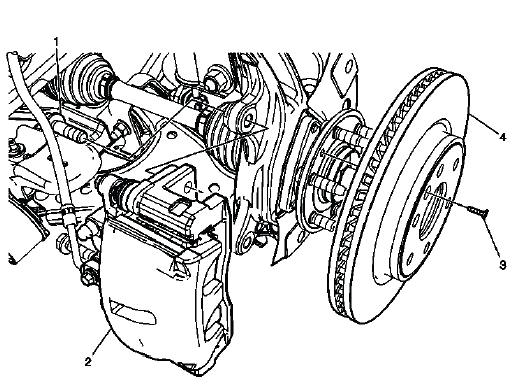
Fig. 20: View Of Front Brake Rotor
Front Brake Rotor Replacement
Front brake rotor replacement is required when the rotor is below minimum thickness, has excessive scoring, cracks, heat damage, or lateral runout that cannot be corrected within specification. Before the new rotor is installed, the hub face should be cleaned thoroughly so rust or debris does not create runout between the rotor and hub.
After installing a new front rotor, inspect rotor seating, brake pad fit, caliper bracket condition, and wheel fastener tightening procedure. A rotor that is installed over a dirty hub surface can develop brake pulsation even when the rotor itself is new. Final brake pedal feel and road test performance should be verified before the repair is considered complete.
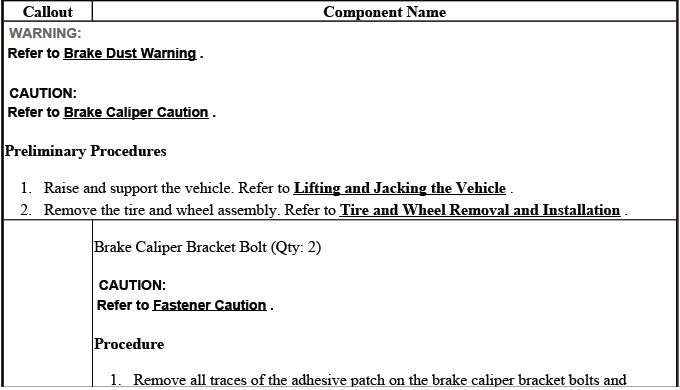
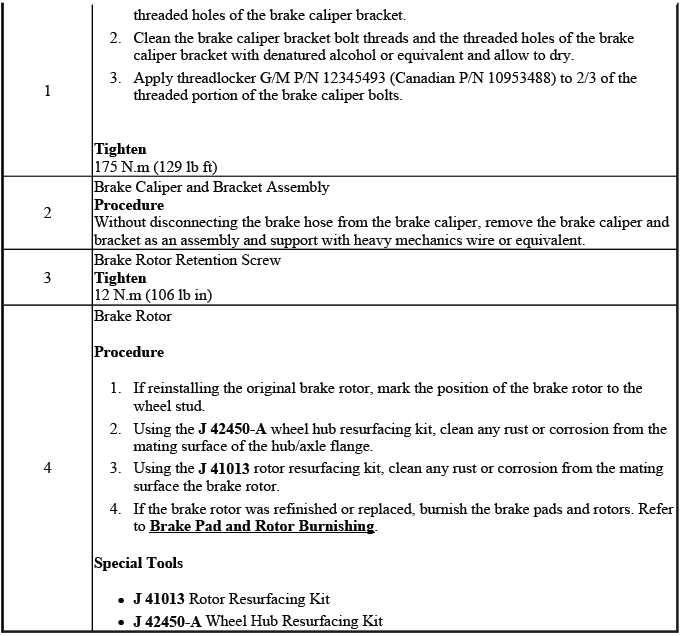
REAR BRAKE ROTOR REPLACEMENT
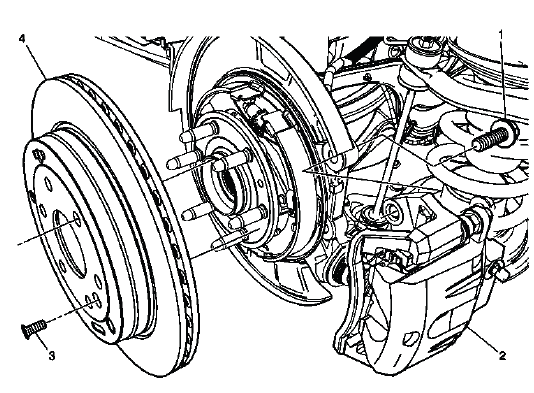
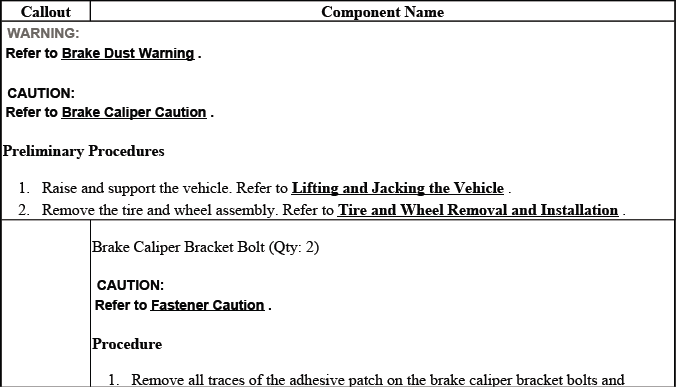
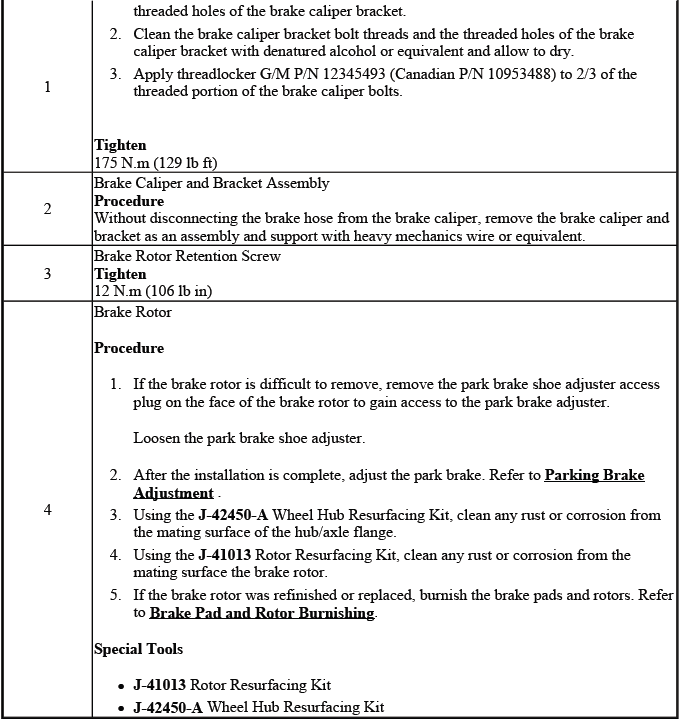
Fig. 21: Identifying Rear Brake Rotor
Rear Brake Rotor Replacement
Rear brake rotor replacement should be performed when the rotor is below service thickness, has excessive scoring, shows heat damage, contains cracks, or cannot be corrected for lateral runout within specification. Before installing the replacement rotor, clean the hub face thoroughly so rust, scale, or trapped debris does not hold the rotor at an angle.
On the Buick Enclave, rear rotor condition has a direct effect on brake smoothness, pad wear, and low-speed brake noise. A new rotor installed on a dirty or uneven hub surface can still develop pedal pulsation, vibration, or uneven pad transfer, so hub preparation and final runout verification should not be skipped.
FRONT BRAKE SHIELD REPLACEMENT
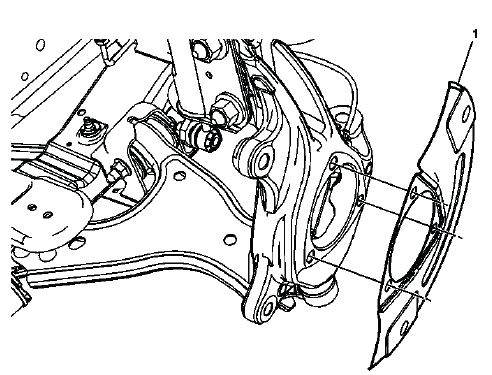
Fig. 22: View Of Front Brake Shield
Front Brake Shield Replacement
The front brake shield helps protect the rotor and brake assembly from road splash, stones, and debris while also helping manage airflow around the brake area. Replacement may be required if the shield is bent into the rotor, heavily corroded, cracked, loose, or damaged during brake or hub service.
A distorted shield can create scraping noises that may be mistaken for worn brake pads or rotor damage. After installation, verify that the shield has enough clearance from the rotor through a full wheel rotation and that it does not contact the caliper, bracket, or wheel speed sensor harness.
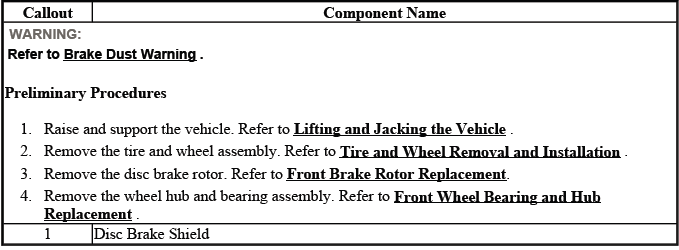
BRAKE ROTOR ASSEMBLED LATERAL RUNOUT CORRECTION
NOTE:
- Brake rotor thickness variation MUST be checked BEFORE checking for assembled lateral runout (LRO). Thickness variation exceeding the maximum acceptable level can cause brake pulsation. Refer to Brake Rotor Thickness Variation Measurement. If thickness variation is already excessive, correcting runout alone will not fully resolve the braking concern.
- Brake rotor assembled lateral runout (LRO) exceeding the maximum allowable specification can cause thickness variation to develop in the brake rotor over time, usually between 4,800-11,300 km (3,000-7,000 mi).
Refer to Brake Rotor Assembled Lateral Runout Measurement. This condition often appears later as a returning brake pulsation complaint after pads or rotors have already been serviced.
Review the following acceptable methods for bringing the brake rotor assembled LRO to within specifications. The best method depends on the amount of runout, rotor condition, hub condition, and whether the rotor is being reused, refinished, or replaced.
Determine which method to use for the specific vehicle being repaired. Before choosing a correction method, confirm that the hub and rotor mating surfaces are clean, the rotor is properly seated, and the wheel fasteners or holding washers are tightened evenly.
- The indexing method of correcting assembled LRO is most effective when the LRO specification is only exceeded by a relatively small amount: 0.025-0.127 mm (0.001-0.005 in). Indexing is used to achieve the best possible match of high spots to low spots between related components. Refer to Brake Rotor Assembled Lateral Runout Correction - Indexing. This method can often improve the reading without machining the rotor.
- The correction plate method of correcting assembled LRO involves the addition of a tapered plate between the brake rotor and the hub/axle flange. The correction plate method can be used to correct LRO that exceeds the specification by up to 0.23 mm (0.009 in). Refer to Brake Rotor Assembled Lateral Runout Correction - Correction Plates. The plate changes the rotor mounting angle to compensate for measured runout.
- The on-vehicle brake lathe method is used to bring the LRO to within specifications by compensating for runout while refinishing the brake rotor. Refer to Brake Rotor Assembled Lateral Runout Correction - On Vehicle Lathe. This method machines the rotor in relation to its installed position on the hub.
If the assembled LRO cannot be corrected using these methods, then other components must be suspected as causing and/or contributing to the LRO concern. Possible causes include hub flange runout, damaged wheel studs, corrosion on the hub face, bearing looseness, improper rotor seating, or a brake rotor that is not suitable for reuse.
BRAKE ROTOR ASSEMBLED LATERAL RUNOUT CORRECTION - INDEXING
NOTE: This Procedure is not used in Europe. Follow the approved regional service procedure and tool recommendations where applicable.
Special Tools
- CH-45101-100 Conical Brake Rotor Washers
For equivalent regional tools, refer to Special Tools. The tools used must hold the rotor evenly against the hub face so the runout measurement reflects the rotor's true installed position.
1. Remove the CH-45101-100 Conical Brake Rotor Washers and the lug nuts that were installed during the assembled LRO measurement procedure. Keep the washers and lug nuts clean so debris does not affect the next measurement setup.
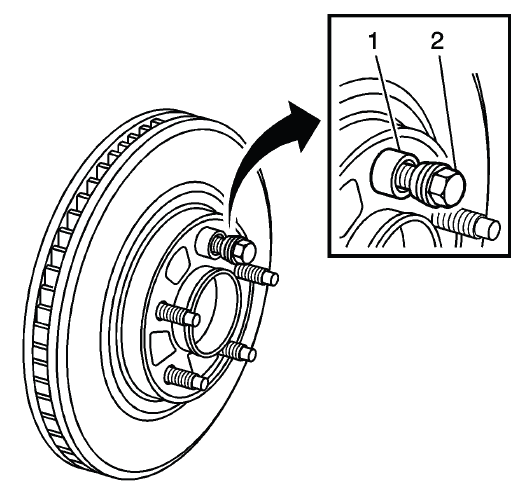
Fig. 23: Identifying Special Tool J 45101-100 & Lug Nut
WARNING: Refer to Brake Dust Warning. Use safe cleaning procedures when working around rotors, pads, and brake hardware.
NOTE: Brake rotor thickness variation MUST be checked BEFORE checking for assembled lateral runout (LRO). Thickness variation exceeding the maximum acceptable level can cause brake pulsation. Refer to Brake Rotor Thickness Variation Measurement.
Brake rotor assembled LRO exceeding the maximum allowable specification can cause thickness variation to develop in the brake rotor over time, usually between 4,800-11,300 km (3,000-7,000 mi). Correcting the runout early helps prevent repeat brake vibration after the vehicle has been driven for several thousand miles.
Refer to Brake Rotor Assembled Lateral Runout Measurement.
2. Inspect the mating surface of the hub/axle flange and the brake rotor to ensure that there are no foreign particles or debris remaining. Even a small amount of rust scale or grit between the two surfaces can change the runout reading.
3. Index the brake rotor in a different orientation to the hub/axle flange. This means rotating the rotor to a new wheel-stud position so the high point of the rotor may better align with a lower point on the hub.
4. Hold the rotor firmly in place against the hub/axle flange and install one of the CH-45101-100 Conical Brake Rotor Washers (1) and one lug nut (2) onto the upper-most wheel stud. The rotor must remain fully seated while the washer and lug nut are installed.
5. Continue to hold the rotor secure and tighten the lug nut firmly by hand. Do not allow the rotor to shift away from the hub face during this step.
6. Install the remaining CH-45101-100 Conical Brake Rotor Washers and lug nuts onto the wheel studs and tighten the nuts firmly by hand in a star-pattern. The star-pattern helps distribute clamping force evenly and prevents the rotor from being pulled unevenly against the hub.
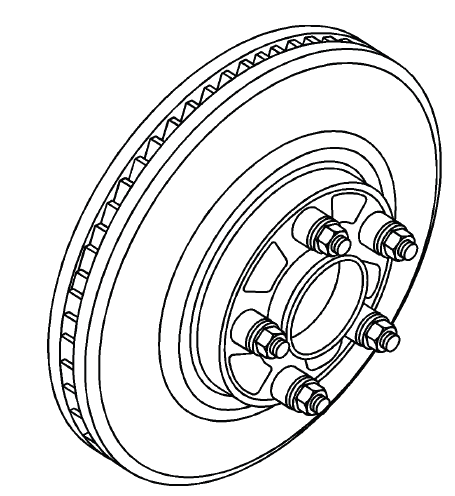
Fig. 24: Identifying All Special Tools J 45101-100s & Lug Nuts
7. Tighten the lug nuts in a star-pattern to specification, in order to properly secure the rotor. Refer to Tire and Wheel Removal and Installation. Proper clamping force is critical because a loose or unevenly tightened rotor can give a false LRO reading.
8. Measure the assembled LRO of the brake rotor. Refer to Brake Rotor Assembled Lateral Runout Measurement. Rotate the rotor smoothly and observe the full sweep of the dial indicator before recording the value.
9. Compare the amount of change between this measurement and the original measurement. If the reading improves, the new rotor position may be closer to the correct hub-to-rotor match.
10. If this measurement is within specifications, proceed to step 14.
11. If this measurement still exceeds specifications, repeat steps 1-9 until the best assembled LRO measurement is obtained. On the Buick Enclave, this indexing process can help reduce brake pulsation risk when the runout is only slightly above specification.
12. Matchmark the final location of the rotor to the wheel studs if the orientation is different than it was originally. This allows the rotor to be reinstalled in the corrected position if it is removed again during service.
13. If the brake rotor assembled LRO measurement still exceeds the maximum allowable specification, refer to Brake Rotor Assembled Lateral Runout Correction. At that point, correction plates, on-vehicle machining, hub inspection, or component replacement may be required.
14. If the brake rotor assembled LRO is within specification, install the brake caliper and depress the brake pedal several times to secure the rotor in place before removing the CH-45101-100 Conical Brake Rotor Washers and the lug nuts. This seats the pads against the rotor and helps hold the rotor steady for final assembly. For the Buick Enclave, always verify pedal feel and smooth rotor rotation before returning the brake system to normal service.
BRAKE ROTOR ASSEMBLED LATERAL RUNOUT CORRECTION - CORRECTION PLATES
NOTE: This procedure not used in Europe. Use the approved regional repair procedure if correction plates are not specified for the market being serviced.
Special Tools
- CH-45101-100 Conical Brake Rotor Washers
Correction plates are used when rotor indexing alone cannot bring assembled lateral runout within specification and the measured runout falls within the correctable range for this method. The plate is installed between the rotor and hub/axle flange to compensate for the measured high spot. Before this method is used, the hub face, rotor mounting surface, wheel studs, and bearing condition should be inspected carefully so the correction plate is not being used to hide a separate mechanical problem.
For equivalent regional tools, refer to Special Tools. Use only tools that can hold the rotor securely and allow the assembled lateral runout measurement to be checked accurately after correction.
1. Rotate the brake rotor so the high spot, identified and marked during the brake rotor assembled LRO measurement procedure, is facing upward. This position provides a clear reference for installing the correction plate in the proper orientation.
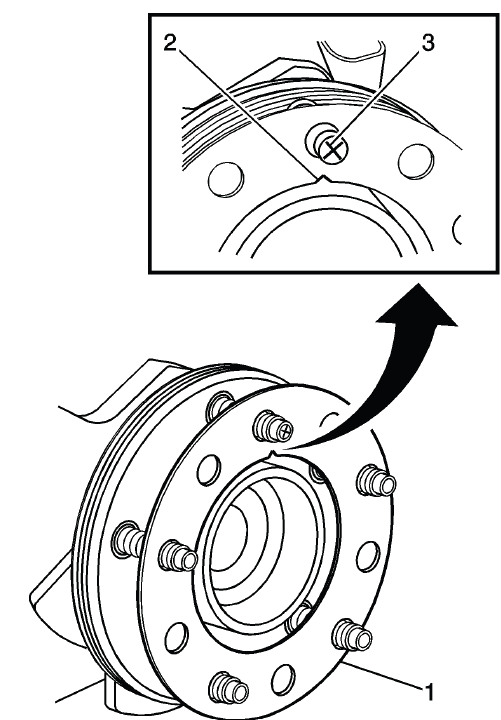
Fig. 25: Identifying Correction Plate, High Spot Mark & V-Shaped Notch
WARNING: Refer to Brake Dust Warning. Use approved cleaning practices when working around brake rotors, pads, and hub surfaces, and avoid creating airborne brake dust.
NOTE:
- Brake rotor thickness variation MUST be checked BEFORE checking for assembled lateral runout (LRO). Thickness variation exceeding the maximum acceptable level can cause brake pulsation. Refer to Brake Rotor Thickness Variation Measurement. If the rotor already has excessive thickness variation, correcting runout alone will not fully repair the condition.
- Brake rotor assembled LRO exceeding the maximum allowable specification can cause thickness variation to develop in the brake rotor over time, usually between 4,800-11,300 km (3,000-7,000 mi).
Refer to Brake Rotor Assembled Lateral Runout Measurement. Correcting LRO helps prevent a brake pulsation concern from returning after the vehicle has been driven for several thousand miles.
2. Remove the CH-45101-100 Conical Brake Rotor Washers and the lug nuts that were installed during the assembled LRO measurement procedure and/or the indexing correction procedure. Keep the washers and nuts clean so dirt or metal particles do not affect the next clamping setup.
3. Inspect the mounting surface of the hub/axle flange and the brake rotor to ensure that there are no foreign particles, rust scale, corrosion, or debris remaining. A small amount of contamination between the rotor and hub can change the runout reading and make the correction plate less effective.
4. Select the correction plate, following the manufacturer's instructions, which has a specification closest to the assembled LRO measurement. The plate must match the measured correction need as closely as possible so the rotor is not over-corrected or left outside specification.
For example: If the assembled LRO measurement was 0.076 mm (0.003 in), the 0.076 mm (0.003 in) correction plate would be used. If the measurement was 0.127 mm (0.005 in), the 0.152 mm (0.006 in) correction plate would be used. On the Buick Enclave, this selection should be made carefully because the correction plate changes the rotor mounting angle relative to the hub face.
5. Determine the positioning for the correction plate (1) using the high spot mark (3) made during the brake rotor assembled LRO measurement procedure. The high spot mark is the reference point that tells you where the plate must be aligned.
6. Install the correction plate (1) onto the hub/axle flange, with the V-shaped notch (2) orientated to align with the high spot mark (3), that was positioned to face upward. Make sure the correction plate sits flat and does not catch on rust, burrs, wheel studs, or debris.
NOTE:
- Do NOT install used correction plates in an attempt to correct brake rotor assembled LRO. A used plate may be distorted, contaminated, or unable to provide the correct correction value.
- Do NOT stack up or install more than one correction plate onto one hub/axle flange location, in an attempt to correct brake rotor assembled LRO. Stacking plates can create poor rotor seating, incorrect clamping, and unsafe brake operation.
7. Install the brake rotor to the hub/axle flange. Use the matchmark made prior to removal for proper orientation to the flange. The rotor should slide into place evenly and sit fully against the correction plate and hub surface.
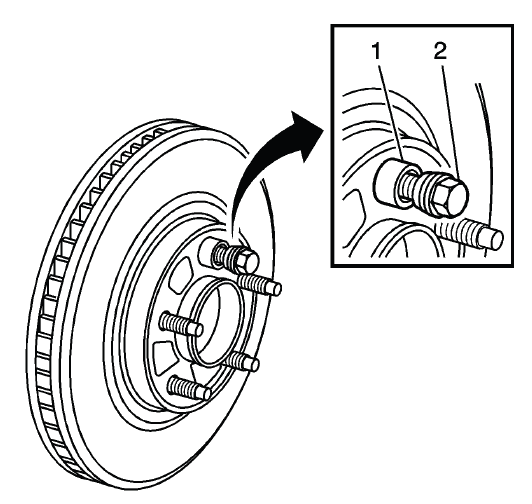
Fig. 26: Identifying Special Tool J 45101-100 & Lug Nut
8. Hold the rotor firmly in place against the hub/axle flange and install one of the CH-45101-100 Conical Brake Rotor Washers (1) and one lug nut (2) onto the upper-most wheel stud. Do not allow the rotor to shift away from the hub while the first washer and nut are installed.
9. Continue to hold the rotor secure and tighten the lug nut firmly by hand. This first fastener helps keep the rotor seated while the remaining conical washers and lug nuts are installed.
10. Install the remaining CH-45101-100 Conical Brake Rotor Washers and lug nuts onto the wheel studs and tighten the nuts firmly by hand in a star-pattern. The star-pattern helps apply clamping force evenly and reduces the chance of distorting the rotor during measurement.
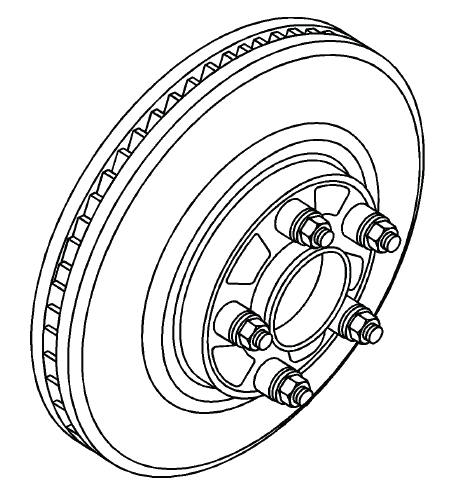
Fig. 27: Identifying All Special Tools J 45101-100s & Lug Nuts
11. Tighten the lug nuts in a star-pattern to specification, in order to properly secure the rotor. Refer to Tire and Wheel Removal and Installation. Correct clamping force is required so the measurement reflects the rotor's true installed position.
12. Measure the assembled LRO of the brake rotor. Refer to Brake Rotor Assembled Lateral Runout Measurement. Rotate the rotor slowly, watch the complete dial indicator sweep, and record the final reading before changing the setup.
13. If the brake rotor assembled LRO measurement still exceeds the maximum allowable specification, refer to Brake Rotor Assembled Lateral Runout Correction. Further correction may require a different method, closer hub inspection, rotor replacement, or additional diagnosis of the mounting surfaces.
14. If the brake rotor assembled LRO measurement is within specification, install the brake caliper and depress the brake pedal several times to secure the rotor in place before removing the CH-45101-100 Conical Brake Rotor Washers and the lug nuts. This seats the pads against the rotor and helps hold the rotor steady for final assembly.
BRAKE ROTOR ASSEMBLED LATERAL RUNOUT CORRECTION - ON VEHICLE LATHE
NOTE: This procedure is not used in Europe. Follow the approved regional service procedure and equipment recommendations for the market being serviced.
Special Tools
- CH-45101-100 Conical Brake Rotor Washers
For equivalent regional tools, refer to Special Tools. The lathe and holding tools must be suitable for machining the rotor in its installed position so the finished surface compensates for hub and rotor assembly runout.
1. Ensure that the caliper and caliper bracket that are already being supported are clear from contacting any rotating components, such as the brake rotor. Secure the caliper and bracket with heavy mechanics wire or another safe support method so they cannot move into the lathe, rotor, or hub during machining.
WARNING: Refer to Brake Dust Warning. Brake machining and cleaning can disturb brake dust, so proper safety precautions and cleaning methods must be used.
NOTE:
- Brake rotor thickness variation MUST be checked BEFORE checking for assembled lateral runout (LRO). Thickness variation exceeding the maximum acceptable level can cause brake pulsation. Refer to Brake Rotor Thickness Variation Measurement. A rotor with excessive thickness variation may require refinishing or replacement before LRO correction is meaningful.
- Brake rotor assembled LRO exceeding the maximum allowable specification can cause thickness variation to develop in the brake rotor over time, usually between 4,800-11,300 km (3,000-7,000 mi).
Refer to Brake Rotor Assembled Lateral Runout Measurement. On the Buick Enclave, correcting LRO is especially important when trying to prevent repeat pedal pulsation after disc brake service.
2. Remove the CH-45101-100 Conical Brake Rotor Washers and the lug nuts that were installed during the assembled LRO measurement procedure and/or the indexing correction procedure. Keep the hardware clean and set it aside where it will not pick up metal chips or dirt.
3. Inspect the mounting surface of the hub/axle flange and the brake rotor to ensure that there are no foreign particles or debris remaining. The rotor must sit flat before machining, because contamination at the hub can affect the final cut and the corrected runout value.
4. Set up the lathe, following the manufacturer's instructions. Confirm that the lathe is mounted securely, the cutting bits are positioned correctly, and all rotating parts have proper clearance before starting the machine.
5. Refinish the brake rotor, following the brake lathe manufacturer's instructions. Use controlled, even cuts and avoid removing more material than necessary. The goal is to bring the rotor surface true to its installed position while keeping the rotor within service thickness limits.
6. After each successive cut, inspect the brake rotor thickness. Refer to Brake Rotor Thickness Measurement. This check is necessary because repeated machining can remove enough material to place the rotor below the allowable refinishing limit.
7. If at any time the brake rotor exceeds the minimum allowable thickness after refinish specification, the brake rotor must be replaced. After replacing the rotor, proceed to step 10. A rotor that is too thin should not be returned to service because it may overheat faster and provide less consistent braking performance.
8. After refinishing the brake rotor, use the following procedure in order to obtain the desired non-directional finish. This finish helps the pads seat properly and reduces the chance of noise, chatter, or uneven pad transfer after service.
- Follow the brake lathe manufacturer's recommended speed setting for applying a non-directional finish. The correct speed helps create an even surface without deep directional marks.
- Using moderate pressure, apply the non-directional finish:
- If the lathe is equipped with a non-directional finishing tool, apply the finish with 120-grit aluminum oxide sandpaper.
- If the lathe is not equipped with a non-directional finishing tool, apply the finish with a sanding block and 150-grit aluminum oxide sandpaper. Keep the pressure even so the surface finish remains uniform.
- After applying a non-directional finish, clean each friction surface of the brake rotor with denatured alcohol or an equivalent approved brake cleaner. For the Buick Enclave, this final cleaning removes abrasive residue and machining dust before the brake pads contact the rotor.
9. Remove the lathe from the vehicle. Take care not to disturb the rotor position or allow debris from the machining process to remain on the hub, rotor, or nearby brake components.
10. Measure the assembled LRO of the brake rotor. Refer to Brake Rotor Assembled Lateral Runout Measurement. This final measurement confirms whether the rotor surface is now running true in its installed position, not just on the lathe.
11. If the brake rotor assembled LRO measurement still exceeds the maximum allowable specification, refer to Brake Rotor Assembled Lateral Runout Correction. Do not proceed with final assembly until the runout concern has been corrected or the faulty component has been identified.
12. If the brake rotor assembled LRO is within specification, install the brake caliper and depress the brake pedal several times to secure the rotor in place before removing the CH-45101-100 Conical Brake Rotor Washers and the lug nuts. Pressing the pedal seats the pads against the rotor and helps hold the rotor correctly during the final stages of assembly.
BRAKE ROTOR REFINISHING
Special Tools
- CH-41013 Rotor Resurfacing Kit
- CH-42450-A Wheel Hub Resurfacing Kit
For equivalent regional tools, refer to Special Tools. Any replacement tool must be suitable for cleaning the hub and rotor mounting surfaces without damaging the machined contact areas.
WARNING: Refer to Brake Dust Warning. Brake dust and machining residue should be handled with approved cleaning methods, and compressed air should not be used to blow dust into the work area.
NOTE:
- The disc brake rotors do not require refinishing as part of routine brake system service. New disc brake rotors do not require refinishing.
Do not refinish disc brake rotors in an attempt to correct the following conditions unless another measurable rotor defect is also present:
- Brake system noise - squeal, growl, groan
- Uneven and/or premature disc brake pad wear
- Superficial or cosmetic corrosion/rust of the disc brake rotor friction surface
- Scoring of the disc brake rotor friction surface less than the maximum allowable specification
- Before refinishing a brake rotor, the rotor MUST first be checked for adequate thickness to allow the rotor to be refinished and still remain above the minimum allowable thickness after refinish specification. Refer to Brake Rotor Thickness Measurement.
Disc brake rotors should only be refinished if they have adequate thickness and if one or more of the following conditions exist:
- Thickness variation in excess of the maximum allowable specification
- Excessive corrosion/rust and/or pitting
- Cracks and/or heat spots
- Excessive blueing discoloration
- Scoring of the disc brake rotor surface in excess of the maximum allowable specification
- Disc brake rotors may need to be refinished as part of the process for correcting brake rotor assembled lateral runout (LRO) that exceeds the maximum allowable specification. On the Buick Enclave, this check is important because runout-related problems can later appear as brake pedal pulsation even after new pads have been installed.
NOTE: If the vehicle is equipped with cross-drilled rotors, use a lathe with positive rake tooling. This setup requires less cutting pressure, which will result in less vibration and a better surface finish. Also, use a vibration dampener when cutting. Otherwise, refinish according to the following instructions.
1. Using the CH-42450-A Wheel Hub Resurfacing Kit, thoroughly clean any rust or corrosion from the mating surface of the hub/axle flange. The hub surface must be clean and flat so the rotor can sit squarely when it is installed.
NOTE: Whenever the brake rotor has been separated from the hub/axle flange, clean any rust or contaminants from the hub/axle flange and the brake rotor mating surfaces. Failure to do this may result in increased assembled lateral runout (LRO) of the brake rotor, which could lead to brake pulsation. Even a thin layer of rust scale between the hub and rotor can change the installed rotor angle.
2. Using the CH-41013 Rotor Resurfacing Kit, thoroughly clean any rust or corrosion from the mating surface and mounting surface of the brake rotor. Do not remove unnecessary metal from the rotor hat; the goal is to remove contamination and provide a clean mounting face.
3. Inspect the mating surfaces of the hub/axle flange and the rotor to ensure that there are no foreign particles or debris remaining. The surfaces should be clean, dry, and free from burrs before the rotor is mounted for refinishing or final installation.
4. Mount the brake rotor to the brake lathe according to the lathe manufacturer's instructions, ensuring that all mounting attachments and adapters are clean and free of debris. Dirty adapters or poor mounting can create an inaccurate cut and may cause the rotor to be refinished unevenly.
5. Ensure that any vibration dampening attachments are securely in place. Proper dampening helps reduce chatter marks and improves the final friction surface finish.
6. With the brake lathe running, slowly bring in the cutting tools until they just contact the brake rotor friction surfaces. Begin with light contact so the initial cut can show how the rotor is mounted and whether the surface is running evenly.
7. Observe the witness mark on the brake rotor. If the witness mark extends approximately three-quarters or more of the way around the brake rotor friction surface on each side, the brake rotor is properly mounted to the lathe. A good witness mark indicates that the rotor is seated correctly and ready for controlled refinishing.
8. If the witness mark does not extend three-quarters or more of the way around the brake rotor, re-mount the rotor to the lathe. Recheck the adapters, mounting surfaces, and clamping setup before cutting again, because an incorrectly mounted rotor can be machined out of true.
9. Following the brake lathe manufacturer's instructions, refinish the brake rotor. Use smooth, controlled cuts and remove only the amount of material needed to correct the measured surface condition. Excessive cutting can reduce rotor life and may bring the rotor too close to the discard limit.
10. After each successive cut, inspect the brake rotor thickness. Refer to Brake Rotor Thickness Measurement. This check prevents the rotor from being machined below the allowable after-refinish specification.
11. If at any time the brake rotor exceeds the minimum allowable thickness after refinish specification, the brake rotor must be replaced. A rotor that is too thin should not be returned to service because it may overheat faster and provide less consistent braking under repeated stops.
12. After refinishing the brake rotor, use the following procedure in order to obtain the desired non-directional finish. This surface finish helps the pads seat properly and reduces the chance of brake noise, chatter, or uneven pad material transfer.
- Follow the brake lathe manufacturer's recommended speed setting for applying a non-directional finish. The correct speed helps create a uniform surface pattern without deep directional marks.
- Using moderate pressure, apply the non-directional finish:
- If the lathe is equipped with a non-directional finishing tool, apply the finish with 120-grit aluminum oxide sandpaper.
- If the lathe is not equipped with a non-directional finishing tool, apply the finish with a sanding block and 150-grit aluminum oxide sandpaper. Keep the pressure even and avoid concentrating the sanding in one area.
- After applying a non-directional finish, clean each friction surface of the brake rotor with a solution of mild dish washing detergent and water or a GM approved brake cleaner and a clean shop towel to remove metal particles remaining from machining. Repeat the cleaning process if necessary to remove all metal particles. For the Buick Enclave, this final cleaning step is important because leftover machining dust can embed into the new pad surface during burnishing.
NOTE: Thoroughly cleaning the brake rotor will prevent the possible transfer of fine metal dust left as a by-product of machining to the brake pad material during the burnishing process, thereby reducing the possibility for brake squeal or other brake noises to occur. A clean rotor surface also helps the brake pads establish a more even contact pattern during the first stops after service.
13. Remove the brake rotor from the brake lathe. Handle the rotor carefully after machining so the friction surfaces are not contaminated with grease, dirt, or fingerprints before installation.
14. Measure the assembled LRO of the brake rotor to ensure optimum performance of the disc brakes. Refer to Brake Rotor Assembled Lateral Runout Measurement. Measuring the rotor after installation confirms that the hub, rotor, and mounting surfaces work together within specification.
15. If the brake rotor assembled LRO measurement exceeds the specification, bring the LRO to within specifications. Refer to Brake Rotor Assembled Lateral Runout Correction. On the Buick Enclave, this final runout correction helps prevent repeat brake pulsation, uneven pad wear, and customer complaints after disc brake service.
