
Buick Enclave: Description and Operation
DISC BRAKE SYSTEM DESCRIPTION AND OPERATION
System Component Description
The disc brake system is built from several parts that work together to convert hydraulic pressure into controlled stopping force. Each component has a specific role, and the system performs correctly only when the pads, rotors, calipers, mounting hardware, and sliding points are clean, properly installed, and able to move as designed.
On the Buick Enclave, disc brake condition affects more than simple stopping ability. Pad movement, rotor surface quality, caliper alignment, and hardware condition can influence pedal feel, brake noise, vibration, stopping smoothness, and overall braking confidence during daily driving.
The disc brake system consists of the following components:
Disc Brake Pads
The disc brake pads transfer mechanical output force from the hydraulic brake calipers to the friction surfaces of the brake rotors. When the pads are pressed against the rotor, friction is created, and that friction slows the rotation of the wheel and tire assembly. Pad material condition, pad thickness, backing plate integrity, and correct pad fit in the bracket are all important for quiet and even brake operation.
Disc Brake Rotors
The disc brake rotors receive mechanical force from the disc brake pads at their friction surfaces and use that force to slow the speed of tire and wheel assembly rotation. A rotor must have the correct thickness, surface finish, and lateral runout to operate smoothly. Scoring, heat spots, rust buildup, thickness variation, or an uneven hub mounting surface can lead to brake pulsation, noise, or reduced braking quality.
Disc Brake Pad Hardware
Disc brake pad hardware holds the pads securely in the correct position relative to the hydraulic brake calipers. This hardware also allows the pads to slide slightly when braking force is applied and released. If the clips, shims, or contact surfaces are corroded, bent, loose, or contaminated, the pads may bind, rattle, wear unevenly, or fail to release cleanly after a brake application.
Disc Brake Caliper Hardware
Disc brake caliper hardware provides the mounting and sliding support for the hydraulic brake caliper and keeps the caliper properly aligned with the caliper bracket. The guide pins, bolts, boots, and bracket surfaces allow the caliper to move as brake force is applied. Smooth caliper movement is necessary so the inner and outer brake pads apply pressure evenly to the rotor.
System Operation
Mechanical output force is applied from the hydraulic brake caliper pistons to the inner brake pads. As the pistons press the inner pads outward, the caliper housings react by drawing the outer brake pads inward. This creates clamping force on both sides of the brake rotor and helps distribute braking load across the friction surfaces.
The brake pads apply this force to both sides of the rotors, slowing the rotation of the tire and wheel assemblies. For this process to remain smooth and balanced, the brake pad hardware and brake caliper hardware must allow controlled movement without looseness, binding, or corrosion. If either the pad or caliper cannot move properly, braking force may become uneven, which can cause pad taper, brake drag, rotor overheating, noise, or vibration.
For the Buick Enclave, a complete disc brake service should always consider the system as a full assembly rather than only replacing worn pads. The rotor-to-hub surface, caliper guide movement, pad hardware fit, brake hose condition, and final pedal feel all help determine whether the repair will perform correctly after the vehicle returns to normal use.
SPECIAL TOOLS AND EQUIPMENT
SPECIAL TOOLS
The following special tools are used to service and inspect the disc brake system correctly. They help ensure that fasteners are tightened accurately, hub and rotor mating surfaces are prepared properly, and assembled lateral runout can be measured or corrected without guesswork.
J 39544-KIT
Complete Torque
Socket Set - 10
Pieces
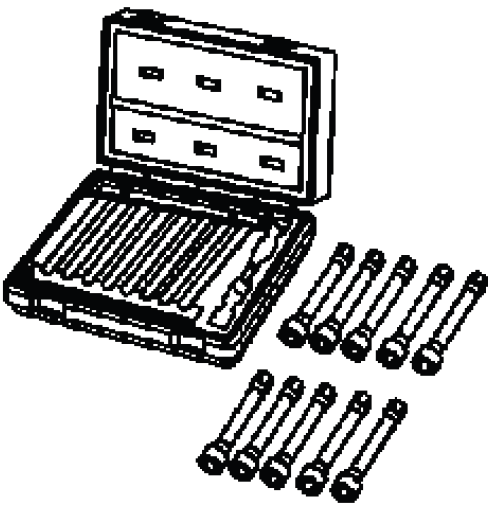
This torque socket set is used when controlled fastener tightening is required during brake service. Correct torque is important because over-tightened or unevenly tightened fasteners can distort parts, while under-tightened hardware can create movement, noise, or unsafe brake operation.
J 41013
Rotor Resurfacing
Kit
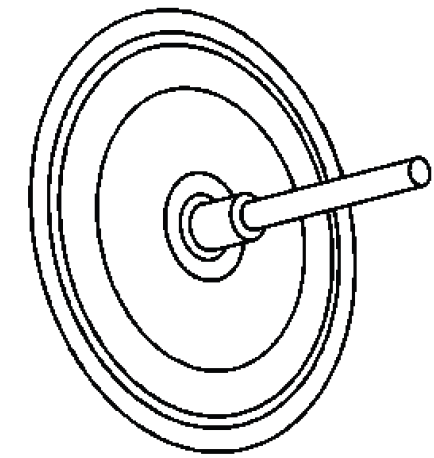
The rotor resurfacing kit is used to clean and prepare brake rotor mating surfaces during refinishing or runout correction work. A clean rotor mounting surface helps the rotor sit flat against the hub and reduces the chance of brake pedal pulsation after repair.
J 42450-A
Wheel Hub
Resurfacing Kit
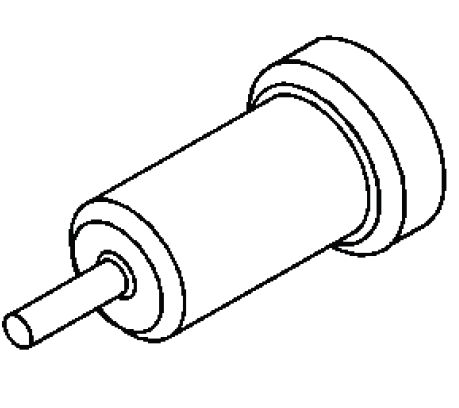
The wheel hub resurfacing kit removes rust, scale, and corrosion from the hub or axle flange where the brake rotor mounts. This step is especially important because debris trapped between the hub and rotor can create lateral runout even when the rotor itself is new or properly refinished.
J 45101
Hub and Wheel
Runout Gauge
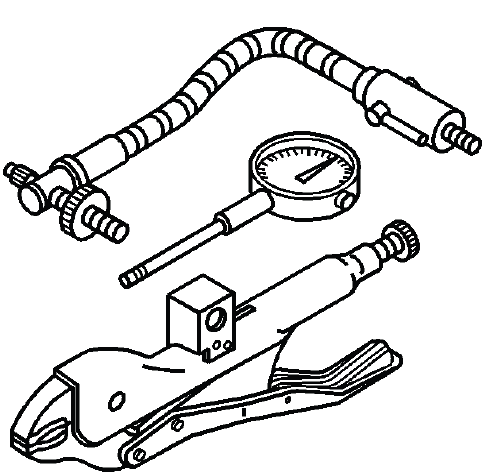
The hub and wheel runout gauge is used to measure assembled lateral runout and help diagnose brake pulsation concerns. Accurate runout measurement allows the technician to identify whether the issue is related to the rotor, hub, mounting surface, wheel studs, or installed rotor position.
J 45101-100
Conical Brake Rotor
Washers
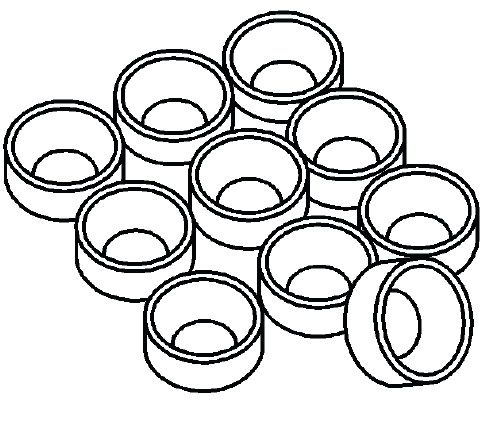
Conical brake rotor washers are used with lug nuts to hold the rotor tightly against the hub during lateral runout measurement or correction. They simulate the clamping effect of the wheel, helping provide a more accurate reading of how the rotor will sit in actual installed condition.
Using the correct tools during disc brake service on the Buick Enclave helps prevent repeat repairs, brake noise, rotor runout problems, and uneven pad wear. Proper measurement and clean mounting surfaces are just as important as the replacement parts themselves.
