Buick Enclave: Rear Suspension
SPECIFICATIONS
FASTENER TIGHTENING SPECIFICATIONS
Fastener Tightening Specifications
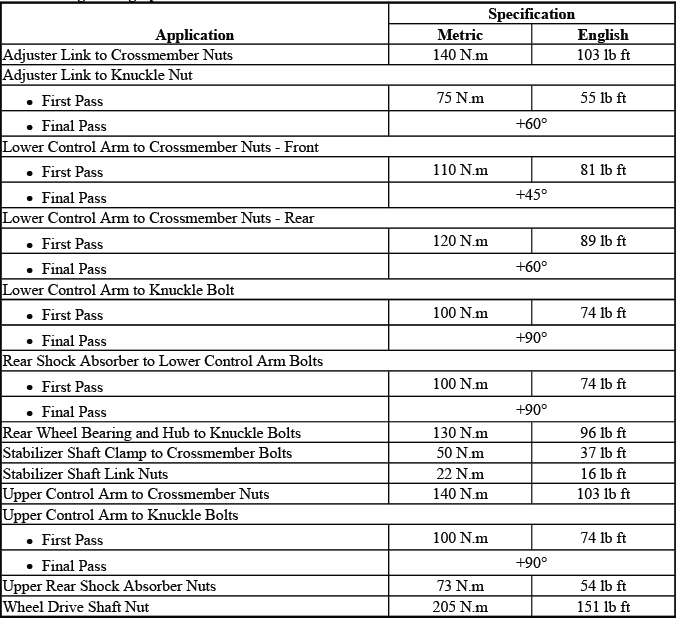
The rear suspension fastener tightening data should be treated as a critical part of the repair, not as a final detail after assembly. Rear suspension components carry wheel loads, braking forces, and cornering loads, so each fastener must be tightened in the correct position and to the listed specification. On the Buick Enclave, tightening suspension hardware with the parts misaligned or hanging at the wrong angle can affect bushing preload, ride height, alignment behavior, and long-term component life.
REPAIR INSTRUCTIONS
REAR WHEEL BEARING AND HUB REPLACEMENT (AWD)
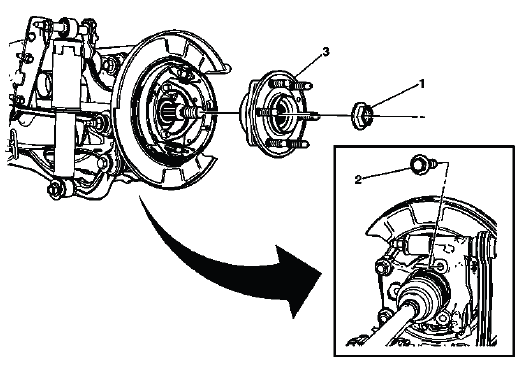
Fig. 1: Identifying Rear Wheel Bearing & Hub (AWD)
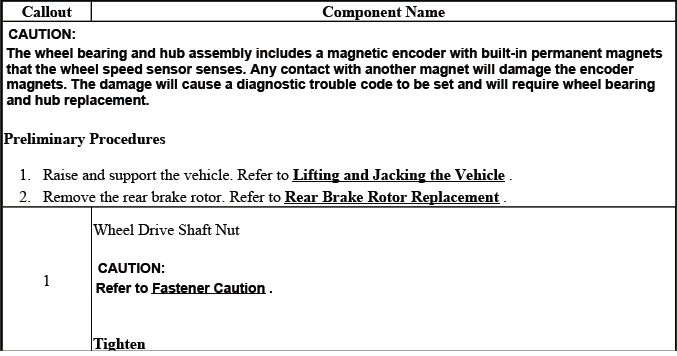
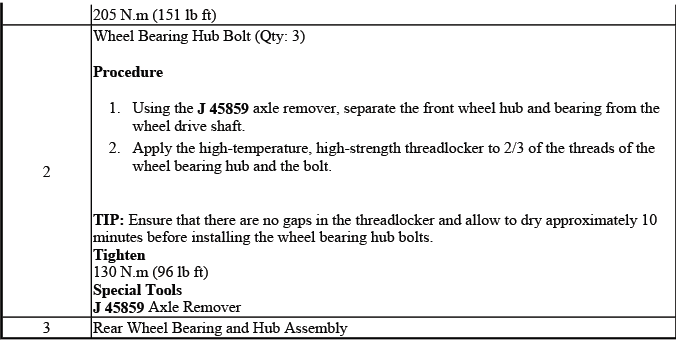
Rear Wheel Bearing and Hub Replacement (AWD)
The AWD rear hub service procedure applies when the rear wheel bearing and hub assembly must be removed for bearing noise, hub damage, wheel speed sensor concerns, axle shaft service, or access to nearby suspension parts. Before removal, inspect for looseness, rough bearing rotation, ABS-related wiring damage, and corrosion around the mounting flange. Keeping the work area clean helps the hub seat squarely against the knuckle during installation.
REAR WHEEL BEARING AND HUB REPLACEMENT (FWD)
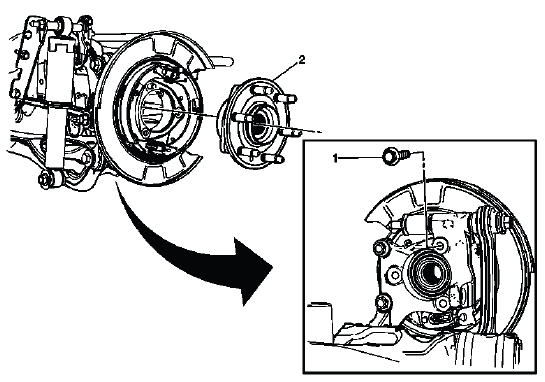
Fig. 2: Identifying Rear Wheel Bearing & Hub (FWD)
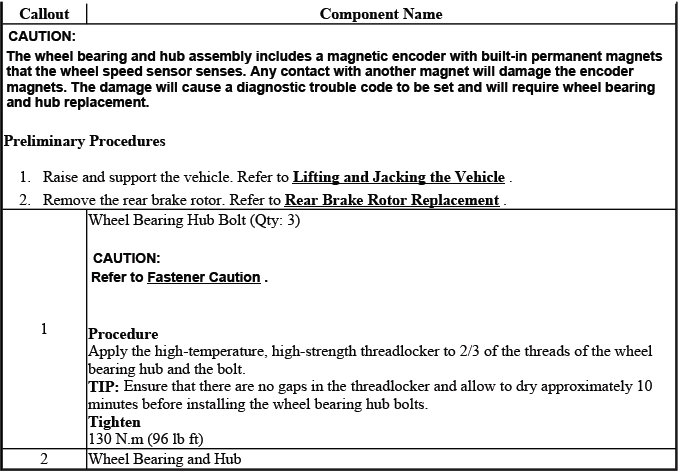
Rear Wheel Bearing and Hub Replacement (FWD)
The FWD rear wheel bearing and hub assembly should be serviced with attention to the mating surface between the hub and knuckle. Rust, scale, or debris behind the hub can cause runout, noise, uneven wheel seating, or ABS signal issues. If the Buick Enclave has a repeated rear bearing concern, also inspect the wheel, tire, brake rotor seating surface, and knuckle condition before installing the replacement hub.
REAR SUSPENSION LINK REPLACEMENT - UPPER TO LOWER CONTROL ARM
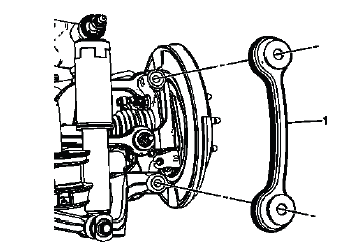
Fig. 3: Identifying Rear Suspension Link
Rear Suspension Link Replacement - Upper to Lower Control Arm
The rear suspension link helps control wheel position as the suspension moves through compression and rebound. When replacing this link, check the bushings, mounting holes, and fastener contact areas for signs of elongation, cracking, corrosion, or impact damage. A damaged or loose rear link can contribute to rear tire wear, unstable handling, clunking noises, or alignment readings that will not remain consistent.
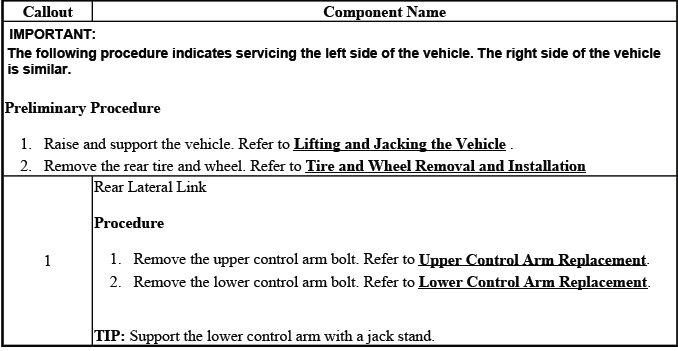
KNUCKLE REPLACEMENT
The rear knuckle supports the hub assembly and connects the rear suspension links, control arms, and axle-related components. Replace or remove it only after the surrounding parts have been supported correctly, because the knuckle location affects rear suspension geometry. During Buick Enclave rear suspension repair, mark component positions when helpful, protect brake and ABS wiring from strain, and avoid forcing the control arms into place with misaligned hardware.
Removal Procedure
1. Raise and support the vehicle. Refer to Lifting and Jacking the Vehicle. Make sure the vehicle is stable before working under the rear suspension, and support it at approved lift points so the suspension can be serviced without twisting or loading the body structure incorrectly.
2. Remove the rear wheel bearing and hub. Refer to Rear Wheel Bearing and Hub Replacement (AWD) and Rear Wheel Bearing and Hub Replacement (FWD). Removing the hub provides the necessary access to the knuckle and prevents the hub assembly from being damaged while the knuckle is separated from the control arms.
3. Remove the park brake backing plate assembly. Refer to Rear Parking Brake Anchor Backing Plate Replacement. Keep the parking brake hardware organized and avoid bending the backing plate or disturbing the cable routing more than necessary.
4. Remove the rear wheel drive shaft. Refer to Rear Wheel Drive Shaft and Rear Axle Shaft Seal Replacement. Support the shaft during removal so the joints and seals are not stressed.
5. Position a jack stand under the lower control arm. The support should hold the control arm securely without lifting the vehicle from the hoist or creating an unstable load path.
6. Remove the nut from the bolt from the knuckle to the adjuster link.
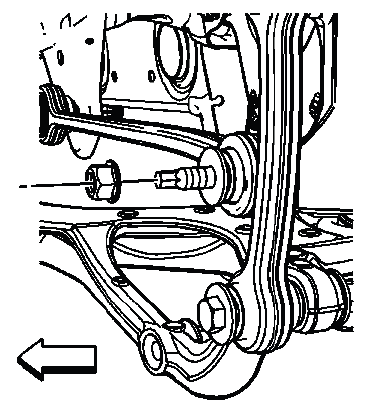
Fig. 4: Identifying Retaining Nut From Adjuster Link To Knuckle
7. Remove the bolt (1) from the knuckle to the adjuster link. If the bolt is tight from corrosion or suspension load, relieve the load carefully instead of striking the knuckle or link in a way that may distort the mounting surfaces.
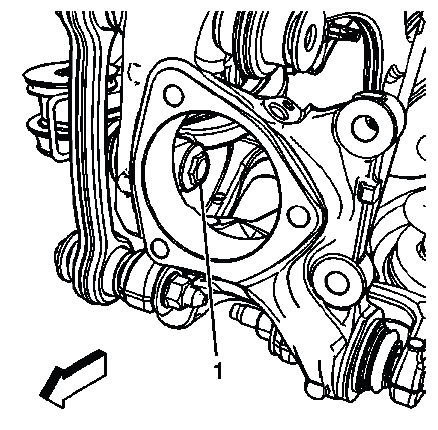
Fig. 5: Identifying Bolt From Knuckle To Adjuster Link
8. Remove the lower knuckle to lower control arm nut and bolt.
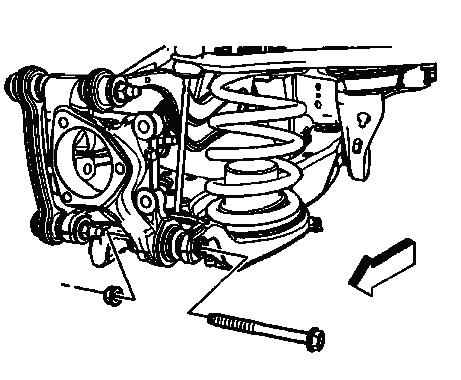
Fig. 6: Identifying Lower Knuckle To Lower Control Arm Nut And Bolt
NOTE: If removing the lower nut and bolt in step 8 or the upper nut and bolt in step 9, to service other suspension components, it is not necessary to remove the knuckle.
9. Remove the bolt and nut from the upper control arm to the knuckle. Keep the control arm supported so the fastener is not removed while the joint is under excessive twist or side load.
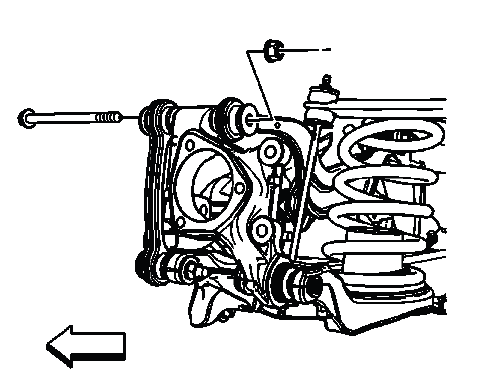
Fig. 7: Identifying Bolt & Nut From Upper Control Arm To Knuckle
10. Remove the knuckle from the upper and lower control arms. Work the knuckle out evenly and watch for interference with the brake backing plate area, axle opening, and suspension link mounting points.
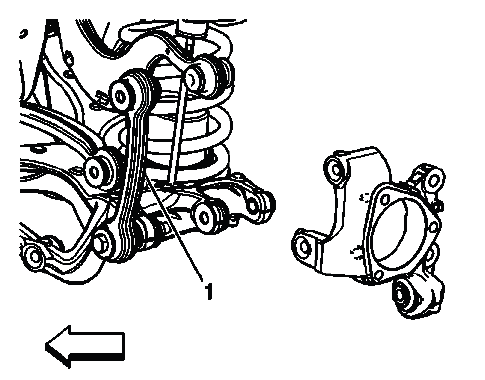
Fig. 8: Identifying Rear Suspension Link
NOTE: In the following service procedure, it is not necessary to remove the rear suspension link from the lower control arm. The link (1) can remain attached to the lower control arm.
Installation Procedure
NOTE: In steps 2-5, ensure that all the fasteners are installed loose in order to allow movement in the knuckle to allow for alignment all the mounting holes. After all the fasteners have been installed, then the proper torque specifications can be applied.
1. Position the knuckle in the upper and lower control arms. Align the mounting holes by hand before installing the bolts, and do not draw the knuckle into place with fastener torque if the parts are not sitting naturally.
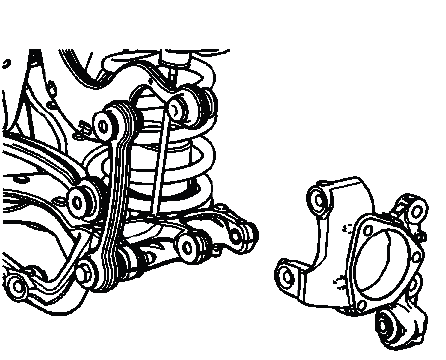
Fig. 9: Identifying Lower Knuckle
2. Install the bolt (1) from the knuckle to the adjuster link. Leave the fastener loose enough to allow the remaining mounting points to line up without binding.
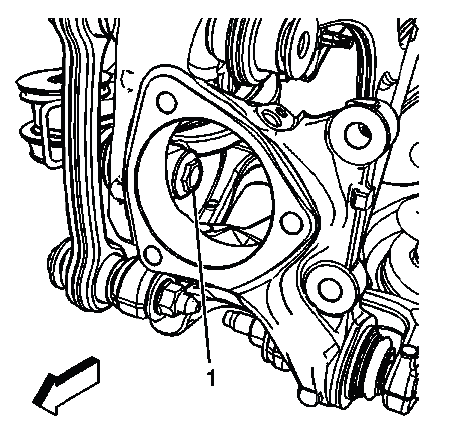
Fig. 10: Identifying Bolt From Knuckle To Adjuster Link
3. Tighten the nut for the bolt from the knuckle to the adjuster link to 75 N.m (55 lb ft) plus 60º. Use the angle portion of the tightening procedure carefully, because the final clamp load depends on both the torque value and the additional rotation.
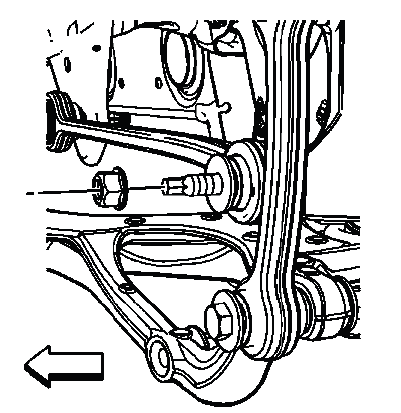
Fig. 11: Identifying Retaining Nut From Adjuster Link To Knuckle
CAUTION: Refer to Fastener Caution.
4. Install the bolt from the upper control arm to the knuckle and tighten to 100 N.m (74 lb ft) plus 90º. Make sure the joint is seated squarely before final tightening, and do not reuse hardware if the service procedure identifies it as a torque-to-yield or one-time-use fastener.
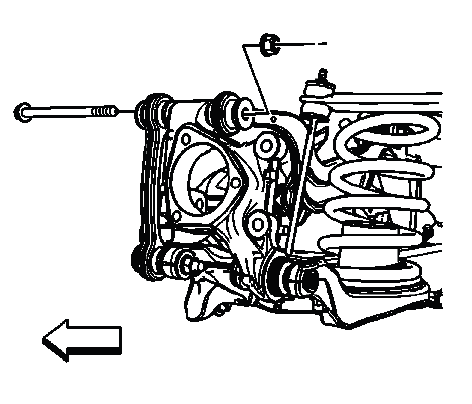
Fig. 12: Identifying Bolt & Nut From Upper Control Arm To Knuckle
NOTE: In steps 4 and 5, finger tighten the bolts. This will allow the alignment of the mounting holes in the control arms and the knuckle.
5. Install the bolt from the lower control arm to the knuckle and tighten to 100 N.m (74 lb ft) plus 90º. Confirm that the lower control arm is supported in a controlled position while tightening so the bushing and knuckle are not loaded unevenly.
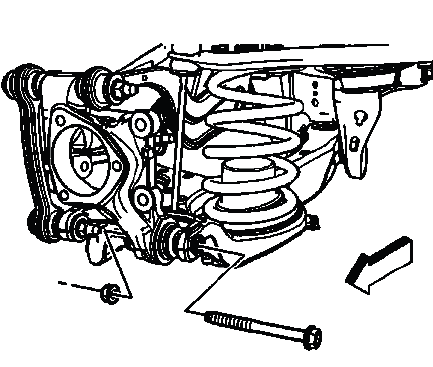
Fig. 13: Identifying Lower Knuckle To Lower Control Arm Nut And Bolt
6. Remove the jack stand from under the lower control arm. Lower the support slowly and verify that the suspension settles without pulling on brake lines, ABS wiring, or the parking brake cable.
7. Install the rear wheel drive shaft. Refer to Rear Wheel Drive Shaft and Rear Axle Shaft Seal Replacement. Confirm that the shaft is seated correctly and that the seal area is clean before final assembly.
8. Install the park brake backing plate assembly. Refer to Rear Parking Brake Anchor Backing Plate Replacement. Check the parking brake hardware for correct placement and smooth movement before the hub is installed.
9. Install the rear wheel bearing and hub. Refer to Rear Wheel Bearing and Hub Replacement (AWD) and Rear Wheel Bearing and Hub Replacement (FWD). The hub mounting surface should be clean and flat so the assembly seats fully against the knuckle.
10. Remove the support and lower the vehicle. After the vehicle is back on the ground, verify rear suspension height, listen for abnormal noises during a short road test, and perform an alignment check whenever suspension geometry has been disturbed.
STABILIZER SHAFT REPLACEMENT
The rear stabilizer shaft helps reduce body roll by transferring load between the left and right sides of the rear suspension. If the stabilizer shaft, links, or bushings are worn, the vehicle may produce clunking noises over bumps, feel loose during cornering, or show uneven rear suspension response. On the Buick Enclave, inspect the links and bushings as a complete system instead of replacing only the most visible worn part.
Removal Procedure
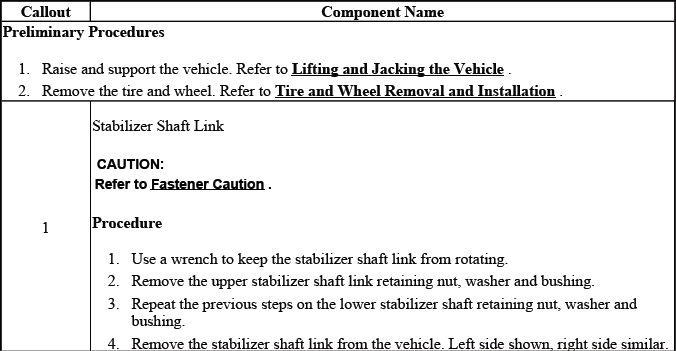
1. Raise and support the vehicle. Refer to Lifting and Jacking the Vehicle. The rear suspension should be safely unloaded while still allowing access to the stabilizer shaft, links, and retaining hardware.
2. Remove the rear tires and wheels. Refer to Tire and Wheel Removal and Installation. Removing both rear wheels improves access and makes it easier to compare link and bushing condition side to side.
3. Remove the spare tire. This creates the clearance needed to move the stabilizer shaft out of the rear suspension area without forcing it against nearby components.
4. Insert a wrench (1) on the stabilizer shaft link (2) so as not to allow the stabilizer shaft link to rotate when removing or installing the retaining nut. Holding the link correctly helps prevent damage to the stud, bushing, or nut threads.
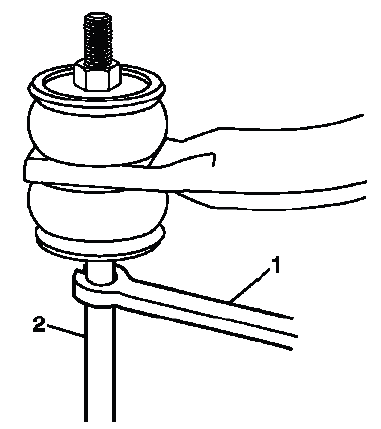
Fig. 14: Identifying Stabilizer Shaft Link
5. Remove the upper stabilizer shaft link retaining nut with washer (1) and bushing (2). Note the order and orientation of the washer and bushing so the new or reused components can be installed in the same arrangement.
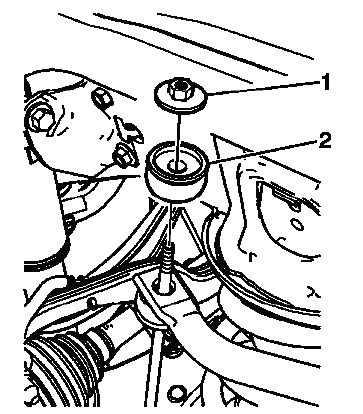
Fig. 15: Identifying Upper Stabilizer Shaft Link Retaining Nut With Washer & Bushing
NOTE: It maybe necessary to apply a small amount of penetrating oil to the stabilizer shaft link retaining nut prior to removal.
If penetrating oil is used, give it time to work into the threads before applying force. Avoid excessive heat near rubber bushings, brake components, fuel lines, or underbody materials. Once the stabilizer hardware is removed, inspect the shaft for cracks, deformation, worn contact points, and corrosion around the bushing areas before reinstallation.
6. Remove the stabilizer shaft clamp bolt (1) and the clamp (2). Keep the clamp and bolt together for reference, and inspect the clamp contact surface for rust buildup, distortion, or marks that could prevent the stabilizer shaft bushing from seating evenly during installation.
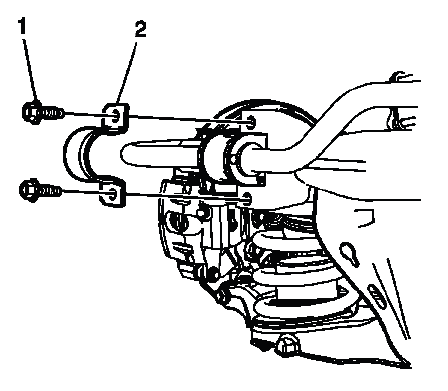
Fig. 16: Identifying Stabilizer Shaft Clamp & Bolts
7. Remove the stabilizer shaft (1) from the stabilizer shaft link (2). If the link is tight on the shaft, work it loose gradually rather than prying against the bushing or bending the link stud.
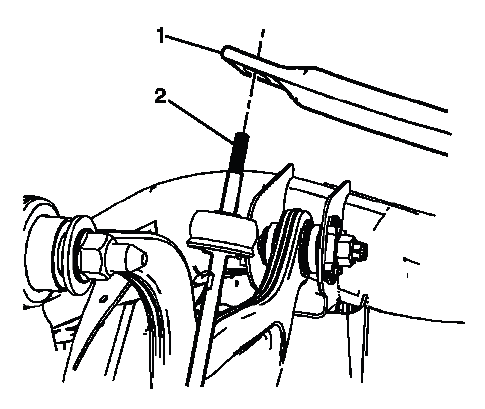
Fig. 17: Identifying Stabilizer Shaft & Stabilizer Shaft Link
8. Remove the stabilizer shaft (1) and bushing (2) from the vehicle. Guide the shaft out carefully so it does not contact brake lines, suspension links, wiring, or the underbody.
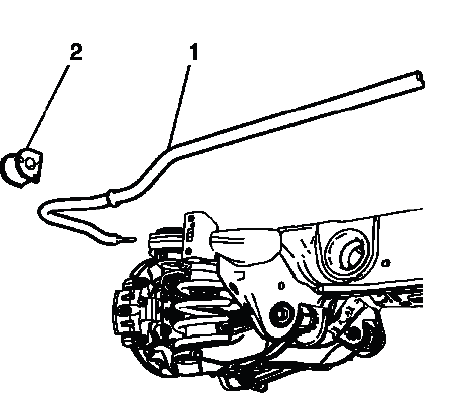
Fig. 18: Identifying Stabilizer Shaft & Bushing
NOTE: It maybe necessary to maneuver the stabilizer shaft in such away to remove it from the vehicle.
Because the rear stabilizer shaft passes through a tight area of the rear suspension, small changes in angle may be needed to remove it cleanly. Do not force the bar against nearby components. On a Buick Enclave with corrosion or road debris around the rear suspension, clean the contact areas before reassembly so the bushings and clamps can sit squarely.
Installation Procedure
1. Install the bushing (2) on the stabilizer shaft (1). Match the bushing position and orientation to the original location unless the service part or procedure specifies otherwise. The split in the bushing should be positioned so the clamp can compress it evenly when tightened.
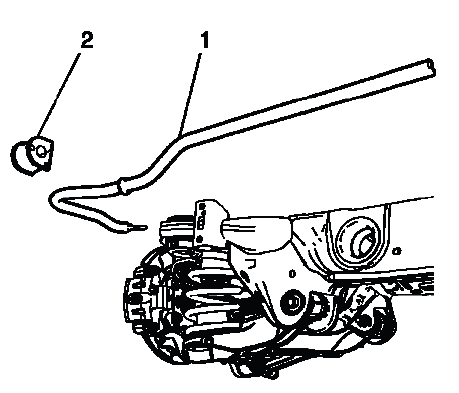
Fig. 19: Identifying Stabilizer Shaft & Bushing
2. Maneuver the stabilizer shaft in such away to properly install it on the frame. Feed the shaft into place slowly, keeping it clear of the brake lines, rear suspension links, and underbody panels. The bar should sit naturally in the frame area without being twisted into position.
3. Install the stabilizer shaft (1) on the stabilizer shaft link (2). Make sure the link is aligned with the shaft before installing the retaining hardware, since forcing the link into position can preload the bushing and cause noise after the repair.
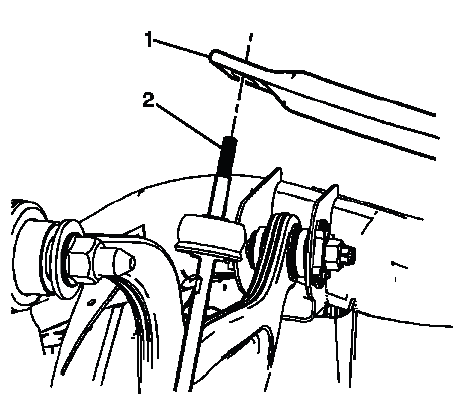
Fig. 20: Identifying Stabilizer Shaft & Stabilizer Shaft Link
4. Install the stabilizer shaft clamp (2) and the bolts (1). Start the bolts by hand first to avoid cross-threading and to allow the clamp to settle evenly over the bushing.
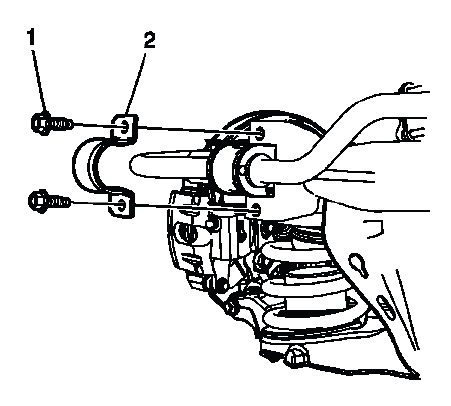
Fig. 21: Identifying Stabilizer Shaft Clamp & Bolts
NOTE: In steps 4 and 5, DO NOT tighten the bolts or nuts to specifications. Leave the bolts and nut loose.
Leaving the stabilizer hardware loose at this stage helps the shaft, bushings, and links center themselves before final tightening. This reduces the chance of bushing bind, uneven clamp load, or a rear suspension noise that appears only after the vehicle is lowered.
5. Install the bushing (2) and the upper stabilizer shaft link retaining nut with washer (1). Place the washer and bushing in the same order shown in the service illustration, and verify that the bushing is not pinched or rolled out of position.
6. Insert a wrench (1) on the stabilizer shaft link (2) so as not to allow the stabilizer shaft link to rotate when removing or installing the retaining nut. Holding the link steady protects the stud and allows the nut to tighten against the bushing correctly.
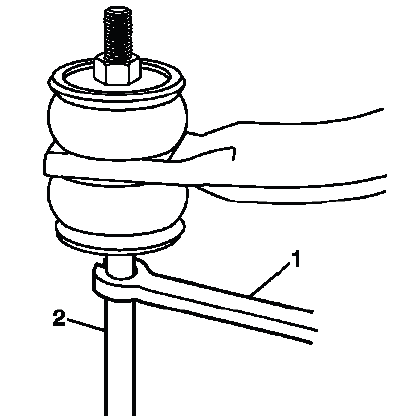
Fig. 22: Identifying Stabilizer Shaft Link
7. Tighten the upper stabilizer shaft link retaining nut. Confirm that the bushing compresses evenly and that the link remains straight as the nut is tightened.
CAUTION: Refer to Fastener Caution.
Tighten
- Tighten the retaining nut to 22 N.m (16 lb ft).
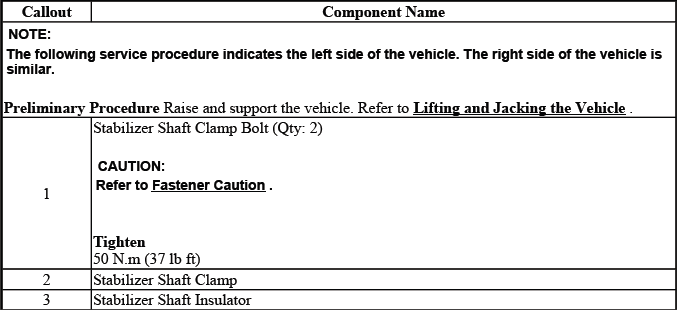
8. Tighten the stabilizer shaft clamp bolts. Tighten both clamp bolts evenly so the clamp seats flat against the mounting surface and the bushing is not squeezed more on one side than the other.
Tighten
- Tighten the clamp bolts nut to 50 N.m (16 lb ft).
9. Install the spare tire. Make sure the spare tire and its retaining hardware are secured so no underbody rattle is introduced after the suspension service.
10. Install the rear tires and wheels. Refer to Tire and Wheel Removal and Installation. Tighten the wheel fasteners in the proper sequence and verify that the wheel seats cleanly against the hub.
11. Remove the support and lower the vehicle. After the Buick Enclave is lowered, bounce the rear of the vehicle lightly to settle the suspension, then listen for any abnormal stabilizer link or bushing noise during a short road test.
STABILIZER SHAFT INSULATOR REPLACEMENT
The stabilizer shaft insulator cushions the stabilizer bar where it is clamped to the rear suspension structure. A worn, hardened, split, or loose insulator can create knocking sounds over uneven pavement and may allow the stabilizer shaft to shift inside the clamp. Inspect both sides before replacement so the repair addresses the complete source of the noise.
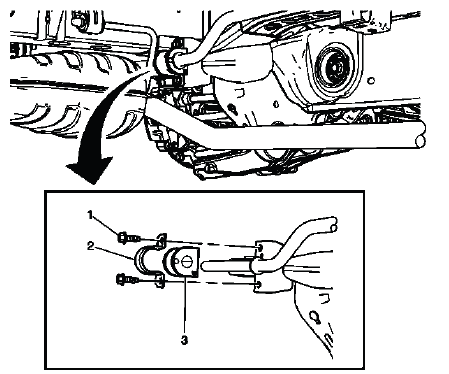
Fig. 23: Identifying Stabilizer Shaft Insulator
Stabilizer Shaft Insulator Replacement
When replacing the insulator, clean the stabilizer shaft contact area and check the clamp for deformation or heavy corrosion. The new insulator should fit snugly around the shaft without twisting. If the shaft surface is deeply pitted at the bushing contact point, the new insulator may wear quickly or still allow noise under body roll.
STABILIZER SHAFT LINK REPLACEMENT
The stabilizer shaft link connects the stabilizer bar to the rear suspension and transfers load as the vehicle leans during cornering. A worn link may cause clunks, looseness, torn bushings, uneven bushing compression, or visible movement at the link joint. On the Buick Enclave, link condition should be checked together with the stabilizer bushings, clamps, and rear suspension hardware.
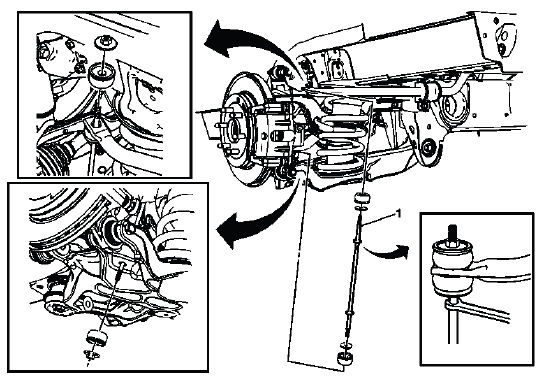
Fig. 24: Identifying Stabilizer Shaft Link
Stabilizer Shaft Link Replacement
During link replacement, hold the link stud with the correct tool when loosening or tightening the retaining nut. Do not allow the stud to spin freely, as this can damage the threads or bushing seat. Compare the new link with the removed part before installation to confirm length, bushing stack, washer shape, and mounting orientation.

STRUT AND SHOCK ABSORBER INSPECTION (SHOCK ABSORBER)
NOTE: The shock absorber assembly DOES NOT have to be removed from the vehicle to perform the following inspection procedure.
NOTE: A light film of oil on the top portion of the lower shock absorber tube is normal.
DO NOT replace the shock absorber for this condition.
The shock absorber inspection is intended to separate normal oil film from a true fluid leak. A small amount of residue near the shock shaft seal can be part of normal operation, while a wet trail, dripping oil, or a heavy film covering a larger area indicates a failed seal. Always inspect both rear shock absorbers under similar lighting so the condition can be compared accurately from side to side.
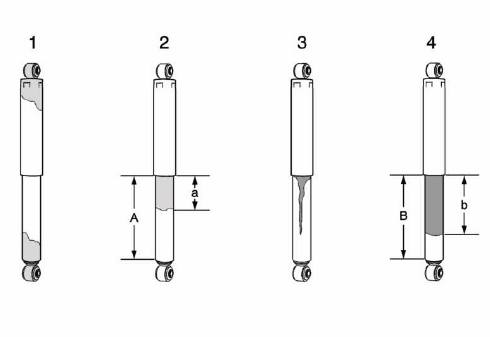
Fig. 25: Identifying Shock Absorber Conditions
Condition 1
Oil or fluid residue only on the bottom or top of the shock absorber and not originating from the shaft seal, is not a shock absorber related problem. DO NOT replace the shock absorber, look for other external leaks. Brake fluid, axle lubricant, road splash, undercoating, or body cavity wax can sometimes be mistaken for shock absorber leakage, so trace the residue to its actual source before replacing parts.
Condition 2
Light film/residue on approximately 1/3 (a) or less of the lower shock tube (A) and originating from the shaft seal, is a NORMAL condition. DO NOT replace the shock absorber. This type of light film can appear as the seal remains lubricated during normal shock travel and does not mean the damping unit has lost its ability to control suspension movement.
Condition 3
Oil drip or trail down the lower shock tube and originating from the shaft seal, is an ABNORMAL condition.
Replace the shock absorber. A visible drip or defined oil trail means fluid is escaping past the seal and the shock absorber may no longer provide consistent damping.
Condition 4
An extreme wet film of oil covering more than 1/3 (b) of the lower shock tube and originating from the shaft seal (B), is an ABNORMAL condition. Replace the shock absorber. Refer to Shock Absorber Replacement. When the wet area extends beyond the normal light film zone, the internal fluid loss can affect ride control, braking stability, and rear suspension response.
Inspection
1. Verify the customer's concern is present. If the concern is present, continue to the next step. If the concern is not present, then the vehicle is operating normally. Customer concerns may include rear bouncing, knocking, poor ride control, uneven tire wear, or a loose feeling over bumps.
2. Raise and support the vehicle. Refer to Lifting and Jacking the Vehicle. Make sure the rear suspension can be inspected safely and that the shock absorber body is visible from top to bottom.
NOTE: The shock absorber assembly DOES NOT have to be removed from the vehicle to perform the following inspection procedure.
3. Visually inspect each of the shock absorbers for external fluid leaks. Refer to the following conditions 1, 2, 3 and 4 for visual inspection. Wipe only the surrounding area if needed for visibility, but avoid cleaning away evidence before the leak pattern has been identified.
- If conditions 1 or 2 are found, continue to step 4.
- If conditions 3 or 4 are found, replace shock absorber. Refer to Shock Absorber Replacement.
4. If equipped with electronic suspension control system, ensure that the system is working properly. Refer to the appropriate Diagnostic Starting Point - Electronic Suspension Control information. A control system fault can affect ride quality and may be mistaken for a failed shock absorber if the electrical side is not checked.
5. Use your hands in order to lift up and push down on each corner of the vehicle 3 times. Remove your hands from the vehicle. If the corner motion exceeds 2 cycles, replace the shock absorber. If the shock absorber does not exceed 2 cycles, NO repair is necessary. This bounce test should be used together with the visual inspection, not as the only diagnostic step.
SHOCK ABSORBER REPLACEMENT
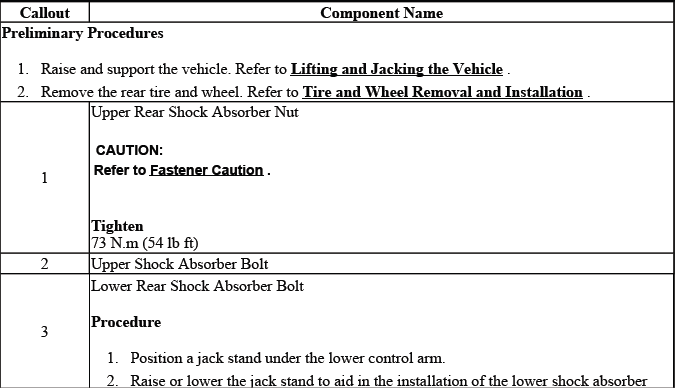
Shock absorber replacement should be performed when leakage, weak damping, physical damage, or failed inspection confirms that the unit can no longer control rear suspension movement. Replacing only one side may create uneven damping if the opposite shock is also worn, so compare both sides before completing the repair. For Buick Enclave rear suspension service, also inspect the upper and lower mounting points for rust, loose hardware, and bushing wear.
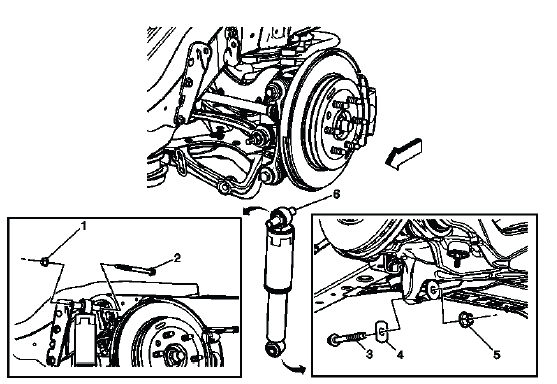
Fig. 26: Identifying Shock Absorber
Shock Absorber Replacement
During replacement, support the suspension as required, remove the shock absorber hardware without letting the suspension drop suddenly, and install the new unit in the same orientation as the original. Tighten the mounting fasteners only according to the service procedure and confirm that the bushings are seated correctly before the vehicle is returned to service.
SHOCK ABSORBER DISPOSAL
Shock absorbers are gas charged and must be handled carefully before disposal. Follow the disposal procedure exactly, wear eye protection, and keep the shock absorber pointed away from the body. Do not cut, heat, crush, or open the unit in an uncontrolled manner.
1. Make an indentation 10 mm (0.4 in) from the bottom (4) of the tube (3) using a centerpunch. The indentation helps locate the drill bit and reduces the chance of the bit wandering across the rounded surface.
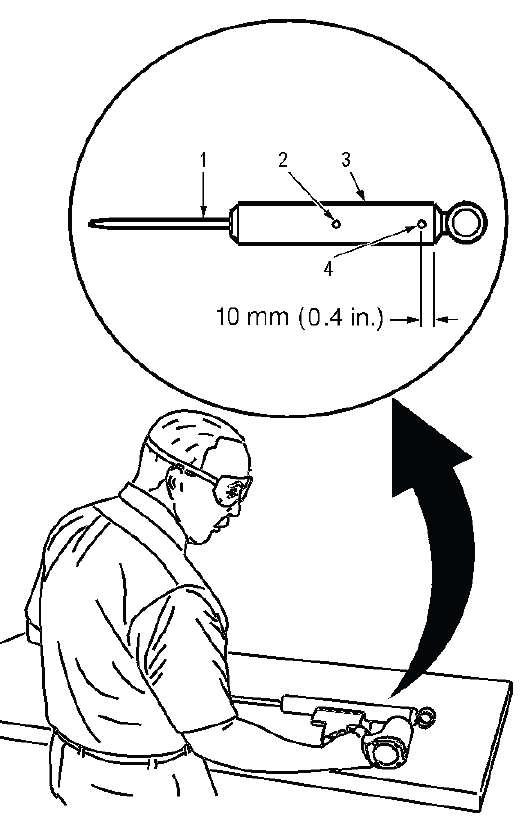
Fig. 27: Drilling Hole In Shock Absorber At Centerpunched Locations
WARNING: Gas charged shock absorbers contain high pressure gas. Do not remove the snap ring from inside the top of the tube. If the snap ring is removed, the contents of the shock absorber will come out with extreme force which may result in personal injury.
Keep the shock absorber secured while the disposal opening is made, and release pressure only through the specified drilled location. The snap ring must remain in place because it retains internal components under pressure. Treat every removed shock absorber as pressurized until the approved disposal steps have been completed.
WARNING: To prevent personal injury, wear safety glasses when centerpunching and drilling the shock absorber. Use care not to puncture the shock absorber tube with the centerpunch.
2. Clamp the shock absorber in a vise horizontally with the shock absorber rod (1) completely extended. Secure the unit firmly enough to prevent movement, but do not crush or distort the tube. Keep the rod extended so internal pressure and fluid can be released in a controlled direction during drilling.
3. Drill a hole in the shock absorber at the centerpunch (4) using a 5 mm (3/16 in) drill bit. Gas or a gas/oil mixture will exhaust when the drill bit penetrates the shock absorber. Use shop towels in order to contain the escaping oil. Drill slowly and keep your body out of the release path, because pressure may discharge suddenly when the drill breaks through the outer tube.
4. Make an indentation in the middle (2) of the tube (3) with a centerpunch. The second centerpunch mark helps guide the drill bit and allows the remaining oil to drain more completely from the shock absorber body.
5. Drill a second hole in the shock absorber at the centerpunch (2) using a 5 mm (3/16 in) drill bit. Oil will exhaust when the drill bit penetrates the shock absorber. Use shop towels in order to contain the escaping oil. Keep the drain area clean and dispose of the collected oil according to local shop and environmental requirements.
6. Remove the shock absorber from the vise. Hold the shock absorber over a drain pan horizontally with the holes down. Move the rod (1) in and out of the tube (3) to completely drain the oil from the shock absorber. Continue moving the rod until the oil flow slows and the unit no longer releases trapped fluid from the drilled openings.
REAR SPRING, INSULATOR AND JOUNCE BUMPER REPLACEMENT
The rear spring, insulator, spring seat, and jounce bumper work together to support vehicle weight, isolate road vibration, and limit suspension travel during heavy compression. On the Buick Enclave, these parts should be inspected together because a damaged insulator, collapsed spring seat, or deteriorated jounce bumper can create noise, uneven ride height, or harsh rear suspension contact over bumps.
Removal Procedure
1. Raise and support the vehicle. Refer to Lifting and Jacking the Vehicle. Make sure the vehicle is stable before unloading the rear suspension, and use approved lift points so the body and suspension are not stressed incorrectly.
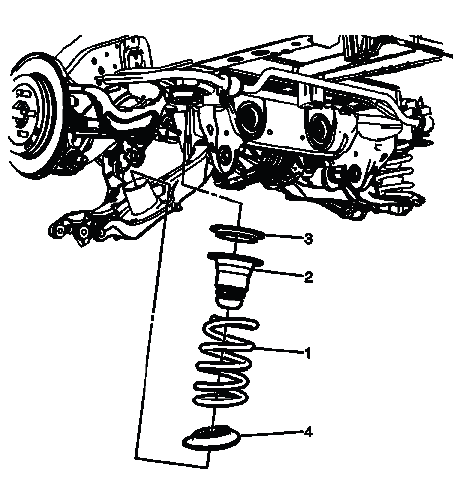
Fig. 28: Identifying Rear Spring & Insulator
2. Remove the rear tire and wheel. Refer to Tire and Wheel Removal and Installation. Removing the wheel provides access to the lower control arm, spring pocket, shock absorber mounting point, and stabilizer link hardware.
3. Position an adjustable jack stand under the lower control arm. The support should be placed securely so the control arm can be lowered gradually without the spring releasing suddenly.
4. Remove the lower stabilizer shaft link bushing and nut. Refer to Stabilizer Shaft Link Replacement. This allows the lower control arm to move through the required range without loading the stabilizer link.
5. Remove the lower shock absorber bolt. Refer to Shock Absorber Replacement. Support the lower control arm before the bolt is removed so the suspension does not drop unexpectedly.
6. Remove the lower bolts from the knuckle. Refer to Knuckle Replacement. Keep track of the fastener orientation and avoid forcing the knuckle or control arm out of alignment while the spring is still under load.
7. Using the adjustable jack stand, slowly lower the vehicle until the rear spring (1), insulator (4), jounce bumper (2) and the spring seat (3) can be removed. Lower the control arm in small increments and watch the spring carefully until all stored tension is released. Do not place hands between the spring and spring pocket while the control arm is moving.
Installation Procedure
1. Position the spring seat (3), jounce bumper (2), rear spring (1) and the insulator (4) on the lower control arm. Make sure the spring end is seated in the correct pocket and that the insulator is not folded, twisted, or trapped between the spring and the mounting surface.
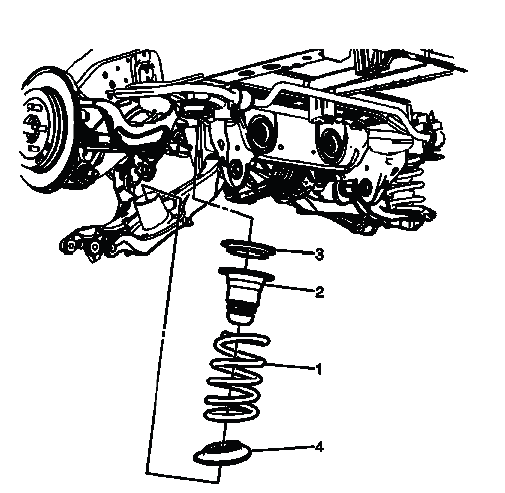
Fig. 29: Identifying Rear Spring & Insulator
2. Using the adjustable jack stand, raise the lower control arm until the lower bolts for the knuckle can be installed. Refer to Knuckle Replacement. Raise the arm slowly and verify that the spring remains seated correctly as the suspension returns to its normal assembly position.
3. Remove the adjustable jack stand. Remove it only after the lower control arm and related fasteners are safely installed and the spring is captured in its seat.
4. Install the lower stabilizer shaft link bushing and nut. Refer to Stabilizer Shaft Link Replacement. Confirm that the bushing stack is assembled in the correct order and that the link is not twisted.
5. Install the lower shock absorber bolt. Refer to Shock Absorber Replacement. Align the shock absorber eye with the mounting bracket without prying against the bushing.
6. Install the rear tire and wheels. Refer to Tire and Wheel Removal and Installation. Clean the hub face if needed and tighten the wheel fasteners in the proper sequence.
7. Remove the support and lower the vehicle. After the vehicle is on the ground, check the rear ride height, verify that both rear springs are seated evenly, and listen for abnormal noises during a short road test. If the Buick Enclave had tire wear or rear alignment concerns before the repair, a wheel alignment check should be performed.
ADJUST LINK REPLACEMENT
The rear adjust link is part of the suspension geometry control system and directly affects alignment positioning. Before removing it, inspect the link, cams, mounting brackets, bushings, and knuckle connection for corrosion, impact marks, or elongated holes. A damaged adjust link can make rear alignment unstable even when the readings initially appear to be within range.
Removal Procedure
NOTE: The following procedure indicates servicing the left side of the vehicle.
Servicing the right side of the vehicle is similar.
1. Raise and support the vehicle. Refer to Lifting and Jacking the Vehicle. Support the vehicle securely and allow enough working room to access the adjuster cams, link fasteners, and knuckle connection.
2. Remove the rear shock absorber. Refer to Shock Absorber Replacement. Removing the shock absorber improves access and allows the suspension to move enough for adjust link service.
3. Remove the retaining nut from the adjuster link to the knuckle. If the fastener is corroded, apply penetrating oil and allow it to work before removal to reduce the chance of damaging the threads.
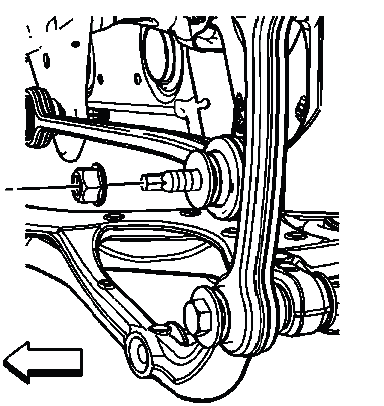
Fig. 30: Identifying Retaining Nut From Adjuster Link To Knuckle
4. Install a wrench to hold the adjuster cam bolt. Holding the cam bolt prevents unwanted movement and helps preserve the current alignment reference before disassembly.
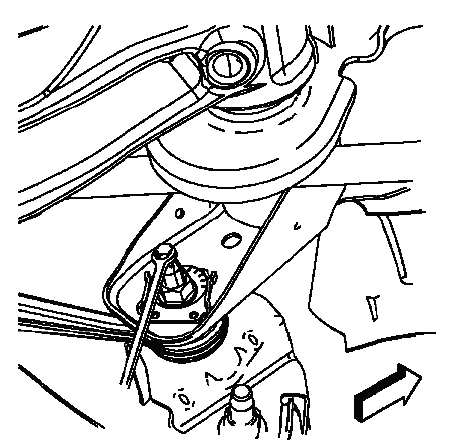
Fig. 31: Identifying Adjuster Cam Bolt
5. Mark a point of reference on the adjuster cam and the mounting bracket. These marks help return the link close to its previous position during reassembly, reducing how far the rear alignment may be disturbed before final adjustment.
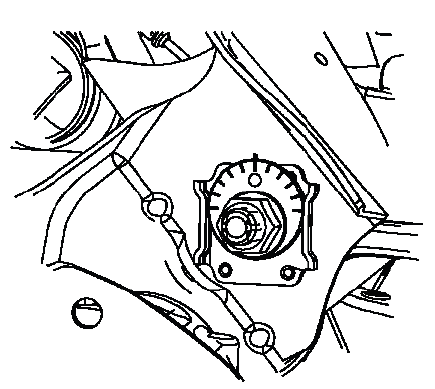
Fig. 32: Identifying Reference Marks On Adjuster Cam & Mounting Bracket
NOTE: In steps 5 and 6, if servicing other suspension components, mark the relationship of the adjuster cams to the mounting brackets to aid in the reinstallation of the adjustment link.
6. Remove the front adjuster nut (1) and the adjuster cam (2). Keep the cam orientation noted so it can be returned to the reference mark during installation.
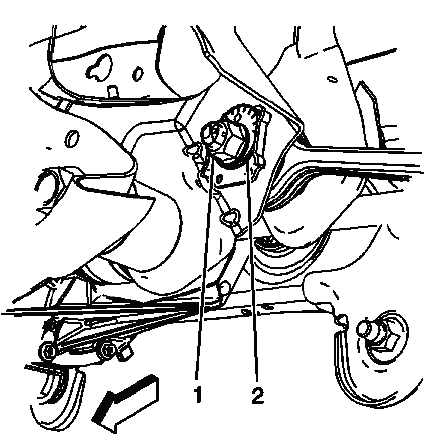
Fig. 33: Identifying Front Adjuster Nut & Adjuster Cam
7. Remove the rear adjuster nut (1), adjuster cam (2). If the cam is seized in the bracket, work it loose carefully rather than bending the mounting bracket or damaging the adjuster bolt.
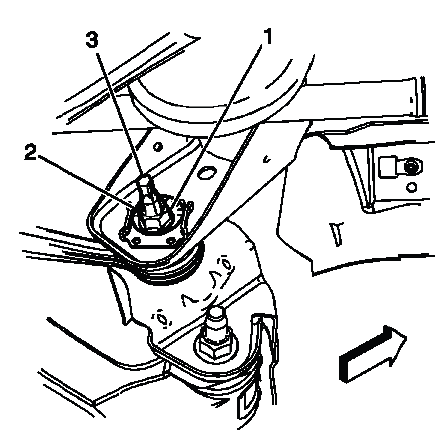
Fig. 34: Identifying Adjuster Bolt In Mounting Bracket & Adjuster Link
8. Maneuver the adjuster bolt (3) so as to remove it from the mounting bracket. Move the bolt out gradually while supporting the link so it does not drop or bind in the bracket.
9. Remove the adjuster link from the knuckle and the mounting bracket. Inspect the removed link for bent sections, torn bushings, sleeve movement, or uneven wear patterns that could explain alignment change or rear suspension noise.
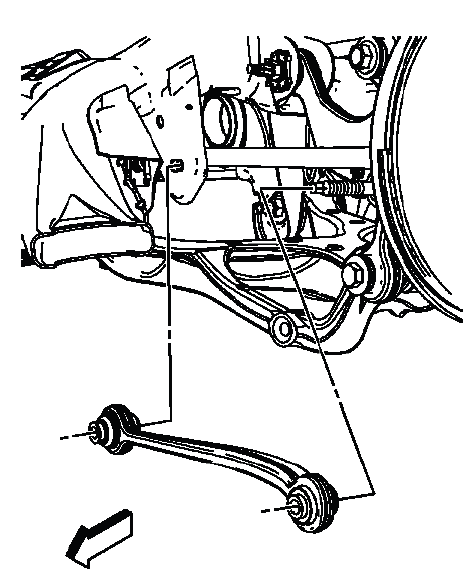
Fig. 35: Identifying Adjuster Link
Installation Procedure
1. Install the adjuster link on the knuckle and in the mounting bracket. Position the link without forcing it sideways, and make sure the bushing sleeves line up with the bracket openings before inserting the bolt.
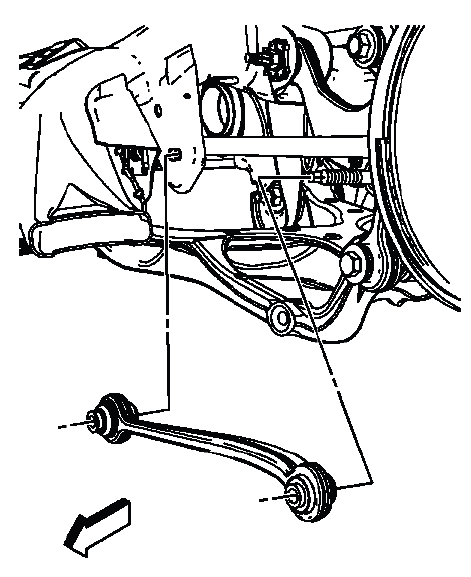
Fig. 36: Identifying Adjuster Link
2. Install the adjuster bolt (3) in the mounting bracket and adjuster link. The bolt should pass through the bracket and link cleanly; if it does not, check link position and bushing alignment before applying force.
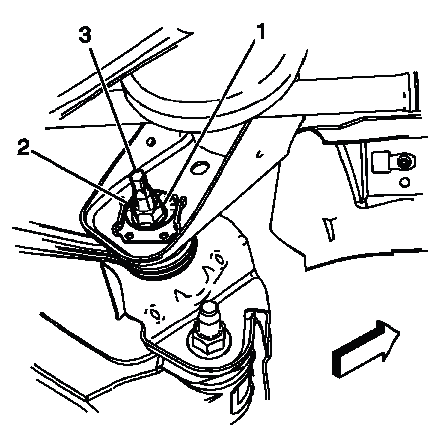
Fig. 37: Identifying Adjuster Bolt In Mounting Bracket & Adjuster Link
3. Install the rear adjuster cam (2) and adjuster nut (1). Finger tighten the nut at this time. Leaving the nut loose allows the cam to be positioned accurately against the reference marks.
4. Install the front adjuster cam (2) and the adjuster nut (1). Finger tighten the nut at this time. Confirm that the cam faces sit flat against the mounting bracket and are not cocked or trapped on debris.
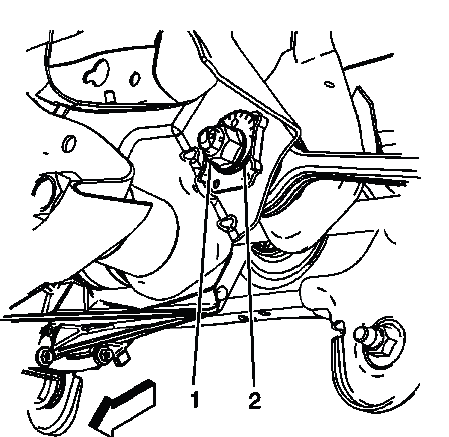
Fig. 38: Identifying Front Adjuster Nut & Adjuster Cam
5. Install the retaining nut for the adjuster link. Make sure the adjuster link is seated fully at the knuckle before tightening the retaining nut.
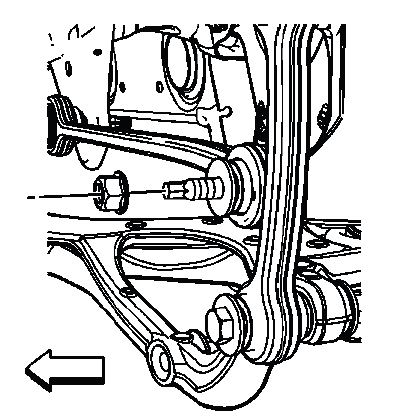
Fig. 39: Identifying Retaining Nut From Adjuster Link To Knuckle
CAUTION: Refer to Fastener Caution.
Tighten
- Tighten the retaining nut to 75 N.m (55 lb ft) plus 60º.
6. Install the rear shock absorber. Refer to Shock Absorber Replacement. Verify that the shock absorber is not used to pull the suspension into position and that the mounting bushing is seated evenly.
7. Align the reference marks on the adjuster cam and the mounting bracket. This returns the rear suspension close to its previous cam position, but it should not be treated as a substitute for a proper alignment check.
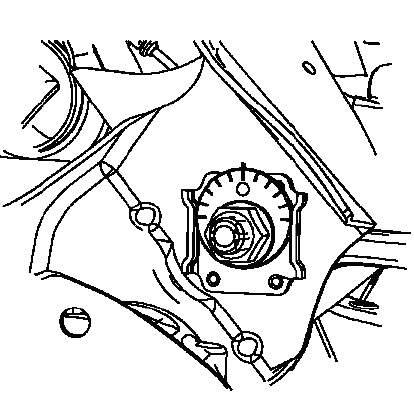
Fig. 40: Identifying Reference Marks On Adjuster Cam & Mounting Bracket
NOTE: If servicing other suspension components, align the relationship marks on the adjuster cam and the mounting brackets to aid in the re-installation of the adjustment link.
8. Install a wrench to hold the adjuster cam bolt. Holding the bolt steady prevents the cam from shifting while the nut is tightened to specification.
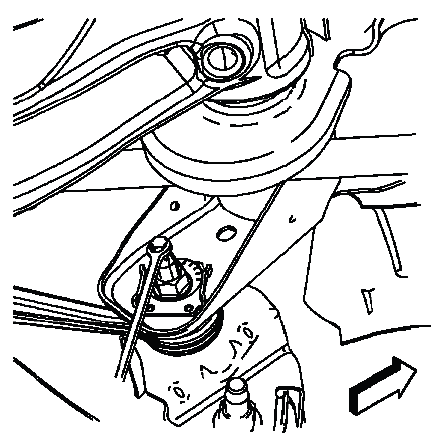
Fig. 41: Identifying Adjuster Cam Bolt
9. Tighten the adjuster cam nuts. Recheck the reference marks after tightening, because the cam can move slightly as clamp load is applied.
Tighten
- Tighten the adjuster cam nuts to 140 N.m (103 lb ft).
10. Remove the support and lower the vehicle. After the Buick Enclave is lowered, settle the rear suspension, inspect the link positions visually, and perform a rear wheel alignment check whenever the adjuster link or cam hardware has been disturbed. A final alignment printout is useful for confirming that the repair corrected the suspension geometry rather than only restoring the previous cam marks.
11. Align the rear suspension. Refer to Wheel Alignment Specifications. After any adjuster link work, the reference marks can help return the parts close to their previous position, but they do not replace a proper alignment check. Final toe and camber readings should be verified on alignment equipment before the vehicle is returned to service.
UPPER CONTROL ARM REPLACEMENT
The rear upper control arm helps maintain wheel position as the suspension moves through normal road travel. If the arm, bushings, adjuster cams, or mounting brackets are worn or damaged, the vehicle may develop rear tire wear, unstable alignment readings, clunking noises, or poor tracking. On the Buick Enclave, this repair should be handled carefully because the upper control arm position directly affects rear suspension geometry.
Removal Procedure
NOTE: In the following service procedures, the left side is shown, the right side is similar.
1. Remove the tire and wheel assembly. Refer to Tire and Wheel Removal and Installation. Removing the wheel provides access to the upper control arm, adjuster cams, wiring harness clips, and knuckle connection points.
2. Scribe a reference mark on the adjuster cam and the bracket to aid in installing the upper control arm. These marks help preserve the approximate cam position during reassembly and reduce how far the alignment may shift before final adjustment.
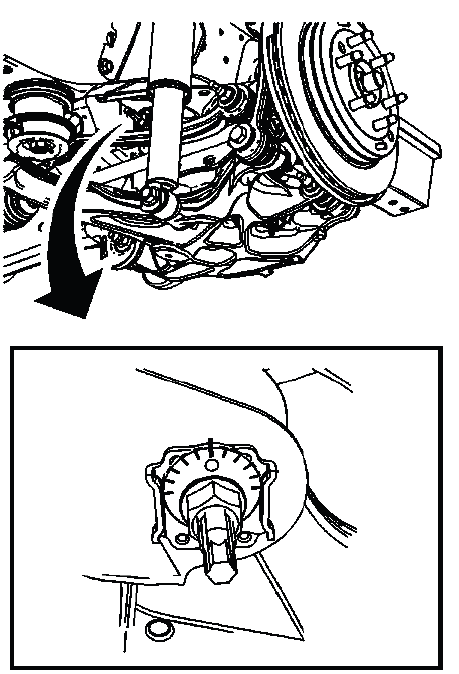
Fig. 42: Identifying Reference Marks On Adjuster Cam & Bracket
NOTE: If removing the upper control arm to service scribe a line on the front adjuster cam to aid in the realignment of the control arm.
3. Remove the speed sensor wiring harness retaining clips (1) and (2) from the upper control arm. Release the clips carefully so the harness insulation, connector seals, and retaining points are not damaged.
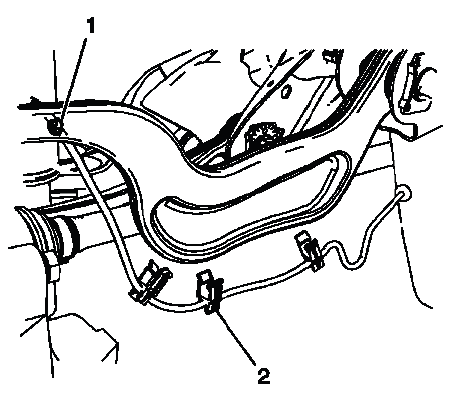
Fig. 43: Identifying Speed Sensor Wiring Harness Retaining Clips
4. Position a jack stand under the lower control arm. The support should hold the arm securely and prevent sudden suspension movement when the control arm and knuckle fasteners are removed.
5. Remove the upper control arm mounting nut (1) and bolt (2). Keep the fastener orientation noted, and inspect the bolt and sleeve area for corrosion, scoring, or bushing wear.
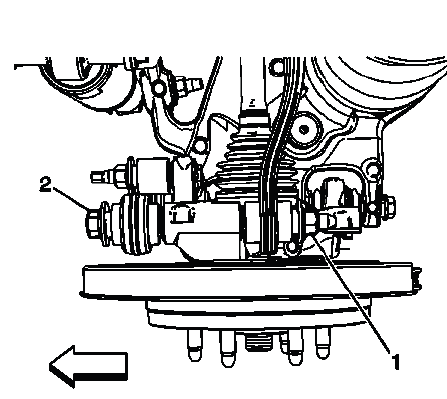
Fig. 44: Identifying Upper Control Arm Bolt & Nut
6. Use a wrench to hold the adjuster cam bolt. Holding the bolt prevents the cam from rotating while the nut is loosened and helps keep the reference marks meaningful during disassembly.
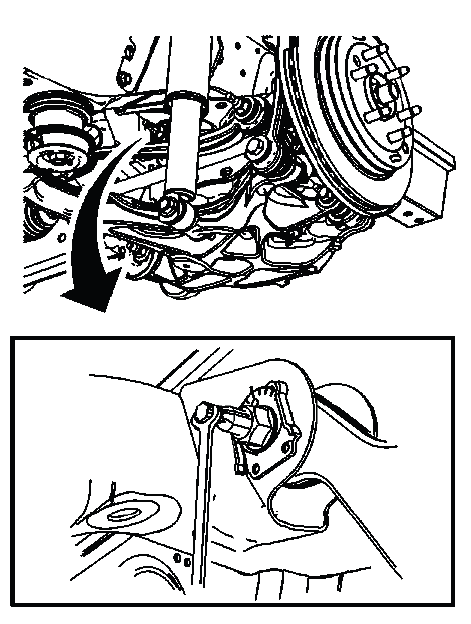
Fig. 45: View Of A Wrench Holding Adjuster Cam Bolt In Place
7. Remove the rear upper adjuster cam bolt (1). If the bolt is tight in the bushing sleeve or bracket, work it loose gradually rather than prying against the mounting bracket.
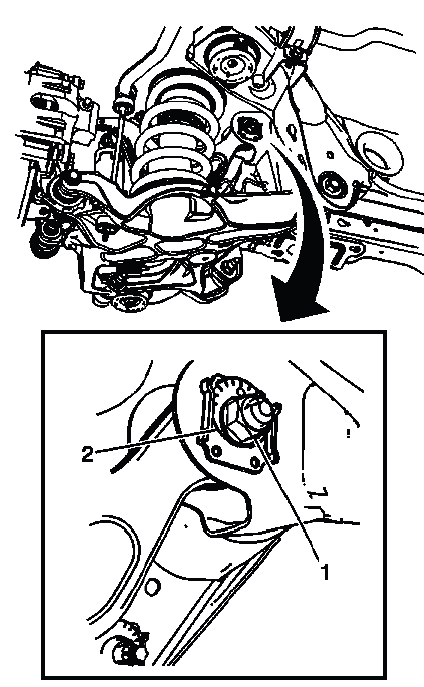
Fig. 46: Identifying Rear Upper Adjuster Cam & Cam Bolt
8. Remove the rear upper adjuster cam (2). Set the cam aside in a way that preserves its orientation for comparison during installation.
9. Remove front the adjuster cam nut (1). Hold the cam bolt as needed so the cam does not rotate unexpectedly.
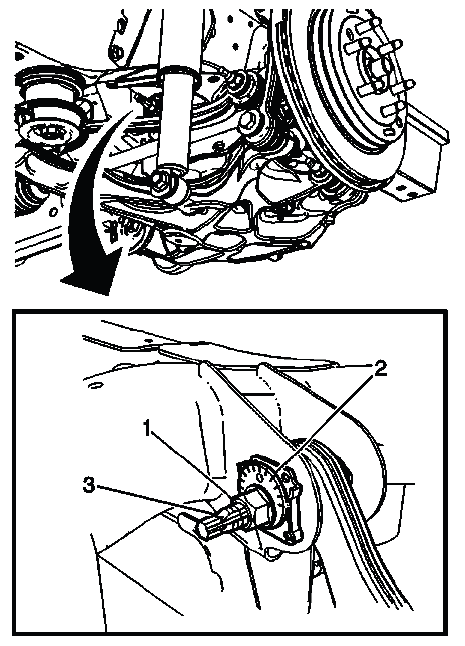
Fig. 47: Identifying Adjuster Cam, Cam Nut & Bolt
10. Remove the adjuster cam (2). Check the cam face and bracket surface for grooves, rust buildup, or deformation that could prevent accurate alignment adjustment later.
11. Remove the adjuster cam bolt (3). Support the upper control arm as the bolt is removed so the arm does not drop or bind against the bracket.
12. Rotate the rear knuckle down to gain removal clearance for the upper control arm. Move the knuckle only as far as needed, and watch the brake hose, speed sensor wiring, and nearby suspension links for tension.
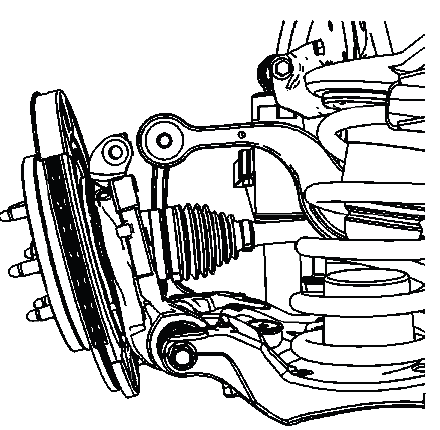
Fig. 48: Identifying Knuckle Assembly
13. Remove the upper control arm (1). Inspect the removed arm for bent sections, cracked bushings, sleeve movement, or evidence of impact damage before discarding or comparing it with the replacement part.
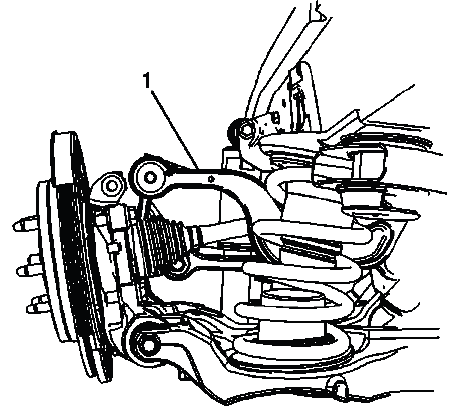
Fig. 49: Identifying Upper Control Arm
Installation Procedure
1. Install the upper control arm (1) in the mounting bracket. Position the arm so the bushing sleeves line up naturally with the bracket openings. Do not use the fasteners to force the arm into a misaligned bracket.
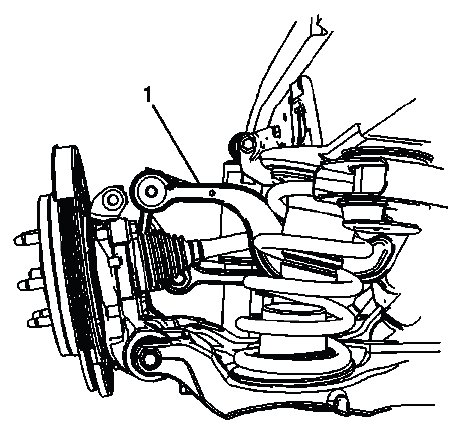
Fig. 50: Identifying Upper Control Arm
2. Rotate the knuckle assembly back into the proper position. Confirm that the knuckle, control arm, and related links line up without placing strain on wiring, brake components, or suspension bushings.
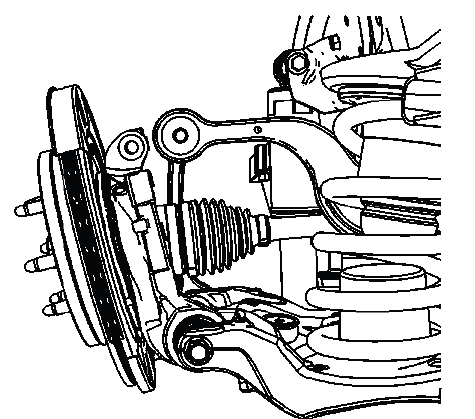
Fig. 51: Identifying Knuckle Assembly
3. Position the front adjuster cam (2) in the mounting bracket. Place the cam against the bracket face so it sits flat and can be aligned with the previously made reference mark.
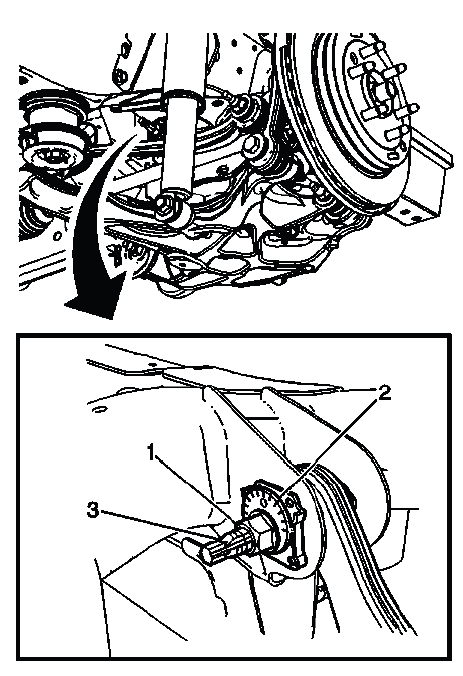
Fig. 52: Identifying Adjuster Cam, Cam Nut & Bolt
4. Install the adjuster cam bolt (3). The bolt should pass through the bushing sleeve and bracket smoothly; if it does not, reposition the arm instead of forcing the bolt through.
5. Finger tighten the front adjuster cam nut (1). Leaving the nut loose at this stage allows the cam position to be corrected before final torque is applied.
6. Position the rear adjuster cam (2) in the mounting bracket. Align it with the bracket face and prepare it for final positioning against the reference mark.
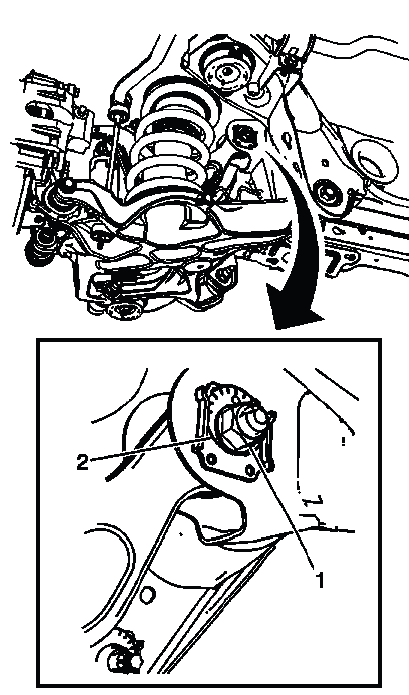
Fig. 53: Identifying Rear Upper Adjuster Cam & Cam Bolt
7. Finger tighten the rear adjuster cam nut (1). Keep the cam movable enough to align the marks before the fastener is fully tightened.
8. Install the upper control arm bolt (2) and nut (1). Verify that the arm is properly seated at the knuckle connection and that the bolt is installed in the correct direction.
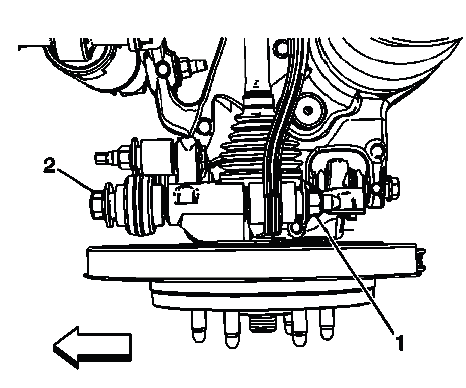
Fig. 54: Identifying Upper Control Arm Bolt & Nut
CAUTION: Refer to Fastener Caution.
Tighten
- Tighten the bolt to 100 N.m (74 lb ft) plus 90º.
9. Remove the jack stand from under the lower control arm. Lower the support slowly and verify that the rear suspension settles without pulling on the speed sensor harness or shifting the control arm unexpectedly.
10. Install the speed sensor wiring harness retaining clips (1) and (2) on the upper control arm. Route the harness exactly as intended so it cannot rub the tire, suspension link, or moving knuckle during travel.
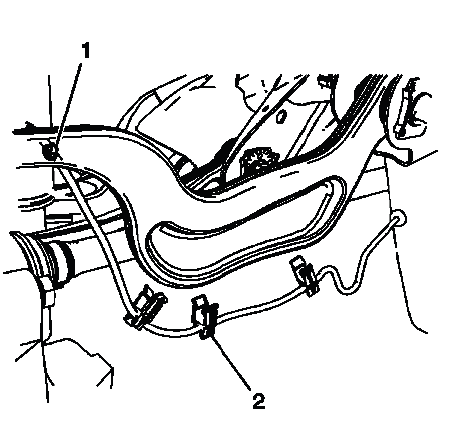
Fig. 55: Identifying Speed Sensor Wiring Harness Retaining Clips
11. Align the reference marks on the adjuster cam and bracket. This step returns the rear upper control arm close to its previous position, but it should not be treated as final alignment confirmation.
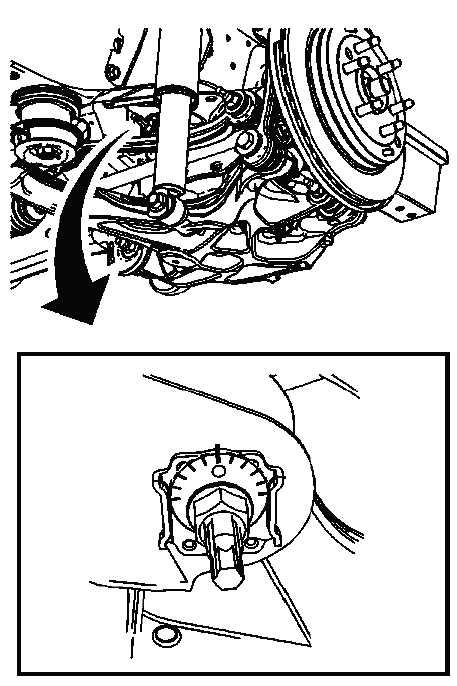
Fig. 56: Identifying Reference Marks On Adjuster Cam & Bracket
12. Using a wrench to hold the adjuster cam bolt in place, tighten all the adjuster cam nuts. Keep the cam from rotating while tightening so the mark alignment is not lost as clamp load is applied.
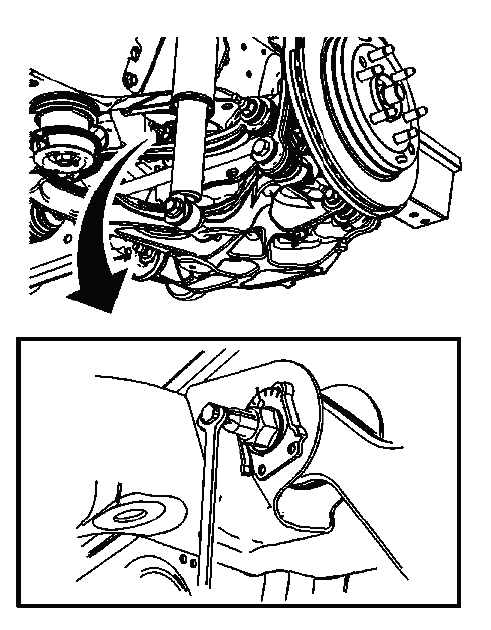
Fig. 57: View Of A Wrench Holding Adjuster Cam Bolt In Place
Tighten
- Tighten the nuts to 140 N.m (103 lb ft).
13. Install the tire and wheel assembly. Refer to Tire and Wheel Removal and Installation. Make sure the wheel mounting surface is clean and tighten the wheel fasteners in the correct pattern.
14. Verify wheel alignment. Refer to Wheel Alignment Specifications. Because the upper control arm and cam hardware influence rear geometry, a final alignment check is necessary after installation. For Buick Enclave rear suspension service, this helps confirm that the repair corrected the mechanical concern without leaving the rear toe or camber outside specification.
LOWER CONTROL ARM REPLACEMENT
The lower control arm carries spring load and locates the lower portion of the rear knuckle. It also works with the upper arm, adjuster link, spring, shock absorber, and stabilizer system to control rear wheel movement. A worn lower control arm bushing, damaged arm, or loose mounting point can create noise, ride height changes, alignment drift, or unstable handling.
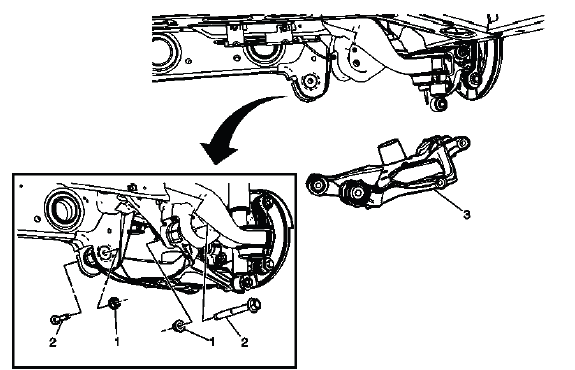
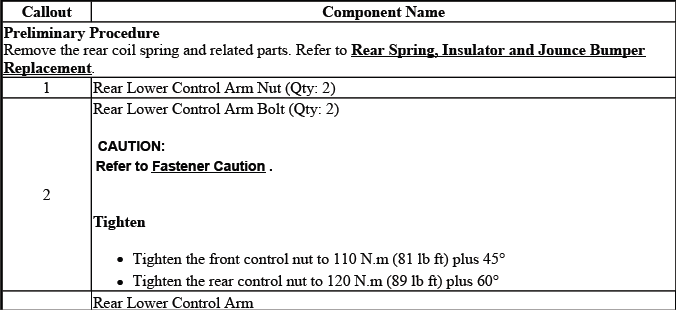
Fig. 58: Identifying Lower Control Arm
Lower Control Arm Replacement
During lower control arm replacement, support the rear suspension before removing load-bearing hardware. Inspect the spring seat, jounce bumper, shock mount, knuckle connection, and lower arm bushings while the area is apart. Any worn companion component should be corrected before alignment is performed, otherwise the new control arm may not hold the rear suspension geometry consistently.

WHEEL STUD REPLACEMENT
A rear wheel stud should be replaced if the threads are damaged, stretched, cross-threaded, broken, or unable to hold proper wheel nut torque. Before replacing the stud, inspect the wheel mounting face, hub flange, and wheel nut condition. A damaged wheel nut can quickly ruin a new stud if it is reused.
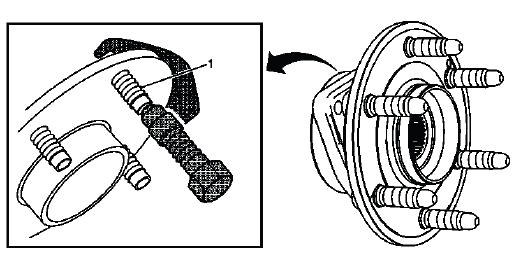
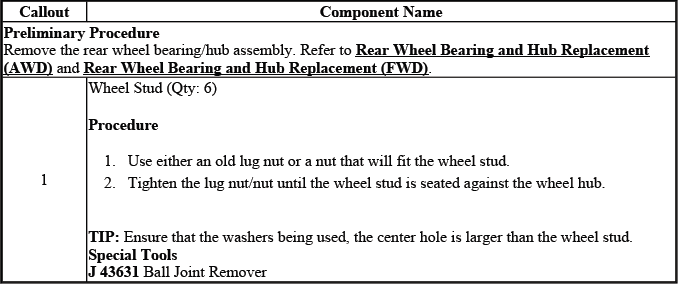
Fig. 59: Identifying Wheel Stud
Wheel Stud Replacement
When installing a replacement wheel stud, make sure it is fully seated against the hub flange. Do not install the wheel until the stud shoulder is drawn completely into place. After assembly, tighten the wheel fasteners evenly and recheck that the wheel seats flat against the hub.
DESCRIPTION AND OPERATION
REAR SUSPENSION DESCRIPTION AND OPERATION
The rear suspension system on this vehicle is the independent suspension type. This design allows each rear wheel to react to road surface changes with less direct effect on the opposite side, helping balance ride comfort, tire contact, and vehicle control. On the Buick Enclave, the rear suspension is designed to support passenger and cargo weight while maintaining stable alignment angles during braking, cornering, and normal suspension travel.
The rear suspension system consists of the following components:
- The crossmember
- The knuckle
- The adjuster link
- The wheel bearing
- The upper control arms
- The lower control arms (with integral ball joints)
- The coils springs
- The stabilizer shaft
- The stabilizer shaft links
- The shock absorbers
- The coils springs
Each part contributes to wheel control in a different way. The crossmember provides the mounting structure, the knuckle carries the hub and wheel bearing, the control arms guide wheel movement, the adjuster link supports alignment correction, and the shock absorbers control spring motion. The stabilizer shaft and links reduce excessive body roll, while the coil springs carry the rear load and help maintain ride height.
Rear suspension diagnosis should begin with a visual inspection for bent arms, torn bushings, loose fasteners, damaged wheel bearings, broken springs, leaking shock absorbers, and incorrect harness routing. Tire wear patterns and alignment readings should be compared with the mechanical condition of the suspension, because a worn bushing or shifted adjuster cam can make the alignment appear to change after the vehicle is driven.
SPECIAL TOOLS AND EQUIPMENT
SPECIAL TOOLS
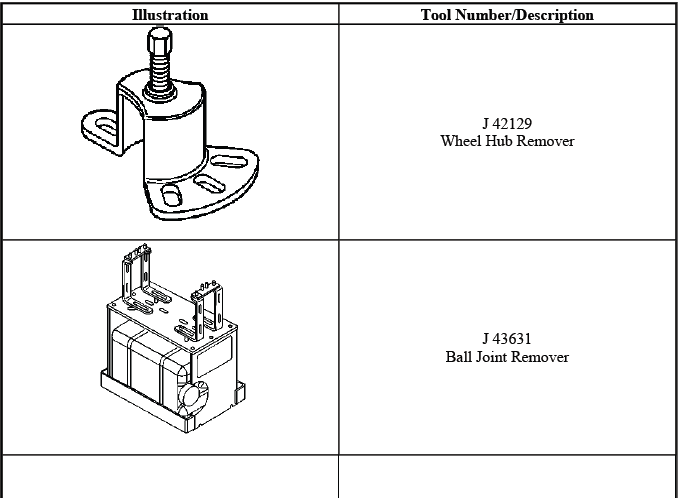
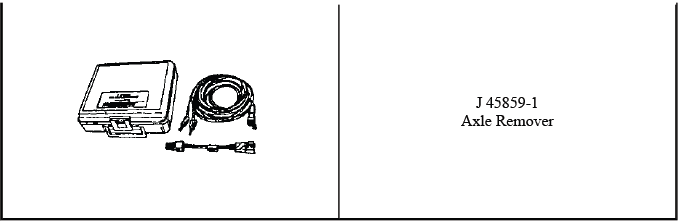
Use the specified service tools when required to avoid damage to the rear suspension components. Correct tools help support the control arms, remove or install wheel studs, protect bushings, and maintain safe control of parts that may be under spring or suspension load.