
Buick Enclave: Propeller Shaft
SPECIFICATIONS
FASTENER TIGHTENING SPECIFICATIONS
Fastener Tightening Specifications
The fastener tightening specifications for the propeller shaft must be followed exactly during service. The propeller shaft transfers driveline torque between major rotating components, so incorrect bolt torque can lead to vibration, flange movement, fastener loosening, or damage to connected driveline parts. Always use the specified tightening values and tighten the hardware evenly in the proper sequence where applicable.

ADHESIVES, FLUIDS, LUBRICANTS AND SEALERS
Adhesives, Fluids, Lubricants and Sealers
Use only the approved adhesives, fluids, lubricants, and sealers listed for the propeller shaft and related driveline components. The correct materials help maintain fastener retention, protect sealing surfaces, and prevent premature wear or contamination around the constant velocity joints. Substituting an incorrect product may affect service life, sealing performance, or future disassembly.

DIAGNOSTIC INFORMATION AND PROCEDURES
PROPELLER SHAFT DIAGNOSIS
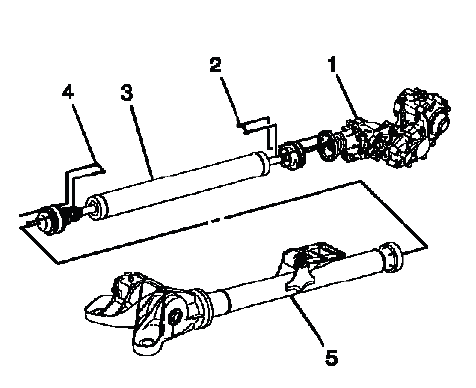
Fig. 1: View Of Propeller Shaft
Review how the propeller shaft system is designed to operate before beginning diagnosis. Refer to Propeller Shaft Description and Operation. Understanding the normal function of the shaft, flanges, bolts, and constant velocity joints makes it easier to separate a true shaft concern from a noise or vibration caused by another driveline component.
Inspect the propeller shaft-to-flange bolts (2) and (4) for looseness, missing hardware, damaged threads, corrosion, or signs that the flange has shifted. Tighten or replace the bolts as necessary. Refer to Propeller Shaft Replacement. A small amount of movement at a flange can create noticeable vibration because the shaft rotates at driveline speed.
The propeller shaft (3) and the constant velocity (CV) joints are not serviceable as separate repair items. If a CV joint, seal, end cap, or the shaft body itself is damaged, the propeller shaft must be replaced as an assembly. The CV joints and seals should still be inspected periodically whenever the vehicle is serviced, especially if there are complaints of driveline vibration, clicking, grease leakage, or underbody noise.
The CV joint seals should be inspected for the following:
- Tears in the seal material that could allow grease to escape or dirt to enter
- Cracks caused by age, heat, road debris, or flexing during normal shaft movement
- Contamination of the lubricating grease, especially from water, grit, or road dust
Carefully pinch the seal and feel for the presence of grit. A gritty feel usually means the seal has allowed contamination into the joint area, even if the outside of the seal does not look badly damaged.
- Loose, damaged, or missing seal clamps that can no longer hold the seal tightly in place
- Leakage of lubricating grease from the seals, clamps, or nearby joint area
The CV joints should be inspected for the following conditions:
- Binding or restricted motion during axial movement of the front and rear CV joints
- Binding or restricted motion during lateral movement of the rear CV joint
- Loose, damaged, shifted, or missing crimped-on end caps
- Leakage of lubricating grease from the end caps or around the joint body
The propeller shaft must be replaced if any of the above conditions exist. This helps ensure that the shaft continues to run true, transfer torque smoothly, and avoid damaging the transfer case, rear differential, flanges, or nearby driveline components. On the Buick Enclave, even a small imbalance or damaged CV joint can create a vibration that may be felt through the body at certain road speeds.
REPAIR INSTRUCTIONS
PROPELLER SHAFT REPLACEMENT
Removal Procedure
NOTE: Before removing the propeller shaft from the vehicle, paint or scribe reference marks on the transfer case flange to the propeller shaft flange and the rear differential drive flange. These marks help the shaft return to its original installed position and reduce the chance of creating driveline imbalance after reassembly.
1. Raise and support the vehicle. Refer to Lifting and Jacking the Vehicle. Make sure the vehicle is stable and that there is enough working room beneath the center and rear driveline area before loosening any shaft hardware.
2. Mark the relationship of the front propeller shaft (2) to the transfer case drive flange (1). A clear paint mark or scribe mark makes alignment easier during installation and helps preserve the original balance relationship between the flange and shaft.
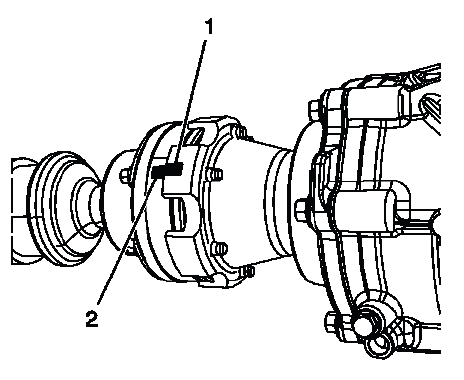
Fig. 2: View Of Front Propeller Shaft-To-Transfer Case Drive Flange
3. Mark the relationship of the rear propeller shaft (1) to the rear differential yoke (2). Do not skip this step, because returning the shaft to the same orientation can reduce the possibility of driveline vibration after service.
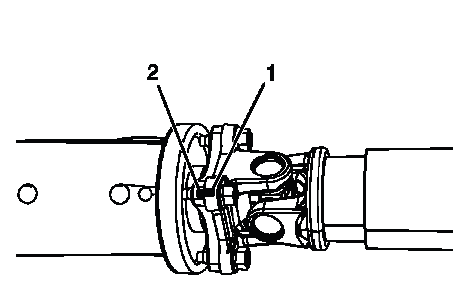
Fig. 3: View Of Rear Propeller Shaft-To-Rear Differential Yoke
4. Remove the mounting bolts and the propeller shaft bolts from the rear differential drive flange. Keep the hardware organized and inspect it for thread damage, corrosion, or signs of stretching before reuse. If the original fasteners are not suitable for reuse, replace them with the correct parts.
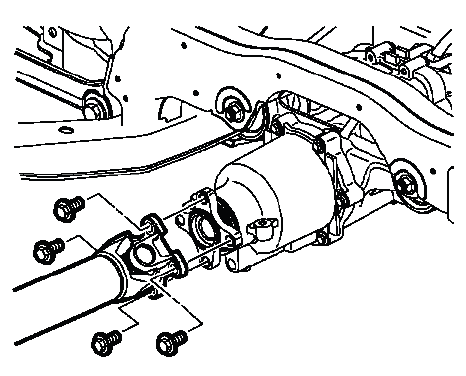
Fig. 4: Identifying Propeller Shaft Flange Mounting Bolts
5. Support the propeller shaft at the rear differential. The shaft should not hang by the remaining flange connection or by the CV joint angle, because that can place unnecessary stress on the joint, seal, or shaft assembly.
6. Remove the propeller shaft bolts and washers (1). Remove the hardware evenly and keep control of the shaft as the final bolt is loosened, since the shaft may shift once clamping force is released.
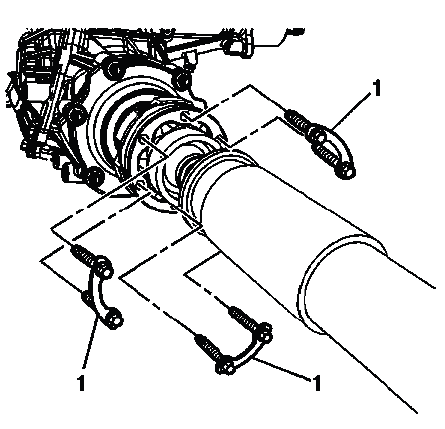
Fig. 5: View Of Propeller Shaft Bolts & Washers
7. Remove the propeller shaft (1) from the transfer case flange (2). Pull the shaft away carefully and avoid striking the CV joint, flange face, or seal area. On the Buick Enclave, protecting the machined flange surfaces during removal helps prevent runout, vibration, and sealing concerns after installation.
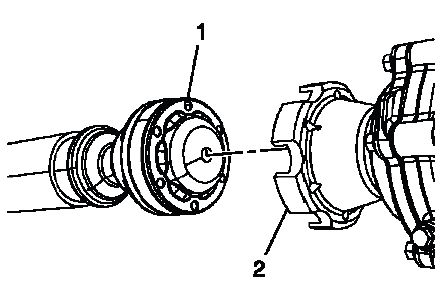
Fig. 6: View Of Propeller Shaft Transfer Case Flange
NOTE: If the propeller drive shaft cannot be removed, proceed to step 8. Do not pry forcefully against the shaft or flange. Failure to follow the correct release method may damage the propeller shaft, CV joint, or transfer case flange.
8. Place a brass drift or punch on the propeller shaft (1) between one of the notches in the transfer case drive flange (2). Use a brass tool rather than a hardened steel punch to reduce the chance of marring the shaft or flange surface. Work with controlled force; the goal is to release the joint from the flange without bending, denting, or upsetting the balance of the shaft assembly.
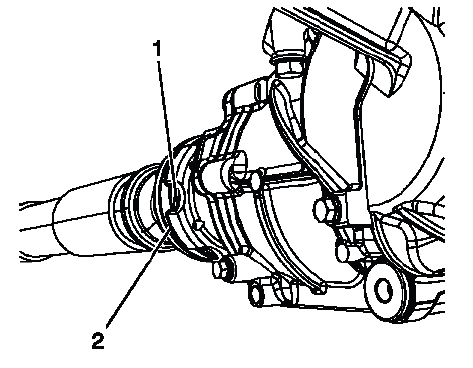
Fig. 7: Locating Propeller Shaft Transfer Case Flange
9. Using a hammer and the brass drift or punch, remove the propeller drive shaft from the transfer case drive flange (2). Use controlled, even taps rather than sharp blows. The goal is to break the flange joint free without denting the shaft, damaging the machined flange face, or disturbing the balance of the propeller shaft assembly.
10. Remove the propeller shaft (1) from the rear differential drive flange (2). Keep the shaft supported as it separates from the flange so the rear joint is not allowed to drop suddenly or hang at an excessive angle.
11. Support the propeller shaft at the transfer case drive flange. This prevents the front joint from carrying the weight of the shaft while the center support hardware is being removed.
12. Remove the center support mounting bolts. Loosen the bolts carefully and keep the support bearing aligned until the shaft is ready to be lowered from the vehicle.
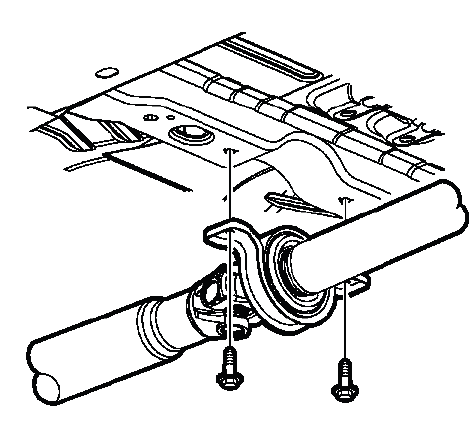
Fig. 8: View Of Propeller Shaft, Support Bearing & Bolts
13. With the aid of an assistant, remove the propeller shaft from the supports and the vehicle. The shaft is long and awkward to handle, so both ends should be controlled during removal. Avoid striking the CV joint, universal joint, center bearing, or flange surfaces against the underbody.
Installation Procedure
NOTE: Align the paint or scribe reference marks on the transfer case flange to the propeller shaft flange and the rear differential drive flange. Returning the shaft to the same installed position helps reduce driveline imbalance and lowers the chance of vibration after service.
1. Clean the mounting bolts for the center bearing, front propeller shaft drive flange, and rear propeller shaft drive flange. Apply threadlocker to the bolt threads. Refer to Adhesives, Fluids, Lubricants and Sealers. Clean threads and the correct threadlocker help the bolts clamp properly and stay secure under driveline load.
2. With the aid of an assistant, position the propeller shaft on the supports. Keep the shaft level as it is raised into place so the center bearing, front flange, and rear flange line up naturally without forcing the joints.
3. Align the reference marks on the front propeller shaft (2) to transfer case flange (1). On the Buick Enclave, keeping this relationship the same as it was before removal helps preserve the original balance of the driveline.
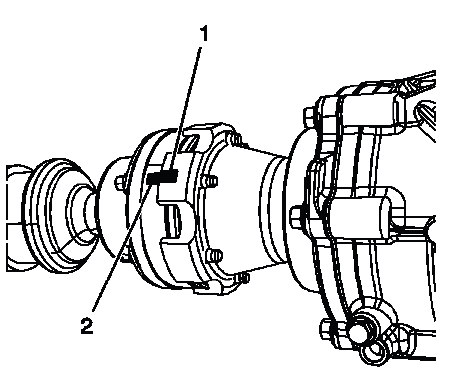
Fig. 9: View Of Front Propeller Shaft-To-Transfer Case Drive Flange
NOTE: Install a few of the mounting bolts and washers to hold the propeller shaft in place. Starting a few bolts by hand keeps the shaft supported while still allowing small alignment corrections before final tightening.
4. Position the center support bearing on the vehicle. The bearing bracket should sit flat against the mounting surface and should not be twisted, pulled sideways, or forced into position.
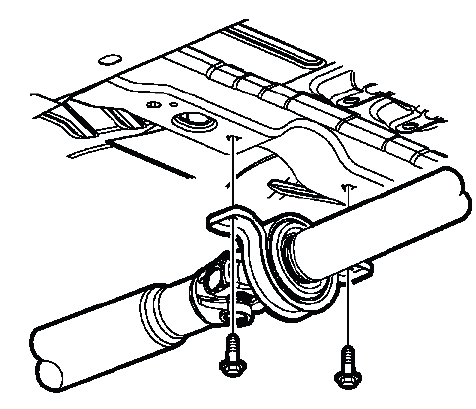
Fig. 10: View Of Propeller Shaft, Support Bearing & Bolts
NOTE: Install the mounting bolt to hold the center bearing in place. Leave the assembly loose enough to allow final alignment before the bolts are tightened to specification.
5. Align the reference marks on the rear propeller shaft (1) to the rear differential yoke (2). The rear flange should meet the yoke evenly, without a gap on one side or pressure that pulls the shaft out of line.
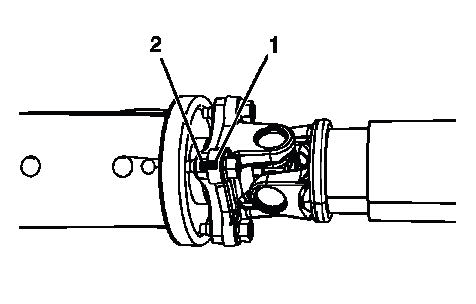
Fig. 11: View Of Rear Propeller Shaft-To-Rear Differential Yoke
NOTE: Install a few of the mounting bolts to hold the propeller shaft in place. Do not fully tighten the rear fasteners until the shaft is correctly seated and all remaining hardware has been started.
6. Install the remaining bolts and washers (1) from the propeller shaft to the transfer case flange and tighten to 34 N.m (25 lb ft). Tighten the bolts evenly so the flange seats flat and the shaft does not shift as clamping force is applied.
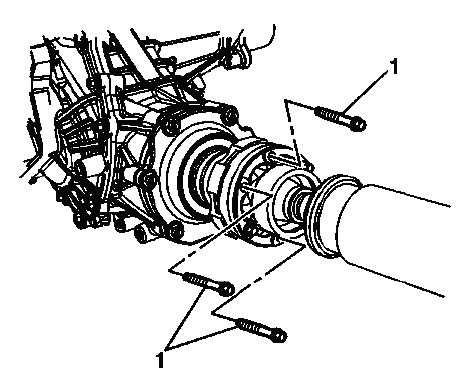
Fig. 12: Identifying Flange Bolts & Washers
CAUTION: Refer to Fastener Caution. Propeller shaft fasteners must be tightened to the specified torque. Loose fasteners can cause driveline vibration or flange movement, while over-tightening can damage threads, washers, or mounting surfaces.
7. Tighten the center bearing mounting bolts to 58 N.m (43 lb ft). Make sure the center bearing remains seated squarely against the underbody as the bolts are tightened.
8. Install the remaining mounting bolts (1) from the propeller shaft to the rear differential yoke and tighten to 58 N.m (43 lb ft). The rear flange must be fully seated against the yoke before final torque is applied.
9. Remove the supports from the vehicle. Before lowering the vehicle, look over the full length of the shaft and confirm that no tools, stands, or temporary supports remain near the rotating driveline.
10. Lower the vehicle. After installation, a road test or final inspection may be used to confirm that no vibration, abnormal noise, or underbody contact is present.
DESCRIPTION AND OPERATION
PROPELLER SHAFT DESCRIPTION AND OPERATION
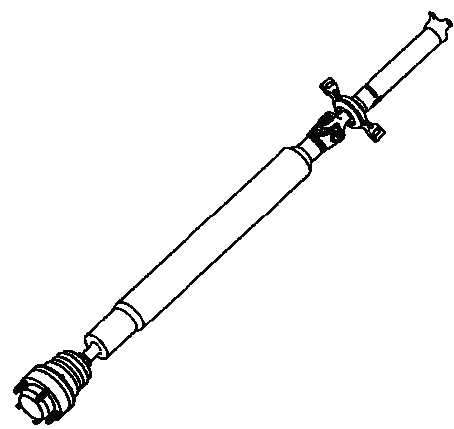
Fig. 13: View Of Propeller Shaft Assembly
The propeller shaft assembly uses a 2-piece design. The front shaft includes a plunging A-type constant velocity joint at the front and a universal joint with a yoke at the rear. This layout allows the driveline to transmit torque while also accommodating normal movement between the transfer case, vehicle body, and rear driveline components.
The rear shaft includes a center bearing and a center yoke, which are pressed onto the rear half of the propeller shaft and retained by a snap ring. The front and rear shafts are connected at the yokes by a universal joint. At the rear, the shaft attaches to the axle through a flange that is connected to the rear shaft with another universal joint.
The center bearing supports the area where the front and rear shaft sections meet and is bolted to the underbody. This support helps control shaft alignment and reduces unwanted movement while the driveline is rotating. The front constant velocity joint is bolted to the transfer case, and the rear universal joint flange is bolted to the rear differential.
On the Buick Enclave, the propeller shaft must run straight, balanced, and free of binding to prevent vibration, rumble, or stress on the transfer case and rear differential. Reference marks, correct flange alignment, clean fasteners, and proper torque all matter because the shaft turns at speed and small errors can be felt through the vehicle.
There are no serviceable internal parts on the propeller shaft. The propeller shaft is serviced as an assembly. If the CV joint, universal joint, center bearing, flange, seal area, or shaft tube is damaged, the complete assembly should be replaced rather than repaired piece by piece.
