
Buick Enclave: Oil Pump
* PLEASE READ THIS FIRST *
NOTE: The following oil pump information is general in nature and is intended to explain common measuring and evaluation practices used during engine overhaul. Pump construction, service limits, and replacement procedures vary by engine design.
Always refer to the appropriate engine overhaul article in the ENGINES section for complete specifications and procedures for the vehicle being repaired. Oil pump clearances should never be estimated by eye when published measurements are available.
ROTOR TYPE
NOTE: Rotor type oil pumps are sensitive to scoring, end clearance, housing wear, and rotor-to-body clearance. Even minor wear can reduce oil volume, especially at idle or when the engine is hot.
Use clean measuring tools and compare all readings with the correct service data. If the pump is reused, every part should return to its original position unless the service procedure gives different instructions.
Before removing the oil pump rotors, mark their installed locations and orientation. This helps prevent reversing worn-in parts during checking and reassembly. See Fig. 30. Remove the outer rotor and measure its thickness and diameter. Then measure the inner rotor thickness. Examine the shaft for scoring, grooves, heat discoloration, or uneven wear. Look over both rotors closely for pitting, cracks, chipped edges, and any signs that debris has passed through the pump.
Evaluate the pump cover for grooving, wear tracks, warpage, and scratches. A cover that is deeply grooved can allow oil to leak internally across the rotor faces, reducing pump output even when the rotors appear usable. Components with heavy wear should be renewed rather than polished aggressively, because removing material can increase working clearance.
Measure the outer rotor-to-body clearance with the rotor installed in the pump body. If the clearance is beyond the allowed limit, use a new pump assembly. Next, measure the clearance between the inner and outer rotors as shown in Fig. 31. If this clearance is too large, install the required new shaft and rotor set according to the service information.
Install the rotors in the pump body and position a straightedge across the pump body surface. Using a feeler gauge, measure the clearance between the rotor faces and the straightedge. This reading checks rotor end clearance. Pump cover wear may also be measured with a straightedge and feeler gauge. If rotor end clearance, cover wear, or housing wear is outside the published limit, fit a new pump or the affected service parts as directed.
A Buick Enclave engine depends on steady oil pressure to protect bearings, camshaft components, timing components, and other lubricated surfaces. For that reason, oil pump checking should be performed carefully during any major engine repair, especially if the engine has suffered from low oil pressure, metal contamination, sludge buildup, or bearing damage.
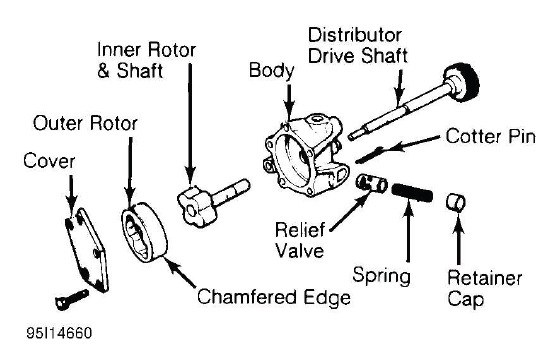
Fig. 30: Typical Rotor Type Oil Pump
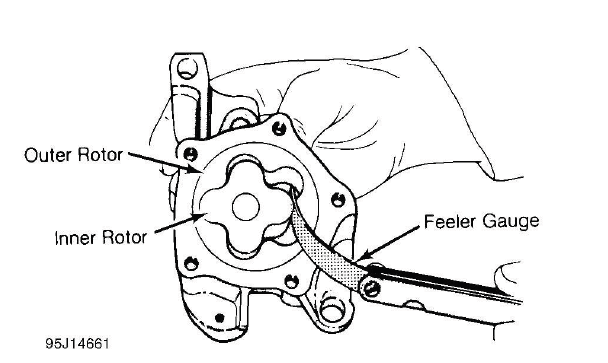
Fig. 31: Measuring Rotor Clearance
GEAR TYPE
NOTE: Gear type oil pump service follows the same basic principle as rotor pump service: measure the working clearances, study the cover and housing surfaces, and renew parts that are worn beyond the service limit.
Keep the gears clean and organized during disassembly. Dirt, gasket material, or metal particles left inside the pump can quickly damage new or reused components after start-up.
Before removing the oil pump gears, mark their installed positions and orientation. See Fig. 32. Remove the gears from the pump body and look for pitting, broken teeth, scoring, and uneven wear. Pay close attention to the gear faces and tooth edges, since small chips or embedded debris can reduce pump efficiency and damage the pump cover.
Check the pump cover for grooves, wear marks, warpage, and scratches on the mating surface. Measure the gear diameter and gear length. Then measure the gear housing cavity depth and diameter as shown in Fig. 33. These measurements show whether the gears still fit the pump body correctly and whether internal leakage may occur during operation.
Install new parts whenever measurements fall outside the permitted range. If the pump cover mating surface is scratched, grooved, or warped beyond the service limit, renew the cover, pump body, or complete pump assembly as required. A pump that looks acceptable from the outside can still lose pressure internally if gear-to-cover clearance or gear-to-housing clearance is excessive.
Pump cover wear is measured by placing a straightedge across the cover or pump body surface and checking the gap with a feeler gauge. Work slowly and check more than one point across the surface. If the straightedge rocks, if the feeler gauge enters beyond the allowed limit, or if visible grooves are present in the oil sealing path, the component should not be reused.
During assembly, lubricate the gears with clean engine oil or approved assembly lubricant, depending on the service instructions. This helps the pump prime quickly during the first start after repair. On Buick Enclave engine work, proper oil pump measurement and priming are not minor details; they are part of protecting the entire lubrication system after the engine has been opened.
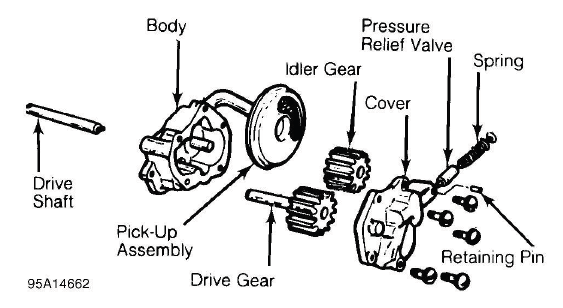
Fig. 32: Typical Gear Type Oil Pump
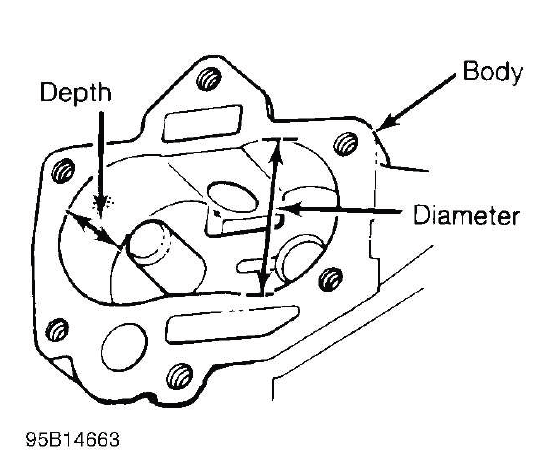
Fig. 33: Measuring Oil Pump Gear Cavity
