
Buick Enclave: Off-Road Recovery. Loss of Control. Driving on Wet Roads
Off-Road Recovery
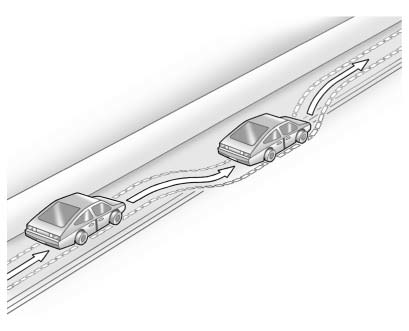
The vehicle's right wheels can drop off the edge of a road onto the shoulder while driving. This can happen when a driver moves too close to the outside edge of the lane, during a moment of inattention, on narrow rural roads, or when avoiding another road user. The most important response is to stay calm and avoid a sudden steering correction.
If the wheels leave the pavement, do not immediately jerk the steering wheel back toward the roadway. A sharp return can cause the vehicle to cross into another lane or become unstable. Instead, allow the Buick Enclave to slow slightly and guide it back with steady, controlled steering.
Follow these tips:
1. Ease off the accelerator and then, if there is nothing in the way, steer the vehicle so that it straddles the edge of the pavement. Keep a firm hold on the steering wheel and avoid sudden braking unless it is necessary to prevent a collision.
2. Turn the steering wheel about one-eighth of a turn, until the right front tire contacts the pavement edge. This small steering input helps the tire climb back onto the road surface without causing an abrupt movement.
3. Then turn the steering wheel to go straight down the roadway. Once all tires are back on the pavement, continue driving only after the vehicle is fully stable and centered in the lane.
Off-road recovery requires patience. Trying to correct too quickly can create a greater hazard than the original lane departure. Smooth steering, gradual speed reduction, and awareness of surrounding traffic are the safest approach.
Loss of Control
Skidding
There are three main types of skids, and each one relates to one of the vehicle's basic control systems. Understanding how they happen can help a driver respond more safely when traction is reduced.
► Braking Skid — wheels are not rolling. This can occur when braking force is greater than the available tire grip, especially on slippery surfaces. ► Steering or Cornering Skid — too much speed or too much steering input in a curve causes the tires to slip and lose cornering force. This can make the vehicle continue straight ahead or slide outward instead of following the intended path. ► Acceleration Skid — too much throttle causes the driving wheels to spin. This is more likely on wet, icy, snowy, gravel-covered, or loose road surfaces.
Defensive drivers avoid most skids by driving at a reasonable speed for the existing conditions and by not asking the tires to do more than the road surface allows. Even a capable vehicle needs proper traction, and the driver must adjust speed, steering, and braking when conditions change.
But skids are always possible. Water, snow, ice, gravel, leaves, oil, uneven pavement, and sudden steering or pedal inputs can all reduce control. In the Buick Enclave, as with any vehicle, the driver should react smoothly and avoid panic movements.
If the vehicle starts to slide, follow these suggestions:
► Ease your foot off the accelerator pedal and quickly steer the way you want the vehicle to go. The vehicle may straighten out. Be prepared for a second skid if it occurs, because tires may regain and lose traction again before the vehicle is fully stable. ► Slow down and adjust your driving according to weather conditions. Stopping distance can be longer and vehicle control can be affected when traction is reduced by water, snow, ice, gravel, or other material on the road. Learn to recognize warning clues — such as enough water, ice, or packed snow on the road to create a shiny or mirrored surface — and slow down whenever there is doubt. ► Try to avoid sudden steering, acceleration, or braking, including reducing vehicle speed by shifting to a lower gear. Any sudden change can cause the tires to slide. Smooth control inputs help the tires maintain grip and help the driver regain direction.
Remember: Antilock brakes help avoid only the braking skid. They do not create extra traction, and they cannot prevent every loss of control. Safe speed, proper following distance, good tires, and careful steering remain essential.
When the road surface is questionable, reduce speed before a curve, leave extra space around the vehicle, and avoid abrupt corrections. Looking where you want the vehicle to travel can also help guide your hands toward a safer recovery path.
Driving on Wet Roads
Rain and wet roads can reduce vehicle traction and affect your ability to stop, accelerate, and steer. Water on the road surface can separate the tires from the pavement, increase stopping distance, and make sudden maneuvers more difficult to control.
Always drive slower in these types of driving conditions and avoid driving through large puddles, deep-standing water, or flowing water. What looks like a shallow puddle may hide a pothole, washed-out pavement, debris, or a depth that is unsafe for the vehicle.
 WARNING
Wet brakes can cause crashes.
They might not work as well in a quick stop and could cause pulling to one side. You could lose control of the vehicle.
After driving through a large puddle of water or a car/vehicle wash, lightly apply the brake pedal until the brakes work normally. Flowing or rushing water creates strong forces. Driving through flowing water could cause the vehicle to be carried away. If this happens, you and other vehicle occupants could drown. Do not ignore police warnings and be very cautious about trying to drive through flowing water.
After passing through water, drive carefully and test the brakes with light pedal pressure when it is safe to do so. This can help dry the brake components and confirm normal braking response. If the vehicle pulls, feels unstable, or the brakes do not feel normal, slow down and avoid sudden stops until braking performance returns.
Hydroplaning
Hydroplaning is dangerous. It can happen when a layer of water builds between the tires and the road surface. When this occurs, the tires may lose direct contact with the pavement, reducing steering, braking, and acceleration control.
Water can build up under the vehicle's tires so they actually ride on the water. This can happen if the road is wet enough and the vehicle is moving fast enough. When the vehicle is hydroplaning, it has little or no contact with the road.
There is no hard and fast rule about hydroplaning. The best advice is to slow down when the road is wet. Lower speed gives the tires more time to push water away and maintain contact with the pavement.
If hydroplaning is suspected, do not brake hard or turn sharply. Ease off the accelerator, keep the steering wheel steady, and allow the vehicle to slow gradually until traction returns.
Other Rainy Weather Tips
Besides slowing down, other wet weather driving tips include:
► Allow extra following distance. A longer gap gives more time to react and stop on slippery roads. ► Pass with caution. Spray from other vehicles can reduce visibility, especially around large trucks or buses. ► Keep windshield wiping equipment in good shape. Worn blades can smear water across the glass and make it harder to see. ► Keep the windshield washer fluid reservoir filled. Road spray can leave dirt, salt, or film on the windshield even during rain. ► Have good tires with proper tread depth. See Tires. Proper tread helps move water away from the contact patch and supports better wet-road grip. ► Turn off cruise control. In wet conditions, the driver should control speed directly and be ready to respond immediately to changing traction.When driving the Buick Enclave in rain, smooth inputs are especially important. Brake gently, accelerate gradually, steer with care, and increase the space between vehicles. These habits help maintain stability and give the driver more time to react.
