Buick Enclave: Fuels in Foreign Countries. Fuel Additives. Filling the Tank
Fuels in Foreign Countries
Never use leaded gasoline or any other fuel not recommended in the previous text on fuel. Using the wrong fuel can damage the engine, fuel system, oxygen sensors, catalytic converters, and emission control components. Costly repairs caused by use of improper fuel would not be covered by the vehicle warranty.
To check fuel availability before traveling, ask an auto club, or contact a major oil company that does business in the country where you will be driving. This is especially important when driving in areas where fuel standards, octane ratings, or ethanol content may differ from those normally available in the United States or Canada.
If the Buick Enclave will be used outside its usual market, confirm that unleaded gasoline with the proper octane rating and fuel quality is available along the route. Planning ahead can help avoid using fuel that may cause poor performance, engine knocking, or emission system concerns.
Fuel Additives
To provide cleaner air, all gasolines in the United States are now required to contain additives that help prevent engine and fuel system deposits from forming, allowing the emission control system to work properly. In most cases, nothing should have to be added to the fuel.
However, some gasolines contain only the minimum amount of additive required to meet U.S. Environmental Protection Agency regulations. While these fuels may meet the basic legal requirement, they may not provide the same level of deposit control as higher-detergency gasoline.
To help keep fuel injectors and intake valves clean and avoid problems caused by dirty injectors or valves, look for gasoline that is advertised as TOP TIER Detergent Gasoline. Look for the TOP TIER label on the fuel pump to ensure gasoline meets enhanced detergency standards developed by auto companies. A list of marketers providing TOP TIER Detergent Gasoline can be found at www.toptiergas.com.
Clean fuel injectors and intake valves help support smooth idle, good throttle response, efficient combustion, and consistent engine performance. Over time, fuel deposits can affect how the engine runs, especially during cold starts, acceleration, or low-speed operation.
For customers who do not use TOP TIER Detergent Gasoline regularly, one bottle of GM Fuel System Treatment PLUS, added to the fuel tank at every engine oil change, can help clean deposits from fuel injectors and intake valves. GM Fuel System Treatment PLUS is the only gasoline additive recommended by General Motors.
It is available at your dealer.
Gasolines containing oxygenates, such as ethers and ethanol, and reformulated gasolines might be available in your area.
These gasolines are recommended if they comply with the specifications described earlier. Properly formulated oxygenated or reformulated gasoline can be used when it meets the required standards for the vehicle.
However, E85, which contains 85% ethanol, and other fuels containing more than 15% ethanol must not be used in vehicles that were not designed for those fuels. High-ethanol fuels can affect fuel system materials, engine calibration, cold starting, and drivability if the vehicle is not specifically engineered for them.
Notice: This vehicle was not designed for fuel that contains methanol. Do not use fuel containing methanol. It can corrode metal parts in the fuel system and also damage plastic and rubber parts. That damage would not be covered under the vehicle warranty.
Some gasolines that are not reformulated for low emissions can contain an octane-enhancing additive called methylcyclopentadienyl manganese tricarbonyl (MMT); ask the attendant where you buy gasoline whether the fuel contains MMT. The use of such gasolines is not recommended.
Fuels containing MMT can reduce spark plug life and affect emission control system performance.
The malfunction indicator lamp might turn on. If this occurs, return to your dealer for service.
For the Buick Enclave, the safest fuel choice is regular unleaded gasoline with an octane rating of 87 or higher, preferably TOP TIER Detergent Gasoline from a reliable station. Avoid leaded fuel, methanol, high-ethanol fuel such as E85, and gasoline containing MMT whenever possible.
Good fuel habits help protect the fuel system, support proper emissions operation, and reduce the chance of performance issues caused by deposits or improper fuel composition.
Filling the Tank
 WARNING
Fuel vapor burns violently and a fuel fire can cause bad injuries.
To help avoid injuries to you and others, read and follow all the instructions on the fuel pump island. Turn off the engine when refueling. Do not smoke near fuel or when refueling the vehicle.
Do not use cellular phones. Keep sparks, flames, and smoking materials away from fuel. Do not leave the fuel pump unattended when refueling the vehicle. This is against the law in some places.
Do not re-enter the vehicle while pumping fuel. Keep children away from the fuel pump; never let children pump fuel.
Refueling should always be done with care. Gasoline vapor can ignite quickly, and even a small spark can create a dangerous situation. Before filling the Buick Enclave, stop the engine, place the vehicle securely in P (Park), and follow all safety instructions posted at the fuel station.
The tethered fuel cap is located behind a hinged fuel door on the driver side of the vehicle. This placement makes refueling convenient from the driver side and helps keep the cap attached so it is not misplaced during fueling.
To open the fuel door, push the rearward center edge in and release it. The hinged fuel door will open, giving access to the fuel cap.
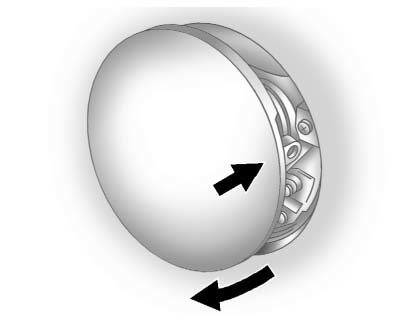
To remove the fuel cap, turn it slowly counterclockwise. The fuel cap has a spring in it; if the cap is released too soon, it will spring back to the right. Opening it slowly helps release any pressure in a controlled way and reduces the chance of fuel spray.
While refueling, hang the tethered fuel cap from the hook on the fuel door. This keeps the cap away from painted surfaces and helps prevent dirt or damage to the sealing area.
WARNING
Fuel can spray out on you if you open the fuel cap too quickly. If you spill
fuel and then something ignites it, you could be badly burned. This spray can happen
if the tank is nearly full, and is more likely in hot weather.
Open the fuel cap slowly and wait for any hiss noise to stop.
Then unscrew the cap all the way.
Be careful not to spill fuel. Do not top off or overfill the tank, and wait a few seconds after you have finished pumping before removing the nozzle. This allows any remaining fuel in the nozzle to drain into the tank instead of dripping onto the vehicle or the ground.
Clean fuel from painted surfaces as soon as possible. Gasoline can damage the finish if it remains on the paint. Wipe spills carefully and avoid rubbing dirt or grit into the surface.
See Exterior Care .
When replacing the fuel cap, turn it clockwise until it clicks. The clicking sound helps confirm that the cap is tightened correctly and sealed properly.
Make sure the cap is fully installed. A loose, missing, or incorrectly installed fuel cap can allow fuel vapors to escape and may cause the diagnostic system to detect an evaporative emissions concern.
The diagnostic system can determine if the fuel cap has been left off or improperly installed. This would allow fuel to evaporate into the atmosphere. See Malfunction Indicator Lamp .
If the malfunction indicator lamp comes on shortly after refueling, check that the fuel cap is installed tightly. If the cap is secure and the light remains on, the Buick Enclave may need diagnosis to confirm that the fuel and emissions system is operating correctly.
WARNING
If a fire starts while you are refueling, do not remove the nozzle. Shut off
the flow of fuel by shutting off the pump or by notifying the station attendant.
Leave the area immediately.
If a fire occurs, do not attempt to continue fueling or handle the nozzle unnecessarily. Stop the flow of fuel if it can be done safely, alert the station attendant, and move away from the pump area immediately.
Notice: If a new fuel cap is needed, be sure to get the right type of cap from your dealer.
The wrong type of fuel cap might not fit properly, might cause the malfunction indicator lamp to light, and could damage the fuel tank and emissions system.
See Malfunction Indicator Lamp .
Using the correct replacement fuel cap is important because the cap is part of the evaporative emissions system. An incorrect cap may not seal as designed, even if it appears to fit. For proper operation, use the recommended cap for the vehicle.
