
Buick Enclave: Antilock Brake System (ABS). Parking Brake. Brake Assist
Antilock Brake System (ABS)
This vehicle has the Antilock Brake System (ABS), an advanced electronic braking system that helps prevent a braking skid. ABS is designed to help the driver maintain steering control during hard braking by reducing the chance that the wheels will lock and slide.
When the engine is started and the vehicle begins to drive away, ABS checks itself. A momentary motor or clicking noise might be heard while this test is going on, and it might even be noticed that the brake pedal moves a little. This is normal.

If there is a problem with ABS, this warning light stays on. See Antilock Brake System (ABS) Warning Light .
If driving safely on a wet road and it becomes necessary to slam on the brakes and continue braking to avoid a sudden obstacle, a computer senses that the wheels are slowing down. If one of the wheels is about to stop rolling, the computer will separately work the brakes at each wheel.
ABS can change the brake pressure to each wheel, as required, faster than any driver could. This can help the driver steer around the obstacle while braking hard. In an emergency, the ability to steer while applying strong brake pressure can be very important.
As the brakes are applied, the computer keeps receiving updates on wheel speed and controls braking pressure accordingly. This rapid adjustment happens automatically and may be felt as a pulsing sensation in the brake pedal.
Remember: ABS does not change the time needed to get a foot up to the brake pedal or always decrease stopping distance. If you get too close to the vehicle in front of you, there will not be enough time to apply the brakes if that vehicle suddenly slows or stops. Always leave enough room up ahead to stop, even with ABS.
ABS helps during hard braking, but it cannot overcome the laws of traction. Road surface, tire condition, vehicle speed, weather, and following distance all affect how quickly the Buick Enclave can stop. On gravel, snow, ice, or wet pavement, stopping distances may still be longer than on dry roads.
Using ABS
Do not pump the brakes. Just hold the brake pedal down firmly and let ABS work. You might hear the ABS pump or motor operating and feel the brake pedal pulsate, but this is normal.
If ABS activates, continue pressing the brake pedal with firm, steady pressure. Do not release and reapply the pedal repeatedly. The system is designed to make the needed pressure adjustments faster and more accurately than manual pumping.
Braking in Emergencies
ABS allows the driver to steer and brake at the same time. In many emergencies, steering can help more than even the very best braking.
When avoiding a sudden obstacle, look where you want the vehicle to go and continue steering while braking firmly. Smooth steering input, proper following distance, and good awareness give ABS the best chance to help the driver maintain control.
The braking system in the Buick Enclave is designed to support safe, confident stopping, but the driver remains the most important part of the system. Keep enough distance, reduce speed in poor conditions, maintain the tires and brakes properly, and respond early whenever traffic or road conditions change.
Parking Brake
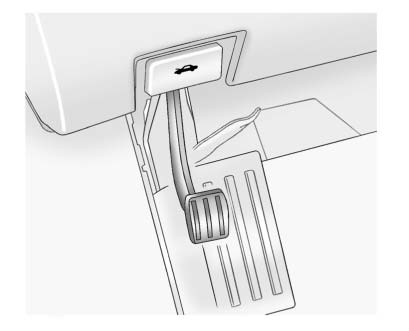
To set the parking brake, keep the regular brake pedal pressed with your foot, then push the parking brake pedal down firmly. This helps secure the vehicle before you shift fully into P (Park), especially when stopping on a slope, parking on uneven pavement, or leaving the vehicle with passengers or cargo inside.
If the ignition is on, the brake system warning light will come on. This light confirms that the parking brake is applied, or that the brake system needs attention depending on the situation.
See Brake System Warning Light .
Notice: Driving with the parking brake on can overheat the brake system and cause premature wear or damage to brake system parts. Make sure that the parking brake is fully released and the brake warning light is off before driving.
Before moving the Buick Enclave, always confirm that the parking brake is completely released. A partially applied parking brake may not be immediately obvious, but it can create heat, reduce braking efficiency, cause unnecessary wear, and affect the way the vehicle feels while driving.
To release the parking brake, hold the regular brake pedal down, then push down momentarily on the parking brake pedal until you feel the pedal release. Slowly pull your foot up off the park brake pedal. Do not let the pedal snap back abruptly; allow it to return in a controlled way.
If the parking brake is not released when you begin to drive, the brake system warning light will be on and a chime will sound warning you that the parking brake is still on. If this happens, stop as soon as it is safe, hold the regular brake pedal, and release the parking brake fully before continuing.
If you are towing a trailer and are parking on a hill, see Driving Characteristics and Towing Tips . A trailer can add extra load and may increase the chance of vehicle movement if the parking brake and transmission are not used correctly.
Using the parking brake correctly is a simple but important habit. It helps reduce stress on the transmission parking mechanism, supports safer parking on grades, and gives the driver more confidence that the vehicle will remain where it is parked.
Brake Assist
This vehicle has a brake assist feature designed to help the driver stop or reduce vehicle speed during emergency driving conditions. The system is intended to recognize situations where the driver applies the brake pedal quickly and forcefully, such as when a sudden obstacle appears, traffic stops unexpectedly, or another vehicle enters the lane.
Brake Assist uses the stability system hydraulic brake control module to supplement the power brake system when the driver rapidly applies strong brake pedal pressure. In these moments, the system can help build brake pressure more quickly than the driver might achieve alone.
The stability system hydraulic brake control module increases brake pressure at each corner of the vehicle until the ABS activates. This added pressure helps the Buick Enclave respond more effectively during panic braking, while the Antilock Brake System helps maintain steering control if wheel lockup is about to occur.
Minor brake pedal pulsation or pedal movement during this time is normal. The driver should continue to apply the brake pedal as the driving situation requires. Do not reduce brake pressure just because the pedal moves or pulses; this feedback can be part of normal brake assist and ABS operation.
The brake assist feature will automatically disengage when the brake pedal is released or brake pedal pressure is quickly decreased. Once the emergency braking demand is no longer present, braking returns to normal system operation.
Brake Assist does not replace attentive driving, proper following distance, or good tire and brake maintenance. It is a support feature for urgent braking situations, but the driver remains responsible for watching the road, reacting early, and leaving enough room to stop safely.
