
Buick Enclave: Towing the Vehicle. Recreational Vehicle Towing
Towing the Vehicle
Notice: To avoid damage, the disabled vehicle should be towed with all four wheels off the ground. Care must be taken with vehicles that have low ground clearance and/or special equipment. Always flatbed on a car carrier.
If the vehicle becomes disabled and must be moved, the safest method is to have it transported on a flatbed car carrier with all four wheels off the ground. This helps prevent damage to the transmission, driveline, suspension, steering components, and lower body areas that could be affected by improper towing.
For the Buick Enclave, towing procedures should not be guessed or improvised at the roadside. A professional towing service has the equipment needed to load and secure the vehicle without dragging the drive wheels or placing stress on parts that are not designed for that type of movement.
Consult your dealer or a professional towing service if the disabled vehicle must be towed.
See Roadside Assistance Program (U.S. and Canada) or Roadside Assistance Program (Mexico).
To tow the vehicle behind another vehicle for recreational purposes, such as behind a motor home, see “Recreational Vehicle Towing” in this section.
Recreational Vehicle Towing
Recreational vehicle towing means towing the vehicle behind another vehicle, such as behind a motorhome. This is different from emergency towing because the vehicle is being prepared in advance to travel behind another vehicle for vacation, camping, or long-distance recreational use.
The two most common types of recreational vehicle towing are known as dinghy towing and dolly towing. Dinghy towing means towing the vehicle with all four wheels on the ground.
Dolly towing means towing the vehicle with two wheels on the ground and two wheels raised on a device known as a dolly.
Before recreational towing is attempted, the towing setup should be planned carefully. The tow vehicle, tow bar or dolly, safety chains, lighting connection, braking equipment, and vehicle preparation steps must all be suitable for the specific vehicle and towing method.
Here are some important things to consider before recreational vehicle towing:
► What is the towing capacity of the towing vehicle?
Be sure to read the tow vehicle manufacturer's recommendations. The towing vehicle must be rated to pull the weight of the vehicle being towed, along with any additional equipment attached to it.
► What is the distance that will be travelled? Some vehicles have restrictions on how far and how long they can tow.
Long-distance towing places different demands on the transmission, tires, steering, battery, and towing equipment than a short move around a service area. Follow the distance and speed limitations exactly.
► Is the proper towing equipment going to be used? See your dealer or trailering professional for additional advice and equipment recommendations.
Do not use homemade equipment or parts that are not rated for the job. Proper towing hardware helps keep the vehicle tracking straight and reduces the chance of damage while traveling.
► Is the vehicle ready to be towed? Just as preparing the vehicle for a long trip, make sure the vehicle is prepared to be towed.
This includes checking tire pressure, confirming the correct transmission position, securing the vehicle to the towing equipment, verifying lights, and following the fuse and ignition steps listed for the towing method.
Dinghy Tow
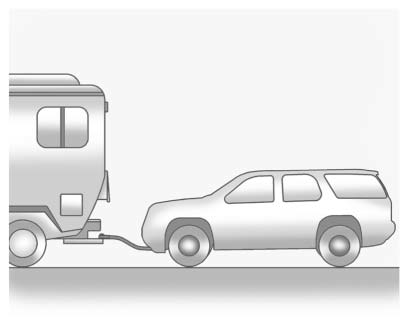
If the vehicle is front-wheel drive, it can be dinghy towed from the front.
These vehicles may also be towed by putting the front wheels on a dolly. See “Dolly Towing” later in this section.
If the vehicle is all-wheel drive, it can be dinghy towed from the front.
These vehicles can also be towed by placing them on a platform trailer with all four wheels off the ground. These vehicles cannot be towed using a dolly.
The towing method depends on whether the vehicle is front-wheel drive or all-wheel drive. Using the wrong method can damage the drivetrain, so the drivetrain type should be confirmed before any recreational towing setup is used.
For vehicles being dinghy towed, the vehicle should be run at the beginning of each day and at each RV fuel stop for about five minutes.
This will ensure proper lubrication of transmission components. Reinstall the fuse to start the vehicle.
Running the engine during these intervals helps circulate fluid through transmission parts that need lubrication. Do not skip this step during long travel days, especially when the vehicle will be towed for many miles.
To tow the vehicle from the front with all four wheels on the ground:
1. Position the vehicle to be towed, shift the transmission to P (Park), and turn the ignition to LOCK/OFF.
2. Secure the vehicle to the towing vehicle.
Make sure the tow bar, safety cables, and any required electrical connections are attached according to the towing equipment manufacturer’s instructions.
3. Set the parking brake.
4. Turn the ignition to ACC/ACCESSORY.
5. Shift the transmission to N (Neutral).
6. To prevent the battery from draining while the vehicle is being towed, remove the 15 amp ECM fuse and the 50 amp BATT1 fuse from the underhood fuse block and store them in a safe location. See Engine Compartment Fuse Block.
Keep the removed fuses in a labeled or protected place so they are not lost during travel. The vehicle will need them reinstalled before normal operation resumes.
7. Release the parking brake.
Notice: If the vehicle is towed without performing each of the steps listed under “Dinghy Towing,” the automatic transmission could be damaged.
Be sure to follow all steps of the dinghy towing procedure prior to and after towing the vehicle.
Do not rely on memory when preparing the Buick Enclave for dinghy towing. Follow the sequence step by step so the transmission, electrical system, and parking brake are all set correctly before the vehicle begins moving behind the tow vehicle.
Notice: If 105 km/h (65 mph) is exceeded while towing the vehicle, it could be damaged.
Never exceed 105 km/h (65 mph) while towing the vehicle.
Keep towing speed within the stated limit. Higher speeds can increase heat, stress, and movement in components that are not operating the same way they do during normal driving.
Once the destination is reached:
1. Set the parking brake.
2. Reinstall the fuses in the underhood fuse block.
Make sure each fuse is returned to its correct position before attempting to start or drive the vehicle.
3. Shift the transmission to P (Park), turn the ignition to LOCK/OFF, and remove the key from the ignition.
4. Disconnect the vehicle from the towing vehicle.
After disconnecting, walk around the vehicle and check that the tow bar, safety cables, lighting harness, and any temporary towing equipment have been fully removed or secured before driving.
Notice: Do not tow a vehicle with the front drive wheels on the ground if one of the front tires is a compact spare tire. Towing with two different tire sizes on the front of the vehicle can cause severe damage to the transmission.
If a compact spare tire is installed on the front, do not dinghy tow with the front drive wheels on the ground. The different tire size can cause drivetrain speed differences that may damage the transmission.
Dolly Towing (All-Wheel-Drive Vehicles)
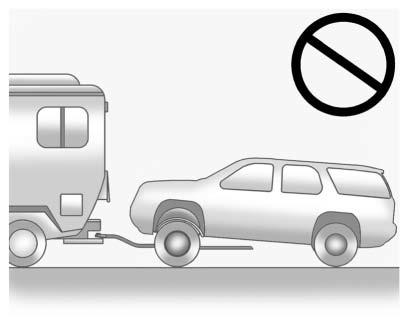
All-wheel-drive vehicles must not be towed with two wheels on the ground. To properly tow these vehicles, they should be placed on a platform trailer with all four wheels off the ground or dinghy towed from the front.
All-wheel-drive systems are sensitive to differences in wheel movement during towing. Lifting only two wheels on a dolly can force parts of the drivetrain to rotate in a way that may cause internal damage. For an all-wheel-drive Buick Enclave, use the approved towing method only.
Dolly Towing (Front-Wheel-Drive Vehicles Only)
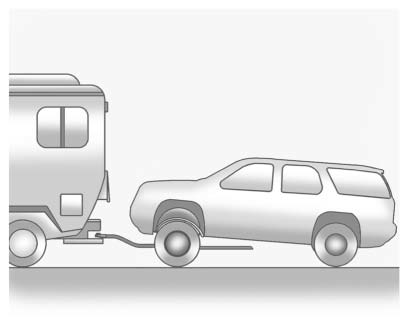
To tow a front-wheel-drive vehicle from the front with two wheels on the ground:
1. Put the front wheels on a dolly.
2. Move the shift lever to P (Park).
3. Set the parking brake.
4. Clamp the steering wheel in a straight-ahead position with a clamping device designed for towing.
The steering wheel must be held straight so the vehicle tracks properly behind the towing vehicle. Use only a device intended for towing, not a temporary strap or loose object that could shift during travel.
5. Remove the key from the ignition.
6. Secure the vehicle to the dolly.
Check that the tire straps, chains, and dolly attachment points are tight and positioned correctly. Recheck them after a short distance, especially at the beginning of a trip.
7. Release the parking brake.
Before driving away, confirm that the vehicle is seated correctly on the dolly, the rear wheels are free to roll, the steering is secured, and all lighting and safety connections are working.
Towing the Vehicle From the Rear
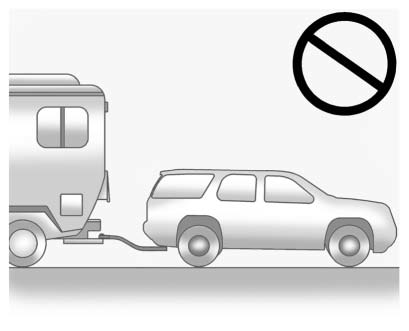
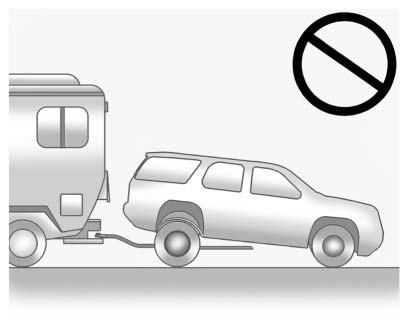
Notice: Towing the vehicle from the rear could damage it. Also, repairs would not be covered by the vehicle warranty. Never have the vehicle towed from the rear.
Do not tow the vehicle from the rear.
Rear towing can place the drivetrain, steering, suspension, and body structure in a condition they were not designed to handle. If the vehicle must be transported, use an approved towing method and avoid any setup that pulls the vehicle backward with the wrong wheels on the ground.
