
Buick Enclave: Repair Instructions
ODOR CORRECTION
Eliminating Air Conditioning Odor
Unpleasant odors from the air conditioning system are most often noticed during initial HVAC operation, especially when the Buick Enclave has been parked in hot, damp, or humid conditions. A musty smell at start-up usually indicates that moisture has remained inside the HVAC case long enough for odor-producing residue or microbial growth to develop on the evaporator core and surrounding surfaces.
The following conditions can contribute to A/C odor:
- Leaves, dust, pollen, or other debris have entered the fresh-air plenum or HVAC module.
- Moisture has collected on the evaporator core and allowed microbial growth to form.
When the blower motor begins moving air through the HVAC module, the airflow can carry the odor from the evaporator area into the passenger compartment. Cleaning only the cabin area will not correct this condition if the source remains inside the HVAC case. To remove this type of odor, the evaporator core must be deodorized and the moisture source must be reduced as much as possible. Use the specified Deodorizing Aerosol Kit and follow the procedure carefully so the treatment reaches the evaporator surface rather than only the ducts.
Perform the following steps in order to deodorize the A/C system:
1. Confirm that the outside-air intake plenum for the HVAC module is open and free of leaves, dirt, seed pods, or other debris. Any restriction in this area can hold moisture and may reintroduce odor after the repair.
2. Disable A/C compressor clutch operation by disconnecting the clutch coil electrical connector. This prevents compressor engagement while the evaporator core is being dried and treated.
3. Dry the evaporator core by performing the following steps:
- Start the engine and allow the HVAC system to operate normally.
- Select the maximum temperature setting so heated air can pass through the case.
- Select the recirculation mode to increase drying efficiency inside the cabin air path.
- Run the blower motor on high speed for 10 minutes to remove as much moisture as possible from the evaporator core.
4. Locate a suitable area in the air conditioning duct between the blower motor and the evaporator core, downstream of the blower motor. Choose the location carefully so the deodorizer can be carried toward the evaporator core by blower airflow.
5. Drill a 3.175 mm (0.125 in) access hole only where the drill bit and the extension tube will not contact or damage the following components:
- The blower motor
- The evaporator core
- Any door, actuator, harness, seal, or other operating part of the HVAC system
6. Wear safety goggles and latex gloves before applying the deodorizing material. Perform the following actions with care:
- Select the maximum blower speed.
- Insert the deodorizer extension tube into the drilled hole up to the mark on the extension tube.
- Apply the deodorizer using short spray bursts while slightly varying the spray direction for a 2-3 minute period. This helps distribute the treatment across a broader section of the evaporator core instead of soaking one small area.
7. Shut the engine OFF and allow the vehicle to sit undisturbed for 3-5 minutes. This dwell time gives the deodorizer time to work on the evaporator surface and nearby HVAC case surfaces.
8. Seal the 3.175 mm (0.125 in) hole with body sealer or RTV gasket compound. The seal must be secure so air leakage, water intrusion, and future noise concerns are avoided.
9. Start the engine.
10. Operate the blower motor on high for 15-20 minutes to dry the treated area. This final drying step is important because excess moisture left inside the HVAC module can allow odor to return.
11. Reconnect the A/C compressor clutch coil electrical connector.
12. Verify clutch operation and confirm that the air conditioning system operates normally. After the Buick Enclave HVAC system has been treated, check for improved outlet air quality during initial start-up and during normal A/C operation.
REFRIGERANT RECOVERY AND RECHARGING
Special Tools
- J 43600 ACR 2000 Air Conditioning Service Center
- J 45037 A/C Oil Injector
For equivalent regional tools, refer to Special Tools.
WARNING: To prevent personal injury, avoid breathing A/C refrigerant and lubricant vapor or mist. Work only in a well ventilated area. To remove refrigerant from the A/C system, use service equipment designed for recovery and certified to meet the requirements of the appropriate SAE standards. If an accidental system discharge occurs, ventilate the work area before continuing service. Additional health and safety information may be obtained from the refrigerant, refrigerant recovery equipment, and lubricant manufacturers.
WARNING: For personal protection, goggles and lint-free gloves should be worn, and a clean cloth should be wrapped around fittings, valves, and connections when performing work that requires opening the refrigerant system. If refrigerant contacts any part of the body, severe frostbite and personal injury can occur. Flush the exposed area immediately with cold water and obtain prompt medical assistance.
CAUTION: You must replace the desiccant if the A/C refrigerant system has been open to atmosphere for more than four hours or if the A/C refrigerant oil has been contaminated. Failure to replace the desiccant can allow moisture to remain in the system and may result in damage to the A/C refrigerant system.
CAUTION: R-134a is the only approved refrigerant for use in this vehicle. Using any other refrigerant may cause poor cooling performance, abnormal operating pressures, seal damage, or component failure.
CAUTION: To avoid system damage, use only R-134a dedicated tools when servicing the A/C system.
CAUTION: Use only Polyalkylene Glycol Synthetic Refrigerant Oil (PAG) for internal circulation through the R-134a A/C system, and use only 525 viscosity mineral oil on fitting threads and O-rings. If lubricants other than those specified are used, compressor failure, fitting seizure, leakage, or premature seal deterioration may result.
CAUTION: R-12 refrigerant and R-134a refrigerant must never be mixed, even in the smallest amount, because they are incompatible. If the refrigerants are mixed, compressor failure is likely to occur. Refer to the manufacturer instructions supplied with the service equipment before servicing.
The J 43600 ACR 2000 air conditioning service center is a complete service unit designed for R-134a air conditioning systems.
The ACR 2000 recovers, recycles, evacuates, and recharges A/C refrigerant quickly, accurately, and automatically. The unit includes a display screen with function controls and service prompts that guide the technician through recovery, recycling, evacuation, and recharge operations. R-134a is recovered into and charged from an internal storage vessel. The ACR 2000 automatically replenishes this vessel from an external source tank in order to maintain a constant 5.45-6.82 kg (12-15 lbs) supply of A/C refrigerant.
The ACR 2000 includes a built-in A/C refrigerant identifier that checks for contamination before recovery begins. If foreign gases are present in the A/C system, the unit will notify the technician and will not recover the refrigerant. This protection is especially important because contaminated refrigerant can damage service equipment and can also lead to incorrect pressure readings, poor cooling performance, and repeated Buick Enclave A/C system concerns.
The ACR 2000 also features automatic air purge, single-pass recycling, and an automatic oil drain. These functions help maintain refrigerant quality, remove non-condensable gases, and track oil removed during service.
Refer to the J 43600 ACR 2000 air conditioning service center manual for complete operation and setup instructions. Always recharge the A/C system with the specified quantity of R-134a. Refer to Refrigerant System Specifications for the correct charge amount. An undercharged system may cool poorly and cycle incorrectly, while an overcharged system may create high pressures and reduce system efficiency.
A/C Refrigerant System Oil Charge Replenishing
If oil was removed from the A/C system during recovery or as a result of component replacement, the oil charge must be replenished. Oil can be injected into a charged system using the J 45037 A/C oil injector. Add only the specified type and amount of oil. For the correct oil quantity to add to the A/C refrigerant system, refer to Refrigerant System Specifications. Maintaining the oil balance is critical because too little oil can damage the compressor, while too much oil can reduce heat transfer and lower cooling performance.
FLUSHING
Tools Required
- J 43600 ACR 2000 Air Conditioning Service Center
- J 45268 A/C Flushing Adapter Kit
- J 41447 Leak Detection Dye
- J 42220 R-134A A/C Tracer Dye - Box of 24
IMPORTANT: Flushing with the J 43600 ACR 2000 air conditioning service center is not intended to remove metal from the A/C system.
Flushing is intended to remove the following contaminants:
- Contaminated polyalkylene glycol (PAG) oil
- Desiccant material following a desiccant bag failure
- An excessive PAG oil charge
- Refrigerant contamination that can be carried through the system
Flushing should be used only when the type of contamination can be removed by the approved procedure. If a compressor failure has distributed metal particles throughout the Buick Enclave A/C system, additional component replacement and inspection may be required because flushing alone is not designed to remove metallic debris from passages, mufflers, or heat exchangers.
1. Recover the refrigerant. Refer to Refrigerant Recovery and Recharging. Never vent refrigerant into the atmosphere, and always use approved recovery equipment.
IMPORTANT: Warmer engine or ambient temperature decreases the refrigerant recovery time during the A/C flush procedure.
2. Remove the front thermal expansion valve (TXV). Refer to Air Conditioning Evaporator Thermal Expansion Valve Replacement.
3. Install the J 45268-121 in place of the TXV. Make sure the adapter is seated correctly so the flush flow is directed through the intended section of the system.
4. Remove the A/C compressor. Refer to Air Conditioning Compressor Replacement. The compressor must not be flushed through as part of this procedure.
5. Install J 45268-5 to the discharge hose.
6. Install J 45268-4 to the suction hose.
7. Forward-flow refrigerant flushing is recommended when the concern involves contaminated refrigerant or PAG oil. Forward flow follows the normal direction of refrigerant movement and helps carry dissolved oil and light contamination out of the affected circuit.
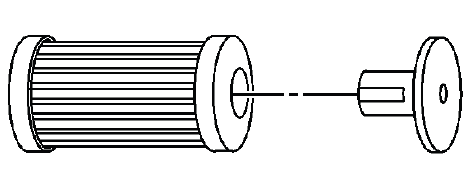
Fig. 1: View Of A/C Filter & Check Valve
Perform the following procedure:
- Service the filter with ACDelco P/N GF 470 before each flush. A clean filter helps protect the equipment and prevents previously trapped material from being carried back into the system during the next service operation.
IMPORTANT: The filter inside J 45268-1 is serviceable. Remove and discard the check valve from the filter before the flushing setup is connected.
- Connect J 45268-1 to the suction port of J 45268-4. Make sure the adapter seats squarely so the flush flow is not restricted or bypassed.
- Connect the blue hose from J 43600 ACR 2000 air conditioning service center to J 45268-1 flush filter adapter. Verify that the coupling is fully engaged before beginning the procedure.
- Connect the red hose from J 43600 ACR 2000 air conditioning service center to J 45268-5 flush adapter. Keep the hose routing clear of sharp edges, moving parts, and hot engine components.
8. Reverse-flow refrigerant flushing is recommended when a desiccant failure has occurred. This direction of flow helps move loose desiccant material back out of the affected circuit instead of driving it deeper into the A/C passages. Replace the desiccant after the A/C flush is complete, then perform the following procedure:
- Service the filter with ACDelco P/N GF 470 before each flush. A clean filter is necessary because trapped material from a previous flush can contaminate the next operation.
IMPORTANT: The filter inside J 45268-1 is serviceable. Inspect the filter condition during setup and replace the element whenever contamination is present.
- Connect J 45268-1 to the discharge port of J 45268-5. Confirm that the adapter is installed in the correct direction for reverse-flow flushing.
- Connect the blue hose from J 43600 ACR 2000 air conditioning service center to J 45268-1 flush filter adapter. This connection allows the recovered material to pass through the serviceable filter during the flush cycle.
- Connect the red hose from J 43600 ACR 2000 air conditioning service center to the suction port of J 45268-4 flush adapter. Double-check both hose connections before the flush is started.
9. Flush the front A/C system. Follow the instructions supplied with the J 43600 ACR 2000 air conditioning service center. Allow the equipment to complete the programmed operation without interrupting the cycle unless the service unit displays a fault or safety message.
IMPORTANT: Close the valve on the external refrigerant tank before starting the flush process. Leaving the valve open can affect the flushing operation and may lead to an incorrect refrigerant transfer.
10. If the vehicle is equipped with rear A/C, flush the auxiliary A/C system separately. The Buick Enclave may use a longer refrigerant circuit when rear air conditioning is installed, so the front and auxiliary sections must be treated as separate flow paths during service.
IMPORTANT: Flush the front A/C system before flushing the auxiliary A/C system. This order helps prevent contamination from being carried from the main circuit into the auxiliary circuit during service.
- Remove J 45268-121 from the front evaporator.
- Inspect the front TXV for debris. Clean or replace the valve as needed. Any restriction at the TXV can affect refrigerant metering and cooling performance after the repair.
- Install the front TXV. Refer to Air Conditioning Evaporator Thermal Expansion Valve Replacement. Make sure the sealing surfaces are clean and the connections are properly seated.
- Install J 45268-121 in place of the auxiliary TXV. This prepares the rear air conditioning circuit for a separate flush operation.
11. Flush the auxiliary A/C system. Follow the instructions supplied with J 43600 ACR 2000 air conditioning service center. Monitor the service equipment prompts and verify that the rear circuit is flushed completely before removing the adapters.
12. Remove J 45268-5 from the discharge hose. Cap or protect open fittings as needed to prevent dirt and moisture from entering the system.
13. Remove J 45268-4 from the suction hose. Keep the hose ends clean because even small particles can affect compressor life and expansion valve operation.
14. If the removed A/C compressor is being reinstalled, perform the following procedure:
IMPORTANT: Flushing will remove all PAG oil from the A/C system. The A/C system must be replenished with the correct amount of PAG oil before the system is returned to operation.
- Drain the PAG oil from the A/C compressor.
Rotate the compressor input shaft by hand to help move trapped PAG oil out of the compressor chambers. Allow enough time for the oil to drain into a clean measuring container.
- Add the total system capacity of PAG oil to the A/C compressor. Refer to Refrigerant System Specifications. Use only the specified oil type and quantity so the compressor receives proper lubrication after the Buick Enclave A/C system is reassembled.
15. If you will replace the A/C compressor after flushing the system, perform the following procedure:
- A new service compressor is shipped with PAG oil. Refer to the Refrigerant System Specifications before adding or removing any oil.
- If the service compressor is shipped with PAG oil, DO NOT drain the new PAG oil from the compressor unless the service information specifically requires an oil balance correction.
- Deduct the amount of PAG oil shipped with the service compressor from the amount of PAG oil listed in the capacities table. Refer to Refrigerant System Specifications.
Add the calculated amount to the compressor, as needed. This prevents overfilling the system with oil, which can reduce cooling efficiency and increase compressor load.
16. Add one bottle of J 41447 leak detection dye directly to the A/C compressor. Adding the dye at this stage helps restore leak detection capability after the system has been flushed.
IMPORTANT: Flushing will remove the fluorescent leak detection dye from the A/C system. New dye must be added after flushing if future leak diagnosis is to remain effective.
17. Install the A/C compressor. Refer to Air Conditioning Compressor Replacement. Confirm that all mounting surfaces are clean and that the compressor is positioned correctly before the fasteners are tightened.
18. Remove J 45268-121.
19. Inspect the auxiliary TXV for debris. Clean or replace as needed. If desiccant particles or oil contamination remain at the valve, the rear A/C circuit may cool poorly or develop a restriction.
20. Install the auxiliary TXV. Refer to Auxiliary Air Conditioning Evaporator Thermal Expansion Valve Replacement. Replace seals as required and keep the fittings clean during assembly.
21. Evacuate and recharge the A/C system. Refer to Refrigerant Recovery and Recharging. Evacuation removes air and moisture from the system before the specified R-134a charge is installed.
22. Leak test the fittings using J 42220 R-134A A/C Tracer Dye - Box of 24. Inspect all serviced connections carefully, especially compressor fittings, TXV connections, hose adapters, and any joint that was opened during flushing.
AIR CONDITIONING COMPRESSOR OIL BALANCING
Draining Procedure
1. Drain the oil from both the suction and discharge ports of the removed compressor into a clean, graduated container. The container must be clean so the oil amount can be measured accurately and the condition of the oil can be inspected.
IMPORTANT: Drain and measure as much refrigerant oil as possible from the removed compressor. An inaccurate oil measurement can lead to an incorrect oil balance in the replacement compressor.
Rotate the compressor shaft to assist in draining the compressor. This helps release oil trapped inside the compressor body and improves measurement accuracy.
2. Measure and record the amount of oil drained from the removed compressor. This recorded value is required during installation of the replacement compressor.
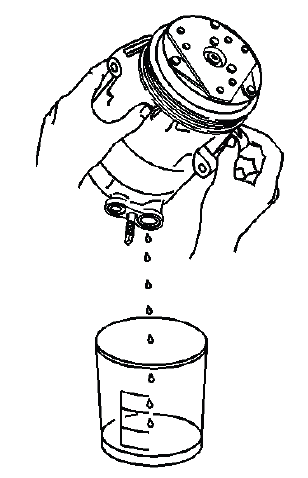
Fig. 2: Draining A/C Refrigerant Oil From Compressor
This measurement will be used during installation of the replacement compressor. Do not estimate the quantity by appearance; use the graduated container reading.
3. Inspect the oil drained from the compressor. Refer to Air Conditioning Compressor Oil Diagnosis. Dark oil, metal particles, burnt odor, or heavy contamination can indicate internal compressor damage or system contamination that requires additional service.
4. Properly discard the used refrigerant oil. Do not reuse drained oil, and do not pour it back into the compressor or the A/C system.
Balancing Procedure
1. The replacement compressor is shipped with 74 ml (2.5 oz) of refrigerant oil. This shipping oil amount must be compared with the amount removed from the original compressor.
IMPORTANT: The refrigerant oil in the A/C system must be balanced during compressor replacement. Correct oil balance protects the compressor while preventing excess oil from reducing evaporator and condenser heat transfer.
2. Compare the amount of refrigerant oil recorded during compressor removal to the amount of refrigerant oil shipped in the replacement compressor.
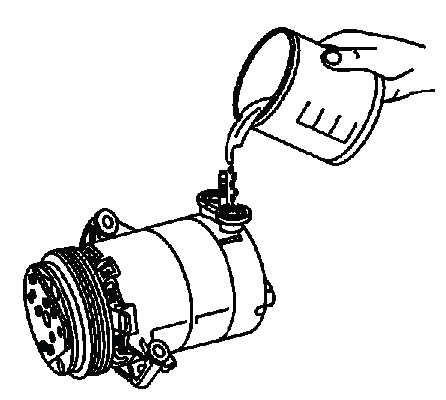
Fig. 3: Replacing Measured Compressor Oil
If the amount of refrigerant oil drained and recorded from the removed compressor is:
- Less than 74 ml (2.5 oz)
Leave the 74 ml (2.5 oz) in the replacement compressor. Do not reduce the oil charge below the amount supplied unless the service procedure specifically instructs otherwise.
- More than 74 ml (2.5 oz)
Add to the compressor the difference between the 74 ml (2.5 oz) and the amount drained. This brings the replacement compressor closer to the oil quantity that was present in the removed unit.
AIR CONDITIONING COMPRESSOR REPLACEMENT
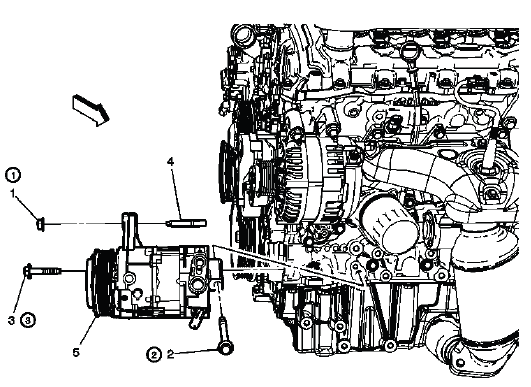
Fig. 4: Air Conditioning Compressor
Air Conditioning Compressor Replacement
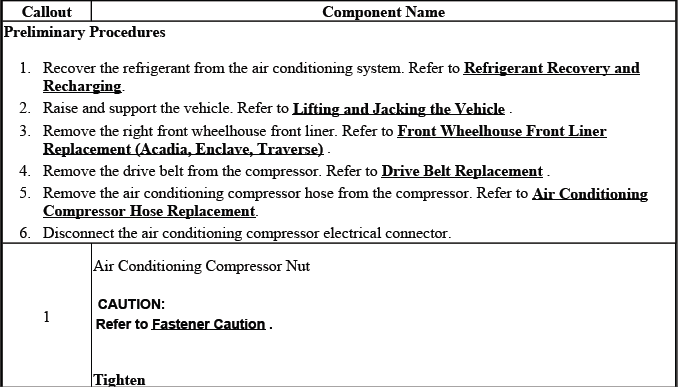
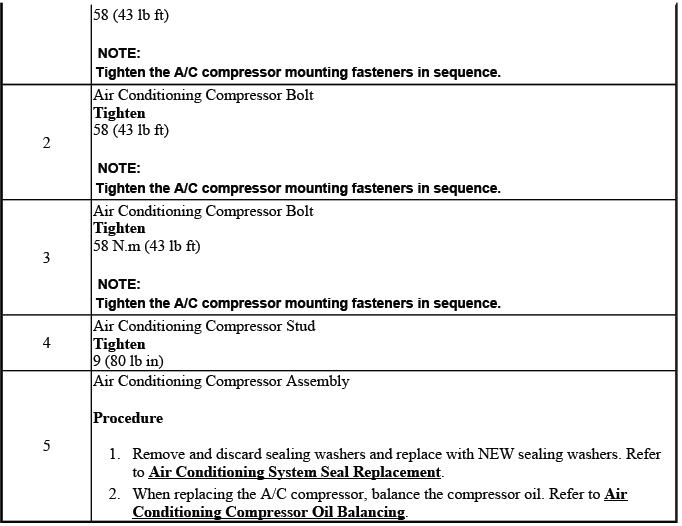
During compressor replacement, keep all refrigerant line openings capped until the moment of connection. This limits moisture entry and reduces the chance of debris entering the system. On the Buick Enclave, careful compressor handling is especially important because the A/C system depends on clean oil flow and correct refrigerant circulation for stable cooling performance.
AIR CONDITIONING CLUTCH ASSEMBLY REPLACEMENT
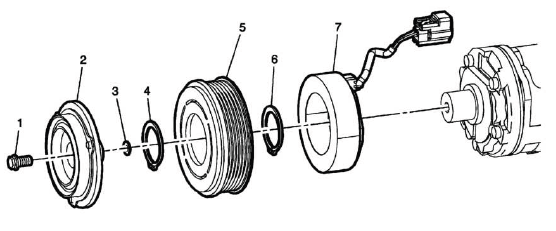
Fig. 5: Air Conditioning Clutch Assembly Components (With V4U)
Air Conditioning Clutch Assembly Replacement
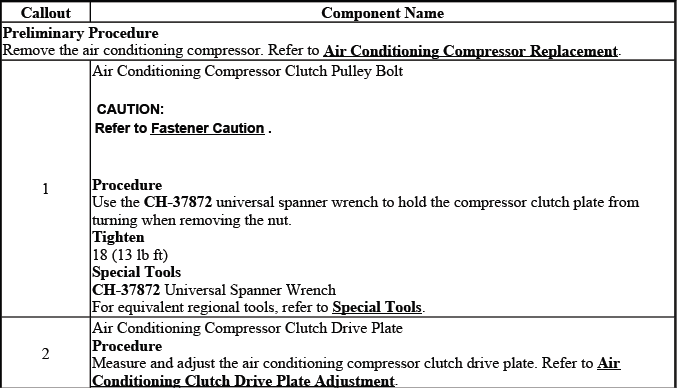

When servicing the A/C clutch assembly, inspect the pulley bearing, drive plate surface, electrical connector, and clutch coil area before final assembly. A clutch that drags, slips, or engages inconsistently can create noise, poor compressor engagement, or intermittent cooling complaints.
AIR CONDITIONING CLUTCH DRIVE PLATE ADJUSTMENT
1. Install the air conditioning clutch plate assembly (2). Make sure the plate is seated evenly on the compressor shaft before checking the air gap.
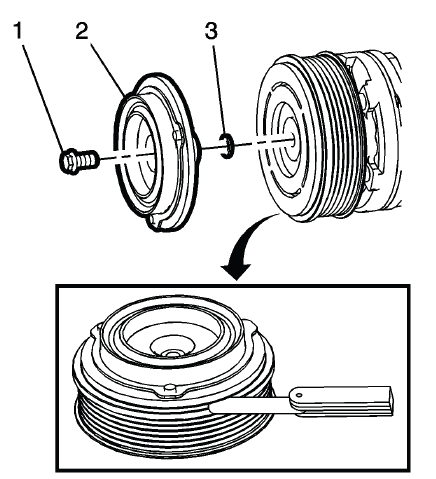
Fig. 6: AC Clutch Plate Assembly, Clutch Pulley Bolt And Shims
2. Measure the air gap between the pulley and the drive plate. Adjust the shims (3) to achieve a 0.21-0.55 mm (0.008-0.022 in) air gap. Measure at several points around the clutch face to confirm the gap is even, not only at one location.
NOTE: Ensure the drive plate does not drag against the pulley when the pulley is rotated. Any contact after adjustment can cause noise, heat buildup, and premature clutch wear.
3. Install the air conditioning compressor clutch pulley bolt (1) and tighten to 18 N.m (13 lb ft). After tightening, rotate the pulley by hand again and confirm that the drive plate remains free of drag.
CAUTION: Refer to Fastener Caution. Use the specified tightening method and torque values during assembly to avoid fitting damage, refrigerant leakage, or distorted sealing surfaces.
AIR CONDITIONING SYSTEM SEAL REPLACEMENT
Removal Procedure
1. Remove the seal washer from the A/C refrigerant component. Work carefully around the fitting face so the sealing surface is not scratched or nicked during removal.
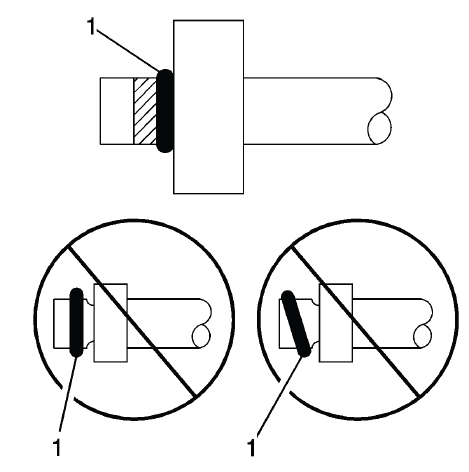
Fig. 7: Identifying Good & Bad Sealing Washer Positions
2. Inspect the seal washer for any signs of damage, including flattening, cracking, uneven compression, surface cuts, or distortion from previous tightening.
3. Inspect the A/C refrigerant components for damage or burrs. Repair the sealing surface if necessary before the system is reassembled. Even a small raised edge can prevent the washer from sealing evenly under pressure.
4. Discard the sealing washer immediately after removal so it cannot be accidentally reused during assembly.
IMPORTANT: DO NOT reuse sealing washer. A used sealing washer may look acceptable, but it has already been compressed and may not seal correctly a second time.
Installation Procedure
1. Inspect the new seal washer for any signs of cracks, cuts, deformation, or other damage. Do not install a washer that has been dropped on a dirty surface or handled in a way that could contaminate the sealing face.
IMPORTANT: Flat washer type seals do not require lubrication. Adding lubricant can affect washer seating and may attract debris to the sealing surface.
Do not use a damaged seal washer.
2. Using a lint-free clean, dry cloth, clean the sealing surfaces of the A/C refrigerant components. The surfaces must be dry and free of old oil, dirt, lint, corrosion, and metal particles before the new washer is installed.
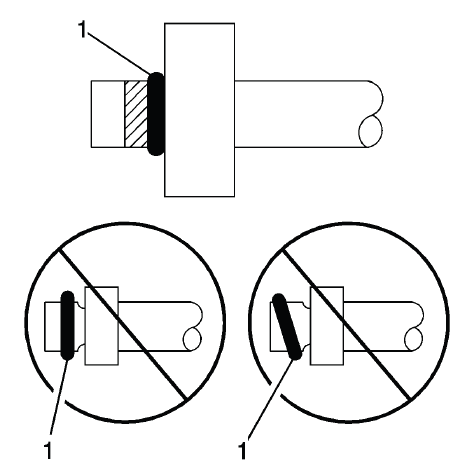
Fig. 8: Identifying Good & Bad Sealing Washer Positions
3. Carefully install the new seal washer onto the A/C refrigerant component. Keep the washer square to the fitting so it does not tilt, pinch, or hang on the edge of the sealing surface.
4. The washer must completely bottom against the surface of the fitting. A washer that is not fully seated can create an uneven gap and may leak after the Buick Enclave A/C system is evacuated and recharged.
5. Assemble the remaining A/C refrigerant components. Refer to the appropriate repair procedure. Align the components naturally before tightening so the line is not forced into position by the fastener.
IMPORTANT: After tightening the A/C components, there should be a slight sealing washer gap of approximately 1.2 mm (3/64 in) between the A/C line and the A/C component. This small visible gap indicates the washer has been compressed correctly and the fitting has not been overtightened.
AIR CONDITIONING O-RING SEAL REPLACEMENT
Removal Procedure
1. Disassemble the A/C refrigerant components. Refer to the appropriate repair procedure. Release the fitting carefully and avoid twisting the refrigerant line more than necessary.
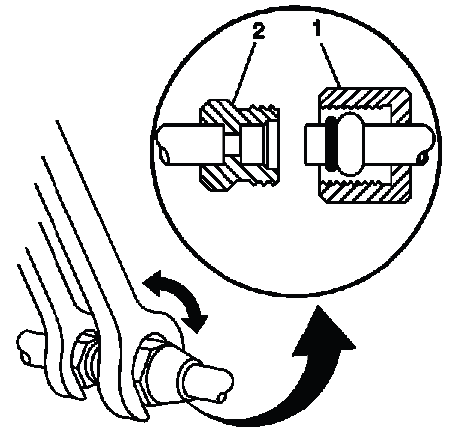
Fig. 9: Disassembling/Reassembling A/C Line Fittings
- For compression style fittings, use a back up wrench on the fitting (2) and loosen the fitting nut (1). Supporting the fitting prevents unnecessary stress on the connected line or component.
- For banjo style fittings, remove the bolt retaining the banjo type fitting. Keep the fitting aligned as the bolt is removed so the sealing surfaces are not gouged.
2. Remove the O-ring seal from the A/C refrigerant component. Use care not to scratch the O-ring groove or the fitting surface.
3. Inspect the O-ring seal for signs of damage such as cuts, swelling, flattening, hardening, or tearing. These conditions can indicate improper installation, age, chemical contamination, or excessive heat exposure.
4. Inspect the A/C refrigerant components for damage or burrs. Repair if necessary. The O-ring must slide into place and seal against a smooth, clean surface.
5. Discard the O-ring seal. Never leave a removed seal on the workbench where it may be confused with a new part.
Installation Procedure
1. Inspect the new O-ring seal for any sign of cracks, cuts, deformation, or damage. Replace the seal if there is any doubt about its condition.
2. Using a lint-free clean, dry cloth, carefully clean the sealing surfaces of the A/C refrigerant components. Do not use cloth that can leave fibers inside the fitting.
3. Lightly coat the new O-ring seal with mineral base 525 viscosity refrigerant oil. Apply only a thin film so the seal can slide into position without rolling or tearing.
IMPORTANT: DO NOT allow any of the mineral base 525 viscosity refrigerant oil on the new O-ring seal to enter the refrigerant system. The oil is used only to assist seal installation at the fitting surface.
4. Carefully slide the new O-ring seal onto the A/C refrigerant component. Do not stretch the seal more than necessary, and do not roll it across sharp edges.
IMPORTANT: DO NOT reuse O-ring seals. Reused O-rings may not maintain the correct shape or elasticity needed for a reliable refrigerant seal.
5. The O-ring seal must be fully seated in its groove. Confirm that it is not twisted, pinched, or sitting above the groove edge.
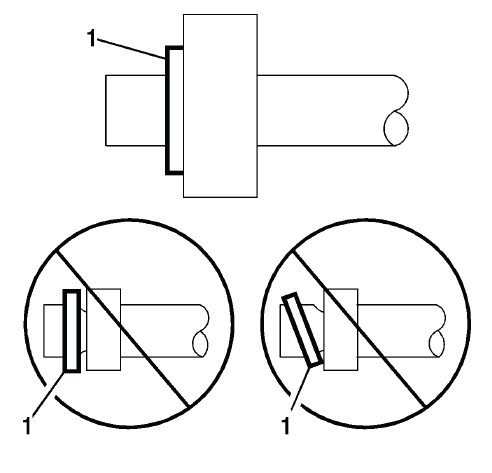
Fig. 10: Identifying Proper Seating Of A/C Refrigerant O-Ring
6. Assemble the A/C components. Bring the fittings together straight and evenly so the O-ring does not get cut during assembly.
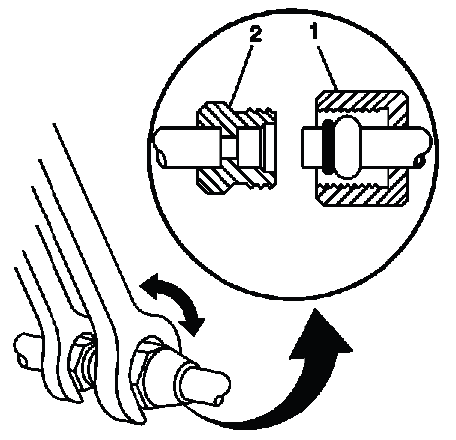
Fig. 11: Disassembling/Reassembling A/C Line Fittings
Refer to the appropriate repair procedure.
- For compression style fittings, use a back up wrench on the fitting (2) and tighten the fitting nut (1) to specification. Holding the fitting steady helps prevent line twist and protects the sealing joint.
- For banjo style fittings, install the bolt retaining the banjo type fitting and tighten to specification. Make sure the fitting remains flat against the component while the bolt is tightened.
AIR CONDITIONING COMPRESSOR HOSE REPLACEMENT
Removal Procedure
1. Remove the front compartment front sight shield. Refer to Front Compartment Front Sight Shield Replacement (Enclave), Front Compartment Front Sight Shield Replacement (Traverse), Front Compartment Front Sight Shield Replacement (Acadia). Removing the shield provides working access and reduces the chance of damaging nearby trim or covers.
2. Recover the refrigerant from the A/C system. Refer to Refrigerant Recovery and Recharging. Do not disconnect any refrigerant line until the system has been properly recovered with approved equipment.
3. Remove the coolant recovery reservoir. Refer to Coolant Recovery Reservoir Replacement. Moving the reservoir out of the work area creates clearance for the compressor hose and related fittings.
4. Remove the air conditioning compressor hose nut (1) at the air conditioning refrigerant heat exchange. Use the correct tool position so the nut is not rounded.
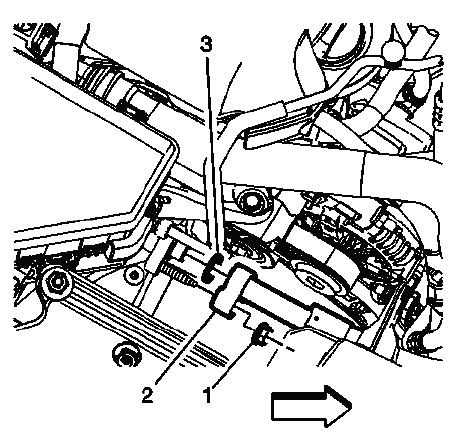
Fig. 12: Air Conditioning Compressor Hose Nut
5. Remove the air conditioning compressor hose (2) from air conditioning refrigerant heat exchange. Pull the hose away evenly and avoid bending the line against the fitting.
6. Remove and discard the sealing washer (3). A new sealing washer must be installed during reassembly.
7. Remove the air conditioning compressor hose nut (1) at the compressor. Keep the fitting supported while loosening the nut to avoid loading the compressor connection.
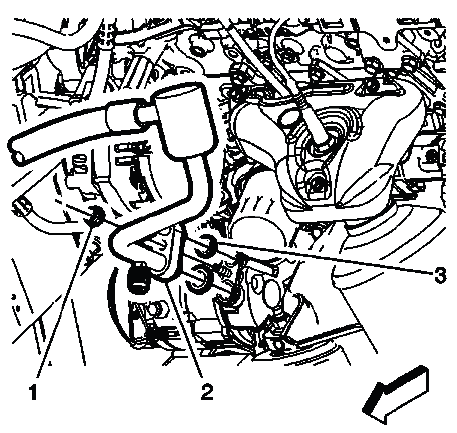
Fig. 13: Compressor Hose Nut And Compressor
8. Remove the air conditioning compressor hose (2) from the compressor. Cap or cover the open compressor port to prevent moisture and debris from entering.
9. Remove and discard the sealing washers (3). Do not reuse washers that have already been compressed.
10. Raise and support the vehicle. Refer to Lifting and Jacking the Vehicle. Make sure the Buick Enclave is safely supported before working near the lower front condenser area.
11. Remove the front bumper fascia. Refer to Front Bumper Fascia Replacement (Acadia), Front Bumper Fascia Replacement (Enclave), Front Bumper Fascia Replacement (Traverse). This step provides access to the condenser connection and heat exchange assembly.
12. Remove the air conditioning compressor hose nut (1) at the condenser. Loosen the nut carefully so the condenser fitting is not stressed.
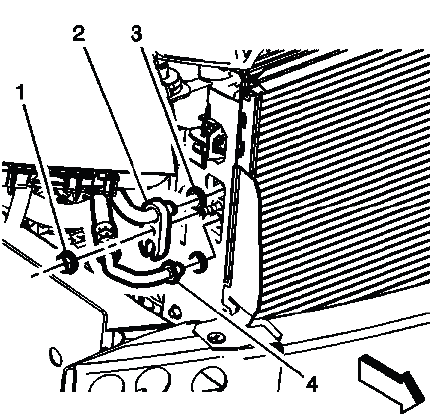
Fig. 14: Air Conditioning Compressor Hose And Condenser
13. Remove the air conditioning compressor hose (2) from the condenser. Keep the line end clean after removal.
14. Remove and discard the sealing washer (3). Always replace the washer when the joint has been opened.
15. Remove the air conditioning refrigerant heat exchange from the condenser (4). Separate the parts without prying against the condenser sealing face.
16. Remove and discard the sealing washer (3). Inspect the mating surface for marks or debris before installation.
17. Remove the air conditioning compressor hose (1) from the top of the vehicle. Guide the hose out carefully to avoid catching it on brackets, wiring, the condenser, or surrounding body components.
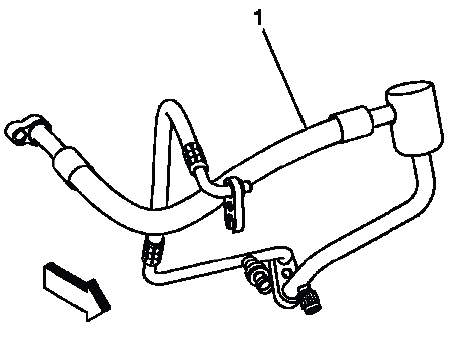
Fig. 15: Air Conditioning Compressor Hose
Installation Procedure
1. Install NEW sealing washers (3) to the air conditioning compressor hose and the air conditioning refrigerant heat exchange (4). Refer to Air Conditioning System Seal Replacement. Confirm the washers are fully seated and correctly positioned before the parts are joined.
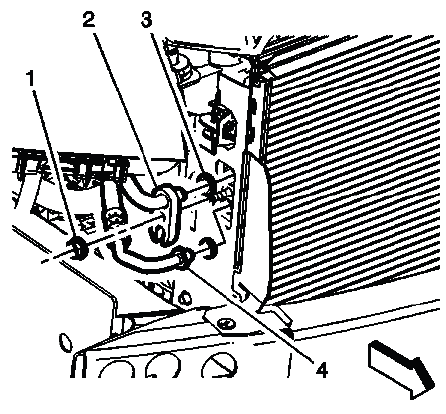
Fig. 16: Air Conditioning Compressor Hose And Condenser
2. Install the air conditioning refrigerant heat exchange to the condenser (4). Align the fitting naturally and do not force the connection into place.
3. Install the air conditioning compressor hose (2) to the condenser. Make sure the hose is routed the same way it was before removal and is not twisted.
4. Install the air conditioning compressor hose nut (1) at the condenser and tighten to 22 N.m (16 lb ft). Correct torque is required to compress the seal without damaging the fitting.
CAUTION: Refer to Fastener Caution. Do not overtighten the condenser connection, because excessive torque can distort the sealing washer or damage the aluminum fitting.
5. Install the front bumper fascia. Refer to Front Bumper Fascia Replacement (Acadia), Front Bumper Fascia Replacement (Enclave), Front Bumper Fascia Replacement (Traverse). Check that the fascia does not interfere with the refrigerant line routing.
6. Lower the vehicle.
7. Install NEW sealing washers (3) to the air conditioning compressor hose. Refer to Air Conditioning System Seal Replacement. On the Buick Enclave, each opened A/C hose joint must be assembled with a fresh sealing washer to reduce the risk of refrigerant leakage after evacuation and recharge.
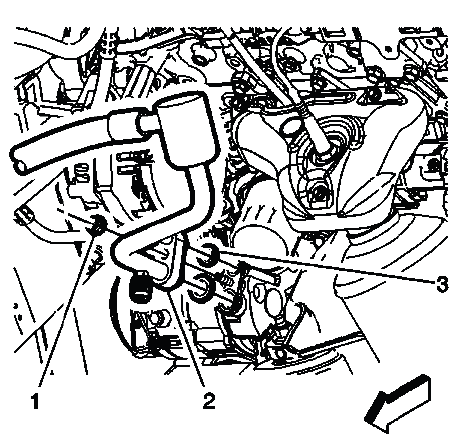
Fig. 17: Compressor Hose Nut And Compressor
8. Install the air conditioning compressor hose (2) to the compressor. Guide the hose into position without forcing the line against the compressor fitting, and make sure the sealing washer remains properly seated during installation.
9. Install the air conditioning compressor hose nut (1) at the compressor and tighten to 22 N.m (16 lb ft). Tighten the nut evenly so the sealing washer compresses correctly and the fitting face is not distorted.
10. Install NEW sealing washers (3) to the air conditioning compressor hose. Refer to Air Conditioning System Seal Replacement. Do not reuse washers removed during disassembly, because previously compressed seals may allow refrigerant leakage after the system is charged.
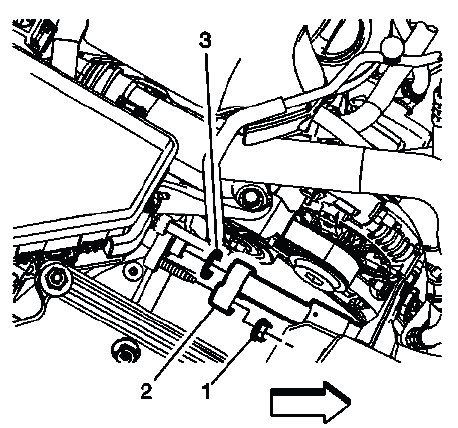
Fig. 18: Air Conditioning Compressor Hose Nut
11. Install the air conditioning compressor hose (2) to the air conditioning refrigerant heat exchange. Align the hose naturally with the fitting before tightening so the connection is not loaded or twisted.
12. Install the air conditioning compressor hose nut (1) to the air conditioning refrigerant heat exchange and tighten to 22 N.m (16 lb ft). After tightening, visually confirm that the hose routing is clear of moving parts, sharp edges, and hot surfaces.
13. Install the coolant recovery reservoir. Refer to Coolant Recovery Reservoir Replacement. Make sure the reservoir is seated securely and that the hoses are returned to their original routing.
14. Evacuate and charge the A/C system. Refer to Refrigerant Recovery and Recharging. A proper evacuation removes air and moisture before the specified refrigerant charge is installed.
15. Install the front compartment front sight shield. Refer to Front Compartment Front Sight Shield Replacement (Enclave), Front Compartment Front Sight Shield Replacement (Traverse), Front Compartment Front Sight Shield Replacement (Acadia). Once the shield is in place, inspect the work area to confirm that no tools, caps, or loose parts remain in the engine compartment.
AIR CONDITIONING REFRIGERANT HEAT EXCHANGER REPLACEMENT
Removal Procedure
1. Remove the front compartment front sight shield. Refer to Front Compartment Front Sight Shield Replacement (Enclave), Front Compartment Front Sight Shield Replacement (Traverse), Front Compartment Front Sight Shield Replacement (Acadia). Removing the shield improves access to the upper A/C line connections and helps prevent accidental damage to nearby covers.
2. Remove the fuel injector sight shield. Refer to Fuel Injector Sight Shield Replacement. Set the shield aside in a clean area so it does not become scratched or contaminated during service.
3. Recover the refrigerant from the air conditioning system. Refer to Refrigerant Recovery and Recharging. Do not open any refrigerant fitting until the system has been properly recovered with approved service equipment.
4. Remove the coolant recovery reservoir. Refer to Coolant Recovery Reservoir Replacement. This creates additional working room around the refrigerant heat exchanger and related hose connections.
5. Remove the air cleaner outlet duct. Refer to Air Cleaner Outlet Duct Replacement. Keep dirt and loose debris away from the open intake path while the duct is removed.
6. Reposition the power brake booster vacuum hose out of the way. Refer to Power Brake Booster Vacuum Check Valve and Hose Replacement. Move the hose only as much as needed, and avoid kinking or stressing the hose connection.
7. Remove the engine strut mount-right side. Refer to Engine Mount Strut Replacement - Right Side. This step provides the clearance needed to remove the refrigerant heat exchanger from the upper area of the Buick Enclave engine compartment.
8. Remove the air conditioning compressor hose nut (1) at the air conditioning refrigerant heat exchanger. Support the line while loosening the nut so the fitting is not side-loaded.
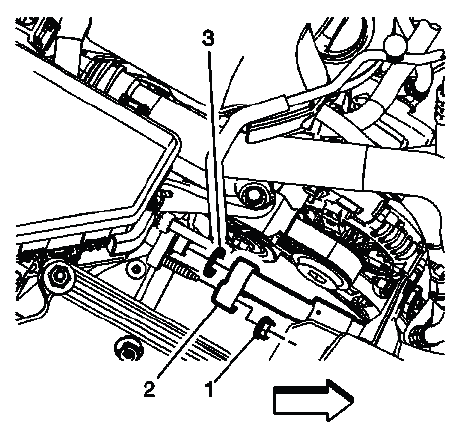
Fig. 19: Air Conditioning Compressor Hose Nut
9. Remove the air conditioning compressor hose (2) from the air conditioning refrigerant heat exchanger. Separate the connection carefully and protect the open fitting from moisture, dust, and shop debris.
10. Remove and discard the sealing washer (3). A new sealing washer is required during installation to maintain a reliable refrigerant seal.
11. Raise and support the vehicle. Refer to Lifting and Jacking the Vehicle. Confirm the vehicle is stable before working around the lower condenser and front fascia area.
12. Remove the front bumper fascia. Refer to Front Bumper Fascia Replacement (Acadia), Front Bumper Fascia Replacement (Enclave), Front Bumper Fascia Replacement (Traverse). Removing the fascia gives access to the condenser-side heat exchanger connections.
13. Remove the air conditioning compressor hose nut (1) at the air conditioning condenser. Loosen the nut with controlled pressure to avoid damaging the condenser fitting.
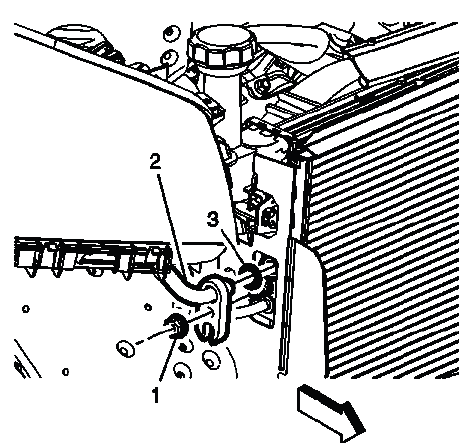
Fig. 20: Air Conditioning Compressor Hose Nut And Air Conditioning Condenser
14. Remove the air conditioning compressor hose (2) from the air conditioning condenser. Keep the hose end clean and avoid bending the line while it is disconnected.
15. Remove and discard the sealing washer (3). Do not attempt to flatten, clean, or reuse the old washer.
16. Remove the air conditioning refrigerant heat exchanger (1) from the air conditioning condenser. Separate the parts evenly so the condenser sealing surface is not scratched.
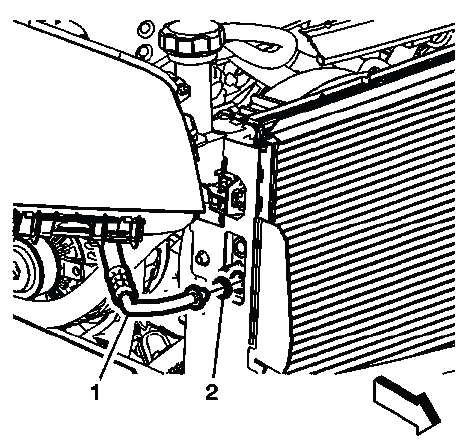
Fig. 21: Refrigerant Heat Exchanger And Washer
17. Remove and discard the sealing washer (2). Inspect the contact area for dirt, corrosion, or marks that could affect the new washer seal.
18. Lower the vehicle.
19. Remove the air conditioning refrigerant heat exchanger nuts (1) from the air conditioning refrigerant heat exchanger (3) at the auxiliary air conditioning evaporator tubes. Hold the tubes steady while loosening the nuts so the rear A/C line connections are not twisted.
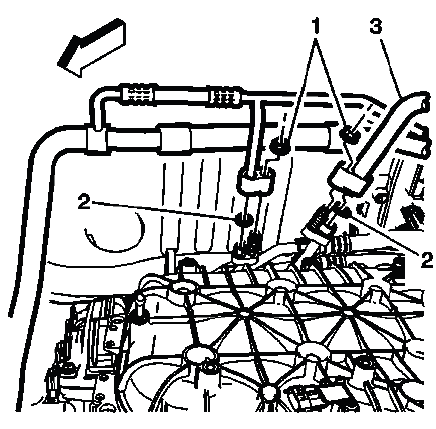
Fig. 22: Refrigerant Heat Exchanger And Auxiliary Air Conditioning Evaporator Tubes
20. Remove the air conditioning refrigerant heat exchanger from the auxiliary air conditioning evaporator tubes. Pull the connection apart squarely and protect the tube ends immediately after separation.
21. Remove and discard the sealing washers (2). Each opened refrigerant joint must receive new sealing washers during reassembly.
22. Remove the air conditioning refrigerant heat exchanger nut (1) from the air conditioning refrigerant heat exchanger (3) at the air conditioning evaporator thermal expansion valve. Keep the tool aligned with the nut to reduce the chance of rounding the fastener.
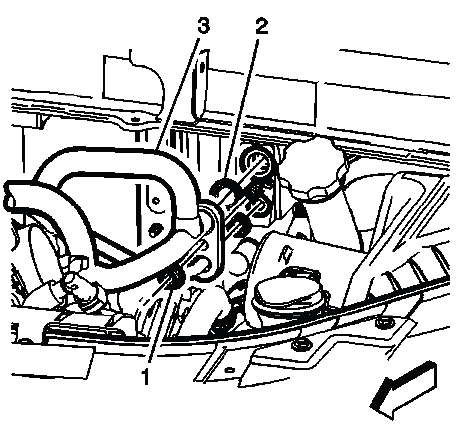
Fig. 23: Air Conditioning Refrigerant Heat Exchanger Nut
23. Remove the air conditioning refrigerant heat exchanger (3) from the air conditioning evaporator thermal expansion valve. Do not pry against the valve body or sealing face.
24. Remove and discard the sealing washers (2). Before installation, the mating surfaces should be clean, dry, and free of old oil residue.
25. Remove the air conditioning refrigerant heat exchanger fasteners (1) from the air conditioning refrigerant heat exchanger (2). Support the heat exchanger as the fasteners are removed so it does not drop or contact nearby components.
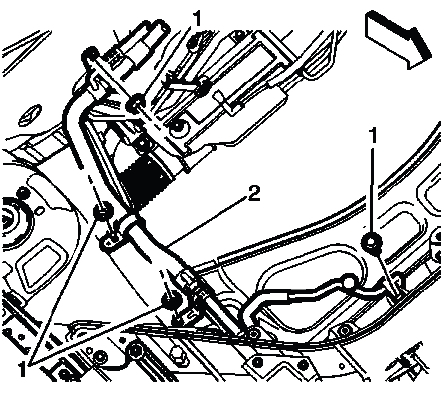
Fig. 24: Air Conditioning Refrigerant Heat Exchanger And Fasteners
26. Remove the air conditioning refrigerant heat exchanger (1) from the top of the vehicle. Carefully guide the heat exchanger out of the Buick Enclave engine compartment, watching for contact with hoses, wiring, brackets, and painted surfaces.
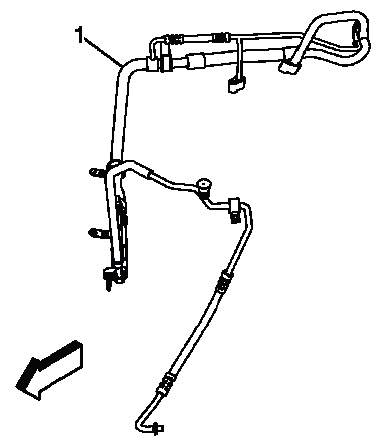
Fig. 25: Refrigerant Heat Exchanger
Installation Procedure
1. Install NEW sealing washers to the air conditioning refrigerant heat exchanger (1). Refer to Air Conditioning System Seal Replacement. Confirm that each washer is clean, correctly positioned, and fully seated before the heat exchanger is installed.
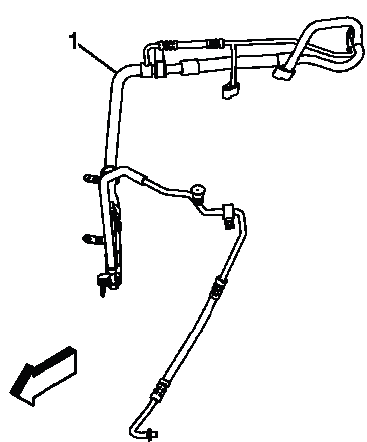
Fig. 26: Refrigerant Heat Exchanger
2. Install the air conditioning refrigerant heat exchanger (1) to the vehicle. Route it into position carefully so none of the refrigerant lines are bent, twisted, or forced against adjacent parts.
3. Install the air conditioning refrigerant heat exchanger fasteners (1) to the vehicle and tighten to 9 N.m (80 lb in). Tighten the fasteners evenly so the heat exchanger sits securely without being stressed.
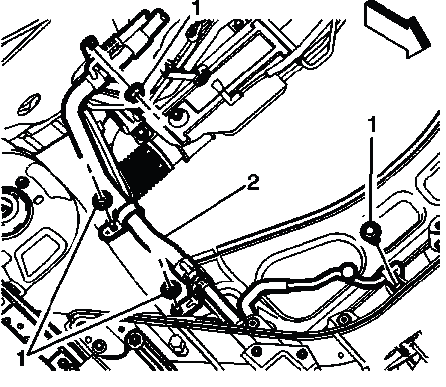
Fig. 27: Air Conditioning Refrigerant Heat Exchanger And Fasteners
CAUTION: Refer to Fastener Caution. Using the correct torque is necessary because overtightening can damage aluminum fittings, while undertightening can allow refrigerant leakage.
4. Install NEW sealing washers (2) to the air conditioning refrigerant heat exchanger (3). Refer to Air Conditioning System Seal Replacement. Never reuse sealing washers removed from the previous heat exchanger connections.
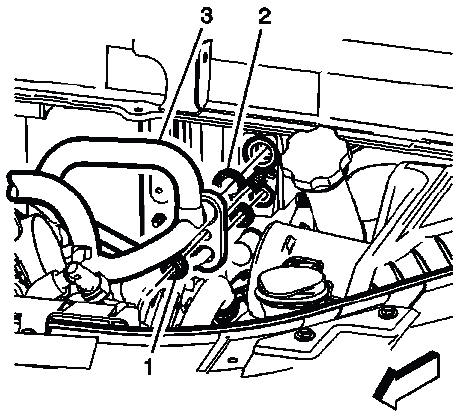
Fig. 28: Air Conditioning Refrigerant Heat Exchanger Nut
5. Install the air conditioning refrigerant heat exchanger (3) to the air conditioning evaporator thermal expansion valve. Bring the parts together straight so the new sealing washers are not pinched or displaced.
6. Install the air conditioning refrigerant heat exchanger nut (1) to the air conditioning evaporator thermal expansion valve and tighten to 22 N.m (16 lb ft). After tightening, confirm that the connection is seated evenly and that the line is not under tension.
7. Install NEW sealing washers (2) to the air conditioning refrigerant heat exchanger. Refer to Air Conditioning System Seal Replacement. On the Buick Enclave, clean sealing surfaces and fresh washers are essential for preventing small refrigerant leaks after evacuation and recharge.
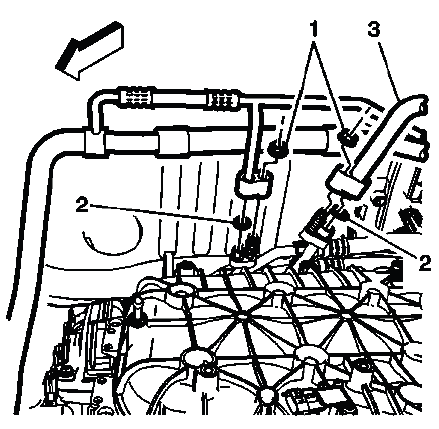
Fig. 29: Refrigerant Heat Exchanger And Auxiliary Air Conditioning Evaporator Tubes
8. Install the air conditioning refrigerant heat exchanger (3) to the auxiliary air conditioning evaporator tubes. Bring the fittings together straight and evenly so the new sealing washers remain centered and are not pinched during assembly.
9. Install the air conditioning refrigerant heat exchanger nuts (1) to the auxiliary air conditioning evaporator tubes and tighten to 22 N.m (16 lb ft). Tighten the nuts evenly and confirm that the auxiliary tube connections are seated without side load or twist.
10. Raise and support the vehicle. Refer to Air Cleaner Assembly Replacement. Make sure the vehicle is stable before continuing work at the lower condenser and front fascia area.
11. Install NEW sealing washers (2) to the air conditioning refrigerant heat exchanger (1). Refer to Air Conditioning System Seal Replacement. Do not reuse washers from the removed connection, because previously compressed seals may leak after evacuation and recharge.
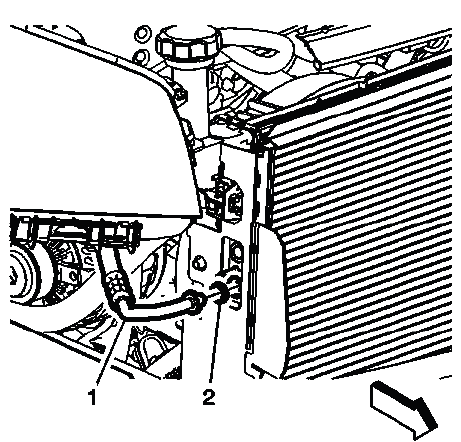
Fig. 30: Refrigerant Heat Exchanger And Washer
12. Install the air conditioning refrigerant heat exchanger (1) to the air conditioning condenser. Align the fitting carefully before tightening so the condenser port is not stressed or scratched.
13. Install NEW sealing washers (3) to the air conditioning compressor hose (2). Refer to Air Conditioning System Seal Replacement. Check that the washers sit flat against the hose fitting and do not shift as the hose is moved into position.
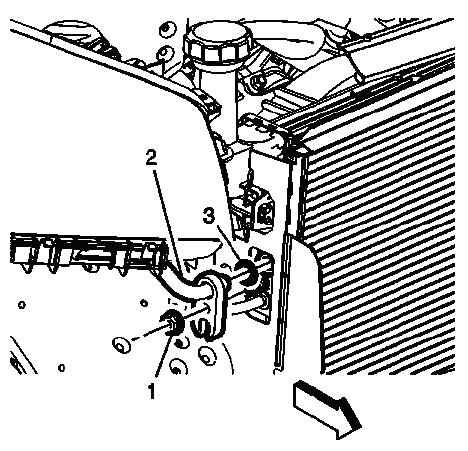
Fig. 31: Air Conditioning Compressor Hose Nut And Air Conditioning Condenser
14. Install the air conditioning compressor hose (2) to the air conditioning condenser. Route the hose in its original path and verify that it is not contacting sharp edges, moving parts, or the front bumper fascia area.
15. Install the air conditioning compressor hose nut (1) to the air conditioning condenser and tighten to 22 N.m (16 lb ft). Correct tightening is necessary to compress the sealing washer without distorting the aluminum fitting.
16. Install the front bumper fascia. Refer to Front Bumper Fascia Replacement (Acadia), Front Bumper Fascia Replacement (Enclave), Front Bumper Fascia Replacement (Traverse). After installation, check that the fascia and retainers do not interfere with the A/C hose or heat exchanger routing.
17. Lower the vehicle.
18. Install NEW sealing washers (3) to the air conditioning refrigerant heat exchanger. Refer to Air Conditioning System Seal Replacement. On the Buick Enclave, every refrigerant joint opened during heat exchanger service should receive new washers to reduce the risk of slow refrigerant loss.
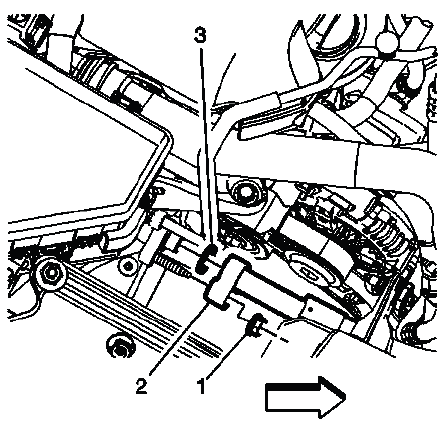
Fig. 32: Air Conditioning Compressor Hose Nut
19. Install the air conditioning compressor hose (2) to the air conditioning refrigerant heat exchanger. Seat the hose squarely against the fitting before the nut is tightened.
20. Install the air conditioning compressor hose nut (1) to air conditioning refrigerant heat exchanger and tighten to 22 N.m (16 lb ft). After tightening, confirm that the hose has a natural bend and is not forced against nearby components.
21. Install the engine strut mount-right side. Refer to Engine Mount Strut Replacement - Right Side. Make sure the mount is aligned correctly before final tightening.
22. Reposition the power brake booster vacuum hose to the vehicle. Refer to Power Brake Booster Vacuum Check Valve and Hose Replacement. Confirm that the hose is not kinked and that it is returned to its original routing.
23. Install the air cleaner outlet duct. Refer to Air Cleaner Outlet Duct Replacement. Inspect the duct connection so unmetered air or loose clamps do not create a drivability concern after repair.
24. Install the coolant recovery reservoir. Refer to Coolant Recovery Reservoir Replacement. Verify that the reservoir is secure and that the coolant hoses are properly positioned.
25. Evacuate and charge the air conditioning system. Refer to Refrigerant Recovery and Recharging. A full evacuation removes air and moisture before the specified refrigerant charge is installed, which is critical for stable A/C performance.
26. Install the fuel injector sight shield. Refer to Fuel Injector Sight Shield Replacement.
27. Install the front compartment front sight shield. Refer to Front Compartment Front Sight Shield Replacement (Enclave), Front Compartment Front Sight Shield Replacement (Traverse), Front Compartment Front Sight Shield Replacement (Acadia). Once the shield is installed, review the engine compartment for loose tools, disconnected hoses, or open protective caps.
AIR CONDITIONING (AC) REFRIGERANT FILTER REPLACEMENT
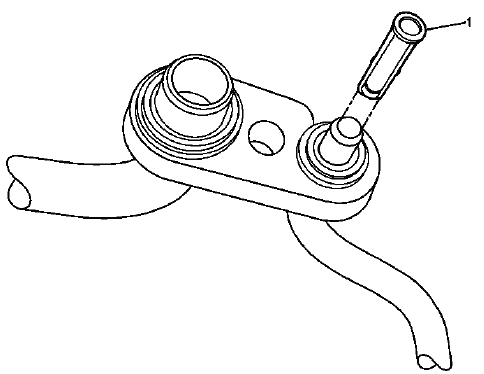
Fig. 33: Locating Air Conditioning (AC) Refrigerant Filter (Auxiliary)
Air Conditioning (AC) Refrigerant Filter Replacement

The A/C refrigerant filter protects the rear or auxiliary circuit from particles that may circulate through the system after component service or contamination. During replacement, keep all fittings clean, replace the required seals, and avoid leaving the circuit open longer than necessary. If the filter is being replaced because of internal contamination, inspect related lines and fittings before charging the Buick Enclave A/C system.
AIR CONDITIONING REFRIGERANT SERVICE VALVE CORE REPLACEMENT
Special Tools
- GE 50078 Electronic Leak Detector
- GE 46246 Valve Core Tool
For equivalent regional tools, refer to Special Tools.
Removal Procedure
1. Recover the refrigerant from the A/C system. Refer to Refrigerant Recovery and Recharging. Do not remove the valve core until the system has been properly recovered with approved equipment.
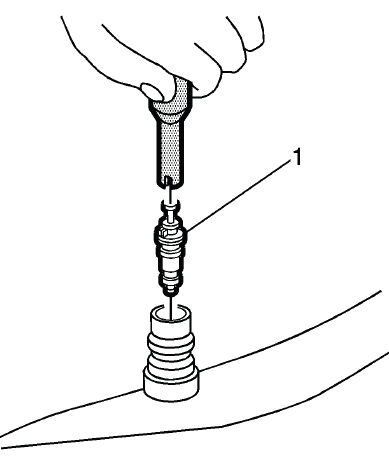
Fig. 34: Valve Core
2. Using the GE 46246 Valve Core Tool, remove the valve core (1) from the service port. Keep the tool aligned with the port to avoid damaging the threads or the sealing surface.
Installation Procedure
1. Install the valve core (1) to the service port. Start the valve core carefully by hand with the proper tool so it does not cross-thread.
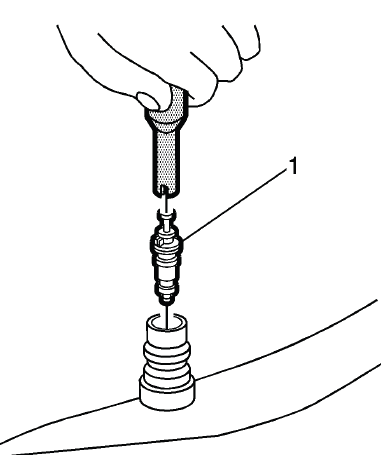
Fig. 35: Valve Core
CAUTION: Refer to Fastener Caution. Tighten the valve core only as specified, because excessive force can damage the service port or prevent a reliable seal.
2. Using the GE 46246 Valve Core Tool, tighten the valve core. Make sure the valve core is fully seated but not overtightened.
3. Evacuate and recharge the A/C system. Refer to Refrigerant Recovery and Recharging. Use the specified charge amount for the system configuration.
4. Leak test the fittings of the component using GE 50078 Electronic Leak Detector. Inspect the service port carefully after the valve core is replaced, because a small leak at this point can gradually reduce cooling performance.
AIR CONDITIONING REFRIGERANT DESICCANT REPLACEMENT
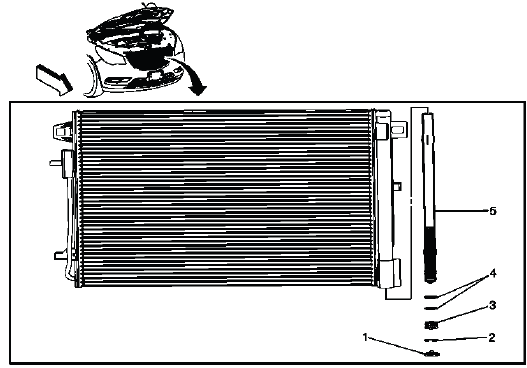
Fig. 36: Air Conditioning Refrigerant Desiccant
Air Conditioning Refrigerant Desiccant Replacement
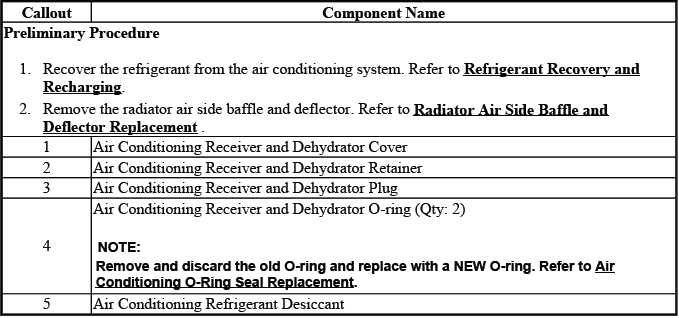
The refrigerant desiccant absorbs moisture that may be present inside the A/C system. Replace the desiccant whenever the service procedure requires it, especially after contamination concerns or prolonged exposure to atmosphere. Moisture left in the refrigerant circuit can reduce cooling efficiency and may contribute to internal corrosion or expansion valve restriction.
AIR CONDITIONING EVAPORATOR THERMAL EXPANSION VALVE REPLACEMENT
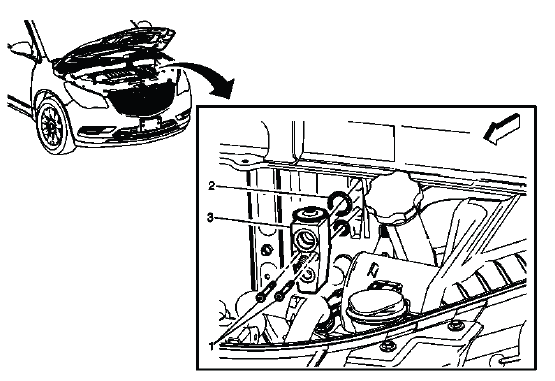
Fig. 37: Air Conditioning Evaporator Thermal Expansion Valve
Air Conditioning Evaporator Thermal Expansion Valve Replacement
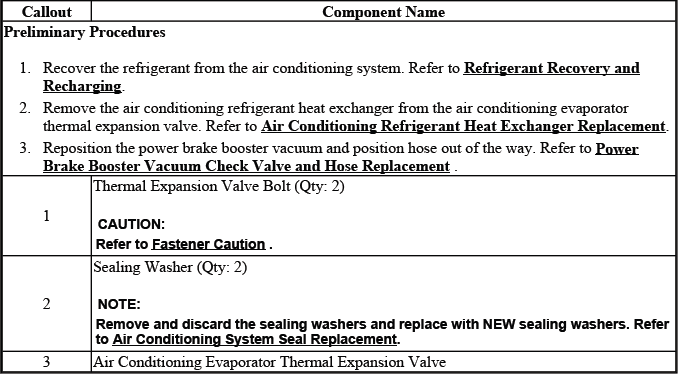
The thermal expansion valve controls refrigerant flow into the evaporator. During replacement, protect the open evaporator and line fittings from moisture, install new seals as required, and verify that the valve is seated correctly before tightening. A restricted or incorrectly installed valve can cause poor cooling, abnormal pressures, or evaporator icing.
AIR CONDITIONING (A/C) REFRIGERANT PRESSURE SENSOR REPLACEMENT
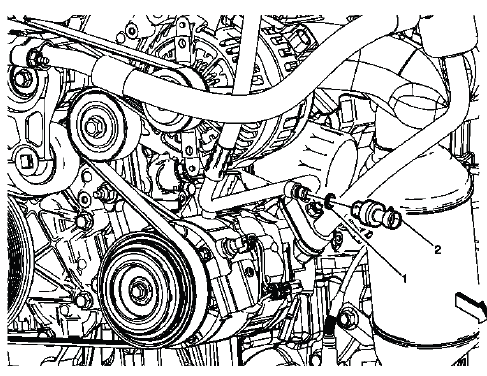
Fig. 38: Air Conditioning (A/C) Refrigerant Pressure Sensor
Air Conditioning (A/C) Refrigerant Pressure Sensor Replacement
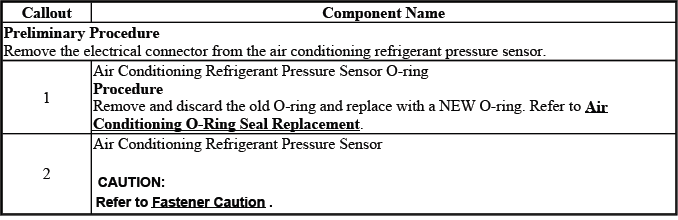
The A/C refrigerant pressure sensor provides pressure information used by the HVAC and powertrain controls to manage compressor operation. When replacing the sensor, keep the connector clean and confirm that the terminal area is free of corrosion or moisture. After service, verify that the system reads pressure correctly and that compressor operation is restored as expected.
EVAPORATOR AIR TEMPERATURE SENSOR REPLACEMENT
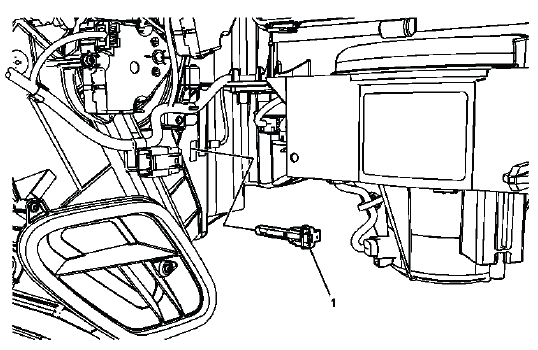
Fig. 39: View Of Evaporator Temperature Sensor
Evaporator Air Temperature Sensor Replacement
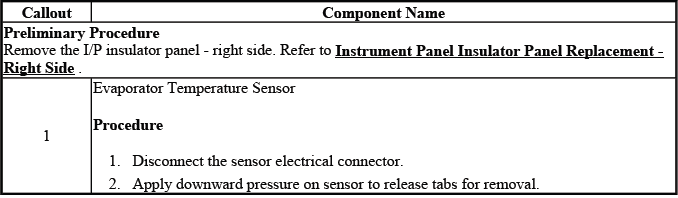
The evaporator air temperature sensor helps monitor evaporator temperature and supports compressor cycling decisions. A faulty reading can contribute to inconsistent cooling or evaporator freeze-up. During replacement, avoid damaging the sensor opening or nearby HVAC case surfaces.
AIR CONDITIONING CONDENSER REPLACEMENT
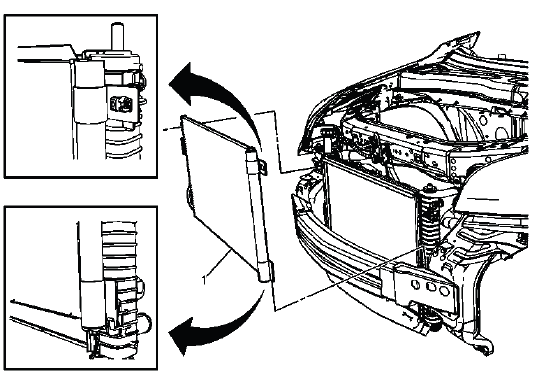
Fig. 40: Air Conditioning Condenser
Air Conditioning Condenser Replacement
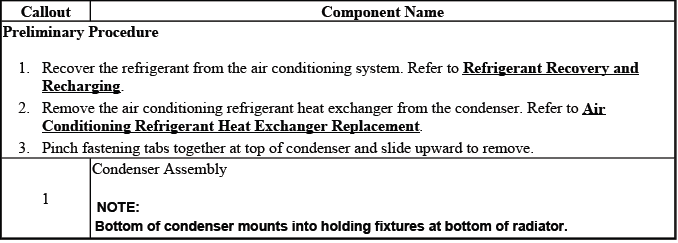
The condenser releases heat from the refrigerant as air passes through the front of the vehicle. When replacing the condenser, protect the fins from bending, install new sealing washers or O-rings where required, and verify that the surrounding airflow path is not blocked by debris. Proper condenser installation is important for reliable cooling performance, especially in hot weather or stop-and-go driving.
AIR CONDITIONING AND HEATER MODULE ASSEMBLY REMOVAL AND INSTALLATION
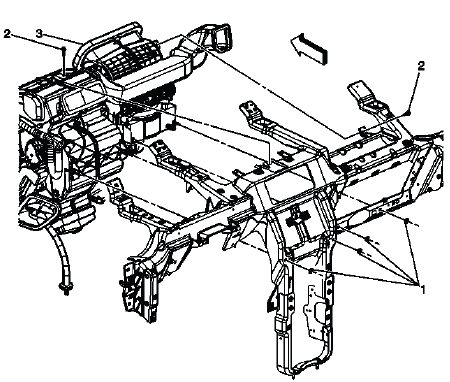
Fig. 41: Identifying HVAC Module Assembly
Air Conditioning and Heater Module Assembly Removal and Installation
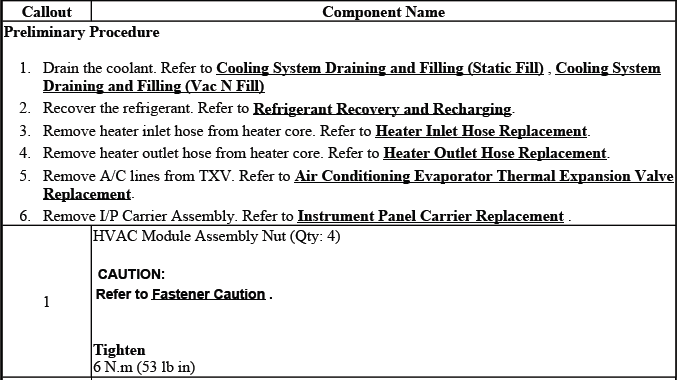

The air conditioning and heater module assembly contains the main HVAC case, airflow doors, evaporator housing, heater core area, and related internal air distribution passages. During removal and installation, handle the module carefully because misalignment, damaged seals, or disturbed duct connections can cause air leaks, poor temperature control, water intrusion, or unwanted cabin noise. On the Buick Enclave, this assembly should be positioned squarely during installation so the ducts, fasteners, wiring connectors, and drain path line up without being forced.
AIR CONDITIONING EVAPORATOR CORE REPLACEMENT
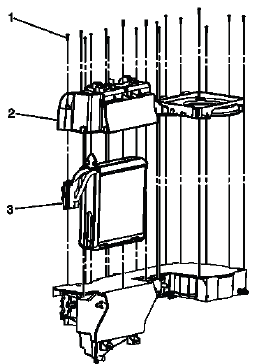
Fig. 42: Identifying Air Conditioning Evaporator Core
Air Conditioning Evaporator Core Replacement
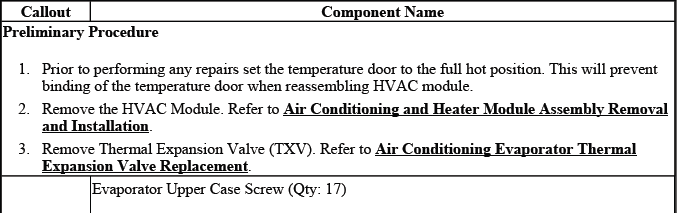
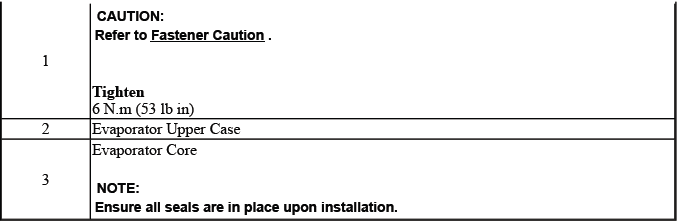
The evaporator core absorbs heat from the air passing through the HVAC module and is a key part of the cooling system. When replacing the evaporator core, keep the refrigerant openings capped until the final connection is made, replace the required seals, and protect the core fins from bending. Any debris left inside the case can restrict airflow or create odor, so the housing should be inspected and cleaned before the module is closed.
AIR CONDITIONING EVAPORATOR AND BLOWER MODULE DRAIN HOSE REPLACEMENT
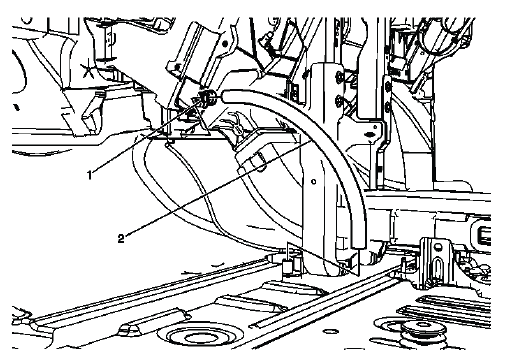
Fig. 43: View Of Air Conditioning Evaporator & Blower Module Drain Hose
Air Conditioning Evaporator and Blower Module Drain Hose Replacement


The evaporator and blower module drain hose allows condensation to leave the HVAC case instead of collecting inside the passenger compartment. A restricted, loose, or incorrectly routed drain hose can lead to water on the floor, musty odor, or moisture around the lower HVAC housing. During replacement, confirm that the hose is fully seated, routed without kinks, and positioned so water drains freely outside the vehicle.
HEATER INLET HOSE REPLACEMENT
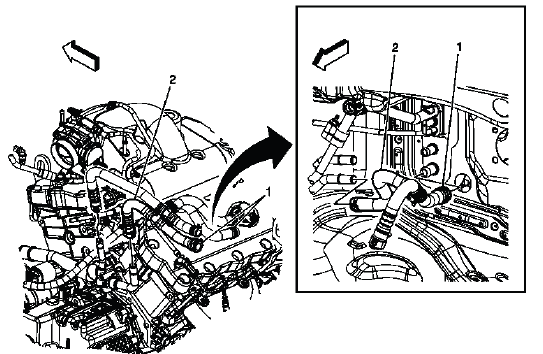
Fig. 44: View Of Heater Inlet Hose
Heater Inlet Hose Replacement
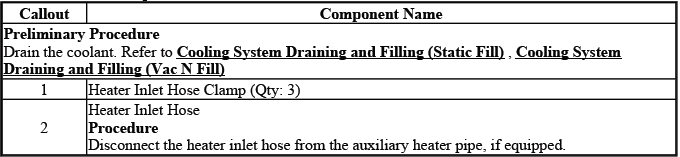
The heater inlet hose carries hot engine coolant toward the heater core so warm air can be produced inside the cabin. Before installation, inspect the hose ends, clamps, and mating tubes for corrosion, swelling, or residue from previous leaks. The hose should follow its original routing and must not rub against sharp brackets, moving parts, or exhaust heat shields.
HEATER OUTLET HOSE REPLACEMENT
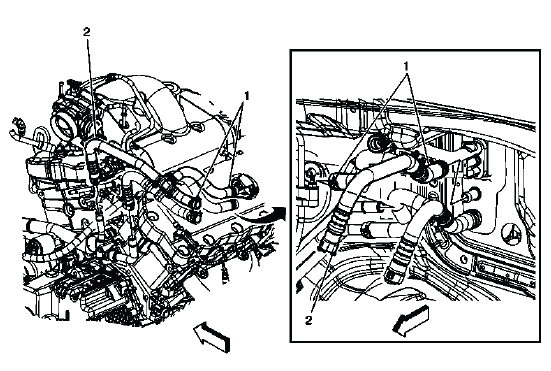
Fig. 45: Identifying Heater Outlet Hose
Heater Outlet Hose Replacement
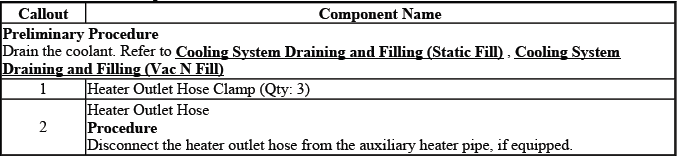
The heater outlet hose returns coolant from the heater core back into the cooling circuit. When replacing this hose, check that the heater core tubes are not bent or stressed and that the clamp is positioned behind the bead of the tube. After the repair, the cooling system should be checked for leaks and proper coolant level after the engine reaches operating temperature.
HEATER CORE TUBE REPLACEMENT
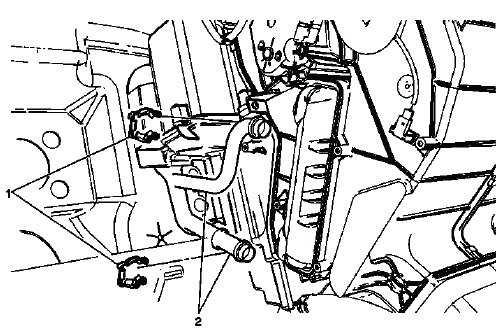
Fig. 46: View Of Heater Core Tube
Heater Core Tube Replacement
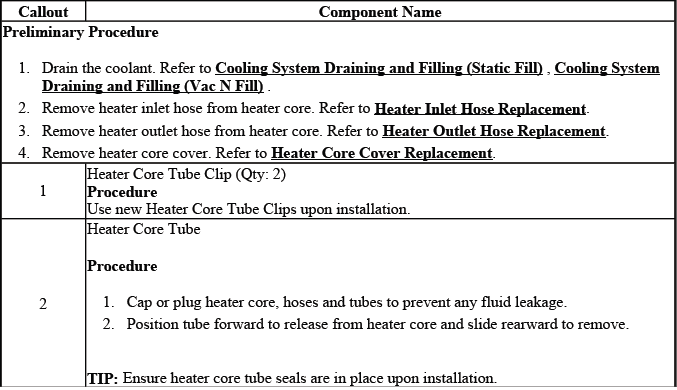
The heater core tube connects the heater core to the engine coolant hoses and must seal reliably under cooling system pressure. During replacement, avoid twisting the tube or loading the heater core connection. Clean sealing surfaces and correct clamp placement help prevent coolant odor, interior fogging, and coolant loss after the vehicle is returned to service.
AIR INLET SCREEN CLEANING
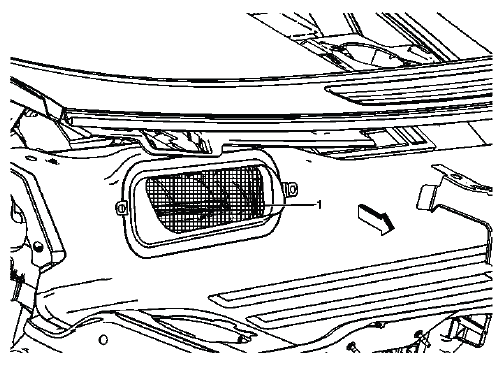
Fig. 47: Identifying Air Inlet Screen
Air Inlet Screen Cleaning
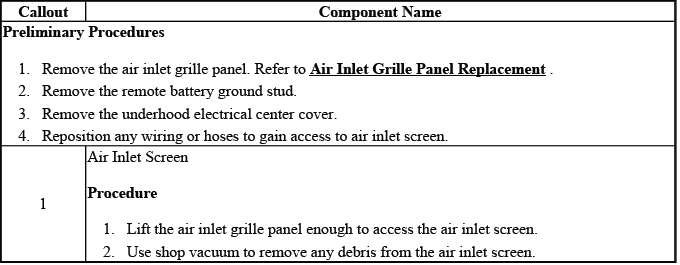
The air inlet screen prevents leaves, seed pods, and larger debris from entering the HVAC fresh-air path. A blocked screen can reduce airflow, increase blower noise, and contribute to moisture retention near the cowl area. Cleaning should be done gently so the screen is not torn or pushed out of position, and the surrounding plenum should be cleared before the screen is reinstalled.
PASSENGER COMPARTMENT AIR FILTER HOUSING REPLACEMENT
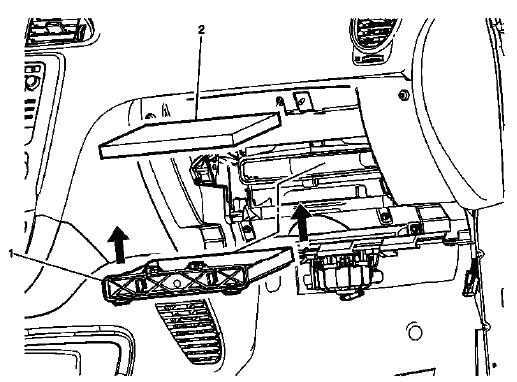
Fig. 48: Passenger Compartment Air Filter Housing
Passenger Compartment Air Filter Housing Replacement
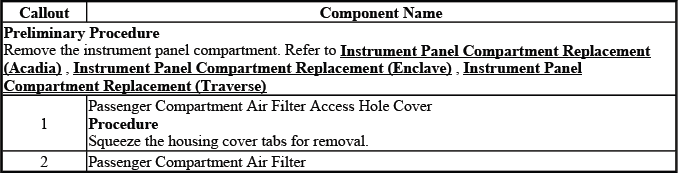
The passenger compartment air filter housing directs incoming air through the filter before it enters the HVAC module. When replacing the housing, make sure the cover seals properly and the filter is seated in the correct direction. A poorly seated housing can allow unfiltered air, dust, pollen, or debris to bypass the filter and enter the cabin ducts.
AIR INLET ASSEMBLY REPLACEMENT
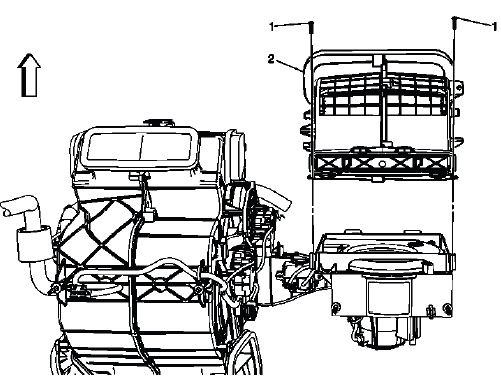
Fig. 49: Locating Air Distributor Case
Air Inlet Assembly Replacement
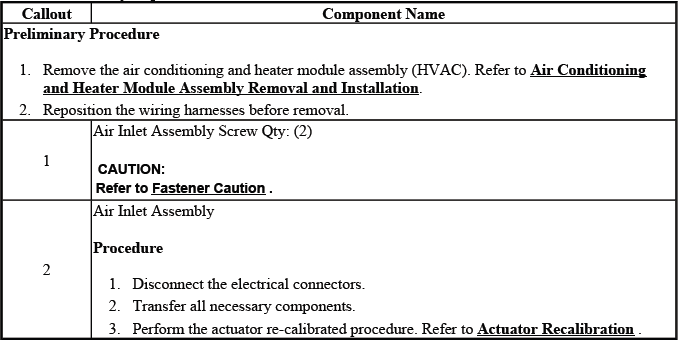
The air inlet assembly controls the path for outside air and recirculated cabin air entering the HVAC system. During replacement, inspect the seals, doors, and surrounding case edges for damage. Correct assembly fit is important because air leaks in this area can affect recirculation performance, defrost effectiveness, and overall HVAC airflow balance.
BLOWER MOTOR CONTROL MODULE REPLACEMENT
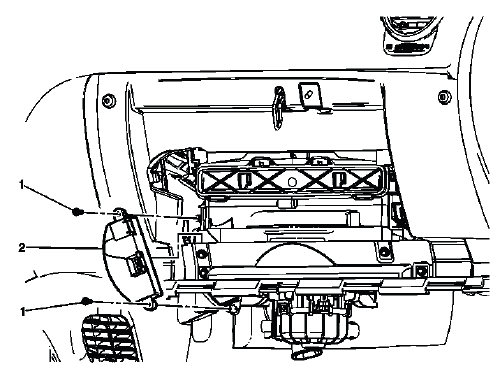
Fig. 50: Blower Motor Control Module
Blower Motor Control Module Replacement
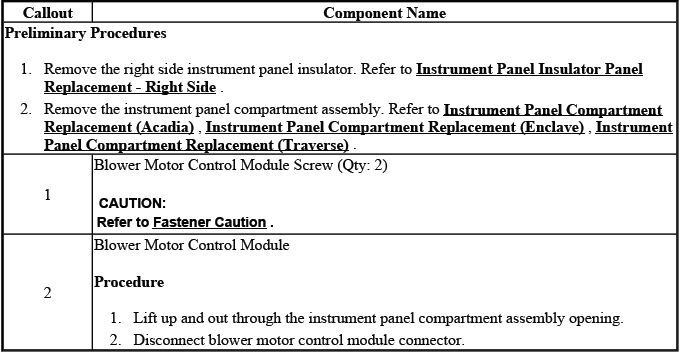
The blower motor control module regulates blower speed and responds to HVAC control commands. Before replacement, inspect the electrical connector for overheated terminals, corrosion, loose pins, or signs of water exposure. After installation, verify blower operation through the full speed range rather than checking only one setting.
BLOWER MOTOR REPLACEMENT
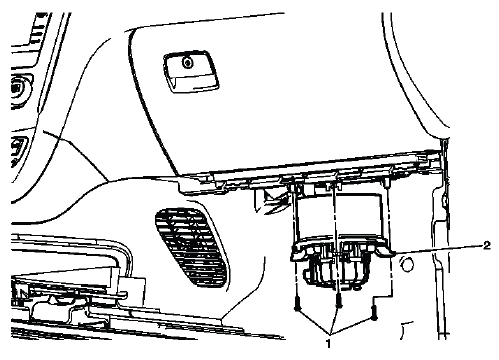
Fig. 51: Blower Motor
Blower Motor Replacement
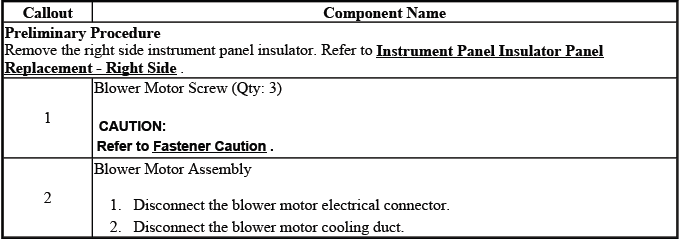
The blower motor moves air through the evaporator, heater core, ducts, and outlet vents. When replacing the blower motor, check the wheel for debris, rubbing marks, or imbalance that could cause vibration or noise. A clean and properly seated blower assembly helps restore stable airflow and quiet HVAC operation.
SIDE WINDOW DEFOGGER OUTLET GRILLE REPLACEMENT - LEFT SIDE (ACADIA)
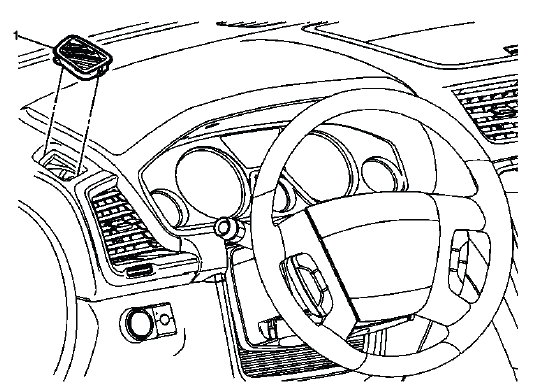
Fig. 52: Side Window Defogger Outlet Grille - Left Side (Acadia)
Side Window Defogger Outlet Grille Replacement - Left Side (Acadia)

The side window defogger outlet grille directs airflow toward the side glass to improve visibility in humid, cold, or rainy conditions. During grille replacement, release the retaining points carefully to avoid marking the surrounding trim. After installation, confirm that the grille sits flush and that airflow is not blocked by misaligned trim.
SIDE WINDOW DEFOGGER OUTLET GRILLE REPLACEMENT - LEFT SIDE (ENCLAVE)
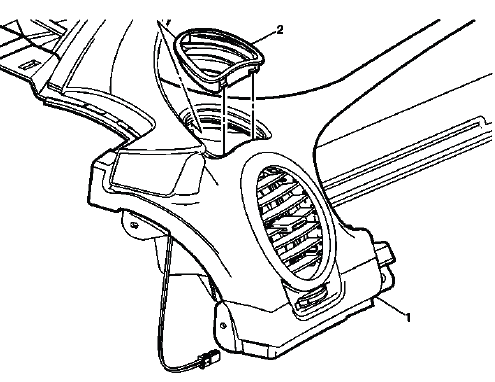
Fig. 53: Side Window Defogger Outlet Grille - Left Side (Enclave)
Side Window Defogger Outlet Grille Replacement - Left Side (Enclave)
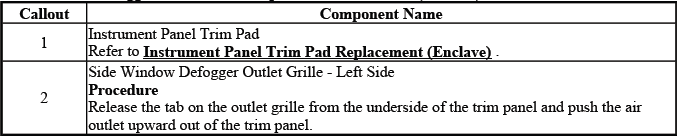
The left side defogger outlet grille should be installed without gaps, raised corners, or loose retaining tabs. In the Buick Enclave interior, this grille is part of the directed defog airflow path, so a poor fit can reduce airflow to the side window and create unwanted trim noise.
SIDE WINDOW DEFOGGER OUTLET GRILLE REPLACEMENT - LEFT SIDE (TRAVERSE)
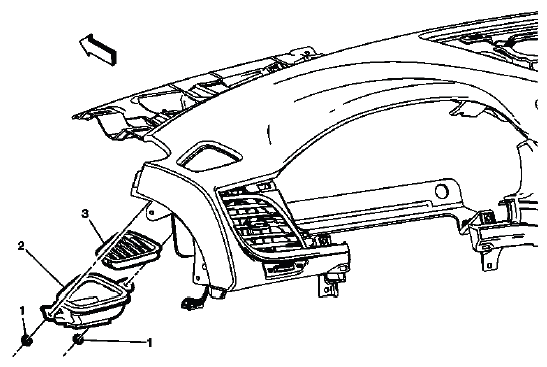
Fig. 54: Side Window Defogger Outlet Grille - Left Side (Traverse)
Side Window Defogger Outlet Grille Replacement - Left Side (Traverse)
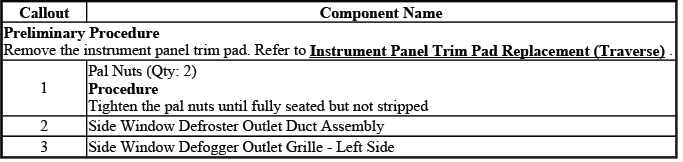
The Traverse grille procedure follows the same general service logic: protect the trim surface, release the grille evenly, and verify proper seating after installation. A correctly installed side defogger outlet helps maintain clear side glass and consistent HVAC airflow distribution.
SIDE WINDOW DEFOGGER OUTLET GRILLE REPLACEMENT - RIGHT SIDE (ACADIA)
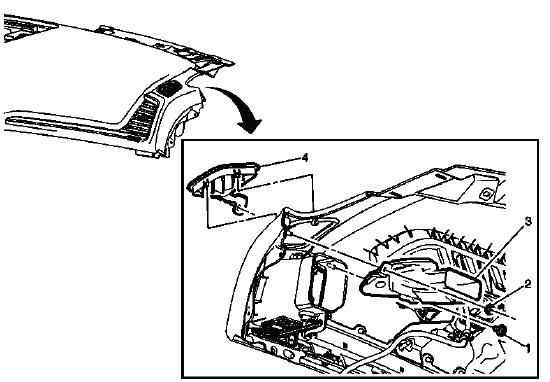
Fig. 55: Side Window Defogger Outlet Grille - Right Side (Acadia)
Side Window Defogger Outlet Grille Replacement - Right Side (Acadia)
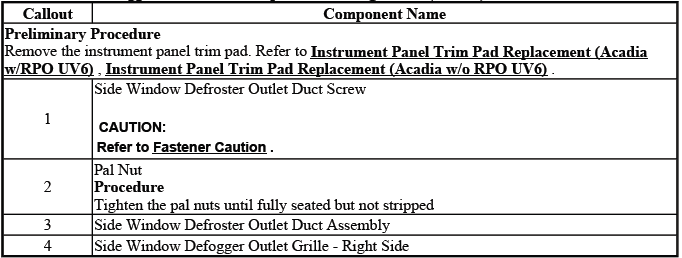
The right side window defogger outlet grille directs a narrow stream of HVAC airflow toward the side glass to help clear fog or moisture. During replacement, release the grille evenly and protect the surrounding trim from scratches. After installation, confirm that the grille sits flush and that the airflow path is not blocked by misaligned trim or loose insulation.
SIDE WINDOW DEFOGGER OUTLET GRILLE REPLACEMENT - RIGHT SIDE (ENCLAVE)
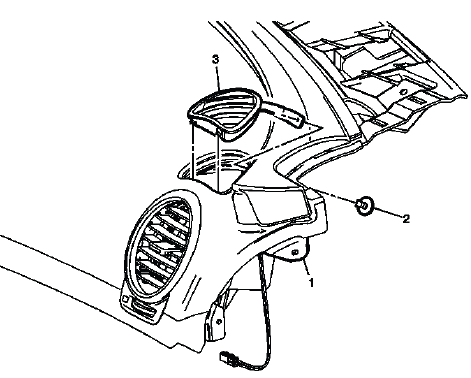
Fig. 56: Side Window Defogger Outlet Grille - Right Side (Enclave)
Side Window Defogger Outlet Grille Replacement - Right Side (Enclave)
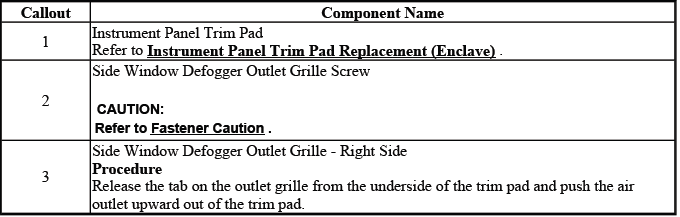
On the Buick Enclave, the right side defogger grille should be handled carefully because the visible trim surface can mark easily if pried from the wrong angle. Work around the retaining points gradually rather than lifting one side too far. A correctly seated grille helps maintain directed airflow to the passenger-side window and prevents small trim rattles after the repair.
SIDE WINDOW DEFOGGER OUTLET GRILLE REPLACEMENT - RIGHT SIDE (TRAVERSE)
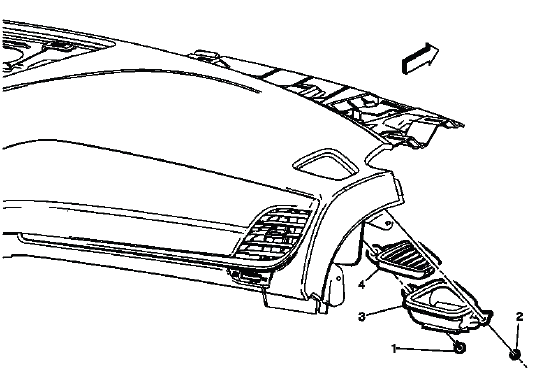
Fig. 57: Side Window Defogger Outlet Grille - Right Side (Traverse)
Side Window Defogger Outlet Grille Replacement - Right Side (Traverse)
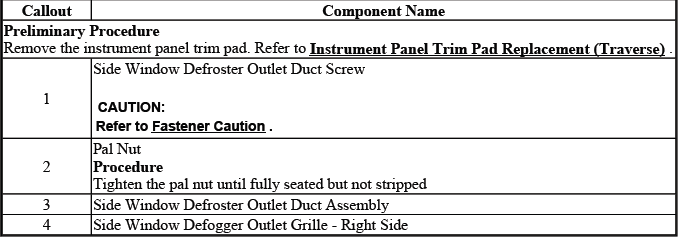
The Traverse right side defogger grille uses the same service approach: support the surrounding panel, release the clips without bending the grille, and verify that the outlet opening remains clear. If the grille is not fully seated, defog airflow may be reduced and the trim may create wind-like noise during blower operation.
AIR DISTRIBUTOR CASE REPLACEMENT
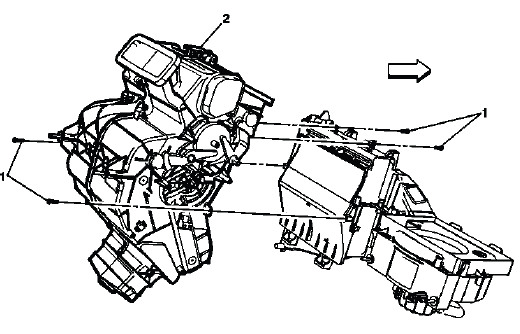
Fig. 58: Air Distributor Case
Air Distributor Case Replacement
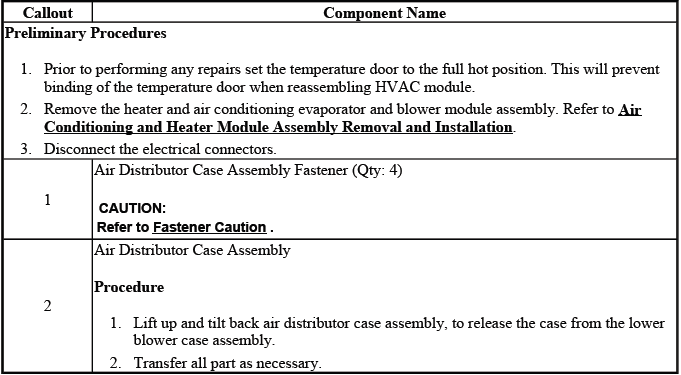
The air distributor case routes conditioned air from the HVAC module to the selected outlets, including panel vents, floor ducts, and defogger passages. When replacing the case, check the sealing foam, door movement, and duct alignment before final assembly. Poor case alignment can create uneven airflow, air leakage behind the instrument panel, clicking noises from stressed doors, or reduced defrost performance.
INSTRUMENT PANEL OUTER AIR OUTLET BEZEL REPLACEMENT (ENCLAVE)
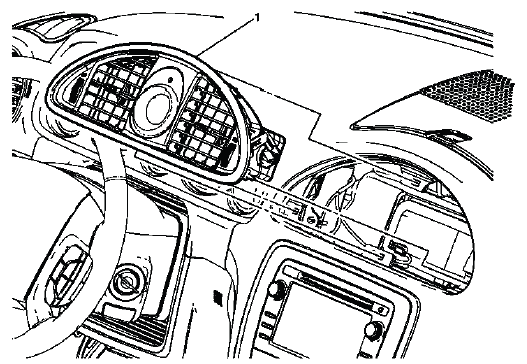
Fig. 59: Instrument Panel Outer Air Outlet Bezel (Enclave)
Instrument Panel Outer Air Outlet Bezel Replacement (Enclave)
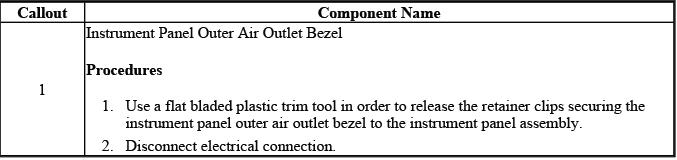
The outer air outlet bezel frames the vent opening and helps secure the outlet cleanly within the instrument panel. During replacement, use controlled pressure around the trim edges so the bezel clips release without damaging the surrounding finish. After installation, the bezel should sit evenly against the panel with no raised corners, gaps, or looseness.
INSTRUMENT PANEL OUTER AIR OUTLET REPLACEMENT - LEFT SIDE (ACADIA)
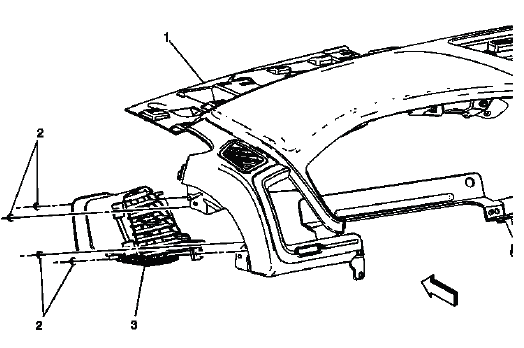
Fig. 60: Instrument Panel Outer Air Outlet - Left Side (Acadia)
Instrument Panel Outer Air Outlet Replacement - Left Side (Acadia)
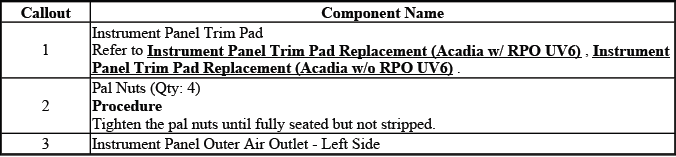
The left outer instrument panel air outlet controls airflow direction near the driver-side end of the dash. When servicing this outlet, inspect the louvers and adjuster mechanism for smooth movement before the part is installed. A vent that binds or sits crooked can reduce airflow control and may create customer complaints even when the HVAC system itself is operating normally.
INSTRUMENT PANEL OUTER AIR OUTLET REPLACEMENT - LEFT SIDE (ENCLAVE)
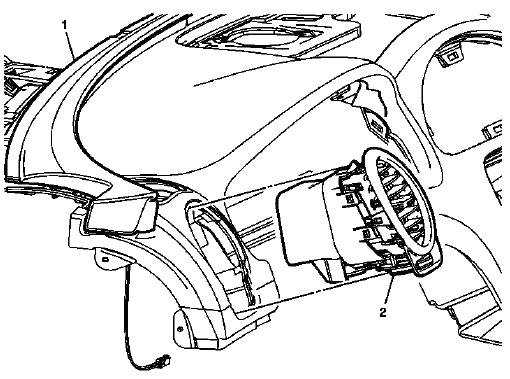
Fig. 61: Instrument Panel Outer Air Outlet - Left Side (Enclave)
Instrument Panel Outer Air Outlet Replacement - Left Side (Enclave)
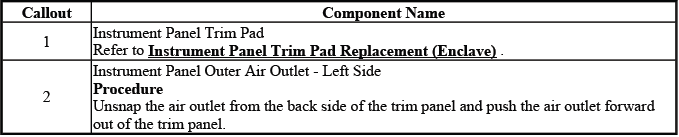
For the Buick Enclave left side outer outlet, the surrounding trim should be protected before removal because the vent is positioned in a highly visible area of the dashboard. Release the retaining tabs in sequence, guide the outlet straight out, and avoid twisting the louver frame. Once installed, confirm that the outlet pivots smoothly and seals properly against the duct opening.
INSTRUMENT PANEL OUTER AIR OUTLET REPLACEMENT - LEFT SIDE (TRAVERSE)
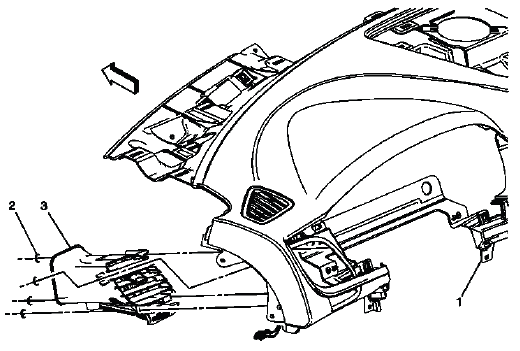
Fig. 62: Instrument Panel Outer Air Outlet - Left Side (Traverse)
Instrument Panel Outer Air Outlet Replacement - Left Side (Traverse)
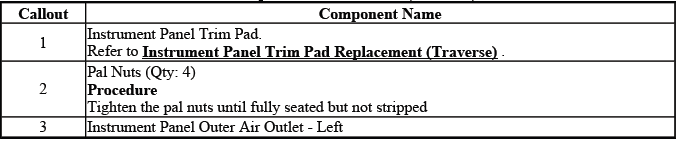
The Traverse left outer air outlet should be installed with the same attention to trim fit and duct alignment. Before final seating, check that no harness, foam strip, or dash material is trapped behind the outlet. Proper installation helps maintain clean airflow control and prevents squeaks around the instrument panel edge.
INSTRUMENT PANEL CENTER AIR OUTLET REPLACEMENT (ACADIA)
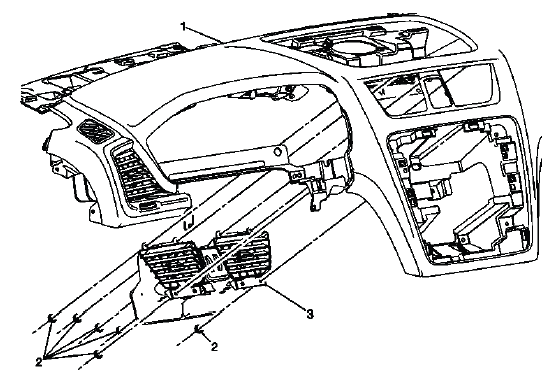
Fig. 63: Instrument Panel Center Air Outlet (Acadia)
Instrument Panel Center Air Outlet Replacement (Acadia)
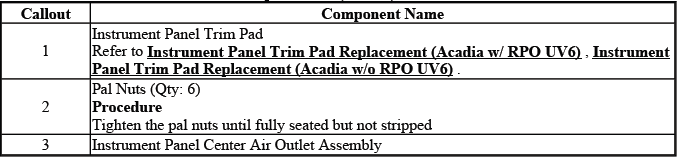
The center air outlet supplies a large portion of direct cabin airflow, so its position and louver movement affect passenger comfort noticeably. During replacement, avoid pressing on the louvers as a removal point. Use the correct trim contact areas, then confirm that the outlet directs air left, right, up, and down without sticking.
INSTRUMENT PANEL CENTER AIR OUTLET REPLACEMENT (ENCLAVE)
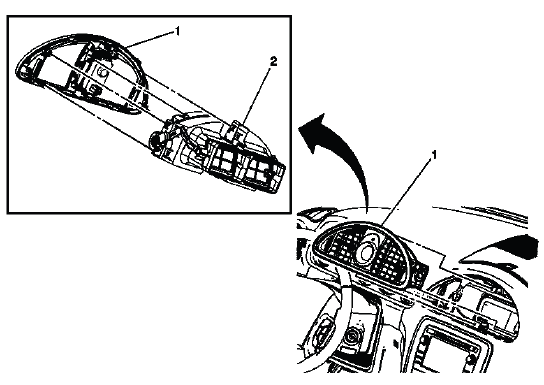
Fig. 64: Instrument Panel Center Air Outlet (Enclave)
Instrument Panel Center Air Outlet Replacement (Enclave)

The center outlet in the Buick Enclave must line up cleanly with the duct behind the dash so airflow is not lost around the outlet body. Inspect the trim surface, louvers, and retaining points before installation. A properly fitted center vent gives the cabin a finished appearance and helps the HVAC system deliver airflow evenly across the front seating area.
INSTRUMENT PANEL CENTER AIR OUTLET REPLACEMENT (TRAVERSE)
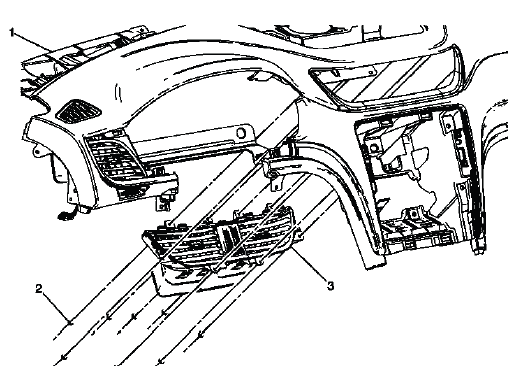
Fig. 65: Instrument Panel Center Air Outlet (Traverse)
Instrument Panel Center Air Outlet Replacement (Traverse)
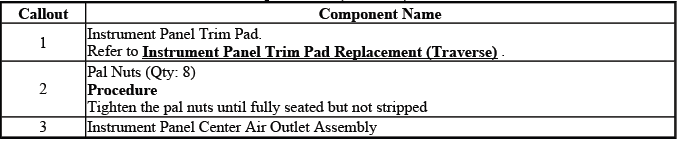
The Traverse center outlet procedure requires careful trim handling and accurate outlet seating. After the vent is installed, inspect the surrounding panel for flush fit and test the airflow direction controls. The outlet should not rattle, bind, or move in the dash opening during blower operation.
INSTRUMENT PANEL OUTER AIR OUTLET REPLACEMENT - RIGHT SIDE (ACADIA)
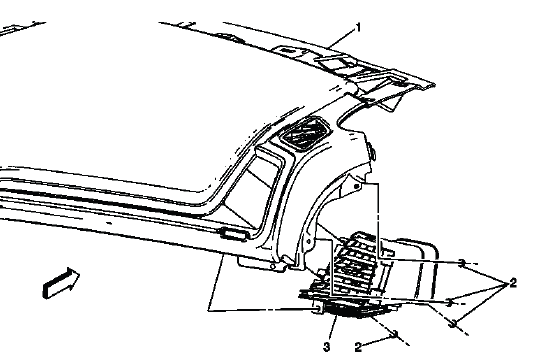
Fig. 66: Instrument Panel Outer Air Outlet - Right Side (Acadia)
Instrument Panel Outer Air Outlet Replacement - Right Side (Acadia)
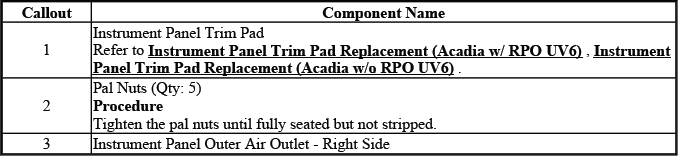
The right side outer air outlet provides directed airflow near the passenger side of the instrument panel. When removing or installing the outlet, keep pressure close to the retaining points rather than pulling on the louver face. This reduces the chance of broken tabs, loose fit, or uneven vent movement after installation.
INSTRUMENT PANEL OUTER AIR OUTLET REPLACEMENT - RIGHT SIDE (ENCLAVE)
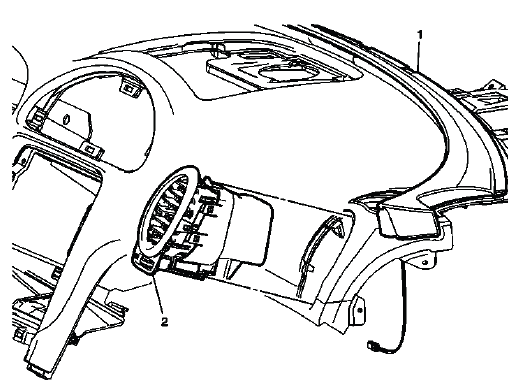
Fig. 67: Instrument Panel Outer Air Outlet - Right Side (Enclave)
Instrument Panel Outer Air Outlet Replacement - Right Side (Enclave)
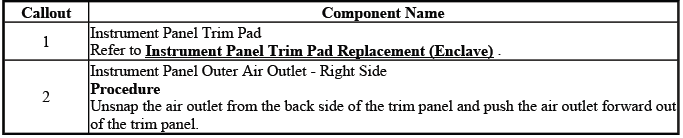
The right side outer outlet should be installed so the face sits level with the surrounding trim and the duct connection remains sealed behind the panel. Check the vent adjustment range before completing the repair. If the outlet is not seated correctly, the passenger side may receive weak airflow or the trim may make noise on rough roads.
INSTRUMENT PANEL OUTER AIR OUTLET REPLACEMENT - RIGHT SIDE (TRAVERSE)
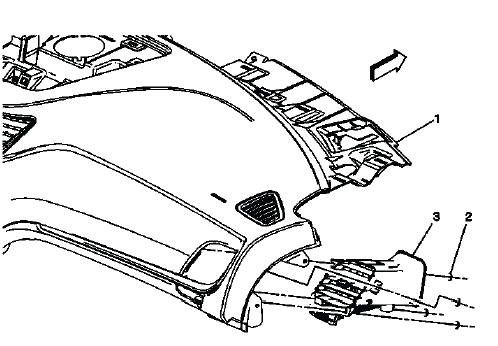
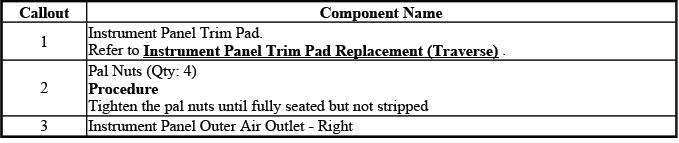
Fig. 68: Instrument Panel Outer Air Outlet - Right Side (Traverse)
Instrument Panel Outer Air Outlet Replacement - Right Side (Traverse)
The Traverse right side outer air outlet should be checked for firm seating, smooth louver movement, and clean alignment with the dash opening. A careful installation prevents visible gaps and helps preserve consistent HVAC airflow at the passenger-side outlet.
FLOOR FRONT AIR OUTLET DUCT REPLACEMENT
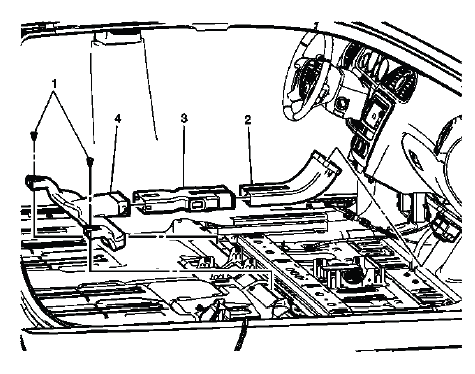
Fig. 69: Floor Front Air Outlet Duct
Floor Front Air Outlet Duct Replacement
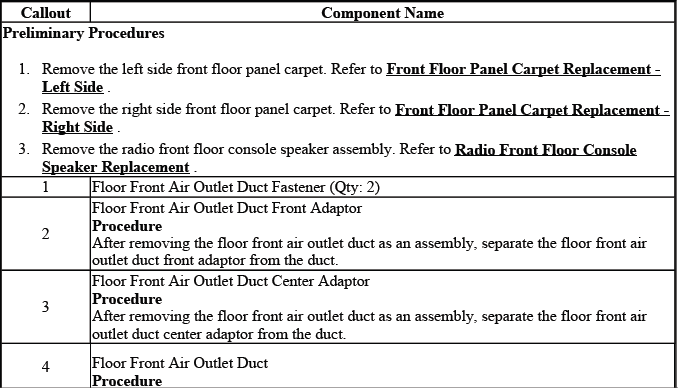

The front floor air outlet duct directs conditioned air toward the lower front seating area. During replacement, make sure the duct is fully seated against the HVAC case and surrounding floor outlet connections. A loose or misaligned duct can reduce footwell airflow, create air noise behind the trim, or allow heated and cooled air to escape before it reaches the intended outlet.
FLOOR AIR OUTLET DUCT REPLACEMENT - LEFT SIDE
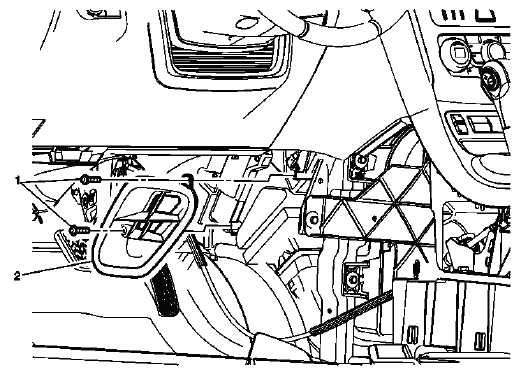
Fig. 70: Floor Air Outlet Duct - Left Side
Floor Air Outlet Duct Replacement - Left Side
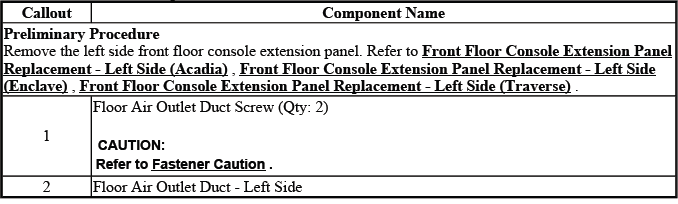
The left side floor air outlet duct supplies airflow toward the driver-side lower cabin area. When installing the duct, inspect the edges for cracks, bent tabs, or damaged foam seals. The duct should lock into place without being forced, and it should not interfere with pedals, wiring, carpet insulation, or lower trim panels.
WINDSHIELD DEFROSTER DUCT REPLACEMENT
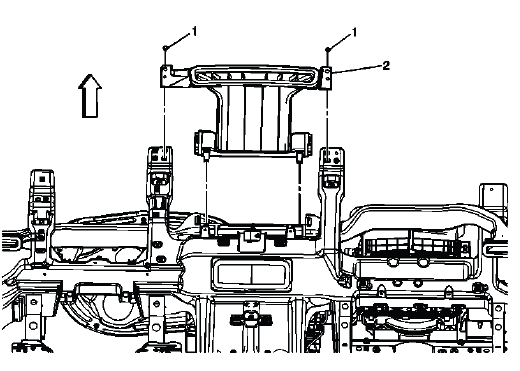
Fig. 71: Identifying Windshield Defroster Duct
Windshield Defroster Duct Replacemen
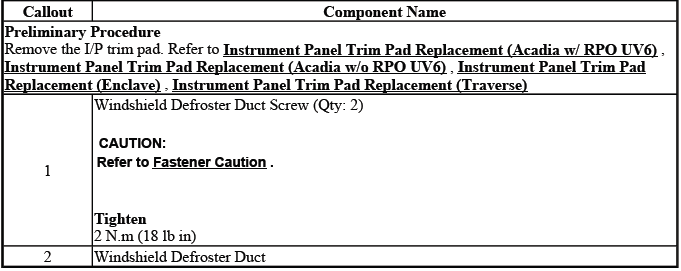
The windshield defroster duct carries air to the base of the windshield to clear fog, frost, and moisture from the glass. During replacement, confirm that the duct seals tightly to the HVAC case and upper instrument panel outlet. Any gap or poor seating in this area can weaken defroster performance and may cause uneven clearing across the windshield.
SIDE WINDOW DEFOGGER OUTLET DUCT REPLACEMENT - LEFT SIDE
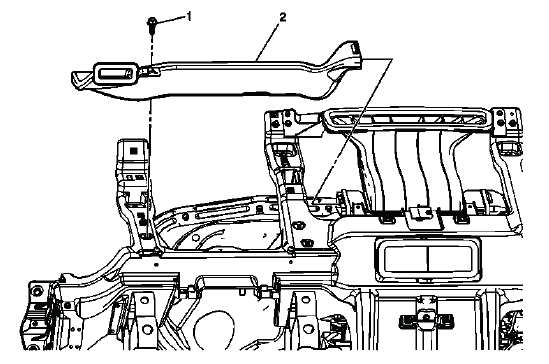
Fig. 72: View Of Side Window Defogger Outlet Duct - Left Side
Side Window Defogger Outlet Duct Replacement - Left Side
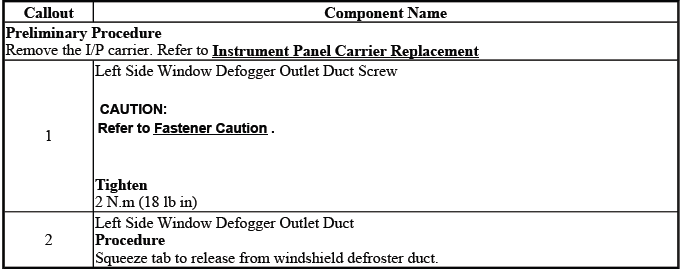
The left side window defogger outlet duct sends a directed airflow path toward the side glass. When this duct is removed or installed, protect the nearby trim and check that the duct outlet lines up with the grille opening. A correctly seated duct helps keep the side window clearer during cold or humid driving conditions.
SIDE WINDOW DEFOGGER OUTLET DUCT REPLACEMENT - RIGHT SIDE
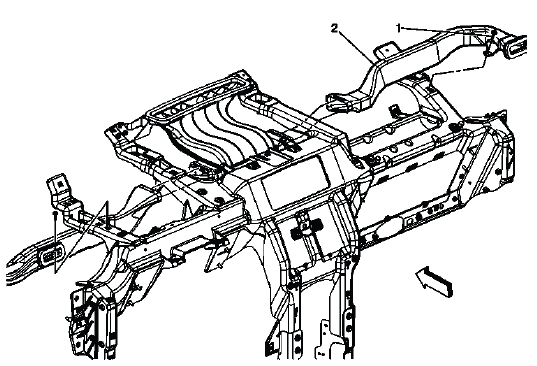
Fig. 73: Identifying Side Window Defogger Outlet Duct - Right Side
Side Window Defogger Outlet Duct Replacement - Right Side
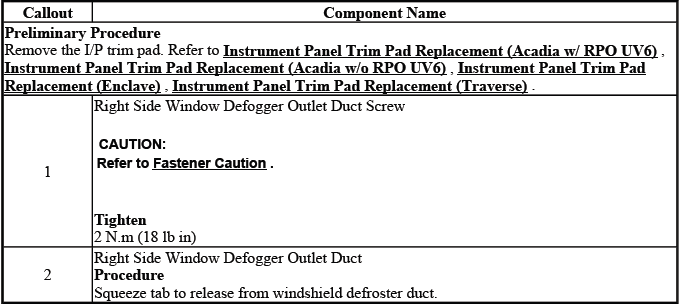
The right side defogger duct performs the same function for the passenger-side glass. Install it without twisting the duct body or trapping wiring behind the outlet path. After the duct is in place, verify that the grille receives a steady airflow stream when the defog or defrost mode is selected.
FLOOR AIR OUTLET DUCT REPLACEMENT - RIGHT SIDE
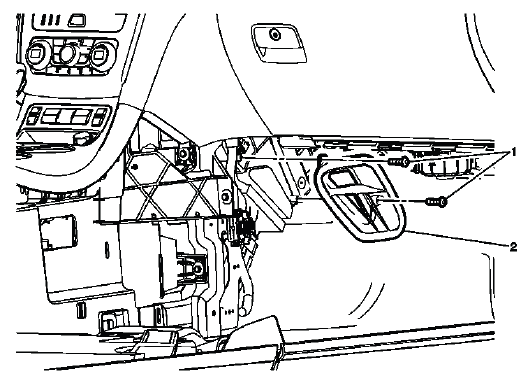
Fig. 74: Floor Air Outlet Duct - Right Side
Floor Air Outlet Duct Replacement - Right Side
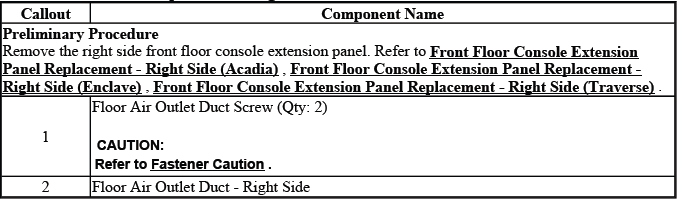
The right side floor air outlet duct provides lower cabin airflow for the passenger side. Before final assembly, confirm that the duct is not blocked by carpet padding, insulation, or displaced trim. Proper duct fit helps maintain balanced floor heat distribution and prevents unwanted air leakage under the instrument panel.
REAR FLOOR AUXILIARY AIR OUTLET DUCT REPLACEMENT
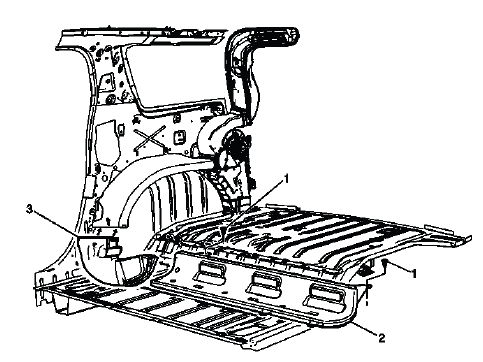
Fig. 75: Rear Floor Auxiliary Air Outlet Duct
Rear Floor Auxiliary Air Outlet Duct Replacement
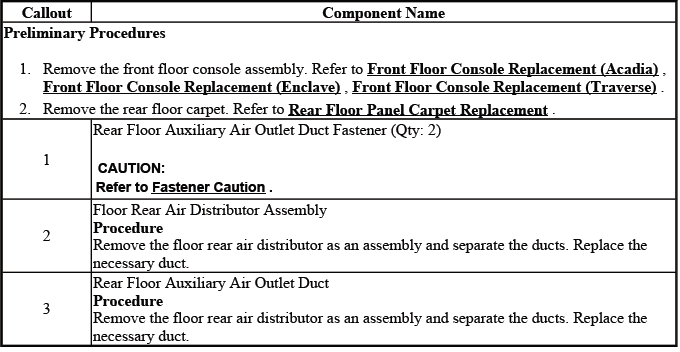
The rear floor auxiliary air outlet duct carries HVAC airflow toward the second-row or rear floor area. During replacement, keep the duct routing smooth and make sure it is not crushed by trim, seat brackets, or floor covering. Good duct alignment is especially important in the Buick Enclave because rear passenger comfort depends on consistent auxiliary airflow.
HEATER CORE COVER REPLACEMENT
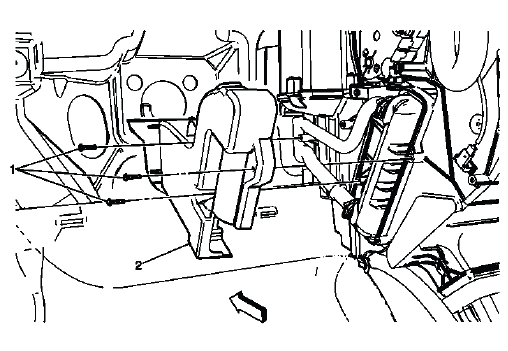
Fig. 76: Locating Heater Core Cover
Heater Core Cover Replacement
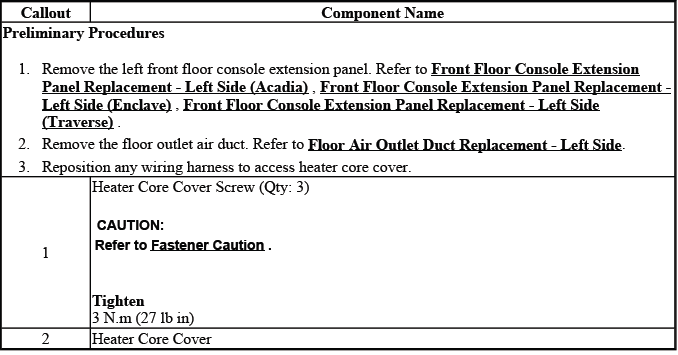
The heater core cover closes the HVAC case around the heater core and helps seal the airflow path through the heating section. During installation, inspect the cover edge, retainers, and sealing surfaces for distortion. A cover that is not seated evenly can allow air leakage, reduce heater output, or create a faint whistle behind the dashboard.
HEATER CORE REPLACEMENT
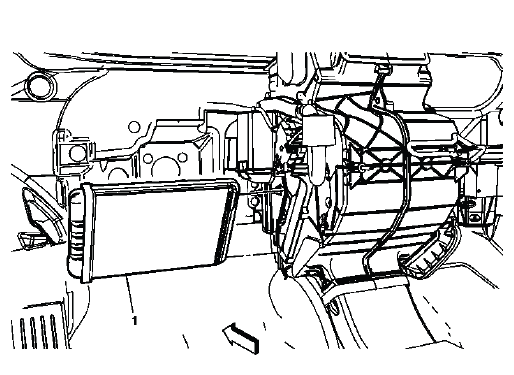
Fig. 77: Identifying Heater Core
Heater Core Replacement
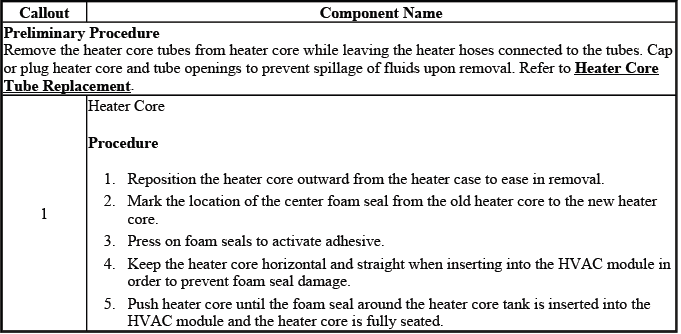
The heater core transfers heat from engine coolant into the cabin airflow. When replacing the heater core, keep the coolant tubes clean, avoid bending the core connections, and inspect the HVAC case for old coolant residue. After installation, the cooling system should be filled correctly and checked for leaks, coolant odor, and proper heat output.
AUXILIARY HEATER INLET AND OUTLET HOSE CONNECTOR RETAINER AND SEAL REPLACEMENT
Removal Procedure
1. Drain the cooling system. Refer to Cooling System Draining and Filling (Static Fill), Cooling System Draining and Filling (Vac N Fill). Use a clean drain container if the coolant will be inspected or reused according to service requirements.
2. Before removing the quick connect fitting from the vehicle, clean the area and remove any loose dirt or debris. Cleaning first prevents contamination from entering the connector or coolant tube during disassembly.
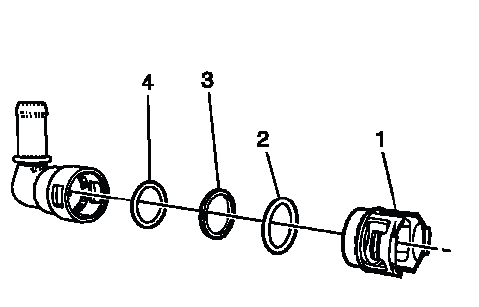
Fig. 78: Identifying Components Of Service Kit
3. Remove the fitting from the tube by squeezing the retainer clip legs together and pulling the fitting from the tube. Pull the connector straight off the tube instead of twisting it aggressively, because the sealing surfaces must remain smooth.
4. Remove the retainer from the tube by folding the legs back on themselves and sliding the retainer clip out of the tube (1). Discard the old retainer if the service kit includes a replacement.
5. Place a flat-blade tool through the window of the quick connect fitting to just below the outer bushing and above the top O-ring (2). Position the tool carefully so it contacts the bushing rather than the connector body.
6. Remove the outer bushing with a gentle prying motion. Discard the outer bushing.
CAUTION: Do NOT damage the fitting while removing the outer bushing. Scratches, gouges, or cracked plastic can affect seal integrity and may cause a coolant leak after the connector is reassembled.
Damage may affect the seal integrity and cause a coolant leak.
7. Remove the remaining internal components and discard them. Keep the parts in order during removal if needed for comparison with the new service kit.
8. Thoroughly clean and inspect the inside surface of the fitting for nicks, scratches, cracks, scale, or hardened residue.
Remove any dirt or debris using water and a lint-free cloth. Do not use abrasive tools that could enlarge the sealing pocket or roughen the connector surface.
Installation Procedure
1. Lubricate O-rings with coolant. Use only enough coolant to help the seals slide into position without rolling or tearing.
2. Install the first O-ring and gently push down into the O-ring pocket (4). Make sure the O-ring is not twisted and sits evenly at the bottom of the pocket.
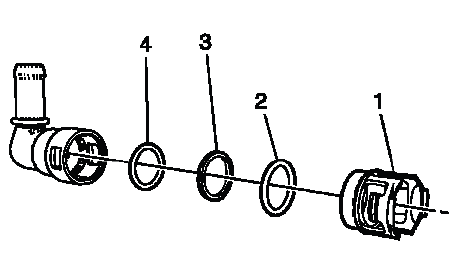
Fig. 79: Identifying Components Of Service Kit
3. Install the midspacer and gently push down to the first O-ring (3). The spacer should sit flat and should not pinch the lower seal.
4. Install the second O-ring and gently push down to the top of the midspacer (2). Confirm that both seals remain properly stacked inside the fitting.
5. Install the retainer clip by lining up the retainer legs with the windows on the fitting housing (1).
Push the retainer clip down until the retainer clip legs are engaged into the windows. The retainer must lock securely because it holds the quick connect fitting on the tube during normal coolant pressure and temperature changes.
6. Clean and inspect the pipe end for any nicks, scratches, cracks, corrosion, or old seal material. The pipe end must be smooth so the new O-rings can seal correctly.
7. Install the fitting to the vehicle by pushing the fitting onto the tube until an audible click is heard. Pull back to verify the connection is secure. On the Buick Enclave auxiliary heater circuit, this confirmation step is important because an incompletely locked connector can leak once the system is refilled and warmed up.
8. Fill the cooling system. Refer to Cooling System Draining and Filling (Static Fill), Cooling System Draining and Filling (Vac N Fill). After filling, check the connector area for leaks and verify that the heater system operates normally as the engine reaches operating temperature.
AUXILIARY BLOWER CONTROL MODULE REPL
