
Buick Enclave: Description and Operation
HEATING AND AIR CONDITIONING SYSTEM DESCRIPTION AND OPERATION
Engine Coolant
Engine coolant is the primary heat source for the heating side of the HVAC system. The engine thermostat regulates normal coolant operating temperature and also creates a controlled restriction in the cooling system. This restriction helps maintain positive coolant flow through the engine and heater circuit while reducing the possibility of cavitation inside the system.
Coolant enters the heater core through the inlet heater hose while under pressure. The heater core is mounted inside the HVAC module, where air drawn into the module passes across the heater core fins. As this air moves through the core area, it absorbs heat from the coolant flowing through the heater core. The HVAC module then directs the warmed air into the passenger compartment to support steady cabin comfort.
Temperature control is achieved by positioning the HVAC module temperature door. When the door allows more air to pass through the heater core area, outlet air temperature rises. When the door reduces airflow through the heater core, less heat is delivered to the cabin. After passing through the heater core, the coolant exits through the return heater hose and circulates back into the engine cooling system. In the Buick Enclave, this heat exchange process must work together with proper coolant level, thermostat operation, clean heater core passages, and sealed HVAC ducting to provide consistent heating performance.
A/C Cycle
The auxiliary A/C system operates from the vehicle's primary A/C system. The front, or primary, A/C system must be turned ON before the rear A/C system can function. This design allows the rear system to share the refrigerant circuit while still providing additional cooling capacity for passengers seated farther back in the cabin.
Refrigerant is the key working fluid in an automotive air conditioning system. R-134a is the approved refrigerant for this system and is used to transfer unwanted heat and moisture from the passenger compartment to the outside air. Under the correct pressure conditions, R-134a can change state between vapor and liquid, allowing the A/C system to absorb heat inside the vehicle and release that heat through the condenser.
The A/C compressor is belt driven and operates when the magnetic clutch is engaged. Once engaged, the compressor draws low-pressure refrigerant vapor from the suction side and compresses it into a high-pressure, high-temperature vapor. This compression process increases both refrigerant pressure and refrigerant temperature. The refrigerant then leaves the compressor through the discharge hose and is forced toward the condenser and the rest of the A/C circuit.
The A/C system is mechanically protected by a high pressure relief valve. If the high pressure switch fails to stop compressor operation, or if a restriction causes pressure to continue rising, the high pressure relief valve can open and release refrigerant from the system. This protection helps reduce the chance of severe component damage, although any discharge condition must be diagnosed and corrected before the system is returned to service.
Compressed refrigerant enters the condenser as a high-temperature, high-pressure vapor. As it travels through the condenser passages, heat is transferred from the refrigerant to the ambient air passing across the condenser fins. As the refrigerant cools, it condenses from a vapor into a high-pressure liquid. This change of state is essential because the refrigerant must reach the expansion valve in a liquid condition for proper system operation.
The condenser is located in front of the radiator to take advantage of direct airflow through the front of the vehicle. It is built from aluminum tubing and aluminum cooling fins, which allow heat to move rapidly from the refrigerant into the surrounding air. After leaving the condenser, the semi-cooled liquid refrigerant flows through the liquid line. The liquid line then divides so refrigerant can be supplied to both the front and rear thermal expansion valves when the system is equipped with rear A/C.
The front and rear thermal expansion valves are attached to the front and rear evaporators. Each thermal expansion valve separates the high-pressure side of the system from the low-pressure side. As liquid refrigerant passes through the valve, pressure drops sharply. Because of this pressure change, the refrigerant begins to vaporize at the outlet of the thermal expansion valve. The valve also meters the amount of liquid refrigerant entering the evaporator so the evaporator can absorb heat efficiently without flooding the compressor with liquid refrigerant.
Refrigerant leaving the thermal expansion valve enters the evaporator core in a low-pressure liquid state. Air drawn through the HVAC module passes across the evaporator core. Warm, humid cabin or outside air causes the low-pressure refrigerant inside the evaporator to boil. As the refrigerant boils, it absorbs heat from the air and removes moisture from the airflow. This is the point where the Buick Enclave A/C system creates cooled and dehumidified air for the cabin.
The refrigerant exits the evaporator, passes back through the thermal expansion valve area, and returns through the suction line to the compressor as a vapor. At the compressor, the refrigerant is compressed again, and the heat removal cycle repeats. This continuous circulation is what allows the system to maintain cooling output while the compressor is operating.
The conditioned air is distributed through the HVAC module to the selected vents for passenger comfort. Moisture removed from the passenger compartment condenses on the evaporator core and drains from the HVAC module as water under the vehicle. A small puddle of clear water beneath the vehicle during A/C use is usually normal, while poor drainage can lead to odor, wet carpet, or reduced HVAC performance. For proper operation on the Buick Enclave, refrigerant charge, airflow through the condenser, evaporator condition, sensor inputs, and door operation all need to work together as one balanced system.
SPECIAL TOOLS AND EQUIPMENT
SPECIAL TOOLS
The following special tools are used for HVAC diagnosis, leak detection, refrigerant recovery, refrigerant charging, oil service, dye service, valve core replacement, and line repair. Using the correct tool helps prevent system contamination, inaccurate refrigerant charging, damaged fittings, and repeat repairs. When servicing the Buick Enclave heating and air conditioning system, always match the tool to the procedure being performed and follow the equipment manufacturer's operating instructions.
GE 50078
Electronic Leak
Detector
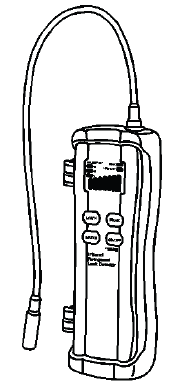
The GE 50078 Electronic Leak Detector is used to locate refrigerant leaks at fittings, service ports, hoses, condensers, evaporator areas, and other A/C components. It is especially useful after a system has been opened, repaired, evacuated, and recharged.
CH 37872
J 37872
Universal Spanner
Wrench
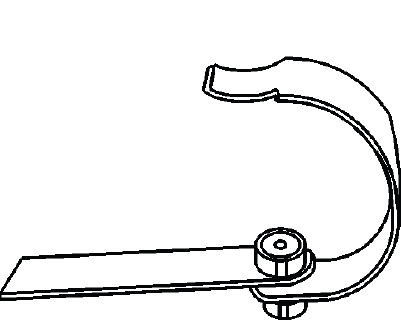
The CH 37872 or J 37872 Universal Spanner Wrench is used where a controlled grip is needed on round or specialty service components. Proper engagement helps reduce the risk of slipping, marking, or distorting the part during removal or installation.
GE 39400-A
J 39400-A
Halogen Leak
Detector
The GE 39400-A or J 39400-A Halogen Leak Detector is used as a diagnostic aid for locating refrigerant leaks. When used correctly, it can help confirm suspected leak areas before parts are replaced.
J 41425
A/C Line Repair
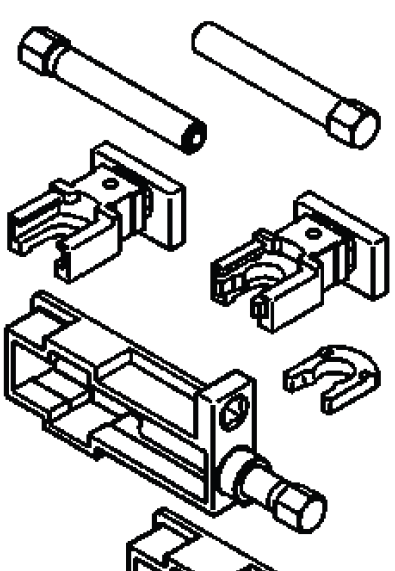
The J 41425 A/C Line Repair tool supports approved refrigerant line repair procedures. Line repair must be performed carefully because poor sealing, contamination, or incorrect alignment can cause refrigerant loss and reduced cooling performance.
GE 41447
J 41447
R-134A A/C Tracer
Dye- Box of 24
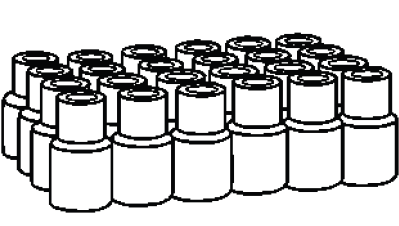
The GE 41447 or J 41447 R-134A A/C Tracer Dye is added to the refrigerant system to help identify leaks during later inspection. The dye circulates with the refrigerant oil and can reveal small leak points that may not be obvious during a visual inspection.
GE 42220
J 42220
Universal 12V Leak
Detection Lamp
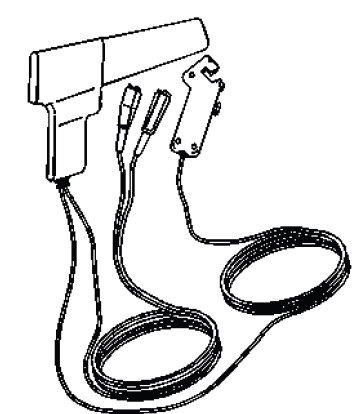
The GE 42220 or J 42220 Universal 12V Leak Detection Lamp is used with fluorescent tracer dye to inspect suspected refrigerant leak areas. Clean inspection surfaces and correct lighting make dye traces easier to identify.
GE 48800
J 43600
ACR 2000 Air
Conditioning Service
Center
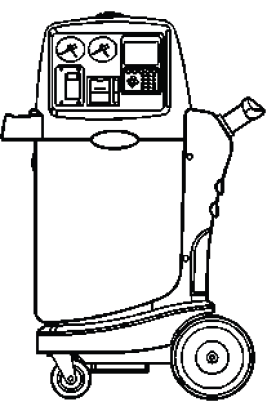
The GE 48800 or J 43600 ACR 2000 Air Conditioning Service Center is used to recover, recycle, evacuate, and recharge the R-134a system. Accurate refrigerant handling is critical because an incorrect charge can affect cooling output, compressor protection, and system pressure readings.
GE 43872
J 43872
Fluorescent Dye
Cleaner
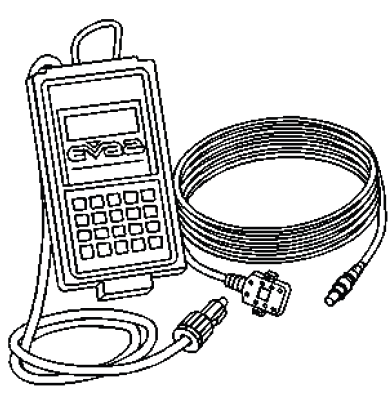
The GE 43872 or J 43872 Fluorescent Dye Cleaner is used to remove old dye residue after inspection or repair. Cleaning the area after a confirmed repair helps prevent old dye from being mistaken for a new leak during future diagnosis.
GE 45037
J 45037
A/C Oil Injector
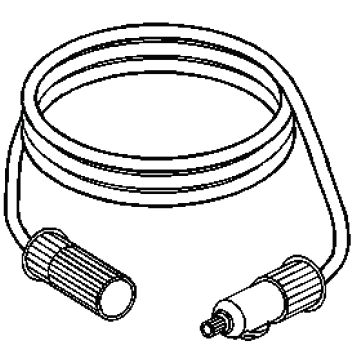
The GE 45037 or J 45037 A/C Oil Injector is used to add the correct quantity of refrigerant oil to the system. Oil quantity should be measured carefully because too little oil can damage the compressor, while too much oil can reduce heat transfer and lower cooling efficiency.
GE 45268
J 45268
A/C Flushing
Adapter Kit
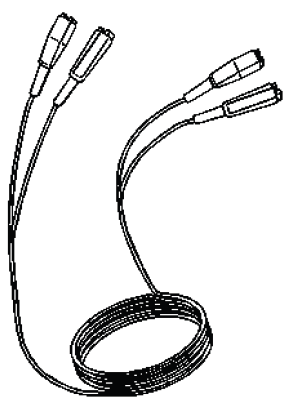
The GE 45268 or J 45268 A/C Flushing Adapter Kit is used during approved flushing procedures. The adapters allow specific sections of the refrigerant circuit to be flushed while protecting components that should not be flushed directly, such as the compressor.
GE 46246
J 46246
Valve Core Tool
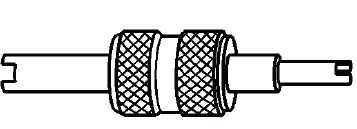
The GE 46246 or J 46246 Valve Core Tool is used to remove and install valve cores at the A/C service ports. The valve core must seat correctly to prevent slow refrigerant loss from the service fitting.
GE 46297
J 46297
A/C Dye Injector
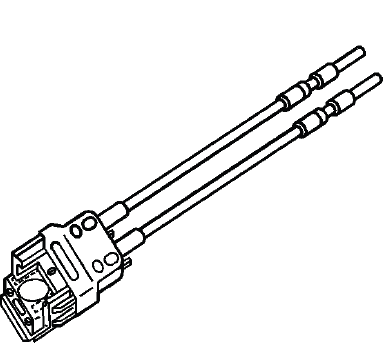
The GE 46297 or J 46297 A/C Dye Injector is used to introduce fluorescent dye into the A/C system in a controlled manner. This tool helps place dye into the system without unnecessary refrigerant loss or contamination.
GE 46297-12
J 46297-12
Replacement Dye
Cartridges
The GE 46297-12 or J 46297-12 Replacement Dye Cartridges are used with the dye injector when additional tracer dye service is required. Use only compatible cartridges and keep the dye supply clean so the refrigerant system is not exposed to debris or moisture.
