
Buick Enclave: Repair Instructions
STEERING LINKAGE INNER TIE ROD INSPECTION
Special Tools
- GE-8001 Dial Indicator Set
For equivalent regional tools, refer to Special Tools. Use a dial indicator that reads accurately in small increments, since inner tie rod lash is measured in very small movement and an imprecise setup can lead to a wrong service decision.
1. Turn the ignition key to the ON position with the engine OFF. This allows the steering column to be unlocked while keeping the engine off during the inspection.
NOTE: This inspection procedure does not supersede local government required inspections that have more stringent requirements.
2. With the aid of an assistant, turn the steering wheel to the full stop position and hold the steering wheel in that position until the test is complete. Part of the steering linkage inner tie rod (2) being tested should be inside the steering gear housing. The inner tie rod housing (1) being tested should be inside the steering gear housing and seated against the steering stop. Holding the steering against the stop places the parts in a repeatable position so the dial indicator measures tie rod movement rather than general steering rack travel.
Fig. 4: Measuring Lash Between Inner Tie Rod & Steering Gear Housing
3. Raise and support the vehicle. Refer to Lifting and Jacking the Vehicle. Make sure the vehicle is stable before applying any force to the tire and wheel assembly.
4. If there is not a good location for the GE-8001 dial indicator pointer at the steering gear housing, install a large worm gear hose clamp (3) to the steering gear housing over the larger steering gear boot clamp and align the clamp so that the screw can be used as a contact point for the GE-8001 dial indicator pointer. The screw head gives the indicator a firm, repeatable surface when the housing shape does not provide a suitable contact area.
5. Install the GE-8001 dial indicator between the inner tie rod and the steering gear housing or the worm gear clamp in such a way as to measure the lash between the inner tie rod and the steering gear housing. The lash between the inner tie rod and the steering gear housing is equal to the lash between the inner tie rod and the inner tie rod housing because the inner tie rod housing is inside the steering gear housing during this procedure. Position the indicator as straight as possible with the direction of movement to avoid side loading the indicator stem or recording a false reading.
6. Grasping the tire at the 3 o'clock (2) and 9 o'clock (1) positions, gently push in on one side of the tire in order to remove any lash. Use a steady hand rather than a sharp push, since aggressive movement can shift the steering rack and affect the reading.
Fig. 5: Identifying Tire Grasping Positions
NOTE: Only move the tire enough to feel any lash between the inner tie rod and the inner tie rod housing without moving the steering gear rack.
7. Zero the GE-8001 dial indicator. Confirm that the indicator needle returns consistently to zero before taking the measurement.
8. On the same side of the tire previously pushed in, gently pull out and measure the lash. Keep the movement small and controlled so the reading represents the inner tie rod joint, not wheel bearing looseness, rack movement, or suspension deflection.
9. Record the measurement shown on the GE-8001 dial indicator. Writing down the value helps compare both sides and prevents confusion if the inspection is repeated.
10. If the measured value exceeds 0.5 mm (0.02 in), replace the inner tie rod. Refer to Steering Linkage Inner Tie Rod Replacement. On a Buick Enclave, excessive inner tie rod lash can contribute to looseness, steering wander, tire wear, knocking, or imprecise steering response.
11. Repeat the procedure for the other side. Both sides should be checked because one worn joint can be missed if only the side with the most obvious symptom is inspected.
STEERING LINKAGE OUTER TIE ROD INSPECTION
Special Tools
- GE-8001 Dial Indicator Set
For equivalent regional tools, refer to Special Tools. The same dial indicator set is used to measure outer tie rod movement at the steering knuckle with enough accuracy to identify excessive lash.
1. Inspect the outer tie rod seal. If the outer tie rod seal is torn, replace the outer tie rod. Refer to Steering Linkage Outer Tie Rod Replacement. A damaged seal can allow water and grit into the joint, washing out lubricant and causing accelerated wear even if the joint does not yet feel loose.
NOTE: This inspection procedure does not supersede local government required inspections that have more stringent requirements.
2. Raise the side of the vehicle being inspected with a floor jack while maintaining contact between the opposite wheel and the shop floor. Support the lower control arm with a floor jack stand as far outboard as possible and remove the floor jack. Refer to Lifting and Jacking the Vehicle. Supporting the control arm near the wheel helps keep the suspension closer to its normal loaded position during the test.
3. Install the GE-8001 dial indicator between the outer tie rod and the steering knuckle as shown in the graphic. Note that the tire and wheel assembly is shown removed only for clarification of the GE-8001 dial indicator position. In actual inspection, the wheel may remain installed so controlled side-to-side movement can be applied through the tire.
Fig. 6: Measuring Outer Tie Rod Lash
4. Grasping the tire at the 3 o'clock (2) and 9 o'clock (1) positions, gently push in on one side of the tire to remove any lash. The movement should be light and controlled so the dial indicator reads joint play instead of movement from another steering or suspension component.
Fig. 7: Identifying Tire Grasping Positions
5. Zero the GE-8001 dial indicator. Make sure the pointer is firmly positioned and that the base does not shift when the tire is moved.
6. On the same side of the tire previously pushed inwards, gently pull outwards and measure the lash. Watch the dial indicator while moving the tire so any sudden jump or inconsistent reading can be noticed immediately.
7. Record the measurement shown on the GE-8001 dial indicator. Compare the value to the service limit and check whether the movement feels smooth, loose, or irregular.
8. If the measured value exceeds 0.5 mm (0.02 in), replace the outer tie rod. Refer to Steering Linkage Outer Tie Rod Replacement. Replacing a loose outer tie rod helps restore accurate steering control and should be followed by any alignment checks required after service.
9. Repeat the procedure for the other side. Inspecting both outer tie rods gives a complete picture of steering linkage condition and helps avoid uneven steering response after repair.
POWER STEERING SYSTEM BLEEDING
Special Tools
- CH-43485 Power Steering Bleeder Adapter
- GE-23738-A Vacuum Pump
For equivalent regional tools, refer to Special Tools. Vacuum bleeding removes trapped air from the hydraulic steering system more effectively than simple cycling when air has entered during hose, pump, gear, or fluid service.
NOTE:
- If you service the power steering system, you will not be able to obtain an accurate fluid level reading unless you bleed the air from the power steering system.
- Hoses touching the frame, body or engine may cause system noise.
Ensure the hoses do not touch any other part of the vehicle.
- Loose connections may not leak, but could allow air into the steering system. Ensure all hose connections are tight.
- Maintain the power steering fluid level throughout the bleeding procedure.
- Use clean, new power steering fluid only. Refer to Fluid and Lubricant Recommendations.
- Introducing too much air into the power steering system will increase the amount of time required to bleed the system.
- DO NOT start the engine until instructed to do so.
- DO NOT use a hoist. Keep the rear tires on the ground.
Air trapped in the power steering system can cause foamy fluid, pump whine, growling, erratic assist, hard steering, or a fluid level that appears to change after the vehicle is operated. For the Buick Enclave, bleeding the system correctly after service is important before judging pump noise, steering effort, or reservoir level.
1. Apply the park brake. This helps keep the vehicle stable while the front end is raised and the steering system is cycled.
2. Using a floor jack and jack stands, raise the front of the vehicle until the center of the front wheels are approximately 61 cm (24 in) off the ground. Refer to Lifting and Jacking the Vehicle. Keep the rear tires on the ground as instructed, and support the vehicle securely before working around the steering system.
3. Fill the power steering fluid reservoir with fluid to the bottom of the filler neck. Leave the cap off. Use only clean, new fluid of the specified type, and keep the reservoir level from dropping during the procedure so additional air is not drawn into the system.
4. Place clean towels around the power steering fluid reservoir neck to catch any fluid that may rise or spill out of the reservoir during the bleeding process. This protects nearby components and makes it easier to see whether the fluid is foaming, overflowing, or carrying air bubbles out of the system.
5. With the key in the ON position and with the engine OFF, turn the steering wheel from stop to stop until the fluid level stabilizes and fewer bubbles are visible in the reservoir. Move the wheel smoothly rather than quickly, allowing the fluid to move through the steering gear and hoses without pulling additional air into the circuit.
NOTE: The fluid level will rise and fall as you turn the steering wheel and you bleed air from the system. This step may take several minutes.
6. Make sure the fluid level is at the bottom of the filler neck. Do not allow the level to drop too low, because air can be drawn back into the power steering system and extend the bleeding time.
7. Connect the CH-43485 adapter to the GE-23738-A pump clear hose. Check that the hose connection is tight so the vacuum pump can hold steady vacuum during the procedure.
8. Hold the CH-43485 adapter on the top of the reservoir filler neck. The adapter must seal evenly against the reservoir opening so vacuum can be applied without drawing air around the adapter edge.
9. Apply a vacuum of 68 kPa (20 in Hg, 10 psi). Watch the gauge closely and bring the vacuum up gradually to avoid pulling fluid too aggressively into the clear hose.
10. Set the GE-23738-A pump down. The vacuum will hold the CH-43485 adapter in place. Confirm that the adapter remains seated and the vacuum does not drop immediately, which could indicate a poor seal or loose connection.
11. Maintain a vacuum of 68 kPa (20 in Hg, 10 psi) while turning the steering wheel from stop to stop. Hold the steering wheel at each steering stop until fewer bubbles appear in the GE-23738-A pump clear hose. This allows trapped air to be drawn out of the hydraulic passages while the steering gear is moved through its full travel.
NOTE: The vacuum gauge needle will fluctuate while the steering wheel is moving. This step may take several minutes.
12. With the steering wheel in the straight ahead position, maintain a vacuum of 68 kPa (20 in Hg, 10 psi) for 5 minutes. Keeping the wheels straight during this hold period helps the remaining air rise out of the system without additional steering movement disturbing the fluid.
13. Inspect the condition of the fluid in the GE-23738-A pump clear hose. If any bubbles are present in the fluid, repeat steps 11 and 12. Clear fluid without visible air is needed before the system can be considered properly bled.
14. Lower the vehicle. Lower it carefully and keep the reservoir area clean so no dirt enters the open filler neck.
15. Relieve the vacuum in the GE-23738-A pump. Release the vacuum slowly to prevent fluid from splashing or being pulled suddenly through the hose.
16. Remove the CH-43485 adapter from the reservoir filler neck. Wipe away any fluid around the opening and inspect the reservoir for foam or aeration.
17. Make sure the power steering fluid level is at the MAX mark on the capstick fluid level indicator. On a Buick Enclave power steering system, the correct level is important because both overfilling and underfilling can affect noise, aeration, and steering feel.
18. With the reservoir cap off, start the engine. Slowly rotate the steering wheel from stop to stop 10 times. Hold the steering wheel at each stop for 2 seconds. Do not hold the wheel against the stop longer than directed, because extended pressure at the stop can raise fluid temperature and load the pump unnecessarily.
19. Verify the steering system does not shudder while turning the steering wheel. If the steering system exhibits a shudder condition, repeat steps 1 through 18. Shudder after bleeding usually means air is still trapped in the hydraulic circuit or the fluid level has not stabilized.
20. Turn the engine OFF. Allow the fluid to settle briefly before checking the level again.
21. Make sure the power steering fluid level is at the MAX mark on the capstick fluid level indicator. Install the cap to the reservoir. Refer to Checking and Adding Power Steering Fluid. A final level check after cycling the system helps confirm that no additional air has purged into the reservoir.
22. Test drive the vehicle. During the road test, listen for pump whine, growl, or shudder, and check that steering assist feels smooth in both directions at low speed and during normal driving.
CHECKING AND ADDING POWER STEERING FLUID
CAUTION: When adding fluid or making a complete fluid change, always use the proper power steering fluid. Failure to use the proper fluid will cause hose and seal damage and fluid leaks.
1. Clean the area surrounding the reservoir cap. Removing dirt before opening the reservoir prevents contamination from entering the hydraulic system.
2. Remove the reservoir cap. Set the cap in a clean location so debris does not cling to the capstick or sealing surface.
3. Inspect the power steering pump fluid level at regular intervals. Use the appropriate procedure below. Add fluid when required. Refer to Fluid and Lubricant Recommendations. Always use the specified fluid type, because incorrect fluid can damage seals, hoses, and pump components.
Fluid Is Hot
- Run the engine until the fluid reaches about 80ºC (170ºF). This represents the hot operating condition used for the fluid level check.
- Turn the engine OFF. Let the fluid settle briefly before removing the cap.
- Remove the reservoir cap. Keep the capstick clean so the reading is accurate.
- Inspect the fluid level on the capstick. Read the level with the vehicle on a level surface.
- Make sure the fluid level is at the HOT/FULL/MAX mark on the capstick.
4. If the fluid level is low, add power steering fluid to the proper level. Add fluid in small amounts and recheck the capstick rather than overfilling the reservoir.
5. Install the reservoir cap. Confirm that the cap is seated correctly so dirt and moisture cannot enter the system.
6. When checking the fluid level after servicing the steering system, bleed the air from the system. Refer to Power Steering System Bleeding. On the Buick Enclave, a fluid level check taken before bleeding may be misleading because trapped air can change the apparent level in the reservoir.
POWER STEERING SYSTEM FLUSHING
1. Make sure the engine is OFF. The flushing procedure begins with the engine off to prevent the pump from running dry or drawing air too quickly into the system.
2. Apply the park brake. This keeps the vehicle stable while the front wheels are raised and the steering system is cycled.
3. Using a floor jack and jack stands, raise the front of the vehicle until the center of the front wheels are approximately 61 cm (24 in) off the ground. Refer to Lifting and Jacking the Vehicle. Support the vehicle securely before turning the steering wheel or working near the power steering hoses.
4. Place a large container under the vehicle to collect the draining fluid. Position the container so the fluid from the disconnected hose can drain without splashing onto suspension, frame, or steering components.
NOTE: Do not reuse any drained power steering fluid regardless of appearance or condition.
5. Loosen the hose clamp (1) and disconnect the power steering fluid reservoir inlet hose from the power steering fluid reservoir. Move the hose carefully so the fitting is not cracked and the hose end is not damaged.
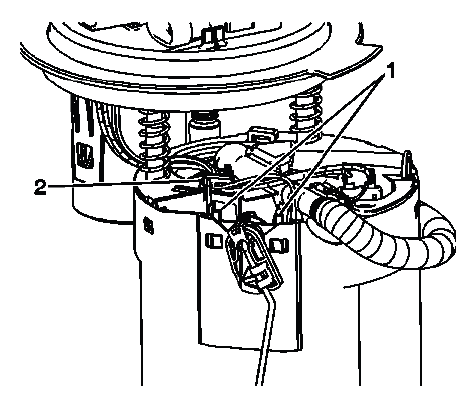
Fig. 8: Identifying Power Steering Reservoir Inlet Hose & Clamp
6. Plug the power steering fluid reservoir inlet port. The plug keeps fluid from draining out of the reservoir port and helps direct old fluid out through the disconnected return hose.
7. With the key ON and the engine OFF, turn the steering wheel fully to the left and to the right while an assistant maintains the minimum fluid level in the reservoir using NEW approved power steering fluid. Refer to Fluid and Lubricant Recommendations. The assistant must not allow the reservoir to run low, because that would introduce air and make the system harder to bleed afterward.
NOTE: This step may require 4 L (4 qt) of power steering fluid until the draining fluid appears clear.
Continue until the fluid from the power steering fluid reservoir inlet hose runs clear. Clear fluid indicates that most of the contaminated or old fluid has been pushed out of the hydraulic circuit.
8. Remove the plug from the power steering fluid reservoir inlet port. Check that the port is clean before reconnecting the hose.
9. Connect the power steering fluid reservoir inlet hose to the reservoir. Secure the hose with the clamp. Make sure the hose is fully seated and the clamp is positioned over the proper sealing area.
10. Fill and bleed the power steering system. Refer to Power Steering System Bleeding. Flushing removes old fluid, but bleeding is still required to remove air introduced during hose disconnection and fluid replacement.
NOTE: Do NOT start the engine without the power steering fluid at a minimum system level.
11. Inspect the power steering fluid for the following indications of contamination:
- Milky fluid - water
- Brown fluid - burnt
- Plastic debris or dirt chunks
Fluid condition should be checked after the flush because remaining contamination can shorten pump life, damage steering gear seals, or cause noise during operation.
12. If the fluid is contaminated, repeat steps 5 through 11. Continue the flushing process until the fluid is clean and free from visible debris, discoloration, or water contamination.
13. Make sure there are no power steering fluid leaks. Inspect the reservoir, hose connection, clamp area, fittings, pump, and steering gear while the system is filled and after it has been cycled.
14. Lower the vehicle. After lowering, recheck the fluid level and confirm that steering operation feels normal before returning the vehicle to service.
POWER STEERING FLUID RESERVOIR REPLACEMENT
Removal Procedure
1. Remove the fuel injector sight shield. Refer to Fuel Injector Sight Shield Replacement. Removing the shield improves access and reduces the chance of spilling fluid onto nearby engine components.
2. Remove as much power steering fluid from the remote power steering fluid reservoir as possible. Use a clean suction tool or suitable fluid extractor, and transfer the old fluid into an approved container for disposal.
3. Place drain pans under the vehicle as needed. Power steering fluid may drain from the hose or reservoir when the connection is opened.
4. Compress the power steering reservoir inlet hose clamp (1) and disconnect the hose from the remote power steering fluid reservoir. Twist the hose gently if it is stuck, but avoid pulling hard enough to tear the hose or damage the reservoir fitting. For Buick Enclave service, keeping the hose end clean and undamaged helps prevent leaks after the new reservoir is installed.
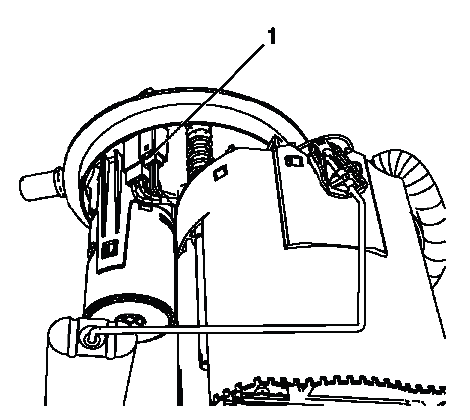
Fig. 9: Identifying Power Steering Reservoir Inlet Hose & Clamp
5. Compress the power steering fluid reservoir outlet hose clamp (1), then disconnect the hose from the remote power steering fluid reservoir. Keep a drain pan and clean shop towels nearby, because residual fluid may drain as soon as the hose is released. Avoid twisting the hose sharply, since an aged hose can crack or lose its sealing shape if it is forced off the reservoir fitting.
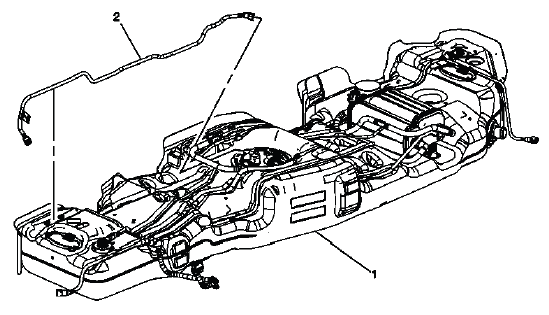
Fig. 10: View Of Power Steering Fluid Reservoir Outlet Hose & Clamp
6. Remove the remote power steering fluid reservoir bolts (1). Support the reservoir while removing the fasteners so it does not shift suddenly or place stress on nearby hoses, brackets, or fittings.
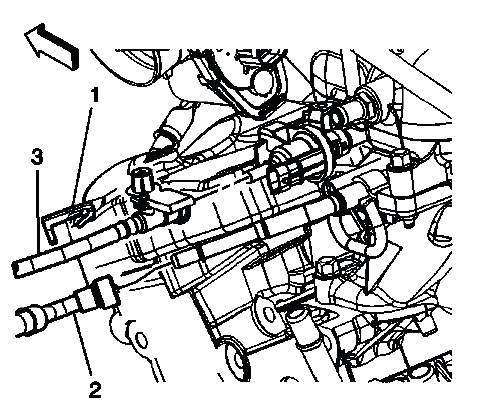
Fig. 11: Locating Power Steering Fluid Reservoir & Bolts
7. Remove the remote power steering fluid reservoir (2). Lift it out carefully and keep the open ports facing upward when possible to reduce fluid dripping onto the engine compartment or steering components.
Installation Procedure
1. Install the remote power steering fluid reservoir (2). Position the reservoir in its original mounting location and confirm that the hose ports are aligned correctly before installing the bolts. Proper positioning helps prevent hose strain and reduces the chance of seepage after the system is filled.
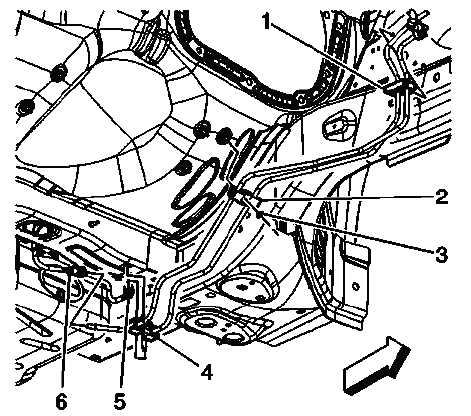
Fig. 12: Locating Power Steering Fluid Reservoir & Bolts
CAUTION: Refer to Fastener Caution.
2. Install the remote power steering fluid reservoir bolts (1) and tighten to 9 N.m (80 lb in). Tighten the bolts evenly so the reservoir sits securely on the bracket without being distorted or pulled out of alignment.
3. Connect the power steering fluid reservoir outlet hose and clamp (1). Slide the hose fully onto the fitting, then position the clamp over the correct sealing area. The connection should be snug, straight, and free from kinks.
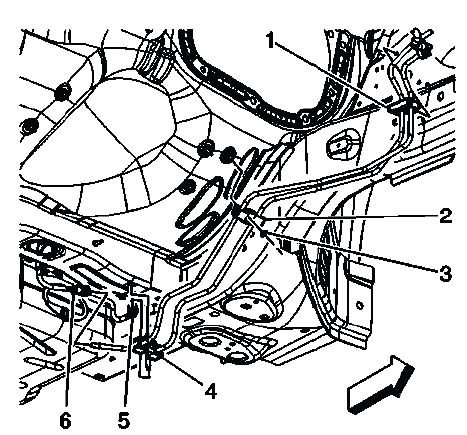
Fig. 13: View Of Power Steering Fluid Reservoir Outlet Hose & Clamp
4. Connect the power steering reservoir inlet hose and clamp (1). Check that the hose is fully seated and that the clamp is not resting on the edge of the fitting. A poorly positioned clamp may allow air entry or fluid seepage even if the hose appears connected.
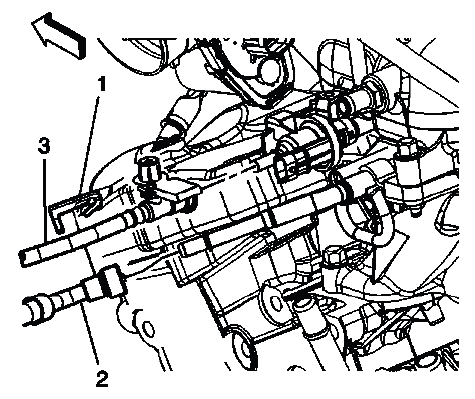
Fig. 14: Identifying Power Steering Reservoir Inlet Hose & Clamp
5. Clean all excess fluid from the vehicle and remove the drain pans. Wipe the reservoir, hoses, fittings, frame areas, and surrounding components so any new leak can be identified clearly during final inspection.
6. Fill and bleed the power steering system. Refer to Power Steering System Bleeding. On the Buick Enclave, bleeding is necessary after reservoir or hose service because trapped air can cause pump whine, fluid foaming, shudder, or inconsistent steering assist.
7. Install the fuel injector sight shield. Refer to Fuel Injector Sight Shield Replacement. Confirm that the shield is seated properly and does not interfere with nearby hoses or wiring.
POWER STEERING FLUID RESERVOIR BRACKET REPLACEMENT
Removal Procedure
1. Remove the fuel injector sight shield. Refer to Fuel Injector Sight Shield Replacement. Removing the shield improves access to the reservoir area and helps prevent accidental damage while the bracket is being serviced.
2. Remove the right side engine mount strut bracket. Refer to Engine Mount Strut Bracket Replacement - Right Side. This creates the working clearance needed to remove the reservoir bracket without forcing the reservoir, hoses, or surrounding components.
3. Remove as much power steering fluid from the remote power steering fluid reservoir as possible. Use a suitable suction tool or extractor and transfer the old fluid into an approved container. Reducing the fluid level before hose removal helps limit spills.
4. Place drain pans under the vehicle as needed. Even after the reservoir is emptied, fluid may remain in the hoses and fittings.
5. Disconnect the power steering reservoir inlet hose (1). Release the clamp carefully, then work the hose loose without prying against the reservoir fitting.
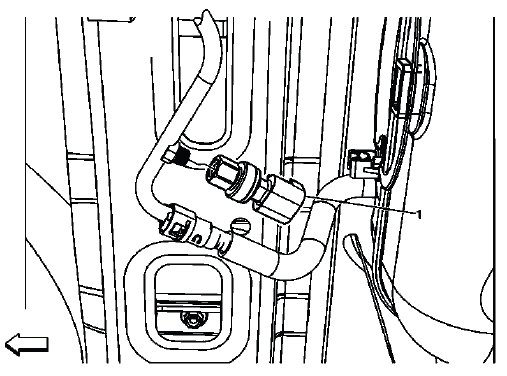
Fig. 15: Identifying Power Steering Reservoir Inlet Hose & Clamp
6. Disconnect the power steering fluid reservoir outlet hose (1). Keep the hose end raised if possible to reduce fluid loss, and inspect the hose for cracking, swelling, or soft spots while it is disconnected.
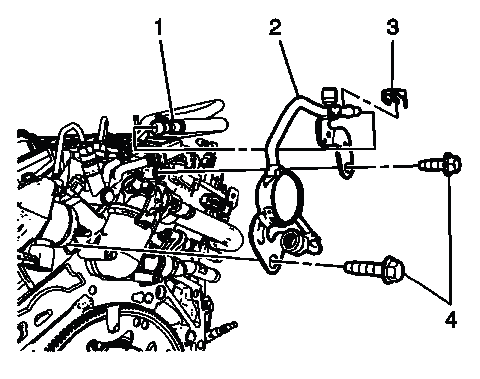
Fig. 16: View Of Power Steering Fluid Reservoir Outlet Hose & Clamp
7. Remove the remote power steering fluid reservoir bracket bolts (1). Support the bracket as the last bolt is removed so it does not drop or scrape nearby components.
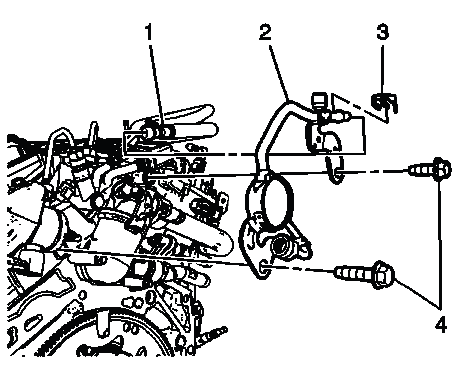
Fig. 17: Identifying Power Steering Fluid Reservoir Bracket & Bolts
8. Remove the remote power steering fluid reservoir bracket (2). Guide the bracket out of position slowly, watching for hose routing, wiring, and nearby engine bay parts that could be contacted during removal.
9. Transfer any parts as needed. Compare the removed bracket and replacement bracket before installation so clips, isolators, retainers, or mounting hardware are moved to the correct locations.
Installation Procedure
1. Install the remote power steering fluid reservoir bracket (2). Position the bracket against its mounting points and confirm that it sits flush before tightening the bolts. A bracket that is not seated correctly can place stress on the reservoir and hoses.
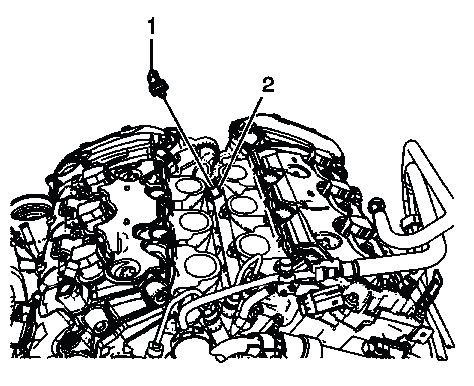
Fig. 18: Identifying Power Steering Fluid Reservoir Bracket & Bolts
CAUTION: Refer to Fastener Caution.
2. Install the remote power steering fluid reservoir bracket bolts (1) and tighten to 9 N.m (80 lb in). Use the specified torque so the bracket is secured without damaging the mounting points.
3. Connect the power steering fluid reservoir outlet hose (1). Confirm that the hose follows its original path and is not stretched, twisted, kinked, or touching sharp edges.
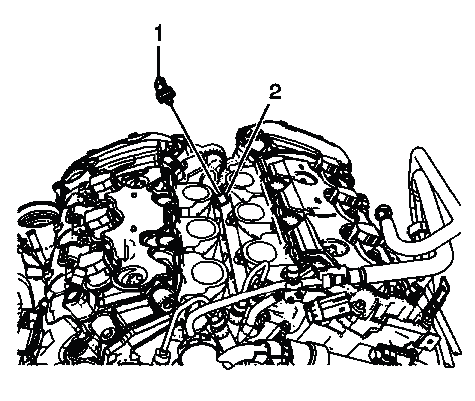
Fig. 19: View Of Power Steering Fluid Reservoir Outlet Hose & Clamp
4. Connect the power steering reservoir inlet hose (1). Seat the hose fully on the fitting and position the clamp squarely over the sealing area. A secure inlet connection is especially important because loose connections may draw air into the hydraulic system without showing an obvious fluid leak.
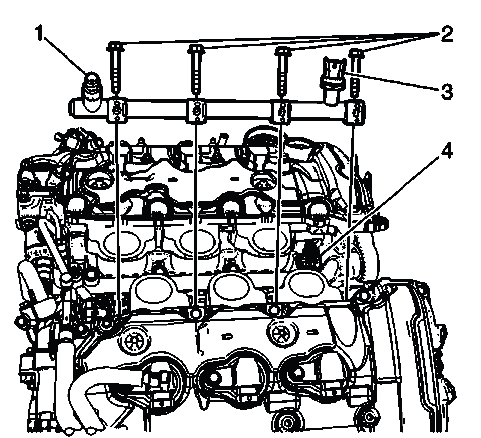
Fig. 20: Identifying Power Steering Reservoir Inlet Hose & Clamp
5. Clean all excess fluid from the vehicle and remove the drain pans. A clean surface makes the final leak inspection more accurate after the system has been refilled and cycled.
6. Install the right side engine mount strut bracket. Refer to Engine Mount Strut Bracket Replacement - Right Side. Make sure the bracket is installed correctly before continuing, since this part affects engine support and clearance around the power steering reservoir area.
7. Fill and bleed the power steering system. Refer to Power Steering System Bleeding. For Buick Enclave power steering service, this step should not be skipped after hoses or reservoir components have been disconnected.
8. Install the fuel injector sight shield. Refer to Fuel Injector Sight Shield Replacement. After installation, perform a final visual check for hose clearance, fluid level, and any sign of seepage at the reservoir connections.
POWER STEERING PUMP PULLEY REPLACEMENT
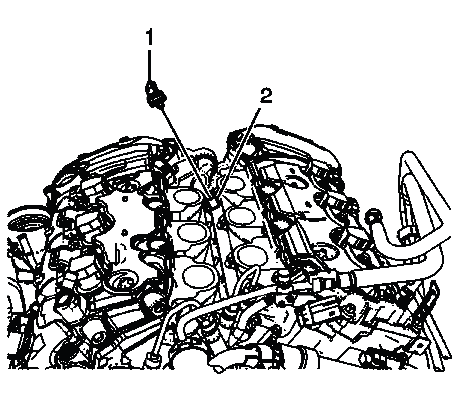
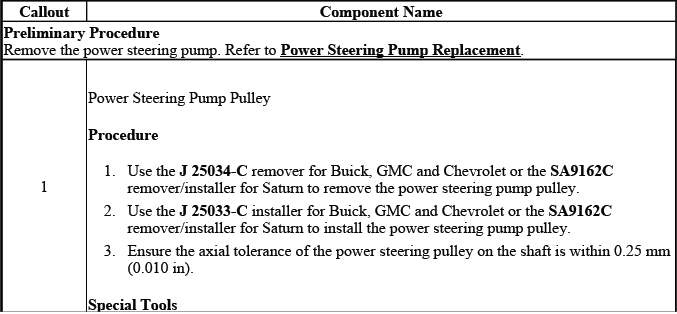
Fig. 21: View Of Power Steering Pump Pulley
Power Steering Pump Pulley Replacement
The power steering pump pulley must be serviced with the correct puller and installer tools. Do not pry behind the pulley or strike it with a hammer, because pulley distortion can cause belt misalignment, noise, wobble, or premature pump shaft damage. Before removal, inspect the belt path and pulley face for cracks, grooves, uneven wear, or signs that the pulley has been running out of alignment.

During installation, press the pulley onto the shaft evenly and verify that it aligns with the other drive belt pulleys. If the pulley is installed too far inward or left too far outward, the belt may track incorrectly and create noise or belt edge wear.
POWER STEERING PUMP REPLACEMENT
Removal Procedure
1. Remove the fuel injector sight shield. Refer to Fuel Injector Sight Shield Replacement. This gives better access to the pump area and helps prevent the shield from being scratched or cracked during service.
2. Remove as much power steering fluid from the remote power steering fluid reservoir as possible. Extracting the fluid before disassembly reduces spillage when the hoses and pump connections are opened.
3. Place drain pans under the vehicle as needed. Power steering fluid may drain from the pump, hoses, and steering lines after the system is opened.
4. Remove the drive belt. Refer to Drive Belt Replacement. Before removing the belt, note its routing and inspect it for glazing, cracking, contamination, or edge damage caused by pulley misalignment.
5. Remove the steering gear heat shield. Refer to Steering Gear Heat Shield Replacement. Removing the shield improves access and helps prevent damage while working around the steering gear and pump-related components.
6. Remove the right side catalytic convertor. Refer to Catalytic Converter Replacement - Right Side. This step provides the required clearance for pump removal. Allow the exhaust components to cool before service, and keep power steering fluid away from hot exhaust surfaces.
7. Disconnect the power steering fluid reservoir outlet hose (1) from the power steering pump. Keep the hose end raised as much as possible and have a drain pan ready, because fluid may run out of the hose or pump port once the connection is opened. Inspect the hose end for swelling, cracking, or a hardened sealing surface before reuse.
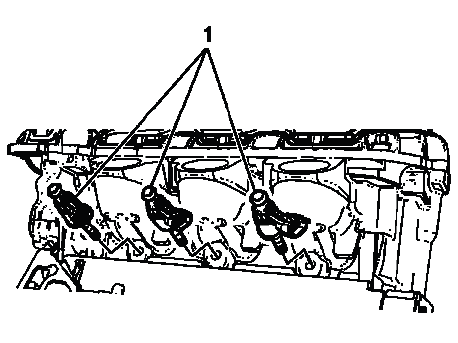
Fig. 22: Identifying Power Steering Fluid Reservoir Outlet Hose
8. Disconnect the power steering gear inlet hose (1) from the power steering pump. Use care when loosening the fitting so the line is not twisted or bent. If the fitting is tight, support the pump and line properly to avoid stressing the hose or damaging the threaded connection.
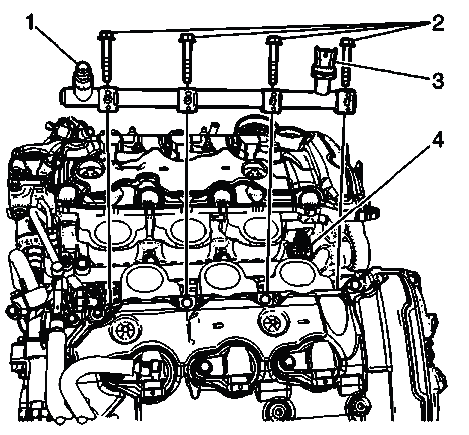
Fig. 23: Identifying Power Steering Gear Inlet Hose And Fitting
9. Remove the power steering pump bolts (2). Support the pump as the last bolt is removed so the unit does not drop, bind against nearby components, or spill remaining fluid onto the engine or exhaust area.
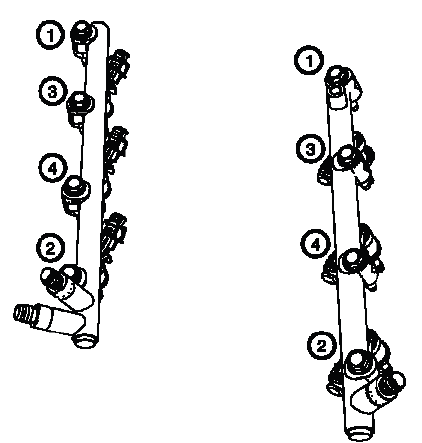
Fig. 24: View Of Power Steering Pump & Bolts
10. Remove the power steering pump (1) from the vehicle. Guide the pump out carefully, watching the pulley, mounting ears, hose fittings, and surrounding brackets. Do not force the pump past nearby parts, because the aluminum housing and fittings can be damaged by impact.
11. Transfer any parts as needed. Compare the removed pump with the replacement pump before installation, including fittings, pulley position, brackets, seals, and mounting points. This step helps prevent installation delays and ensures the new pump is prepared correctly for the Buick Enclave power steering system.
Installation Procedure
1. Install the power steering pump (1) to the vehicle. Position the pump squarely against its mounting surface before installing the bolts. The pump should sit flush without being pulled into place by the fasteners.
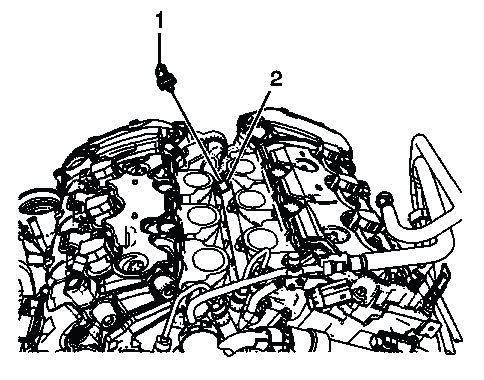
Fig. 25: View Of Power Steering Pump & Bolts
2. Install the power steering pump bolts (2) and tighten to 50 N.m (37 lb ft). Tighten the fasteners evenly so the pump remains aligned with the drive belt path and does not place side load on the pulley or bracket.
CAUTION: Refer to Fastener Caution.
3. Connect the power steering gear inlet hose fitting (1) to the power steering pump and tighten to 34 N.m (25 lb ft). Start the fitting by hand to avoid cross-threading, then tighten it to specification. A clean, properly seated fitting helps prevent pressure-side leaks and air entry.
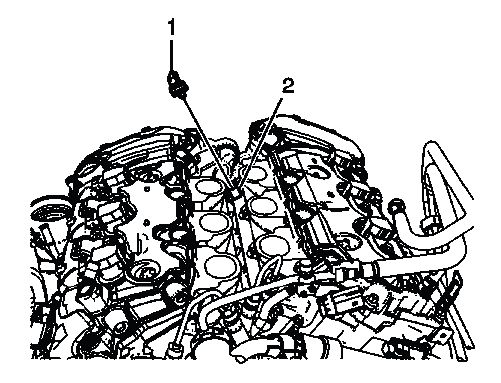
Fig. 26: Identifying Power Steering Gear Inlet Hose And Fitting
4. Connect the power steering fluid reservoir outlet hose (1) to the power steering pump. Make sure the hose is fully seated on the pump fitting and routed without kinks, twists, or contact with sharp edges. A restricted or loose supply hose can cause pump noise, aerated fluid, and poor steering assist.
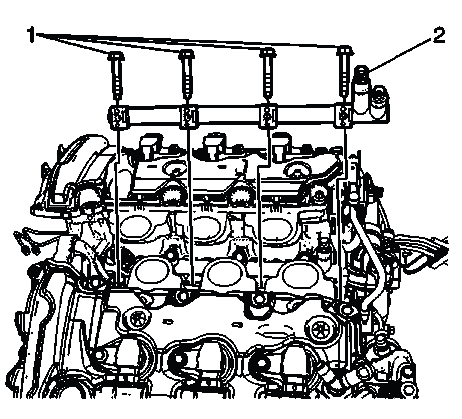
Fig. 27: Identifying Power Steering Fluid Reservoir Outlet Hose
5. Clean any excess fluid from the vehicle and remove the drain pans. Wipe the pump, hoses, fittings, brackets, frame areas, and nearby engine components so any fresh seepage can be identified during the final inspection.
6. Install the right side catalytic convertor. Refer to Catalytic Converter Replacement - Right Side. Keep the power steering lines clear of hot exhaust components and confirm that no fluid remains on the converter or heat shields before operation.
7. Install the steering gear heat shield. Refer to Steering Gear Heat Shield Replacement. The heat shield helps protect steering components and nearby hydraulic lines from exhaust heat, so it should be installed securely in its original position.
8. Install the drive belt. Refer to Drive Belt Replacement. Check belt routing, pulley alignment, and belt seating in each groove before starting the engine. A misrouted or partially seated belt can create noise or damage the new pump pulley.
9. Fill and bleed the power steering system. Refer to Power Steering System Bleeding. For Buick Enclave pump replacement, bleeding is essential because trapped air can cause foaming, whine, shudder, or inconsistent steering effort.
10. Install the fuel injector sight shield. Refer to Fuel Injector Sight Shield Replacement. After the shield is installed, perform one more visual check around the pump, hoses, and reservoir for leaks, loose connections, or fluid residue.
STEERING LINKAGE OUTER TIE ROD REPLACEMENT
Special Tools
- J-24319-B Steering Linkage and Tie Rod Puller
- SA91100C Tie Rod Separator
For equivalent regional tools, refer to Special Tools. Use the correct separator or puller to protect the joint, seal, and steering knuckle from unnecessary damage during removal.
Removal Procedure
1. Remove the front tire and wheel assembly. Refer to Tire and Wheel Removal and Installation. With the wheel removed, inspect the tie rod area for torn boots, corrosion, impact marks, or signs of looseness before disassembly begins.
2. Remove the steering linkage outer tie rod nut (1). If the nut or stud is corroded, clean the exposed threads before removal so the nut does not bind and damage the stud.
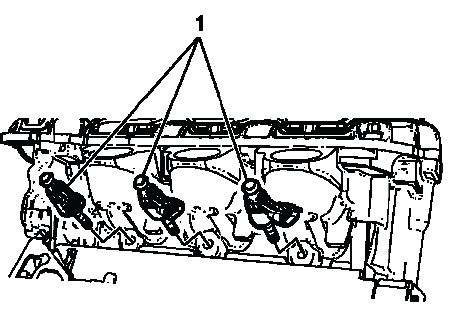
Fig. 28: Identifying Steering Linkage Outer Tie Rod Nut
3. Loosen the steering linkage inner tie rod nut (1). Do not move it farther than needed. Keeping its position helps preserve the existing toe setting closely enough for the vehicle to be moved safely to an alignment check after service.
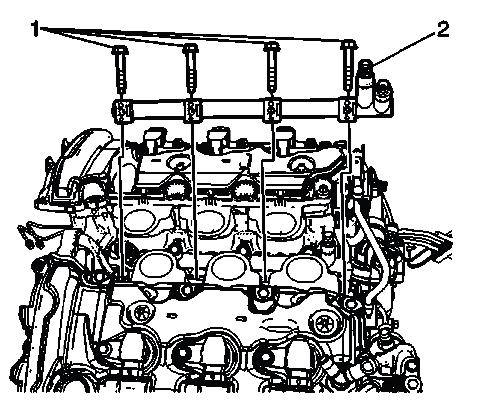
Fig. 29: View Of Steering Linkage Inner Tie Rod Nut
4. Use the J-24319-B puller for Buick, GMC and Chevrolet and the SA91100C separator for Saturn in order to disconnect the steering linkage outer tie rod from the steering knuckle. Apply the tool squarely to the joint so the stud separates cleanly without bending the tie rod or damaging the knuckle.
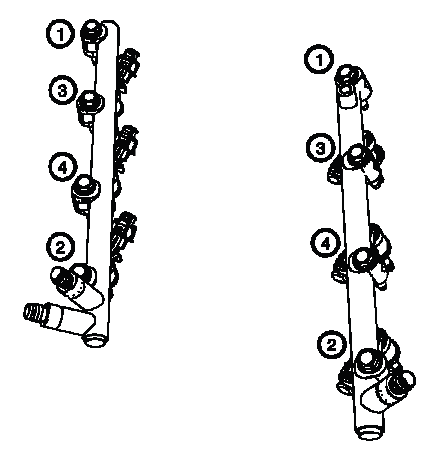
Fig. 30: Removing Outer Tie Rod Assembly From Steering Knuckle
CAUTION: Do not attempt to free the ball stud by using a pickle fork or wedge type tool, because seal or bushing damage could result. Use the proper tool to separate all ball joints.
5. Remove the steering linkage outer tie rod (2) from the steering linkage inner tie rod (1). Count the total number of complete rotations needed to remove the outer tie rod from the inner tie rod. Record the count, because reinstalling the replacement part with the same number of turns helps keep the toe setting close to its previous position until alignment is performed.
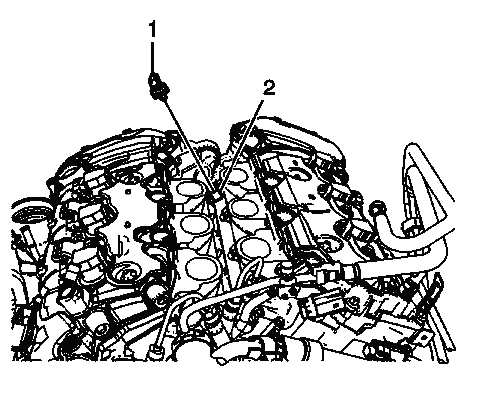
Fig. 31: Identifying Steering Linkage Inner & Outer Tie Rod
Installation Procedure
1. Install the steering linkage outer tie rod (3) to the steering linkage inner tie rod (1) using the same number of complete rotations counted during removal. Do not tighten the steering linkage inner tie rod nut (2) yet. This keeps the adjustment movable until the outer tie rod is seated in the steering knuckle.
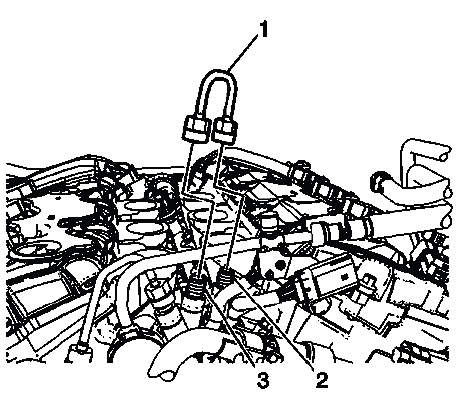
Fig. 32: Identifying Outer Tie Rod Assembly & Inner Tie Rod Assembly
2. Connect the steering linkage outer tie rod (2) to the steering knuckle (1). Make sure the tapered stud seats fully in the knuckle before the nut is tightened. A properly seated taper prevents joint movement and helps maintain precise steering response.
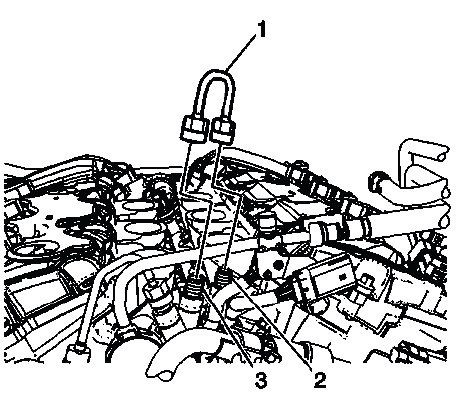
Fig. 33: View Of Outer Tie Rod & Steering Knuckle
3. Make sure the threads on the steering linkage outer tie rod nut (1) and on the outer tie rod stud are clean and free from corrosion. If the threads on any part are corroded, replace the corroded part. Clean threads allow the nut to develop the required drag and tightening force.
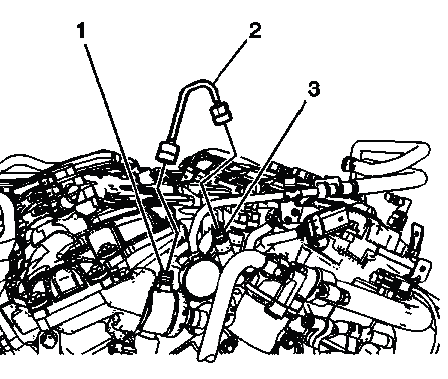
Fig. 34: Identifying Steering Linkage Outer Tie Rod Nut
4. Install the steering linkage outer tie rod nut to the outer tie rod stud. Make sure the nut develops 2 N.m (18 lb in) of torque or drag on the stud before the nut seats. If the nut does not meet this specification, replace the nut. This drag helps confirm that the nut can hold properly after final tightening.
CAUTION: Refer to Fastener Caution.
5. Tighten the steering linkage outer tie rod nut to 30 N.m (22 lb ft). After tightening, verify that the joint is seated, the boot is not twisted or pinched, and the steering linkage moves smoothly. On a Buick Enclave, a final wheel alignment check is recommended after outer tie rod replacement to restore correct toe and tire wear control.
6. Tighten the steering linkage outer tie rod nut an additional 120º. Use a smooth, controlled turn and avoid over-rotating the nut, because the final angle is part of the required clamping load for the tie rod stud.
7. Ensure that 2.5-4.5 steering linkage outer tie rod threads are visible beyond the steering linkage outer tie rod nut nylon. This thread exposure confirms that the nut has engaged properly and that the locking portion of the nut is seated as intended.
8. Install the front tire and wheel assembly. Refer to Tire and Wheel Removal and Installation. After the wheel is installed, make sure it is seated flat against the hub and that no dirt, rust scale, or debris is trapped between the mounting surfaces.
9. Measure and adjust the front toe. Refer to Wheel Alignment - Steering Wheel Angle and/or Front Toe Adjustment. Any outer tie rod service can change toe angle, so the alignment must be checked before the Buick Enclave is returned to normal driving.
10. Tighten the steering linkage inner tie rod nut (1) to 75 N.m (55 lb ft). Hold the tie rod securely while tightening so the adjustment does not move and the final toe setting remains accurate.
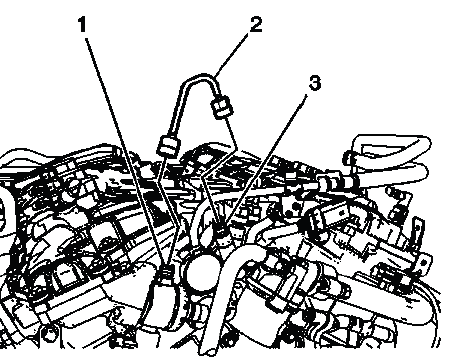
Fig. 35: View Of Steering Linkage Inner Tie Rod Nut
POWER STEERING COOLER PIPE/HOSE REPLACEMENT
Removal Procedure
1. Remove the right front frontwards wheelhouse liner. Refer to Front Wheelhouse Front Liner Replacement (Acadia, Enclave, Traverse). Removing the liner gives access to the cooler pipe area and reduces the chance of damaging the hose, clamp, or cooler connection during service.
2. Place drain pans under the vehicle as needed. Power steering fluid may drain from the pipe, hose, and cooler when the connection is opened, so position the pans before loosening any clamp.
3. Loosen the power steering cooler pipe clamp (2) and disconnect the power steering cooler pipe (3) from the power steering fluid cooler (1). Work the pipe free carefully and avoid pulling at an angle, since the cooler fitting and pipe end must remain round and undamaged for a leak-free connection.
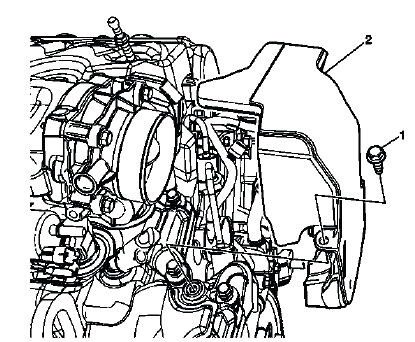
Fig. 36: Identifying Power Steering Fluid Cooler, Power Steering Cooler Pipe & Clamp
4. Remove the power steering gear outlet hose bracket bolt (1). Keep the bracket supported as the bolt is removed so the hose and cooler pipe are not pulled out of position.
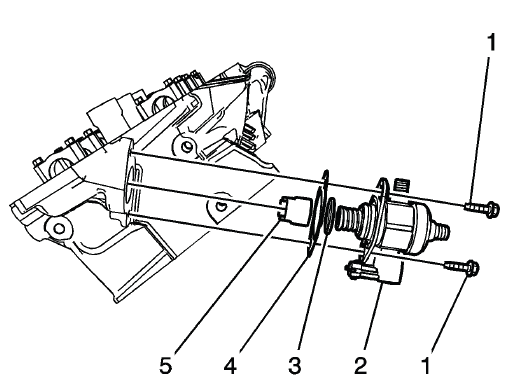
Fig. 37: View Of Power Steering Gear Outlet Hose Bracket Bolt
5. Remove and discard the power steering gear outlet hose clamp (2). This clamp should not be reused because its holding force and shape may be reduced after removal.
6. Disconnect the power steering cooler pipe from the power steering gear outlet hose (4, 3). Separate the connection slowly and keep the hose end clean so dirt does not enter the hydraulic system.
7. Remove any plastic retaining clips on the power steering cooler pipe and discard them. Note the original routing and clip locations before removal, since the replacement pipe must be secured away from moving parts, sharp edges, and hot components.
8. Remove the power steering cooler pipe from the vehicle. Guide it out of the vehicle without bending nearby lines or scratching the cooler, frame, or wheelhouse area.
Installation Procedure
1. Install the power steering cooler pipe to the vehicle. Follow the original routing and confirm that the pipe is not twisted, kinked, or contacting sharp brackets. Correct routing is important for both fluid flow and long-term hose durability.
2. Install a new power steering cooler pipe clamp (2). Position the clamp over the proper sealing area before tightening so the connection seals evenly around the pipe.
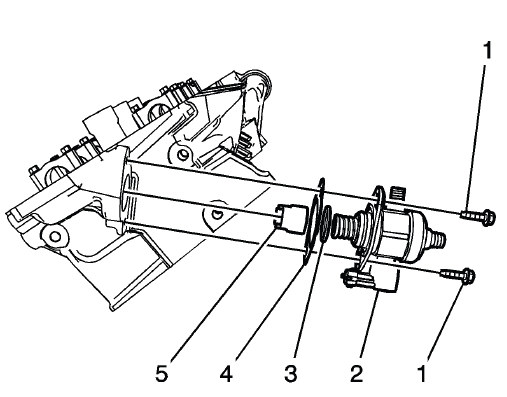
Fig. 38: View Of Power Steering Gear Outlet Hose Bracket Bolt
3. Connect the power steering cooler pipe to the power steering gear outlet hose (4, 3). Push the pipe fully into the hose and verify that the joint is seated straight before the clamp is secured.
4. Install the power steering gear outlet hose bracket bolt (1) and tighten to 9 N.m (80 lb in). The bracket holds the hose in its proper position and helps prevent vibration, rubbing, and stress at the connection.
CAUTION: Refer to Fastener Caution.
5. Connect the power steering cooler pipe (3) to the power steering fluid cooler (1) and tighten the power steering cooler pipe clamp (2). Make sure the pipe is fully seated at the cooler and that the clamp is not installed over the edge of the fitting.
Fig. 39: Identifying Power Steering Fluid Cooler, Power Steering Cooler Pipe & Clamp
6. Clean any excess fluid from the vehicle and remove the drain pans. Wipe the cooler, pipe, hose ends, brackets, and frame area so a fresh leak can be identified clearly during final inspection.
7. Install the right front frontwards wheelhouse liner. Refer to Front Wheelhouse Front Liner Replacement (Acadia, Enclave, Traverse). Confirm that the liner is secured correctly and does not rub against the cooler pipe or hose.
8. Fill and bleed the power steering system. Refer to Power Steering System Bleeding. On the Buick Enclave, bleeding after cooler pipe or hose service helps remove air that can cause pump noise, foaming fluid, or uneven steering assist.
POWER STEERING FLUID COOLER REPLACEMENT
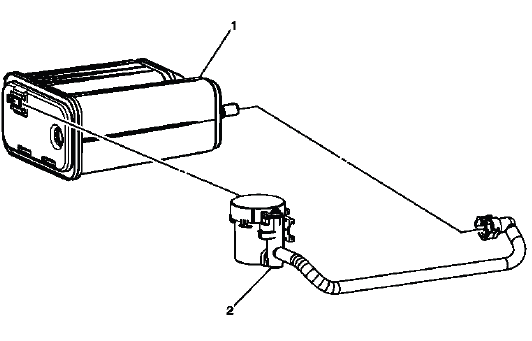
Fig. 40: View Of Power Steering Fluid Cooler
Power Steering Fluid Cooler Replacement
The power steering fluid cooler helps control hydraulic fluid temperature during steering operation. When replacing the cooler, inspect the connected pipes, hoses, clamps, and mounting points for leaks, corrosion, restriction, or damage. A damaged cooler can reduce fluid cooling efficiency and may contribute to steering noise, fluid breakdown, or repeated leaks.
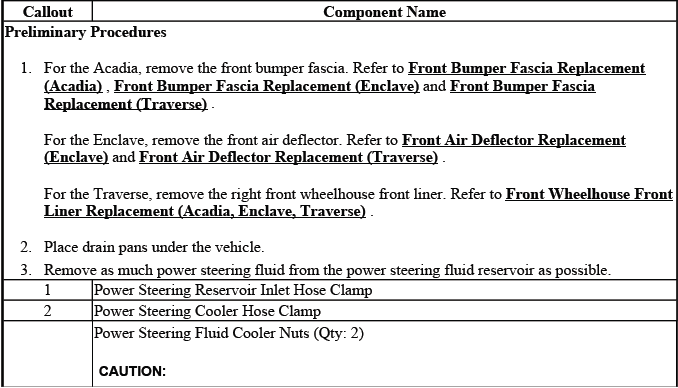
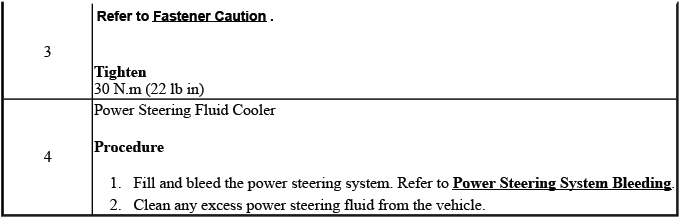
After cooler replacement, refill the system with the specified fluid and bleed it thoroughly. Check for leaks at all cooler connections after the steering system has been cycled and the fluid level has stabilized.
POWER STEERING FLUID RESERVOIR INLET HOSE REPLACEMENT
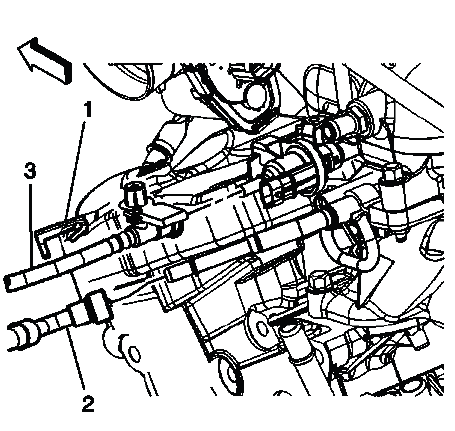
Fig. 41: View Of Power Steering Reservoir Inlet Hose
Power Steering Fluid Reservoir Inlet Hose Replacement
The power steering fluid reservoir inlet hose must be routed exactly as designed so it does not kink, rub, or contact hot engine components. During replacement, inspect the hose ends, clamps, and reservoir fitting for wear or distortion. A loose inlet connection may allow air to enter the system even when no obvious external leak is visible.

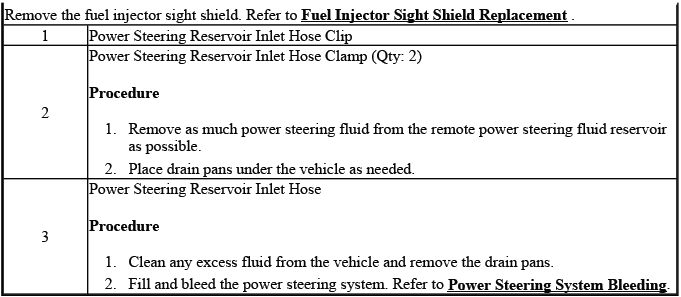
Once the inlet hose has been replaced, clean any spilled fluid, refill the reservoir as needed, and bleed the hydraulic steering system. Confirm that the hose is clipped in place and has clearance from belts, pulleys, brackets, and sharp edges.
POWER STEERING FLUID RESERVOIR OUTLET HOSE REPLACEMENT
Removal Procedure
1. Remove the fuel injector sight shield. Refer to Fuel Injector Sight Shield Replacement. This improves access to the remote reservoir and helps prevent the shield from being damaged during hose removal.
2. Remove as much power steering fluid from the remote power steering fluid reservoir as possible. Use a clean suction tool or fluid extractor and place the used fluid in an approved container. Reducing the fluid level before disconnecting the hose helps limit spills.
3. Place drain pans under the vehicle as needed. Fluid may still drain from the hose and pump connection even after the reservoir has been emptied.
4. Disconnect the power steering fluid reservoir outlet hose (1) from the remote power steering fluid reservoir. Release the clamp carefully, then work the hose loose without prying against the reservoir fitting.
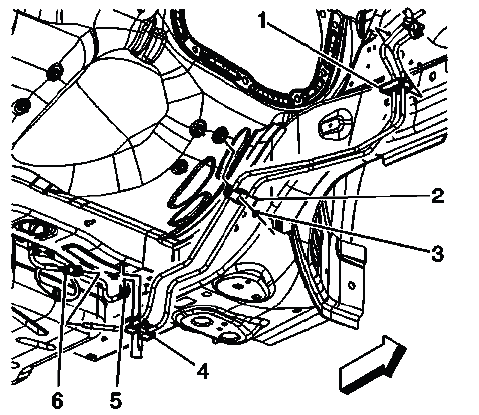
Fig. 42: View Of Power Steering Fluid Reservoir Outlet Hose & Clamp
5. Disconnect the power steering fluid reservoir outlet hose (1) from the power steering pump. Keep the hose end raised if possible to reduce fluid loss, and inspect the pump-side connection for residue, swelling, or signs of leakage.
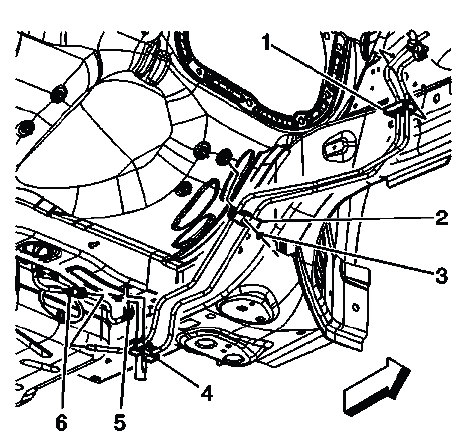
Fig. 43: Identifying Power Steering Fluid Reservoir Outlet Hose
6. Remove the power steering fluid reservoir outlet hose from the vehicle. Follow the hose routing carefully so clips, retainers, and nearby components are not damaged during removal.
NOTE: Disconnect any clips as needed before attempting removal.
Installation Procedure
1. Install the power steering fluid reservoir outlet hose to the vehicle. Route the hose in the same path used by the original part so it is not stretched, twisted, kinked, or positioned against sharp edges.
NOTE: Clip the power steering fluid reservoir hose in place in its original routing.
2. Connect the power steering fluid reservoir outlet hose (1) to the power steering pump. Make sure the hose is fully seated and the clamp is positioned over the correct sealing area. For Buick Enclave power steering service, this connection must remain airtight because the pump inlet side can draw air into the system if the hose is loose or poorly seated.
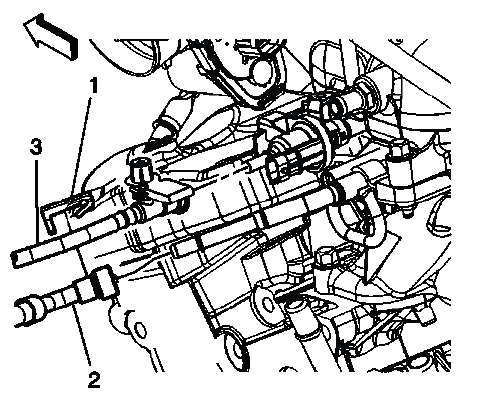
Fig. 44: Identifying Power Steering Fluid Reservoir Outlet Hose
3. Connect the power steering fluid reservoir outlet hose (1) to the remote power steering fluid reservoir. Push the hose fully onto the reservoir fitting and position the clamp over the correct sealing area. The hose should sit straight, without twisting or pulling against the reservoir.
Fig. 45: View Of Power Steering Fluid Reservoir Outlet Hose & Clamp
4. Clean all excess fluid from the vehicle and remove the drain pans. Wipe the reservoir, hose ends, pump area, steering gear connections, frame surfaces, and nearby brackets so any fresh seepage can be identified during the final inspection.
5. Fill and bleed the power steering system. Refer to Power Steering System Bleeding. Bleeding is required after hose service because trapped air can cause foaming, pump whine, steering shudder, or inconsistent assist.
6. Install the fuel injector sight shield. Refer to Fuel Injector Sight Shield Replacement. After the shield is installed, confirm that it does not contact the power steering hoses or disturb their routing.
POWER STEERING GEAR INLET PIPE/HOSE REPLACEMENT
Removal Procedure
1. Remove the right side catalytic convertor. Refer to Catalytic Converter Replacement - Right Side. Allow the exhaust components to cool before working near this area, and keep power steering fluid away from hot exhaust surfaces.
2. Remove as much power steering fluid from the remote power steering fluid reservoir as possible. Use a suitable suction tool or extractor and transfer the old fluid into an approved container. Lowering the fluid level before hose removal helps reduce spills when the hydraulic connections are opened.
3. Place drain pans under the vehicle as needed. Position them below the pump, steering gear, and hose routing areas because fluid can drain from more than one point once the line is disconnected.
4. Disconnect the power steering fluid reservoir outlet hose from the power steering pump. Refer to Power Steering Fluid Reservoir Outlet Hose Replacement. Keep the hose end clean and raised where possible to reduce fluid loss and prevent dirt from entering the system.
5. Unclip the power steering fluid reservoir outlet hose from the power steering gear inlet hose bracket. Release the clip carefully so the hose and bracket are not damaged. Note the original routing because it must be restored during installation to prevent rubbing, heat exposure, or vibration noise.
Fig. 46: Identifying Power Steering Gear Inlet Hose Bracket Nut & Bolt
6. Remove the power steering gear inlet hose bracket bolt (1). Support the hose and bracket while removing the bolt so the line is not pulled out of position.
7. Remove the power steering gear inlet hose bracket nut (2). Keep the hardware organized for installation and inspect the bracket for bending, corrosion, or wear marks from hose contact.
8. Disconnect the power steering gear inlet hose (1) from the power steering pump. Start loosening the fitting carefully and support the line to avoid twisting the metal section. A distorted line or damaged fitting can cause leakage after reassembly.
Fig. 47: Identifying Power Steering Gear Inlet Hose And Fitting
9. Remove the power steering gear inlet hose retaining plate bolt (1). The retaining plate helps keep the hose seated in the steering gear, so remove it carefully and inspect the plate area for debris, corrosion, or damaged sealing surfaces.
Fig. 48: Identifying Power Steering Gear Inlet Hose Retaining Plate Bolt
10. Remove the power steering gear inlet and outlet pipe clip bolt (2). This clip secures the hydraulic lines in their designed position and prevents movement during vehicle operation.
11. Remove the power steering gear inlet hose from underneath the vehicle. Guide the hose out slowly, following its original path, and avoid bending nearby lines or scraping the hose against sharp edges, brackets, or exhaust-related components.
Installation Procedure
1. Install the power steering gear inlet hose to the vehicle from underneath the vehicle and place the power steering gear inlet hose end into the steering gear. Route the hose exactly as designed, making sure it is not kinked, twisted, or positioned against hot or sharp components. On the Buick Enclave, correct hose routing is important for steering feel, fluid flow, and long-term hose durability.
NOTE: Hand tighten the bolts and nut in the following steps until all parts are in place. Once all bolts, the nut and the part are in place they can be torqued to the specifications.
2. Install the power steering gear inlet hose retaining plate bolt (1) and tighten to 12 N.m (106 lb in). Start the bolt by hand first so the retaining plate seats evenly and the threads are not damaged.
Fig. 49: Identifying Power Steering Gear Inlet Hose Retaining Plate Bolt
CAUTION: Refer to Fastener Caution.
3. Install the power steering gear inlet and outlet pipe clip bolt (2) and tighten to 9 N.m (80 lb in). Confirm that both pipes are correctly held by the clip and are not forced out of alignment.
4. Connect the power steering gear inlet hose (1) to the power steering pump and tighten to 34 N.m (25 lb ft). Thread the fitting by hand before using a wrench. A properly started fitting protects the pump threads and helps prevent pressure-side leaks.
Fig. 50: Identifying Power Steering Gear Inlet Hose And Fitting
5. Install the power steering gear inlet hose bracket and bolt (1) and tighten to 9 N.m (80 lb in). The bracket should hold the hose securely without pulling the line sideways or creating tension at the pump fitting.
Fig. 51: Identifying Power Steering Gear Inlet Hose Bracket Nut & Bolt
6. Install the power steering gear inlet hose bracket and nut (2) and tighten to 9 N.m (80 lb in). After tightening, check that the hose is stable in the bracket and has clearance from moving parts, exhaust heat, and sharp edges.
7. Connect the power steering fluid reservoir outlet hose to the power steering pump. Refer to Power Steering Fluid Reservoir Outlet Hose Replacement. Make sure the hose is fully seated and the clamp is placed over the correct sealing area.
8. Clip the power steering fluid reservoir outlet hose to the power steering gear inlet hose bracket. The clip should hold the hose in its original path without crushing it or allowing it to rub against adjacent components.
9. Clean any excess fluid from the vehicle and remove the drain pans. Clean surfaces are important because old spilled fluid can be mistaken for a new leak during the final inspection.
10. Install the right side catalytic convertor. Refer to Catalytic Converter Replacement - Right Side. Verify that the power steering hoses and pipes have proper clearance from the converter and heat shields.
11. Fill and bleed the power steering system. Refer to Power Steering System Bleeding. After the Buick Enclave power steering hose service is complete, bleeding removes trapped air and helps restore quiet pump operation and smooth steering assist.
POWER STEERING GEAR OUTLET PIPE/HOSE REPLACEMENT
Removal Procedure
1. Remove as much power steering fluid from the remote power steering fluid reservoir as possible. Removing fluid first helps control spills when the outlet hose is separated from the steering gear and related hose connections.
2. Hoist and raise the vehicle. Refer to Lifting and Jacking the Vehicle. Make sure the vehicle is safely supported before working underneath it or pulling on the steering gear outlet hose.
3. Place drain pans under the vehicle as needed. Fluid may drain from the steering gear, hose, cooler line, and connection points after the system is opened.
4. Remove the power steering gear inlet hose retaining plate bolt (1) and the power steering gear inlet and outlet pipe clip bolt (2). Removing these fasteners releases the line support and allows the outlet hose to be withdrawn without bending or stressing the pipe assembly.
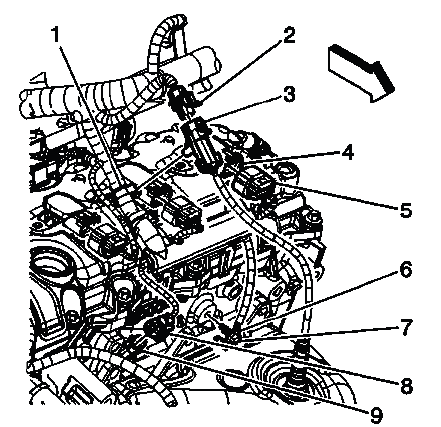
Fig. 52: Identifying Power Steering Gear Inlet Hose Retaining Plate Bolt
5. Pull the power steering gear outlet hose out of the steering gear. Move it straight out of the port where possible so the sealing area is not scratched or distorted.
6. Remove the power steering gear outlet hose bracket bolt (1). Keep the hose supported while the bracket is loose to prevent unnecessary strain at the rubber and metal hose sections.
Fig. 53: View Of Power Steering Gear Outlet Hose Bracket Bolt
7. Remove and discard the power steering gear outlet hose crimp clamp (2). This clamp is not intended for reuse because its clamping force and shape may be reduced after removal.
8. Disconnect the rubber segment from the metal segment of the power steering gear outlet hose (3, 4). Separate the connection carefully and keep both ends clean so debris does not enter the hydraulic system.
9. Remove any plastic retaining clips on the power steering gear outlet hose and discard them. Note the original clip locations before removal so the replacement hose can be secured in the same path.
10. Remove the power steering gear outlet hose from the vehicle. Guide the hose out from underneath the vehicle without bending nearby lines or dragging the hose across sharp brackets, frame edges, or heat shields.
Installation Procedure
1. Position the power steering gear outlet hose to the vehicle. Follow the original routing and check for clearance around the steering gear, cooler pipe, exhaust area, suspension components, and frame brackets.
2. Position a new power steering gear outlet hose clamp (2). Place the clamp over the correct sealing area before tightening, and confirm that the rubber segment is fully seated on the metal hose section.
Fig. 54: View Of Power Steering Gear Outlet Hose Bracket Bolt
3. Connect the rubber segment to the metal segment of the power steering gear outlet hose (3, 4). Push the hose fully onto the metal tube until it is seated in the correct position, and make sure the joint is straight before securing it. A hose that is only partially seated can leak once the system is filled and pressure is restored.
4. Crimp the new power steering gear outlet hose crimp clamp. Use the correct crimping method so the clamp applies even pressure around the hose without cutting into the rubber or leaving a loose area at the connection.
5. Install the power steering gear outlet hose bracket bolt (1) and tighten to 9 N.m (80 lb in). The bracket should hold the hose in its original routing and prevent vibration, rubbing, or strain at the steering gear connection.
CAUTION: Refer to Fastener Caution.
6. Insert the steering gear outlet hose into the steering gear. Guide the hose end into the port squarely and avoid forcing it at an angle. The sealing surface must remain clean and undamaged for the hydraulic connection to remain leak-free.
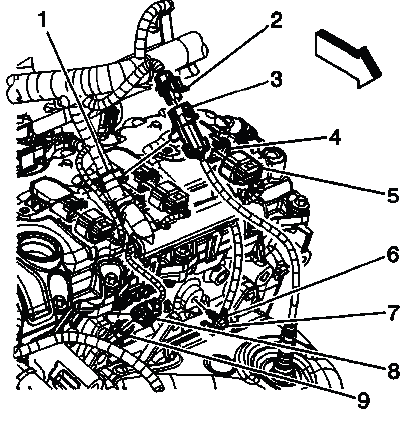
Fig. 55: Identifying Power Steering Gear Inlet Hose Retaining Plate Bolt
7. Install the power steering gear inlet hose retaining plate bolt (1) and tighten to 12 N.m (106 lb in). The retaining plate must sit flat against the steering gear so the hose ends stay fully seated during steering operation.
8. Install the power steering gear inlet and outlet pipe clip bolt (2) and tighten to 9 N.m (80 lb in). Confirm that both lines are secured in the clip and that neither pipe is pulled sideways, twisted, or contacting nearby components.
9. Clean any excess fluid from the vehicle and remove the drain pans. Wipe the steering gear, hose connections, brackets, frame area, and surrounding parts so any fresh leak can be identified after the system is filled and cycled.
10. Fill and bleed the power steering system. Refer to Power Steering System Bleeding. On the Buick Enclave, bleeding after hose or steering gear line service is necessary to remove trapped air that can cause pump noise, fluid foaming, shudder, or uneven steering assist.
STEERING GEAR HEAT SHIELD REPLACEMENT
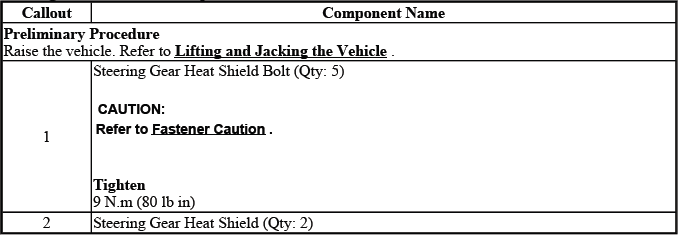
Fig. 56: View Of Steering Gear Heat Shield
Steering Gear Heat Shield Replacement
The steering gear heat shield protects the steering gear, hydraulic lines, and nearby components from exhaust heat. During replacement, inspect the shield for cracking, distortion, missing fasteners, or signs of contact with the exhaust system. A damaged or missing heat shield can allow excessive heat to reach the steering components, which may shorten hose life, affect seals, or contribute to fluid deterioration.
When installing the heat shield, position it exactly as designed and make sure it does not touch the steering gear, hydraulic hoses, intermediate shaft, or exhaust components. Proper clearance prevents rattles and protects the power steering system during normal engine and exhaust operation.
STEERING GEAR REPLACEMENT
Removal Procedure
1. Lock the steering column in the straight-ahead position. The front wheels should be pointing straight ahead before any steering shaft, steering gear, or related linkage connection is separated.
CAUTION: With wheels of the vehicle facing straight ahead, secure the steering wheel utilizing steering column anti-rotation pin, steering column lock or a strap to prevent rotation. Locking of the steering column will prevent damage and a possible malfunction of the SIR system.
The steering wheel must be secured in position before disconnecting the following components:
- The steering column
- The intermediate shaft(s)
- The steering gear
After disconnecting these components, do not rotate the steering wheel or move the front tires and wheels. Failure to follow this procedure may cause the SIR coil assembly to become un-centered and cause possible damage to the SIR coil. If you think the SIR coil has become un-centered, refer to your specific SIR coil's centering procedure to re-center SIR Coil.
This caution is especially important because the SIR coil is designed to operate within a limited rotational range. If the steering wheel is allowed to turn freely while the steering gear or intermediate shaft is disconnected, the coil can become off-center and may be damaged when the steering is later turned lock-to-lock.
2. Place drain pans under the vehicle. Position them below the steering gear and hydraulic hose connection areas because power steering fluid may drain from several points during removal.
3. Remove as much power steering fluid from the power steering fluid reservoir as possible. Use a clean suction tool or fluid extractor and dispose of the used fluid properly. Lowering the fluid level before disconnecting the lines helps reduce spills and keeps the work area cleaner.
4. Disconnect the steering linkage outer tie rods from the steering knuckles. Refer to Steering Linkage Outer Tie Rod Replacement. Keep the tie rod ends protected from impact, and avoid damaging the boots during separation.
5. Disconnect the stabilizer shaft links at the stabilizer shaft. Refer to Stabilizer Shaft Link Replacement. This provides additional clearance for lowering the frame and accessing the steering gear.
6. Disconnect the intermediate steering shaft from the steering gear. Refer to Intermediate Steering Shaft Replacement. Mark or note the shaft relationship as required by the service procedure so alignment can be restored during installation.
7. Remove the rear propeller shaft, if equipped. Refer to Propeller Shaft Replacement. Support the shaft during removal and keep the joints from hanging at a sharp angle.
8. Remove the underbody rear side rails. Refer to Underbody Rear Side Rail Replacement. Removing these components creates the clearance needed for frame movement and steering gear removal.
9. Remove the frame brace. Refer to Frame Brace Replacement. Keep the brace hardware organized and inspect the brace for corrosion or damage before reinstallation.
10. Remove the right side catalytic convertor. Refer to Catalytic Converter Replacement - Right Side. Allow the exhaust system to cool fully before working in this area, and keep power steering fluid away from hot exhaust surfaces.
11. Remove the steering gear heat shields. Refer to Steering Gear Heat Shield Replacement. Removing the shields improves access to the steering gear and hydraulic line connections.
12. Position adjustable jack stands underneath the left and right sides of the vehicle at the rear of the front frame. The frame must be supported evenly before the mounting bolts are removed or loosened, since controlled lowering is required to gain steering gear clearance.
13. Remove the left and right front frame reinforcement mounting bolts (1). Keep the frame supported and do not allow it to drop or shift unexpectedly as the fasteners are removed.
Fig. 57: Front Frame Reinforcement Mounting Bolts
14. Loosen the front frame reinforcement mounting bolts (1). Loosen the bolts gradually and evenly so the frame remains controlled and does not bind against the body or nearby components.
Fig. 58: Identifying Front Frame Mounting Bolts
15. Loosen the front frame mounting bolts (2). These bolts help retain the frame position, so they should be handled carefully and replaced if removed as required by the service note.
NOTE: When the front frame mounting bolts are removed always discard and replace them with new bolts.
16. Loosen the front frame rear mounting bolts (1). Lowering the frame should be done only enough to gain the needed clearance, not more than necessary.
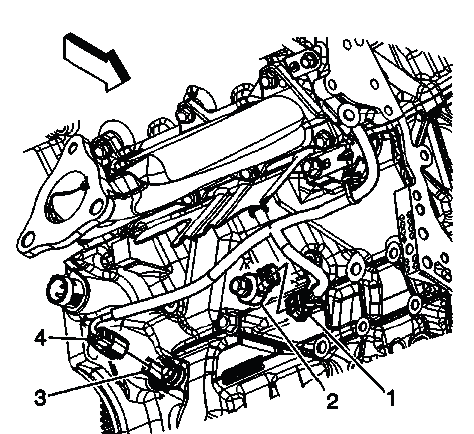
Fig. 59: Locating Rear Frame Mounting Bolts
NOTE: When the front frame rear mounting bolts are removed always discard and replace them with new bolts.
17. Lower the front frame (1) from the frame rail (2) until enough clearance is gained to remove the steering gear. Lower the frame slowly and watch the hoses, wiring, exhaust components, mounts, and steering-related parts to make sure nothing is stretched or pinched. For Buick Enclave steering gear replacement, controlled frame lowering is one of the most important parts of the removal process.
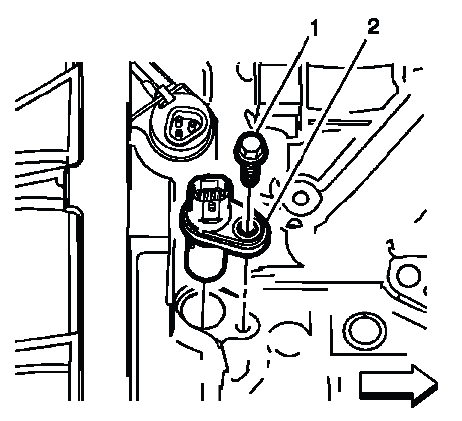
Fig. 60: Identifying Frame & Frame Rail
18. Remove the power steering gear inlet hose retaining plate bolt (1). Keep the retaining plate and line area clean so dirt does not enter the open hydraulic connections.
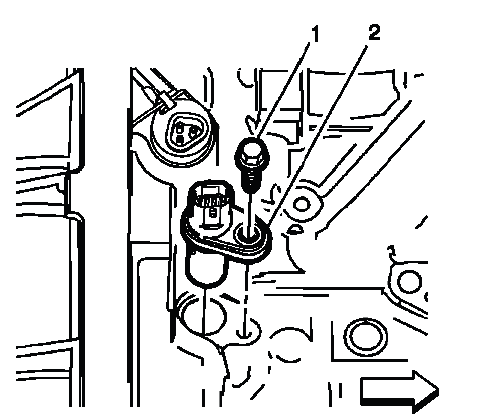
Fig. 61: Identifying Power Steering Gear Inlet Hose Retaining Plate Bolt
19. Disconnect the power steering gear inlet and outlet hoses from the steering gear. Cap or cover the openings where possible to prevent fluid loss and contamination. Avoid bending the lines because damaged fittings or distorted tubing can cause leaks after installation.
20. Remove the power steering gear inlet and outlet pipe clip bolt (2). This releases the line support and allows the hoses to move away from the steering gear without being forced.
21. Separate the power steering gear inlet and outlet hoses from the power steering gear inlet and outlet pipe clip. Move the hoses aside carefully and keep them clear of the steering gear removal path.
22. Remove the left side steering gear nuts (1) and bolts (2). Support the steering gear before removing the final fastener so the assembly does not shift suddenly or contact nearby components.
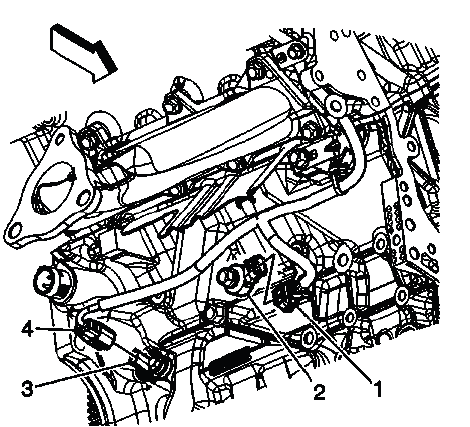
Fig. 62: View Of Left Side Steering Gear Nuts & Bolts
23. Remove the right side steering gear bolts (1). Support the steering gear before the final bolt is removed so the assembly does not shift suddenly, bind against the frame, or damage nearby hydraulic lines.
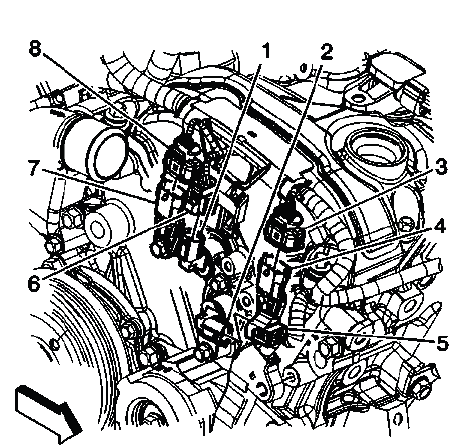
Fig. 63: Identifying Right Side Steering Gear Bolts
24. Remove the steering gear from the vehicle toward the left side of the vehicle. Guide the unit out slowly and watch the hose ports, mounting ears, rack boots, and surrounding brackets so the steering gear is not scratched, dropped, or forced through the opening.
Installation Procedure
1. Position the steering gear in the vehicle from the left side of the vehicle. Move it into place carefully and align the mounting points before installing any fasteners. The steering gear should sit naturally against its mounting surfaces without being pulled into position by the bolts.
2. Install the left side steering gear nuts (1) and bolts (2) and tighten to 180 N.m (133 lb ft). Start the hardware by hand first, then tighten evenly so the steering gear seats squarely against the frame.
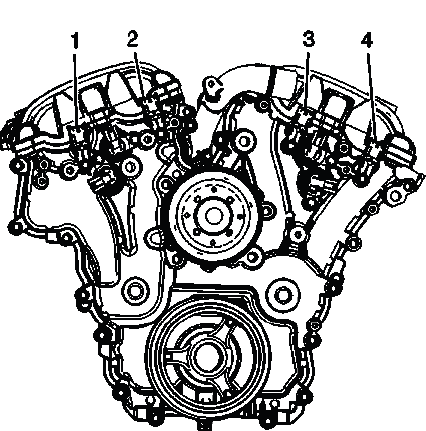
Fig. 64: View Of Left Side Steering Gear Nuts & Bolts
CAUTION: Refer to Fastener Caution.
NOTE: Start all bolts by hand before finalizing any torques.
3. Install the right side steering gear bolts (1) and tighten to 100 N.m (74 lb ft). Confirm that the right side of the gear is fully seated and that no hose, wire, shield, or bracket is trapped between the gear and the mounting area.
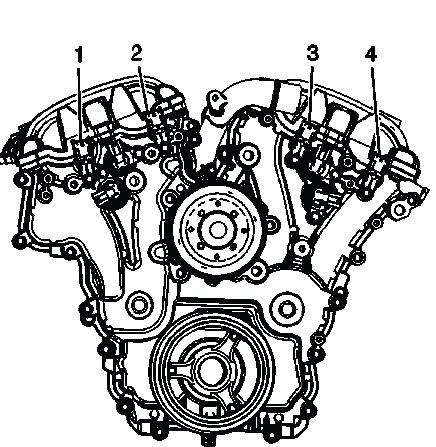
Fig. 65: Identifying Right Side Steering Gear Bolts
4. Install the power steering gear inlet and outlet hoses to the steering gear. Keep the hose ends clean and insert them squarely into the ports. A damaged seal, dirt on the fitting, or a hose installed at an angle can cause leakage after the system is filled.
5. Install the power steering gear inlet hose retaining plate bolt (1) and tighten to 12 N.m (106 lb in). Make sure the retaining plate sits flat and holds the hose connection securely in the steering gear.
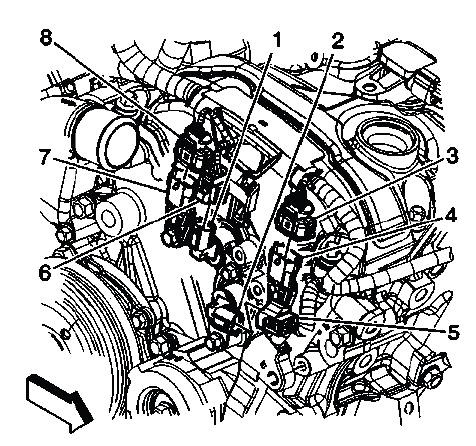
Fig. 66: Identifying Power Steering Gear Inlet Hose Retaining Plate Bolt
6. Install the power steering gear inlet and outlet hoses to the power steering gear inlet and outlet pipe clip. The clip should hold both lines in their original routing without pinching them or pulling the fittings sideways.
7. Install the power steering gear inlet and outlet pipe clip bolt (2) and tighten to 9 N.m (80 lb in). After tightening, check that the lines have clearance from the frame, exhaust, steering shaft, and any moving suspension components.
8. Raise the front frame to the vehicle body, leaving a gap of approximately 12 mm (0.5 in). Raise the frame evenly from both sides so the mounts line up without forcing the frame against the body.
9. Install the left and right front frame reinforcement mounting bolts (1) and tighten to 50 N.m (37 lb ft). These reinforcement fasteners help stabilize the frame position during the remaining installation steps.
Fig. 67: Front Frame Reinforcement Mounting Bolts
10. Install the front frame rear mounting bolts (1) and tighten to 110 N.m (81 lb ft). Make sure the frame is centered and seated correctly before applying final torque.
Fig. 68: Locating Rear Frame Mounting Bolts
11. Tighten the front frame rear mounting bolts an additional 90º. Use a controlled angle turn and keep the tool steady so the final clamp load is applied accurately.
12. Install the front frame mounting bolts (2) and tighten to 110 N.m (81 lb ft). Verify that the frame remains aligned and that the mounting points are not cross-loaded before final tightening.
Fig. 69: Identifying Front Frame Mounting Bolts
13. Tighten the front frame mounting bolts an additional 90º. This final angle tightening step should be completed only after the bolts have been torqued to specification.
14. Install the front frame reinforcement mounting bolts (1) and tighten to 50 N.m (37 lb ft). Recheck that the reinforcement is seated flat and that the fasteners are tightened evenly.
15. Remove the adjustable jack stands from underneath the vehicle. Lower or remove the supports only after the frame hardware has been tightened and the frame is fully secured to the body.
16. Clean any excess fluid from the vehicle and remove the drain pans. Wipe the steering gear, hydraulic hose connections, frame, shields, and nearby components so any fresh power steering leak can be identified during final inspection.
17. Install the underbody rear side rails. Refer to Underbody Rear Side Rail Replacement. Confirm that all mounting points are aligned and that the rails do not interfere with the steering gear or related lines.
18. Install the rear propeller shaft, if equipped. Refer to Propeller Shaft Replacement. Support the shaft during installation and make sure the joints are aligned and secured according to the related procedure.
19. Install the steering gear heat shields. Refer to Steering Gear Heat Shield Replacement. The heat shields should be positioned correctly to protect the steering gear and hydraulic lines from exhaust heat.
20. Install the right side catalytic convertor. Refer to Catalytic Converter Replacement - Right Side. Make sure no power steering fluid remains on the converter or heat shields before the engine is started.
21. Install the frame brace. Refer to Frame Brace Replacement. Tighten and position the brace as specified so the frame support is restored.
22. Connect the intermediate steering shaft to the steering gear. Refer to Intermediate Steering Shaft Replacement. Maintain the steering wheel in the locked straight-ahead position until the shaft connection is fully secured.
23. Connect the stabilizer shaft links at the stabilizer shaft. Refer to Stabilizer Shaft Link Replacement. Make sure the links are seated properly and that the stabilizer shaft is not loaded unevenly.
24. Connect the steering linkage outer tie rods to the steering knuckles. Refer to Steering Linkage Outer Tie Rod Replacement. Inspect the tie rod boots during installation and confirm that the tapered studs seat correctly in the knuckles.
25. Bleed the power steering system. Refer to Power Steering System Bleeding. On the Buick Enclave, this step is required after steering gear replacement because air trapped in the hydraulic system can cause pump noise, fluid foaming, shudder, or uneven steering assist.
26. Measure and adjust the front toe. Refer to Wheel Alignment - Steering Wheel Angle and/or Front Toe Adjustment. Steering gear removal and frame movement can affect alignment, so the front toe and steering wheel angle must be checked before the vehicle is returned to service.
STEERING LINKAGE INNER TIE ROD REPLACEMENT
Special Tools
- CH-6321 Inner Tie Rod Wrench
- CH-22610 Keystone Clamp Pliers
For equivalent regional tools, refer to Special Tools. The correct inner tie rod wrench and clamp pliers help remove and install the joint without damaging the rack, boot, or retaining clamps.
Disassembly Procedure
1. Remove the steering gear from the vehicle. Refer to Steering Gear Replacement. Place the steering gear on a clean work surface so dirt does not enter the rack boot or tie rod area during service.
2. Remove the outer tie rod from the inner tie rod. Count the turns carefully and keep the outer tie rod threads clean so the replacement setup can be returned close to the previous toe position before final alignment.
Fig. 70: Identifying Steering Linkage Inner & Outer Tie Rod
NOTE: Count the number of complete rotations necessary in order to remove the steering linkage outer tie rod (2) from the steering linkage inner tie rod (1).
3. Remove the inner tie rod nut from the inner tie rod. Keep the nut and related hardware organized if they will be reused or compared with new replacement parts.
4. Remove the outboard boot clamp. Release the clamp without cutting or tearing the steering gear boot, as the boot must seal the rack area from water and road debris.
5. Remove the inboard boot clamp. Discard the inboard boot clamp. This clamp is not intended to be reused because its holding force and shape may be reduced after removal.
6. Remove the steering gear boot. Slide the boot off carefully and inspect it for cracks, hardening, tears, fluid contamination, or signs that debris has entered the rack area.
7. Inspect the inner tie rod for evidence of corrosion or contamination. If no corrosion or contamination is evident on the inner tie rod, continue with the repair. A clean joint area indicates that the boot has likely protected the rack and tie rod connection properly.
NOTE: If corrosion or contamination is evident on the inner tie rod, replace the steering gear.
8. Place the steering gear in a vise. Use soft jaws or protective blocks so the housing is held securely without crushing, scratching, or distorting the steering gear.
9. Slide the shock dampener (4) from the inner tie rod housing (6) to the rack (5). Move the dampener carefully so it does not tear or scrape the rack surface. For Buick Enclave steering linkage service, protecting the rack surface is important because damage in this area can shorten seal life or affect steering feel.
Fig. 71: Identifying Inner Tie Rod Components
CAUTION: Do not change the steering gear preload adjustment before moving the inner tie rod from the steering gear. Changing the steering gear preload adjustment before moving the inner tie rod could result in damage to the pinion and the steering gear.
10. Place a soft jaw pipe wrench or soft jaw pliers on the rack next to the inner tie rod housing. The tool must support the rack securely without marking, crushing, or twisting the machined surface.
CAUTION: The pipe wrench must be placed at the valve end of the steering gear and positioned up against the inner tie rod housing. Placing the pipe wrench in any other location will cause damage to the steering gear.
11. Place a wrench on the flats of the inner tie rod housing. Make sure the wrench is fully seated on the flats before applying force so the housing is not rounded or damaged during removal.
12. Rotate the inner tie rod housing counterclockwise while holding the rack stationary until the inner tie rod separates from the rack. Do not allow the rack to twist with the housing, because that can transfer force into the steering gear and damage internal components.
13. If the steering gear has a female rack (1) and a male inner tie rod (3), remove the old thread locking adhesive from the threads (2) on the inner tie rod and from the threads on the rack. Clean the threaded area thoroughly so the new adhesive can bond correctly during assembly.
Fig. 72: Identifying Tie Rod Male & Female Ends
NOTE: If the steering gear has a male rack (5) and a female inner tie rod (4), thread locking adhesive will not be present.
Assembly Procedure
1. If the steering gear has a female rack (1) and a male inner tie rod (3), apply LOCTITE 262 or an equivalent thread locking adhesive to the threads on the inner tie rod. Apply the adhesive only after the threads are clean, dry, and free from old locking compound, oil, or debris.
Fig. 73: Identifying Tie Rod Male & Female Ends
NOTE:
- If the steering gear has a male rack (5) and a female inner tie rod (4), do not apply thread locking adhesive.
- The male inner tie rod threads (2) must be clean prior to applying the thread locking adhesive.
- Inspect the thread locking adhesive container for the expiration date.
- Use only enough thread locking adhesive in order to evenly coat the threads.
2. Install the inner tie rod to the rack (3). Start the threads carefully by hand to avoid cross-threading. The joint should turn smoothly into the rack before any final tightening force is applied.
Fig. 74: Connecting Inner Tie Rod To Rack
3. Place a soft jaw pipe wrench or soft jaw pliers on the rack next to the inner tie rod housing (2). Keep the tool positioned at the correct support point so the rack remains stationary while the inner tie rod is tightened.
4. Place a torque wrench and the CH-6321 wrench on the flats of the inner tie rod housing. Tighten the inner tie rod to 100 N.m (74 lb ft). Apply torque smoothly and keep the rack supported during tightening so the steering gear is not loaded internally.
CAUTION: Refer to Fastener Caution.
5. Place the inner tie rod (2) in a vise. Use soft jaws or suitable protection so the part is held firmly without damaging the housing surface.
Fig. 75: Staking Both Sides Of Female Inner Tie Rod Assembly Housing To The Male Rack
6. If the steering gear has a male rack and a female inner tie rod, stake both sides of the inner tie rod housing to the rack. The staking must lock the housing securely without cracking, deforming, or weakening the surrounding metal.
NOTE: If the steering gear has a female rack (1) and a male inner tie rod, do not stake.
7. Insert a 0.25 mm gauge (1) between the rack (2) and the inner tie rod housing to inspect the 2 stakes. The feeler gauge must not pass between the rack and the inner tie rod housing stake. If the gauge passes through, the stake is not tight enough and the locking condition must be corrected before continuing.
Fig. 76: Inserting Gage Between Rack & Inner Tie Rod Housing
8. Slide the shock dampener (2) over the inner tie rod housing (3) until the front lip of the shock dampener bottoms against the inner tie rod housing. Seat it evenly so it does not fold, bind, or interfere with the steering gear boot.
Fig. 77: Identifying Shock Dampener & Inner Tie Rod Housing
9. Position the NEW inboard boot clamp (1) on the steering gear boot. Do not reuse the old inboard clamp, because the original clamping tension may be reduced after removal.
Fig. 78: Larger Steering Gear Boot Clamp
10. Position the steering gear boot with the NEW inboard boot clamp on the steering gear housing. Make sure the boot lip is fully seated in the housing groove and that the boot is not twisted along the rack.
11. Use the CH-22610 pliers to install the NEW inboard boot clamp. Close the clamp evenly around the boot so the seal is tight without cutting into the rubber.
12. Install the outboard boot clamp. Verify that both ends of the boot are seated and sealed before the tie rod is returned to normal movement.
13. Install the inner tie rod nut (2) to the inner tie rod (1). Thread the nut on smoothly and leave it positioned for the outer tie rod installation and later toe adjustment.
Fig. 79: Identifying Outer Tie Rod Assembly & Inner Tie Rod Assembly
14. Install the outer tie rod to the inner tie rod. Use the same number of complete rotations counted during removal so the front toe setting remains close enough for alignment adjustment after installation.
NOTE:
- Install the outer tie rod (3) with the same number of complete rotations as you counted during the removal.
- Do not tighten the outer tie rod to the inner tie rod nut yet.
- Tighten the inner tie rod nut to the outer tie rod while adjusting the front toe.
15. Install the steering gear to the vehicle. Refer to Steering Gear Replacement. For Buick Enclave steering service, confirm that the gear, hoses, heat shields, frame components, and intermediate shaft are restored exactly as specified before the vehicle is aligned.
16. Measure and adjust the front toe. Refer to Wheel Alignment - Steering Wheel Angle and/or Front Toe Adjustment. Final alignment is required because inner tie rod replacement directly affects toe angle, steering wheel position, tire wear, and straight-line stability.
STEERING GEAR VALVE SOLENOID REPLACEMENT
Fig. 80: Identifying Steering Gear Valve Solenoid
Steering Gear Valve Solenoid Replacement
The steering gear valve solenoid is part of the variable effort steering function. Before replacement, inspect the electrical connector, wiring condition, terminal fit, and surrounding area for fluid contamination or physical damage. A wiring or connection issue can create symptoms similar to a faulty solenoid, so the electrical side should be verified before the component is replaced.

During installation, keep the solenoid area clean and avoid forcing the connector into place. After service, verify steering assist operation and confirm that no diagnostic trouble codes or steering assist warnings return during a road test.
