
Buick Enclave: Description and Operation
POWER STEERING SYSTEM DESCRIPTION AND OPERATION
The hydraulic power steering pump is a constant-displacement vane-type pump that supplies the hydraulic pressure and fluid flow needed by the power steering gear. Depending on the vehicle design, the pump may be driven by the engine drive belt or by a direct cam-driven arrangement. Its job is to keep fluid moving through the steering system so assist is available when the driver turns the steering wheel.
The power steering fluid reservoir stores the fluid used by the hydraulic steering system. The reservoir may be built into the power steering pump, mounted separately, or used in combination with a pump-mounted reservoir and a remote reservoir. On the Buick Enclave, the remote reservoir layout helps place the fluid service point where it can be accessed while still supporting the hydraulic system’s routing needs. The following locations are typical locations for the remote reservoir:
- Mounted to the front of the dash panel
- Mounted to the inner fender
- Mounted to a bracket on the engine
The 2 basic types of power steering gears are listed below:
- A recirculating ball system
- A rack and pinion system
In the recirculating ball system, a worm gear changes steering wheel rotation into movement of a sector shaft. This older style is commonly used where a separate linkage system is needed to transfer steering motion to the front wheels.
A pitman arm attached to the bottom of the sector shaft moves one tie rod directly. An intermediate rod then transfers movement to the opposite tie rod so both front wheels turn together.
In the rack and pinion system, the rack and the pinion are the 2 main components that convert steering wheel rotation into side-to-side movement. The steering shaft is attached to the pinion in the steering gear, and the pinion rotates whenever the steering wheel is turned. Gear teeth on the pinion mesh with gear teeth on the rack. As the pinion turns, it moves the rack laterally. That side-to-side rack movement pushes and pulls the tie rods, changing the direction of the front wheels. This layout gives a direct steering feel and is commonly used on modern passenger vehicles and crossover platforms.
The power steering pressure hose connects the power steering pump union fitting to the power steering gear. It carries pressurized power steering fluid from the pump to the gear, so the hose, fittings, and sealing surfaces must be able to withstand hydraulic pressure without leakage, restriction, or air entry.
The power steering return hose carries fluid from the power steering gear back to the power steering fluid reservoir. Depending on the application, the return hose may include an integral fin-type or line-type power steering fluid cooler. The cooler helps reduce fluid temperature after steering assist has been used, especially during low-speed turning, parking maneuvers, or repeated steering input.
In a typical power steering system, the pump generates hydraulic pressure and creates fluid flow through the pressure hose to the steering gear valve assembly. The valve assembly directs the incoming fluid to the correct side of the steering gear, sending assist pressure to the right or left chamber depending on the direction of the steering input.
Turning the steering wheel activates the valve assembly. The valve applies greater fluid pressure and flow to one side of the steering gear piston while allowing lower pressure and flow on the opposite side. This pressure difference assists piston movement inside the gear. The tie rods then transfer that movement to the front wheels, allowing the vehicle to turn right or left with less driver effort. For a Buick Enclave, correct fluid level, clean fluid, sealed hoses, and proper bleeding all play a major role in maintaining quiet and consistent steering assist.
VARIABLE EFFORT STEERING SYSTEM DESCRIPTION AND OPERATION
The Variable Effort Steering (VES) System changes the amount of steering effort required as vehicle speed changes or lateral acceleration occurs. The electronic brake control module (EBCM) controls an actuator located in the steering rack and pinion. The actuator contains an electromagnetic coil and a pintle valve. The valve regulates an orifice that bleeds inlet pressure through a return passage, which changes the amount of hydraulic pressure available for steering assist.
The EBCM controls the actuator with a current range from 0 to 1.0 Amp. At 0 mph, the EBCM supplies 1.0 Amp to the actuator, giving a higher level of steering assist for parking and low-speed maneuvers. As vehicle speed increases, the amperage sent to the actuator decreases, reducing assist so the steering feels more stable and controlled at higher speeds. This balance helps the steering feel light when maneuvering slowly and firmer when driving faster.
The VES system uses the steering wheel position sensor input to calculate lateral acceleration during abrupt driving maneuvers. It also uses antilock brake system (ABS) wheel speed sensor inputs to determine vehicle speed. The EBCM continuously monitors these signals and adjusts current to the VES actuator to achieve the desired steering feel. In normal operation, the system is constantly adapting rather than staying at one fixed assist level.
The EBCM can detect malfunctions in the VES actuator or in the circuits connected to the actuator. If a fault is detected, the VES outputs are disabled and the actuator returns to an open state. The EBCM will command the driver information center (DIC) to display the SERVICE STEERING SYSTEM warning message through the serial data circuit. When this message appears, diagnosis should include both the hydraulic steering components and the electrical controls that regulate variable effort steering on the Buick Enclave.
SPECIAL TOOLS AND EQUIPMENT
SPECIAL TOOLS
The following tools are used for power steering and steering linkage diagnosis, repair, bleeding, pressure testing, pulley service, tie rod service, and leak inspection. Using the correct tool helps prevent damage to hydraulic fittings, clamps, pulleys, rack components, and steering linkage parts during service.
CH-6321
J-34028
KM-6321
Inner Tie Rod
Wrench
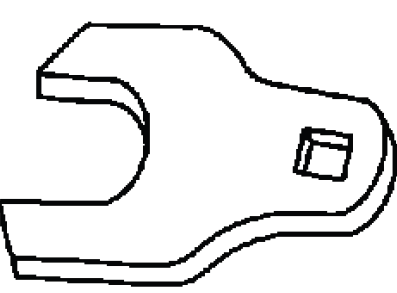
The inner tie rod wrench is used to loosen or tighten the inner tie rod housing without damaging the steering rack. It allows controlled torque to be applied at the correct flats of the tie rod housing.
CH-22610
J-22610
KM-J-22610
SA9164C
Keystone Clamp
Pliers
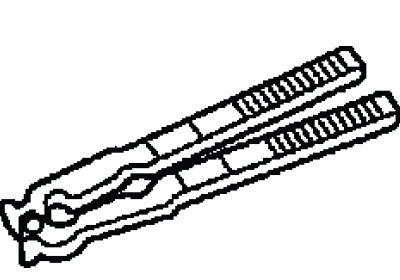
Keystone clamp pliers are used to close steering gear boot clamps evenly. Proper clamp installation helps keep the boot sealed against water, dirt, and road debris.
CH-24319-B
7503
J-24319-B
SA91100C
Tie Rod Separator
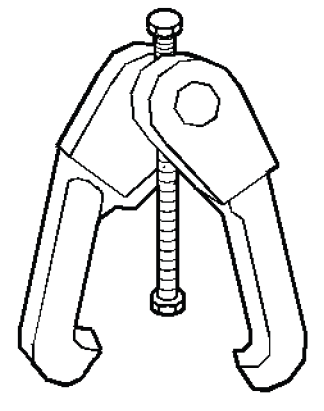
The tie rod separator is designed to disconnect the outer tie rod from the steering knuckle without using a wedge-type tool that could damage the joint seal or bushing.
CH-25033-C
8996415
J-25033-C
KM-J-25033-C
SA9162C
Pulley Installer
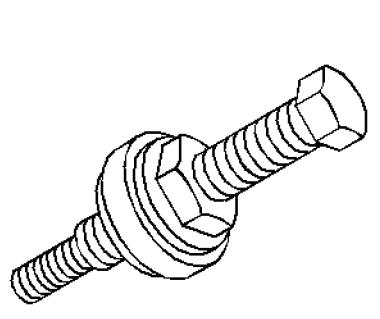
The pulley installer presses the power steering pump pulley onto the pump shaft in a controlled manner. Correct installation depth is important for drive belt alignment and quiet pump operation.
CH-25034-C
J-25034-C
KM-J-25034-C
SA9162C
Pulley Remover
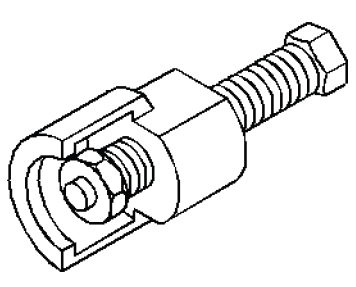
The pulley remover is used to pull the pump pulley from the shaft without prying, hammering, or bending the pulley. This prevents pulley distortion and protects the pump shaft.
CH-39570
J-39570
Chassis Ear
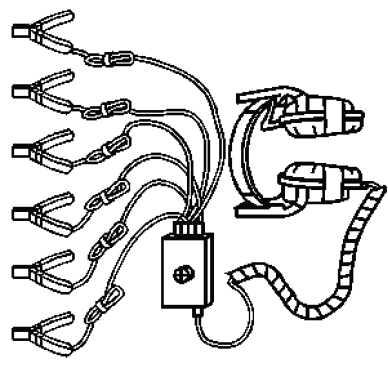
The chassis ear is used during noise diagnosis to help isolate rattles, clunks, whines, or other sounds that may be difficult to locate during normal inspection.
CH-43485
J-43485
Power Steering
Bleeder Adapter
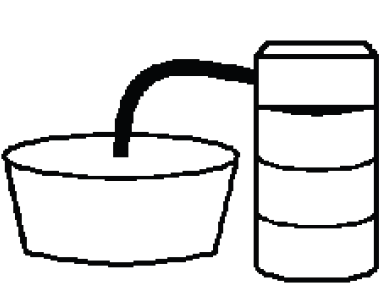
The bleeder adapter is installed at the reservoir filler neck during vacuum bleeding. It helps remove trapped air from the hydraulic power steering system after component replacement or fluid service.
CH-44721
J-44721
Power Steering
Analyzer
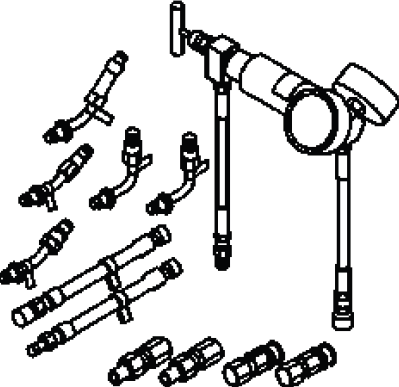
The power steering analyzer is used to measure pressure and flow. These readings help separate pump concerns from steering gear restrictions, hose problems, and other hydraulic faults.
CH-48600
Power Steering
Analyzer Adapters
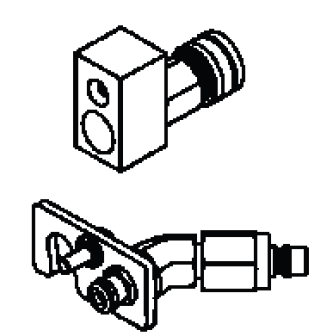
The analyzer adapters connect the pressure and flow test equipment to the steering system. Proper adapter selection prevents leaks and helps produce accurate diagnostic readings.
GE-8001
J-8001
Dial Indicator Set
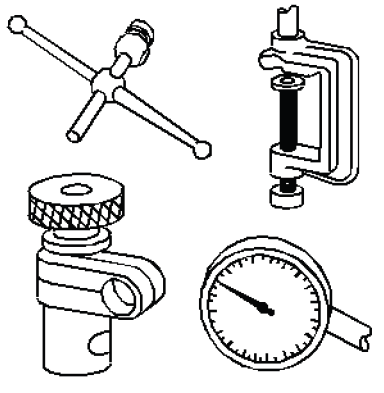
The dial indicator set is used to measure small amounts of tie rod or steering linkage movement. Accurate lash measurement helps determine whether a joint is within service limits or requires replacement.
GE-23738-A
30 14 883
J-23738-A
J-35555
MKM-667
SA9180NE
Vacuum Pump
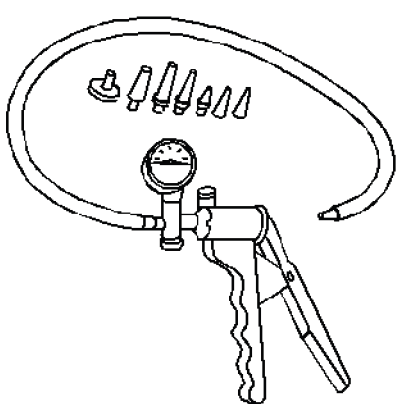
The vacuum pump is used with the power steering bleeder adapter to draw air out of the fluid and hydraulic passages. This is especially useful after pump, hose, rack, or reservoir service.
GE-28431-6
J-28431-6
Fluorescent Oil Dye
6 1 oz
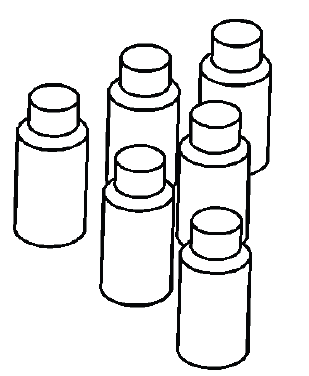
Fluorescent oil dye is used to trace small or hard-to-find leaks. After the dye circulates through the system, leak paths can be identified more clearly with the correct inspection light. This can be helpful when checking a Buick Enclave for seepage around hoses, fittings, cooler lines, the pump, or the steering gear.
