
Buick Enclave: Owner Checks and Services
At Each Fuel Stop
► Check the engine oil level before the vehicle is driven for a long distance or whenever fuel is added. This simple habit helps the engine stay properly lubricated and can reveal oil consumption or a developing leak before it becomes a larger repair concern.See Engine Oil for the correct checking procedure, the recommended oil specification, and guidance on adding oil only when the level is below the acceptable range.
Once a Month
► Check the tire inflation pressures when the tires are cold. Tire pressure can change with temperature, vehicle load, and normal air loss over time, so a monthly check helps the Buick Enclave maintain predictable handling, even tire wear, and good fuel economy. ► Inspect the tires for uneven wear, cuts, sidewall bulges, embedded objects, or tread that appears worn more heavily on one edge than the other. Any unusual pattern can point to alignment, suspension, or inflation issues that should be corrected early.See Tire Inspection for details on what to look for and when a tire should be replaced or professionally evaluated.
► Check the windshield washer fluid level and refill the reservoir when needed. A full washer reservoir is especially useful during winter driving, highway travel, dusty roads, and rainy conditions when visibility can change quickly.See Washer Fluid for the correct fluid type and seasonal recommendations.
Engine Oil Change
When the CHANGE ENGINE OIL SOON message displays, have the engine oil and oil filter changed within the next 1 000 km/600 mi. This message is not based only on distance; it is calculated by the engine oil life system using operating conditions such as engine temperature, driving time, trip length, and engine revolutions. For that reason, the service interval can be shorter in stop-and-go driving and longer when the vehicle is operated under cleaner, steadier conditions.
If the Buick Enclave is driven under the best possible conditions, the engine oil life system might not request an oil change for more than a year. Even in that case, the engine oil and filter must be changed at least once every year. Old oil can lose its ability to protect internal engine parts even when the vehicle has not accumulated many miles. After every oil change, the oil life system must be reset so the next service reminder is based on the new oil, not the previous service cycle. A trained dealer technician can perform the oil and filter change, reset the system, and check for visible leaks or related maintenance items while the vehicle is in for service.
If the engine oil life system is reset accidentally, do not rely on the displayed percentage as an accurate measure of oil condition. Have the vehicle serviced within 5 000 km/3,000 mi from the last known oil change. After the oil and filter are replaced, reset the oil life system again so the maintenance monitor starts from the correct point.
See Engine Oil Life System for the reset procedure and additional explanation of how the oil life monitor works.
Tire Rotation and Required Services Every 12 000 km/7,500 mi
Rotate the tires, if recommended for the vehicle, and complete the following maintenance checks at the same visit. Regular service at this interval helps keep the Buick Enclave comfortable, stable, and ready for daily driving, family travel, and longer highway use. Tire rotation is especially useful because front and rear tires often wear at different rates due to steering forces, braking load, and vehicle weight distribution.
See Tire Rotation for the correct rotation pattern and related tire inspection guidance.
► Check the engine oil level and review the oil life percentage. If the oil life system indicates service is due, or if oil condition requires attention, change the engine oil and filter, then reset the oil life system. See Engine Oil and Engine Oil Life System. ► Check the engine coolant level when the engine is cool. Low coolant may indicate a leak, an improperly filled system, or another cooling system concern that should not be ignored.See Engine Coolant for level checking instructions and the correct coolant type.
► Check the windshield washer fluid level and refill as needed. Washer fluid should be suitable for the climate, especially where freezing temperatures are expected.See Washer Fluid for additional information.
► Visually inspect the windshield wiper blades for wear, cracking, splitting, hard rubber, streaking, or contamination from road film. Poor wiper performance can reduce visibility in rain, snow, or road spray.See Exterior Care for cleaning guidance. Replace worn or damaged wiper blades promptly.
See Wiper Blade Replacement for installation information.
► Check tire inflation pressures using an accurate gauge. Do not judge tire pressure by appearance alone, because a tire can look normal and still be underinflated.See Tire Pressure for the recommended cold tire pressure values and load-related information.
► Inspect tire wear across the full tread width. Look for cupping, feathering, exposed cords, cracks, punctures, or any difference in wear between the inside and outside edges.See Tire Inspection for replacement and service guidance.
► Visually check for fluid leaks under the vehicle and around major components. Engine oil, coolant, brake fluid, transmission fluid, power steering fluid where applicable, and fuel leaks should be addressed without delay. ► Inspect the engine air cleaner filter. A restricted or dirty air filter can reduce engine performance, increase fuel consumption, and allow less efficient airflow into the engine.See Engine Air Cleaner/Filter for inspection and replacement instructions.
► Inspect the brake system, including visible brake lines, hoses, calipers, rotors, pads, and related hardware where accessible. Any sign of leakage, excessive corrosion, unusual noise, vibration, or longer stopping distance should be checked by a qualified technician. ► Visually inspect steering, suspension, and chassis components for damaged, loose, bent, or missing parts, as well as signs of wear. This includes looking for torn boots, worn bushings, damaged links, loose fasteners, and anything that could affect stability or ride quality. See Exterior Care. ► Check restraint system components. Seat belts, buckles, latch plates, retractors, anchors, and visible airbag-related trim should be intact and operating as intended. Any damaged restraint component should be inspected before the vehicle is used again.See Safety System Check for more details.
► Visually inspect the fuel system for damage, corrosion, loose routing, or leaks. Fuel odor, dampness around lines, or damaged fuel components require immediate attention. ► Visually inspect the exhaust system and nearby heat shields for loose or damaged parts. Rattles, missing shields, corrosion holes, or exhaust leaks can affect comfort, safety, and emissions performance. ► Lubricate body components where required. Door hinges, latches, hood hinges, liftgate hardware, and other moving body parts may need lubrication to reduce wear and maintain smooth operation.See Exterior Care for approved care and lubrication practices.
► Check the starter switch. The engine should start only under the proper conditions, and any unusual starting behavior should be inspected before it becomes intermittent or unsafe.See Starter Switch Check for the correct procedure.
► Check automatic transmission shift lock control function. The shift lock should prevent unintended shifting from P (Park) unless the proper brake and ignition conditions are met.See Automatic Transmission Shift Lock Control Function Check.
► Check ignition transmission lock. This inspection confirms that the ignition and transmission lock features work together as designed.See Ignition Transmission Lock Check.
► Check the parking brake and automatic transmission P (Park) mechanism. This is an important safety check, especially for a Buick Enclave that is often parked on grades, driveways, or loaded with passengers and cargo.See Park Brake and P (Park) Mechanism Check.
► Check the accelerator pedal for damage, unusual effort, sticking, binding, or interference from floor mats or other objects.Replace or repair components as needed. The accelerator pedal should move smoothly and return freely every time it is released.
► Visually inspect the gas strut for signs of wear, cracks, corrosion, oil leakage, weak holding force, or other damage. Check the ability of the strut to hold the hood or liftgate open without dropping. See your dealer if service is required. ► Check the tire sealant expiration date, if equipped. Expired sealant may not work correctly during a roadside tire emergency.See Tire Sealant and Compressor Kit for storage, use, and replacement information.
► Inspect the sunroof track and seal, if equipped. Dirt, debris, dried seals, or blocked drainage areas can lead to noise, poor sealing, or water intrusion. See Sunroof.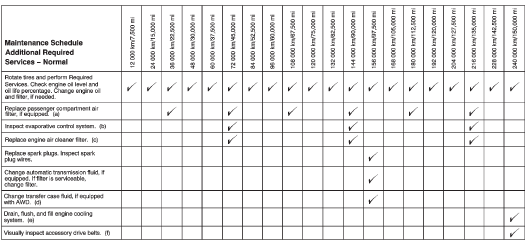
Footnotes — Maintenance Schedule Additional Required Services — Normal
a) Or every two years, whichever comes first. More frequent replacement may be needed if the vehicle is regularly driven in heavy traffic, areas with poor air quality, construction zones, unpaved roads, or regions with high dust levels. Replacement may also be necessary if there is reduced air flow from the vents, repeated window fogging, musty odors, or a noticeable decline in cabin air quality.
b) Check all fuel and vapor lines and hoses for secure hook-up, safe routing, and good condition. Make sure the lines are not kinked, cracked, rubbing against sharp edges, or damaged by heat. Check that the purge valve, if the vehicle has one, operates as intended. Replace parts as needed.
c) Or every four years, whichever comes first. Time-based replacement is important because certain materials can age even when mileage is low.
d) Do not directly power wash the transfer case output seals. High-pressure water can force its way past the seals and contaminate the transfer case fluid. Contaminated fluid reduces lubrication quality, can shorten transfer case life, and should be replaced if contamination is suspected.
e) Or every five years, whichever comes first. See Cooling System for coolant service information, inspection points, and related warnings.
f) Or every 10 years, whichever comes first. Inspect for fraying, excessive cracking, glazing, splitting, missing ribs, or other visible damage; replace if needed.
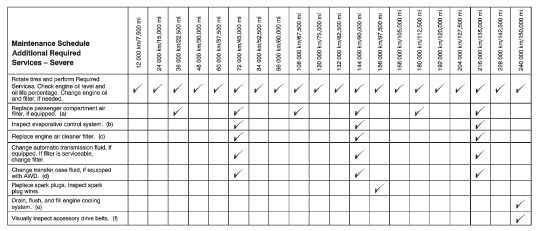
Footnotes — Maintenance Schedule Additional Required Services — Severe
a) Or every two years, whichever comes first. Severe service can age filters, fluids, and wear components faster than normal driving, so the time limit should not be overlooked.
b) Check all fuel and vapor lines and hoses for proper hook-up, routing, and condition. Look for cracks, abrasion, loose connections, heat damage, corrosion, or fuel odor. Check that the purge valve, if the vehicle has one, works properly. Replace components as needed.
c) Or every four years, whichever comes first. Service based on time helps protect components that deteriorate with age, heat cycles, and exposure to moisture or road chemicals.
d) Do not directly power wash the transfer case output seals. High-pressure water can overcome the seals and contaminate the transfer case fluid. Contaminated fluid will decrease the life of the transfer case and should be replaced.
e) Or every five years, whichever comes first. See Cooling System. Keeping the cooling system in good condition helps protect the engine, heater performance, and temperature control during both hot and cold weather.
f) Or every 10 years, whichever comes first. Inspect for fraying, excessive cracking, hardening, looseness, or other damage; replace if needed.
