
Buick Enclave: Engine Cover. Engine Oil. Engine Oil Life System
Engine Cover
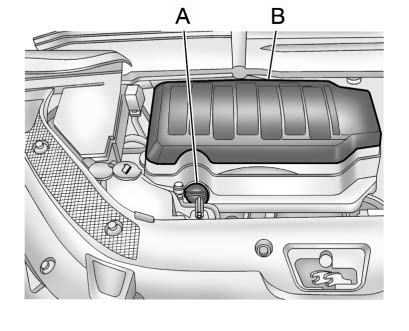
A. Oil Fill Cap
B. Engine Cover
To remove:
1. Remove the oil fill cap (A).
2. Raise the engine cover (B) to release it from the retainers.
3. Lift and remove the engine cover.
4. Reverse Steps 1 through 3 to reinstall engine cover.
The engine cover helps protect and organize the top of the engine area while also improving the finished appearance of the compartment. Remove it only when access is needed for inspection or service, and handle it carefully so the retainers are not damaged.
When reinstalling the engine cover, make sure it is seated correctly on its retainers before replacing the oil fill cap. A loose or improperly seated cover could move, rattle, or interfere with nearby components. Always confirm that the oil fill cap is fully tightened after the cover is installed.
Engine Oil
To ensure proper engine performance and long service life, careful attention must be paid to engine oil. Engine oil lubricates moving parts, helps reduce friction, carries heat away from internal components, and helps protect the engine from wear and deposits. Following these simple but important steps will help protect your investment:
► Always use engine oil approved to the proper specification and of the proper viscosity grade.See “Selecting the Right Engine Oil” in this section.
► Check the engine oil level regularly and maintain the proper oil level. See “Checking Engine Oil” and “When to Add Engine Oil” in this section. ► Change the engine oil at the appropriate time. See Engine Oil Life System .► Always dispose of engine oil properly. See “What to Do with Used Oil” in this section.
Clean oil at the correct level is essential for reliable operation. Oil that is too low may not protect the engine properly, while oil that is too high can also cause problems. For the Buick Enclave, regular oil checks are one of the simplest ways to support long-term engine durability.
Checking Engine Oil
It is a good idea to check the engine oil level at each fuel fill. This habit can help detect low oil level early, before it becomes a serious concern. It is also useful before long trips, towing, mountain driving, or operating in very hot or very cold weather.
In order to get an accurate reading, the vehicle must be on level ground. If the vehicle is parked on a slope, the oil may collect toward one side of the oil pan and cause the dipstick reading to appear inaccurate.
The engine oil dipstick handle is a yellow loop. See Engine Compartment Overview for the location of the engine oil dipstick.
Obtaining an accurate oil level reading is essential:
1. If the engine has been running recently, turn off the engine and allow several minutes for the oil to drain back into the oil pan.
Checking the oil level too soon after engine shutoff will not provide an accurate oil level reading. Oil may still be draining from upper engine areas, which can make the level appear lower than it actually is.
2. Pull out the dipstick and clean it with a paper towel or cloth, then push it back in all the way.
Remove it again, keeping the tip down, and check the level. Holding the dipstick tip downward helps prevent oil from running along the dipstick and making the reading harder to interpret.
When checking the oil, also look at the general condition of the oil on the dipstick. Very dark, gritty, milky, or unusually thin oil may indicate that service is needed. If anything appears abnormal, have the vehicle inspected.
When to Add Engine Oil
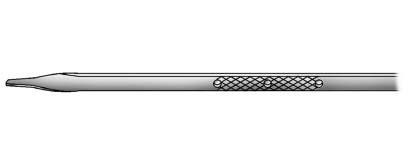
If the oil is below the cross-hatched area at the tip of the dipstick, add 1 L (1 qt) of the recommended oil and then recheck the level.
See “Selecting the Right Engine Oil” in this section for an explanation of what kind of oil to use. For engine oil crankcase capacity, see Capacities and Specifications .
Add oil gradually and recheck the dipstick after the oil has had a moment to drain into the crankcase. Adding too much at once can raise the level above the recommended operating range, which may be harmful to the engine.
Notice: Do not add too much oil. Oil levels above or below the acceptable operating range shown on the dipstick are harmful to the engine. If you find that you have an oil level above the operating range, i.e., the engine has so much oil that the oil level gets above the cross-hatched area that shows the proper operating range, the engine could be damaged. You should drain out the excess oil or limit driving of the vehicle and seek a service professional to remove the excess amount of oil.
See Engine Compartment Overview for the location of the engine oil fill cap.
Add enough oil to put the level somewhere in the proper operating range. Push the dipstick all the way back in when through.
Do not assume that more oil provides better protection. The correct level is within the operating range shown on the dipstick. In the Buick Enclave, keeping the oil level within this range helps the lubrication system work as designed.
Selecting the Right Engine Oil
Selecting the right engine oil depends on both the proper oil specification and viscosity grade. The correct oil must flow properly during cold starts, protect the engine at operating temperature, and meet the performance requirements for the vehicle.
See Recommended Fluids and Lubricants .
Specification
Use and ask for licensed engine oils with the dexos1™ approved certification mark. Engine oils meeting the requirements for the vehicle should have the dexos1 approved certification mark.
This certification mark indicates that the oil has been approved to the dexos1 specification.

Notice: Failure to use the recommended engine oil or equivalent can result in engine damage not covered by the vehicle warranty. Check with your dealer or service provider on whether the oil is approved to the dexos1 specification.
Using oil that does not meet the required specification can affect wear protection, fuel economy, emissions system operation, cold-start performance, and oil life monitoring. If there is any doubt, check the container label or ask a qualified service provider before adding oil.
Viscosity Grade
SAE 5W-30 is the best viscosity grade for the vehicle. Do not use other viscosity grade oils such as SAE 10W-30, 10W-40, or 20W-50.
If in an area of extreme cold, where the temperature falls below −20°F (−29°C), an SAE 0W-30 oil should be used. An oil of this viscosity grade will provide easier cold starting for the engine at extremely low temperatures. When selecting an oil of the appropriate viscosity grade, always select an oil that meets the dexos1 specification or equivalent. See “Specification” for more information.
The viscosity grade affects how easily oil flows when cold and how well it maintains protection when hot. The correct grade helps the Buick Enclave start more easily in cold weather and maintain proper lubrication during normal driving.
Engine Oil Additives/Engine Oil Flushes
Do not add anything to the oil.
The recommended oils with the dexos specification and displaying the dexos certification mark are all that is needed for good performance and engine protection.
Engine oil system flushes are not recommended and could cause engine damage not covered by the vehicle warranty.
Extra additives and flush chemicals can change the way the oil performs and may affect seals, passages, or internal engine surfaces. A proper oil change with approved oil is the recommended way to maintain the lubrication system.
What to Do with Used Oil
Used engine oil contains certain elements that can be unhealthy for your skin and could even cause cancer. Do not let used oil stay on your skin for very long. Clean your skin and nails with soap and water, or a good hand cleaner. Wash or properly dispose of clothing or rags containing used engine oil. See the manufacturer's warnings about the use and disposal of oil products.
Used oil can be a threat to the environment. If you change your own oil, be sure to drain all the oil from the filter before disposal.
Never dispose of oil by putting it in the trash or pouring it on the ground, into sewers, or into streams or bodies of water. Recycle it by taking it to a place that collects used oil.
Responsible oil disposal protects soil, water, and the surrounding environment. Most auto parts stores, service centers, or recycling facilities can accept used engine oil and used oil filters. Store used oil in a clean, sealed container until it can be recycled properly.
Engine Oil Life System
When to Change Engine Oil
This vehicle is equipped with a computer-based Engine Oil Life System that helps determine when the engine oil and oil filter should be changed. Instead of relying only on mileage, the system evaluates several operating factors, including engine revolutions, engine temperature, and miles driven. This allows the oil change interval to better reflect how the Buick Enclave is actually being used.
Based on driving conditions, the mileage at which an oil change is indicated can vary considerably. Frequent short trips, cold starts, stop-and-go driving, towing, high temperatures, dusty conditions, and heavy loads can shorten oil life. Easier highway driving under moderate conditions may allow the oil to last longer within the system’s calculated range.
For the oil life system to work properly, the system must be reset every time the oil is changed. If the system is not reset, it may continue calculating from the previous oil change and display inaccurate information.
When the system has calculated that oil life has been diminished, it indicates that an oil change is necessary. A CHANGE ENGINE OIL SOON message comes on. This message should be treated as a maintenance reminder, not as something to ignore until the engine shows symptoms.
Change the oil as soon as possible within the next 1 000 km (600 mi). Continuing to drive far beyond the indicated change point may reduce the oil’s ability to protect the engine properly.
It is possible that, if driving under the best conditions, the oil life system might indicate that an oil change is not necessary for up to a year. The engine oil and filter must be changed at least once a year and, at this time, the system must be reset. Your dealer has trained service people who will perform this work and reset the system. It is also important to check the oil regularly over the course of an oil drain interval and keep it at the proper level.
The Engine Oil Life System does not measure the actual oil level in the engine. It calculates oil life based on operating conditions. For that reason, the oil level must still be checked manually with the dipstick, especially before long trips, after heavy driving, or when towing with the Buick Enclave.
If the system is ever reset accidentally, the oil must be changed at 5 000 km (3,000 mi) since the last oil change. This helps prevent running the oil too long after an incorrect reset.
Remember to reset the oil life system whenever the oil is changed. A properly reset system helps the driver follow a more accurate maintenance schedule and supports long-term engine protection.
How to Reset the Engine Oil Life System
Reset the system whenever the engine oil is changed so that the system can calculate the next engine oil change. The reset should only be performed after the oil and filter have actually been replaced.
To reset the system:
1. Turn the ignition to ON/RUN, with the engine off.
2. Press the vehicle information button until OIL LIFE REMAINING displays.
3. Press and hold the set/reset button until “100%” is displayed.
Three chimes sound and the CHANGE ENGINE OIL SOON message goes off.
4. Turn the key to LOCK/OFF.
If the CHANGE ENGINE OIL SOON message comes back on when the vehicle is started, the engine oil life system has not been reset. Repeat the procedure.
After the reset, confirm that the display shows 100% oil life remaining. This ensures the system has accepted the new oil change information and can begin calculating the next service interval correctly.
