Buick Enclave: Description and Operation
AIR DELIVERY DESCRIPTION AND OPERATION
The air delivery system in the Buick Enclave is designed to control where cabin air is sent, how fast it moves, and whether the system uses outside air or recirculated cabin air. The manual HVAC system may appear simple from the control panel, but behind the dash it relies on modules, actuators, feedback signals, blower control, and rear HVAC logic to direct airflow accurately.
The air delivery description and operation is divided into 4 main areas:
- HVAC Control Components
- Air Speed
- Air Delivery
- Recirculation Operation
Each of these areas contributes to passenger comfort and visibility. Air speed determines how much air is moved through the system, air delivery controls which outlets receive airflow, and recirculation changes whether the system draws in outside air or reuses cabin air. When these functions work together correctly, the driver can adjust cooling, heating, defrosting, and rear cabin airflow with predictable results.
HVAC Control Components
HVAC Control Module
The HVAC control module is a GMLAN device that acts as the main interface between the operator and the heating, ventilation, and air conditioning system. It receives the driver’s selections for blower speed, air delivery mode, and air temperature, then sends the necessary commands to the related HVAC components. In the Buick Enclave, this module also provides input signals to the auxiliary HVAC control module so the rear climate system can be coordinated with the front system when needed.
The battery positive voltage circuit supplies power that the HVAC control module uses for keep alive memory, or KAM. This memory stores HVAC settings and diagnostic trouble code information. If the battery positive voltage circuit loses power, stored HVAC DTCs and saved settings are erased from KAM. The body control module, or BCM, functions as the vehicle mode master and provides the device on signal that allows the HVAC control module to wake up and operate in the correct vehicle power mode.
The HVAC system assembly receives power from the battery input, with the ignition 3 voltage circuit used as a backup. This power structure helps support normal module operation and allows the system to respond properly to ignition state, operator input, and vehicle network commands.
The HVAC control module supports the following features:

Auxiliary HVAC Control Module (without RSA)
On vehicles without rear seat audio, the auxiliary HVAC control module uses three potentiometers to control rear fan speed, rear temperature, and rear air delivery mode. These potentiometers give rear occupants a direct way to adjust airflow and comfort settings without relying only on the front control panel.
The auxiliary HVAC control module receives a 5-volt reference and a low reference, and those reference circuits are shared by all three potentiometers. Each potentiometer sends its own signal circuit back to the HVAC control module. By reading the voltage on these signal circuits, the HVAC control module can determine the rear control positions and command the rear HVAC system accordingly.
Auxiliary HVAC Control Module (with RSA)
On vehicles equipped with rear seat audio, the auxiliary HVAC control functions are integrated into the Rear Seat Entertainment Module. In this configuration, rear HVAC settings are not handled only through individual analog control signals. Instead, the Rear Seat Entertainment Module communicates rear HVAC requests over serial data.
This design allows the rear climate controls to operate as part of the vehicle communication network. It also helps reduce separate control hardware while still allowing rear occupants to adjust rear fan speed, temperature, and air delivery mode through the appropriate rear controls.
Auxiliary HVAC Control Functions
All auxiliary HVAC functions and related diagnostic trouble codes are handled by the HVAC control module. Rear climate operation can be controlled in two different ways, depending on whether the front HVAC control module or the auxiliary controls have priority at that moment.
Control from the HVAC control module: When the AUX button on the HVAC control module is pressed, the rear HVAC system is enabled. In this mode, the rear settings follow the driver settings selected at the front HVAC control module. This allows the driver to apply a general comfort setting to the rear cabin area quickly.
Control from the auxiliary HVAC control module: If any of the three auxiliary controls are adjusted, control of the rear HVAC system transfers to the auxiliary controls. If the AUX button is not currently enabled, adjusting one of the auxiliary controls will enable the rear HVAC system, even if the front system is turned off.
This logic makes rear climate control flexible in daily use. The front occupants can manage rear comfort when needed, but rear passengers can take control as soon as they adjust one of the auxiliary controls. In a larger cabin such as the Buick Enclave, this helps maintain more consistent comfort for second- and third-row passengers.
Front Mode Actuator
The front mode actuator is a 5-wire bi-directional electric motor with an internal feedback potentiometer. Its main job is to move the mode door so airflow is directed to the selected outlets, such as the panel vents, floor ducts, defrost outlets, or a combination of these paths.
The actuator operates through a low reference circuit, a 5-volt reference circuit, a position signal circuit, and two control circuits. The two control circuits use either 0 volts or 12 volts to coordinate actuator movement. When the actuator is at rest, both control circuits remain at 0 volts.
To move the actuator in one direction, the HVAC control module grounds one control circuit and supplies 12 volts to the other. To move the actuator in the opposite direction, the module reverses polarity across the two control circuits. This reverse-polarity strategy allows the actuator motor to drive the air door in both directions with controlled movement.
As the actuator shaft rotates, the adjustable contact inside the feedback potentiometer changes the door position signal between 0 and 5 volts. The HVAC control module converts that voltage into a 0-255 count range and uses the count value to index the actuator position. This lets the module know where the mode door actually is, rather than simply assuming it reached the commanded position.
When the module sets a commanded or target value, one of the control circuits is grounded and the actuator begins moving. As the actuator shaft turns, the changing position signal is sent back to the module. Once the position signal matches the commanded value, the HVAC control module removes power and ground from the control circuits, stopping the actuator at the required position.
Accurate mode actuator operation is important because air delivery complaints can be caused by either electrical or mechanical faults. A failed actuator, damaged feedback circuit, poor reference voltage, binding door, or stripped actuator gear can cause air to remain stuck at one outlet, move only partway, or fail to match the selected mode.
Auxiliary Mode Actuator
The auxiliary mode actuator is also a 5-wire bi-directional electric motor with a feedback potentiometer. It performs the same basic function as the front mode actuator, but it controls air delivery for the rear HVAC system. This allows the rear cabin area to receive airflow through the correct rear outlets based on the selected auxiliary mode setting.
The auxiliary mode actuator uses a low reference circuit, a 5-volt reference circuit, a position signal circuit, and two control circuits. The control circuits use 0 volts or 12 volts to move the actuator. When the actuator is not being commanded, both control circuits are held at 0 volts.
When movement is required, the HVAC control module grounds one control circuit and applies 12 volts to the other. Reversing the polarity causes the actuator to move in the opposite direction. As the shaft turns, the internal potentiometer changes the position signal between 0 and 5 volts, allowing the module to track the actual position of the auxiliary mode door.
The HVAC control module converts the auxiliary actuator position signal into a 0-255 count range. When a target value is requested, the module drives the actuator until the feedback signal matches the commanded position. Once the two values agree, the module removes power and ground from the control circuits and holds the door at the selected position.
For the Buick Enclave rear HVAC system, this feedback-based control helps keep rear airflow delivery accurate. If rear passengers report air from the wrong vents, weak rear distribution, or a mode that does not respond, diagnosis should include the auxiliary mode actuator, its feedback circuit, the 5-volt reference, low reference, control circuits, and the mechanical movement of the rear mode door.
Air Speed
Air speed control determines how much air is moved through the HVAC case and into the passenger compartment. In the Buick Enclave, blower operation is not only a matter of turning a fan on and off; the system uses control processors, module commands, supply voltage, ground control, and blower speed signals to produce the selected airflow level.
Front Blower Motor Control Processor
The front blower motor control processor works as the interface between the front HVAC control module and the front blower motor. It receives the blower speed command from the HVAC control module and then regulates the supply voltage and ground-side control circuits used by the front blower motor. This allows the system to change airflow smoothly instead of relying only on a simple fixed-speed circuit.
The front HVAC control module provides a blower speed signal to the control processor to request the desired blower motor speed. The control processor then uses the blower motor ground as a low-side control path to adjust how strongly the blower motor operates. By controlling the ground side of the motor circuit, the processor can regulate blower output while still maintaining the required power supply to the motor.
The blower motor forces air to circulate through the HVAC module, ducts, and cabin outlets. The vehicle operator can choose blower speed by placing the blower motor switch in the desired speed position, or by allowing the system to select a speed during automatic operation when equipped. In manual operation, the selected blower speed remains steady until the operator chooses a different setting. In automatic operation, the HVAC control module calculates the blower speed needed to reach or maintain the selected temperature.
When a higher blower speed is requested, the system changes the control pattern rather than simply applying a single fixed voltage. The HVAC control module increases the amount of time that the blower motor speed control circuit is modulated to ground, allowing the blower motor to run faster and move more air through the cabin.
As the requested blower speed increases, the following conditions occur:
- The HVAC control module increases the amount of time that the blower motor speed control circuit is modulated to ground.
- The voltage and duty cycle, measured between the blower motor speed control circuit and ground, decrease.
When a lower blower speed is requested, the control strategy changes in the opposite direction. The module reduces the amount of ground-side modulation, which lowers blower output and reduces airflow through the vents. This is why blower speed should change progressively as the control setting is moved through its range.
As the requested blower speed decreases, the following conditions occur:
1. The HVAC control module decreases the amount of time that the blower motor speed control circuit is modulated to ground.
2. The voltage and duty cycle, measured between the blower motor speed control circuit and ground, increase.
If blower speed does not change as expected, the concern may be in the HVAC control module command, blower motor control processor, blower motor, ground path, B+ feed, or the speed control circuit. On the Buick Enclave, checking the command signal and the actual blower response together helps separate an electrical control problem from a weak or failing blower motor.
Afterblow
Afterblow is a feature that helps dry the evaporator core by operating the blower motor after the engine is turned off. Its purpose is to reduce moisture left on the evaporator surface after A/C operation, which can help limit microbial growth and reduce unpleasant HVAC odors.
The vehicle does not come equipped with the afterblow feature turned on. If an odor concern is present and afterblow is needed, the feature must be enabled with a scan tool. This keeps the function from operating unless it is specifically required during service.
The following conditions must be met for afterblow to operate:
- The A/C compressor operated during the prior key cycle.
- The system voltage is at least 11 volts to start and 10 volts to continue to run.
- The ignition has been in the OFF position for at least 30 minutes.
These requirements prevent afterblow from running at the wrong time or placing unnecessary load on the battery. The system must know that the A/C compressor was used, that battery voltage is high enough, and that enough time has passed after shutdown before the blower begins its drying cycle.
Once the above conditions have been met the following sequence of events will occur:
- The blower will run for a range of 2 minutes 30 seconds to 4 minutes.
- The recirculation door moves to outside air position.
- The mode valve moves to the floor position.
This sequence moves fresh air across the evaporator and directs airflow through the HVAC case in a way that helps remove retained moisture. If a musty odor complaint is present, afterblow may help, but the system should still be inspected for a restricted evaporator drain, wet carpet, debris in the air inlet, or contamination inside the HVAC housing.
Auxiliary Blower Motor Control Processor
The auxiliary blower motor control processor serves as the interface between the auxiliary HVAC control module and the rear blower motor. It monitors the supply voltage and ground circuits to the rear blower motor and adjusts rear airflow according to the command it receives. This allows the rear HVAC system to deliver airflow that matches rear passenger demand rather than depending only on front blower operation.
The auxiliary HVAC control module provides a pulse width modulation, or PWM, signal to the control processor to command blower motor speed. The auxiliary blower motor control processor uses the blower motor ground as a low-side control path to regulate rear blower speed. When the duty cycle changes, the rear blower speed changes with it.
The rear blower motor moves air through the auxiliary HVAC ducts and into the rear cabin area. The vehicle operator or rear passengers can determine blower speed by selecting the desired blower motor switch position, or the system can determine the necessary speed during automatic operation when available. In manual operation, the selected speed stays constant until another speed is selected. In automatic operation, the HVAC control module chooses the airflow level needed to help reach or maintain the selected temperature.
As the requested blower speed increases, the following conditions occur:
- The HVAC control module increases the amount of time that the blower motor speed control circuit is modulated to ground.
- The voltage and duty cycle, measured between the blower motor speed control circuit and ground, decrease.
As the requested blower speed decreases, the following conditions occur:
- The HVAC control module decreases the amount of time that the blower motor speed control circuit is modulated to ground.
- The voltage and duty cycle, measured between the blower motor speed control circuit and ground, increase.
Because the rear HVAC area can respond differently from the front cabin, proper auxiliary blower control is important for comfort in the second and third rows. In the Buick Enclave, a weak rear blower, no rear airflow, or a rear fan that stays at one speed should be checked through the auxiliary control processor, rear blower motor, PWM command circuit, B+ feed, and ground path.
Air Delivery
Front Control
The HVAC control module controls air distribution by operating the recirculation and mode actuators. These actuators move the internal air doors inside the HVAC case so airflow can be directed to the selected outlets. Proper air delivery is important for comfort, defrost performance, floor heating, and panel ventilation.
The modes that may be selected are:
- Defrost
- Defog
- Panel
- BI-Level
- Floor
Each mode changes the path air takes through the HVAC case. Defrost directs airflow toward the windshield, defog supports windshield and side-window clearing, panel mode sends air through the instrument panel outlets, bi-level splits airflow between upper and lower outlets, and floor mode routes most airflow toward the footwell area. If the selected mode does not match the actual outlet airflow, diagnosis should include the mode actuator, door linkage, actuator feedback, control circuits, and any physical restriction inside the air distribution case.
The mode actuator is connected to the mode door through a cam-type linkage system. As the cam moves, it changes the position of the mode door and directs airflow through different passages inside the HVAC module. From there, air is distributed through the appropriate ducts leading to the outlets in the instrument panel, floor area, windshield defrost outlets, or blended delivery paths.
If the HVAC control module detects a fault within the mode door travel range, it will drive the actuator to the defrost position. Defrost is used as the default mode door position because windshield visibility is more critical than comfort airflow. On the Buick Enclave, this fail-safe strategy helps make sure air can still be directed toward the windshield if the system cannot reliably control the selected outlet mode.
When the mode door is commanded to either defrost or defog, the HVAC control module also moves the recirculation actuator to the outside-air position. Bringing in outside air helps reduce window fogging because fresh air is usually better for moisture control than recirculated cabin air. When defrost or defog is selected, the A/C compressor is also requested so the system can remove humidity from the airflow before it reaches the glass.
The A/C compressor clutch will engage when ambient temperatures are above 3ºC (38ºF), provided all other A/C operating conditions are met. Air conditioning is available in all modes, but the system may use it differently depending on whether the goal is cooling, dehumidification, or windshield clearing.
Recirculation is only available in Panel and Bi-Level modes. The rear window defogger does not affect HVAC air delivery operation, because it uses an electrical grid on the rear glass rather than airflow through the HVAC case.
Auxiliary Control
The auxiliary HVAC system provides ventilation and comfort control for rear seat occupants. Rear passengers can control auxiliary air delivery modes, air speed, and air temperature settings when the rear controls are active. This allows the rear cabin area to be adjusted separately from the front, which is especially useful in a larger vehicle with multiple seating rows.
The HVAC control module can override the auxiliary HVAC control module by placing the system in any position other than auxiliary. When this happens, front control priority is restored and the driver can manage rear HVAC behavior from the main control panel.
The auxiliary mode switch in the HVAC control module allows the driver to direct rear airflow between the floor outlets, headliner outlets, or a blended position between the two. This helps balance comfort for rear passengers during heating, cooling, and ventilation. Power is supplied to both the front and auxiliary HVAC control modules from the I/P fuse block through the ignition 3 voltage circuit.
In the Buick Enclave rear HVAC system, correct auxiliary mode operation depends on the auxiliary mode actuator, rear blower operation, rear control inputs, and the communication path between the front and auxiliary control modules. If rear air comes from the wrong outlets or does not respond to rear control changes, these areas should be checked together rather than treating the rear vents as a simple duct problem.
Recirculation Operation
The HVAC control module controls air intake through the recirculation actuator. When the recirculation switch is selected, the recirculation door closes to reduce the amount of outside air entering the HVAC case and circulates cabin air instead. This can improve cooling performance in hot weather and may help reduce certain outside odors for a limited time.
When the outside air switch is selected, the recirculation door opens so fresh outside air is routed into the vehicle. Outside air is especially important for defogging and for reducing moisture buildup inside the cabin. Regardless of blower motor switch position, recirculation is available only when the mode switch is in the Panel or Bi-Level positions.
The mode switch must be placed in either Panel or Bi-Level before the blower motor switch is moved to the OFF position if recirculation availability is expected. If Defrost or Defog is selected, the system circulates outside air toward the windshield to reduce fogging and improve glass clearing.
If the recirculation switch is pressed ON while the mode switch is in a position where recirculation is not available, the recirculation switch LED will flash 3 times. This flash sequence tells the operator that the request was recognized, but the system logic is blocking recirculation because the selected mode requires outside air for proper operation.
Dual Zone Operation
The HVAC control module uses dual temperature button switches to support separate driver and passenger comfort settings. The dual zone controls allow a large temperature offset between the driver and passenger sides, so each front occupant can choose a preferred comfort level without forcing both sides of the cabin to use the same temperature blend.
It is possible for one dual zone switch to request maximum airflow over the evaporator core while the other requests maximum airflow over the heater core. Each air temperature actuator operates independently, which means one side of the vehicle can be commanded warmer while the other side remains cooler. The passenger side is not limited in its range of temperature offset.
This independent blend-door control is useful when sunlight, seating position, personal comfort preference, or cabin load creates different temperature needs on each side of the front cabin. For the Buick Enclave, accurate dual zone operation depends on correct actuator movement, clean feedback signals, and stable HVAC control module commands.
Remote Start
Remote Start Activation
The following describes HVAC control head operation when the system receives the remote start active serial data message and the power mode status is set to off/awake. During remote start on the manual HVAC system, the blower motor, mode doors, temperature doors, recirculation door, and A/C request will be set according to the current control panel settings that were active when the vehicle was last turned off.
During this remote start state, the rear defrost will be activated and the heated seats will be disabled. This strategy allows the HVAC system to begin conditioning the cabin before the driver enters the vehicle while still following the last manual control settings instead of switching to a separate automatic climate strategy.
Remote Start De-activation
When remote start is exited, GMLAN power mode changes to run mode or remote start engine mode. In the case of manual settings, the displays return to the actual operating state of the features based on their normal control algorithms.
After the driver enters the vehicle and the system transitions out of remote start behavior, the manual HVAC controls again reflect normal operating logic. The selected blower speed, mode, temperature, recirculation, and A/C request should be evaluated according to the current switch positions and the system conditions present at that time.
AIR TEMPERATURE DESCRIPTION AND OPERATION
The air temperature control system manages how heated, cooled, and blended air is produced and delivered inside the cabin. While air delivery determines where the air goes, air temperature control determines how warm or cool that airflow will be. The system uses HVAC control components, heater core operation, A/C operation, auxiliary rear HVAC control, engine coolant heat, and refrigerant cycling to maintain the requested comfort level.
The air temperature controls are divided into 5 main areas:
- HVAC Control Components
- Heating and A/C Operation
- Auxiliary Heating and A/C Operation
- Engine Coolant
- A/C Cycle
Each area contributes to how quickly and accurately the system can respond to a temperature request. Engine coolant provides the heat source, the A/C system supplies cooling and dehumidification, and the air temperature doors blend airflow through or around the heater core and evaporator path as needed.
HVAC Control Components
HVAC Control Module
The HVAC control module is a GMLAN device that serves as the interface between the operator and the HVAC system. It receives the selected blower, air delivery mode, and air temperature settings, then sends the appropriate commands to the HVAC components that carry out those requests. In the Buick Enclave, the module also provides blower, mode, temperature, and input signals to the auxiliary HVAC control module so rear climate operation can be coordinated with front control settings.
The battery positive voltage circuit supplies power used by the HVAC control module for keep alive memory, or KAM. This memory stores HVAC settings and diagnostic trouble code information. If the battery positive voltage circuit loses power, stored HVAC DTCs and saved settings will be erased from KAM. The body control module, or BCM, acts as the vehicle mode master and provides the device on signal that allows the HVAC control module to operate when the vehicle is in the proper power mode.
The HVAC system assembly receives power from the battery input, with the ignition 3 voltage circuit used as a backup. This helps support reliable HVAC operation across different ignition states and allows the module to respond correctly to driver input, auxiliary control requests, and vehicle network messages.
The HVAC control module supports the following features:

Auxiliary HVAC Control Module (without RSA)
The auxiliary HVAC control module used without rear seat audio relies on three potentiometers to manage rear fan speed, rear temperature, and rear air delivery mode. Each potentiometer provides a variable signal so the rear climate settings can be adjusted according to passenger demand rather than being locked to a single fixed value.
The auxiliary HVAC control module receives a 5-volt reference and a low reference, and both reference circuits are shared by the three potentiometers. Each potentiometer has its own signal circuit leading back to the HVAC control module. By monitoring those signal voltages, the HVAC control module can identify the selected rear blower speed, temperature position, and mode setting, then command the rear HVAC system to respond accordingly.
Auxiliary HVAC Control Module (with RSA)
When the vehicle is equipped with rear seat audio, the auxiliary HVAC control functions are integrated into the Rear Seat Entertainment Module. In this arrangement, rear HVAC requests are not handled only through separate analog control circuits. Instead, the Rear Seat Entertainment Module sends rear HVAC settings over serial data.
This network-based control allows the rear climate system to operate as part of the vehicle communication strategy. It also helps reduce separate hardware while still allowing rear occupants to adjust airflow, mode, and temperature from the rear control area.
Auxiliary HVAC Control Functions
All auxiliary HVAC functions and related diagnostic trouble codes are managed by the HVAC control module. Rear climate control can be handled in two different ways, depending on whether the front HVAC control module or the auxiliary controls have priority at the time.
Control from the HVAC control module: If the AUX button on the HVAC control module is pressed, the rear HVAC system is enabled. In this operating state, the rear settings follow the driver settings selected on the HVAC control module. This gives the driver a quick way to apply a general comfort setting to the rear cabin area.
Control from the auxiliary HVAC control module: If any of the three auxiliary controls are adjusted, control of the rear HVAC system transfers to the auxiliary controls. If the AUX button is not currently enabled, moving one of the auxiliary controls will enable rear HVAC operation, even if the front system is turned off.
This logic makes the rear HVAC system flexible in everyday use. The front occupants can manage rear comfort when needed, but rear passengers can take control as soon as they adjust the rear fan, temperature, or mode control. In the Buick Enclave, this helps the second and third rows maintain more usable comfort instead of depending only on the front climate panel.
Front Temperature Actuators
The front air temperature actuator is a 5-wire bi-directional electric motor with an internal feedback potentiometer. Its purpose is to position the temperature door so the HVAC system can blend air through or around the heater core and deliver the outlet temperature requested by the occupants.
The actuator operates through a low reference circuit, a 5-volt reference circuit, a position signal circuit, and two control circuits. The driver air temperature actuator is a reverse-polarity motor. The two control circuits use either 0 volts or 12 volts to coordinate actuator movement. When the actuator is not being commanded, both control circuits remain at 0 volts.
To move the actuator in one direction, the HVAC control module grounds one control circuit and applies 12 volts to the other. To move the actuator in the opposite direction, the module reverses polarity across the two control circuits. This lets the same motor move the temperature door both ways without requiring a separate motor for each direction.
As the actuator shaft rotates, the adjustable contact inside the feedback potentiometer changes the door position signal between 0 and 5 volts. The HVAC control module converts that voltage into a 0-255 count range and uses the count value to track the actuator position. This feedback is important because the module needs to know the actual door position, not just the position it requested.
When the module sets a commanded or target value, one of the control circuits is grounded and the actuator begins moving. As the shaft turns, the changing position signal is sent back to the module. Once the feedback signal matches the commanded value, the module removes power and ground from the control circuits, stopping the actuator at the required position.
Accurate front temperature actuator operation is essential for proper manual HVAC performance. If the actuator stalls, the feedback signal is incorrect, the door binds, or the reference circuits are damaged, the system may deliver air that stays too hot, too cold, or does not match the selected temperature setting.
Auxiliary Temperature Actuator
The auxiliary air temperature actuator is also a 5-wire bi-directional electric motor with a built-in feedback potentiometer. It performs the same basic temperature-door function as the front actuator, but it controls the rear HVAC temperature blend for rear passenger comfort.
The auxiliary actuator uses a low reference circuit, a 5-volt reference circuit, a position signal circuit, and two control circuits. These circuits allow the HVAC control module to command rear temperature-door movement and monitor the actual actuator position. The control circuits use either 0 volts or 12 volts to move the actuator in the required direction.
When the actuator is at rest, both control circuits have a value of 0 volts. To move the actuator, the HVAC control module grounds one control circuit while providing 12 volts to the other. Reversing polarity moves the actuator in the opposite direction. As the actuator shaft rotates, the potentiometer’s adjustable contact changes the door position signal between 0 and 5 volts.
The HVAC control module converts the auxiliary actuator position signal into a 0-255 count range. When the module requests a target position, it drives the actuator until the feedback signal and commanded value agree. Once they match, the module removes power and ground from the control circuits and holds the rear temperature door at the selected position.
For the Buick Enclave rear HVAC system, this feedback-based control helps maintain consistent rear outlet temperature. If rear air remains warm, cold, or slow to respond to temperature changes, diagnosis should include the auxiliary temperature actuator, its signal circuit, the 5-volt reference, the low reference, both control circuits, and the mechanical movement of the rear temperature door.
Ambient Air Temperature Sensor
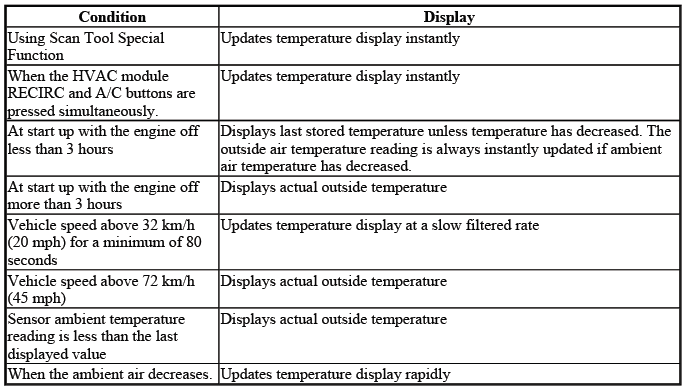
The ambient air temperature sensor is mounted under the hood and measures outside air temperature for HVAC operation and display logic. Because of its location, the sensor reading can be influenced by city traffic, extended idling, engine compartment heat soak, or restarting the vehicle while the engine is still hot.
For that reason, the HVAC control module filters the ambient air temperature value before using it for temperature display and compressor permission decisions. If the ambient air temperature sensor value drops below 2ºC (35ºF), the compressor clutch will be disabled until the ignition has been off for more than 3 hours or an instant OAT update is performed. This can happen even if the actual outside temperature has already risen, because the HVAC control module continues to use the filtered value until it is refreshed.
The ambient air temperature value is updated under specific operating conditions. This filtered update strategy helps prevent false temperature display changes caused by temporary heat around the sensor, but it also means that a technician must consider the stored or filtered outside temperature value when diagnosing A/C compressor operation on the Buick Enclave.
A/C Refrigerant Pressure Sensor
The A/C refrigerant pressure sensor is a 3-wire piezoelectric pressure transducer used to report refrigerant pressure to the powertrain control module. A 5-volt reference circuit, low reference circuit, and signal circuit allow the sensor to operate. The A/C pressure signal can vary between 0 and 5 volts, depending on the pressure inside the refrigerant system.
When A/C refrigerant pressure is low, the signal voltage is near 0 volts. When refrigerant pressure rises, the signal voltage increases toward 5 volts. The PCM converts this voltage into a pressure value that can be used for compressor control, system protection, and engine load calculations.
The A/C refrigerant pressure sensor helps protect the A/C system from operating during an excessively high-pressure condition. If the pressure exceeds 3234 kPa, the PCM disables the compressor clutch to reduce the risk of system damage. The clutch will be enabled again only after pressure decreases below 1931 kPa and the remaining compressor enable conditions are satisfied.
On the Buick Enclave, this pressure input is important because the compressor is not controlled only by the A/C button. The PCM must see a pressure value within the expected range before it will allow clutch engagement. A sensor that reads too high, too low, or intermittently can cause poor cooling, no compressor operation, or diagnostic trouble codes related to refrigerant pressure.
Dual Zone Operation
The HVAC control module uses dual temperature button switches to allow separate temperature control for the driver and passenger sides. Dual zone operation makes it possible to create a significant temperature offset between the two front seating positions, so one side can be warmer while the other remains cooler.
It is possible to select maximum airflow over the evaporator core with one dual zone switch while the other side requests maximum airflow over the heater core. Each air temperature actuator operates independently, and the passenger side is not limited in its range of temperature offset. This independent actuator control helps the system respond to different comfort preferences, sun load conditions, and cabin temperature demands.
If one side of the cabin does not match the selected temperature, diagnosis should include the related temperature actuator, actuator feedback signal, control circuits, heater core airflow path, and evaporator airflow path. A dual zone complaint is often caused by a blend-door or actuator issue rather than by the refrigerant system alone.
Heating and A/C Operation
The heating and A/C system is designed to provide both warmed and cooled air to the vehicle interior. The A/C system also removes moisture from the air, which helps reduce windshield fogging and improves comfort during humid conditions. Even when the temperature setting is selected correctly, several factors can affect how quickly the HVAC system reaches the desired cabin temperature.
Regardless of the temperature setting, the following can affect the rate that the HVAC system can achieve the desired temperature:
- Recirculation actuator setting
- Difference between inside and desired temperature
- Difference between ambient and desired temperature
- Blower motor speed setting
- Mode setting
- Auxiliary HVAC settings
These factors work together during normal HVAC operation. Recirculation can help cool the cabin faster by reusing already cooled air, while outside air may improve defogging and ventilation. Blower speed changes how much air passes through the HVAC case, and the selected mode determines where that air is delivered. Rear auxiliary settings can also affect overall cabin comfort because air temperature and airflow may differ between the front and rear seating areas.
The manual HVAC system is a dual temperature zone system with two separate air temperature levers. These levers control how air is blended through the heating and cooling sections of the HVAC case.
Moving the air temperature levers upward diverts most of the airflow through the heater core, increasing outlet air temperature. Moving the levers to the most downward position diverts most of the airflow around the heater core, lowering the outlet air temperature. The right air temperature actuator controls the duct air temperature flowing through the center console to the second-row seating area. The air temperature offset can be as much as 16.7ºC (30ºF).
This temperature offset allows the Buick Enclave cabin to provide different comfort levels for front and rear occupants. Because the right-side temperature actuator also affects airflow through the center console ducts, a second-row temperature complaint may be linked to the front passenger-side blend control rather than only to the auxiliary HVAC system.
Pressing the A/C button allows the HVAC control module to request A/C compressor engagement and turns on the A/C button LED. The HVAC control module sends a GMLAN message to the powertrain control module requesting compressor operation. If all required conditions are met, the PCM grounds the A/C compressor relay control circuit, allowing the relay contacts to close and send battery voltage to the A/C compressor clutch coil.
The A/C compressor diode prevents a voltage spike from entering the vehicle electrical system when the compressor is disengaged. This spike can occur when the magnetic field in the clutch coil collapses. Defrost and Defog mode selections will request A/C operation for dehumidification, but they do not turn on the A/C LED. This is normal operation and should not be mistaken for a control panel fault.
The following conditions must be met in order for the A/C compressor clutch to turn ON:
- Ambient air temperature above 2ºC (35ºF)
- A/C low pressure switch signal circuit is grounded.
- A/C refrigerant pressure sensor parameter is less than 3234 kPa.
- A/C compressor temperature switch contacts are closed.
- PCM receives an A/C request from the HVAC control module.
- Engine coolant temperature (ECT) is less than 124ºC.
- The engine RPM is less than 5, 800 RPM.
These conditions explain why the compressor clutch may not engage even when the A/C button is pressed. The PCM can disable compressor operation because of low ambient temperature, abnormal refrigerant pressure, an open low-pressure switch signal, excessive engine coolant temperature, high engine RPM, or a missing A/C request from the HVAC control module.
The sensor information is used by the PCM to determine the following:
- The A/C high side pressure
- An A/C system load on the engine
- An excessive A/C high side pressure
- The heat load at the A/C condenser
- Outside air temperature
By monitoring these inputs, the PCM can balance A/C performance with engine protection and drivability. High condenser heat load, excessive high-side pressure, or a large A/C load on the engine may cause the module to alter compressor operation. For the Buick Enclave, scan tool data should be checked during diagnosis so a normal compressor inhibit condition is not confused with a failed compressor clutch, relay, or HVAC control module.
The A/C compressor has an internal A/C compressor temperature switch. This switch protects the compressor from overheating by interrupting power to the compressor clutch coil when the compressor core temperature rises too high. When compressor core temperature rises above 124ºC (255ºF), the switch opens and disables the compressor clutch coil. When temperature drops to 120ºC (248ºF), the switch closes and allows the compressor clutch coil to operate again.
This switch is integral to the A/C compressor and is not serviced separately. If the compressor temperature switch opens repeatedly, the underlying cause should be investigated before compressor replacement is considered. Possible causes can include airflow problems at the condenser, refrigerant charge issues, abnormal system pressure, excessive heat load, or a compressor that is operating under poor conditions.
Once engaged, the compressor clutch will be disengaged when one or more operating conditions move outside the range the PCM considers acceptable. This is a normal protection strategy and should not automatically be interpreted as a failed compressor, relay, or HVAC control module. On the Buick Enclave, compressor clutch disengagement may be commanded to protect the A/C system, reduce engine load, prevent overheating, or maintain acceptable idle quality.
Once engaged, the compressor clutch will be disengaged for the following conditions:
- Ambient air temperature is less than 4ºC (39ºF).
- A/C compressor temperature switch contacts are open.
- Throttle position is 100%.
- The A/C low pressure switch is open.
- A/C high side pressure is more than 1931 kPa.
- A/C low side pressure is less than 151 kPa (22 psi).
- Engine coolant temperature (ECT) is more than 124ºC.
- Engine speed is more than 5, 800 RPM.
- Transmission shift
- PCM detects excessive torque load.
- PCM detects insufficient idle quality.
- PCM detects a hard launch condition.
These disengagement conditions show that compressor operation is linked to more than the A/C button alone. Low ambient temperature, low refrigerant pressure, high system pressure, high engine temperature, high RPM, wide-open throttle, a transmission shift, or heavy torque demand can all cause the PCM to interrupt compressor clutch operation. During diagnosis, scan tool data should be reviewed at the exact moment the compressor disengages so the technician can identify whether the clutch was turned off because of a fault or because the system was protecting itself.
Auxiliary Heating and A/C Operation
The auxiliary air temperature switch is a rotary knob switch used to adjust rear outlet air temperature. Turning the air temperature switch toward the warmest position moves the rear temperature blend door so most of the airflow passes through the heater core. This increases the temperature of the air delivered to rear seat occupants.
Turning the air temperature switch toward the coolest position moves the blend door so most of the airflow bypasses the heater core. This lowers rear outlet temperature by reducing the amount of heat added to the air stream. In the Buick Enclave auxiliary HVAC system, rear passenger comfort depends on correct operation of the rotary switch, auxiliary temperature actuator, rear blower motor, and the air passages leading to the rear outlets.
If rear air temperature does not change smoothly, the concern may be caused by a faulty auxiliary temperature actuator, poor control signal, restricted door movement, low coolant temperature, A/C performance issue, or a physical restriction inside the auxiliary HVAC case. The rear temperature complaint should be checked as a system rather than treated as a knob or actuator problem only.
Engine Coolant
Engine coolant is the main heat source for the heating system. The thermostat controls normal engine operating coolant temperature and helps the engine reach and maintain the temperature needed for efficient operation. The thermostat also creates a controlled restriction in the cooling system, which promotes positive coolant flow and helps prevent cavitation.
Coolant enters the heater core through the inlet heater hose while under pressure. The heater core is located inside the HVAC module, where air drawn through the HVAC case passes across its heated fins. As air moves over the heater core, it absorbs heat from the coolant flowing through the core, and that heated air is then distributed into the passenger compartment for comfort.
The air temperature door controls how much heat is delivered into the cabin. When the door directs more air through the heater core, outlet temperature increases. When the door routes more air around the heater core, outlet temperature decreases. This blend-door control allows the HVAC system to adjust cabin temperature without changing coolant temperature itself.
After passing through the heater core, the coolant exits through the return heater hose and recirculates back into the engine cooling system. If cabin heat is weak, slow to build, or uneven, diagnosis should include coolant level, thermostat operation, heater hose temperature, heater core flow, trapped air in the cooling system, and temperature-door movement. On the Buick Enclave, a heating concern may come from the cooling system or from the HVAC air-blend side, so both areas should be considered.
A/C Cycle
Refrigerant is the key working fluid in the air conditioning system. R-134a is the approved refrigerant used for this system, and it is designed to absorb heat and moisture from the passenger compartment, carry that heat outside the cabin, and release it to the outside air. The A/C cycle works by repeatedly changing refrigerant pressure, temperature, and physical state as it moves through the compressor, condenser, orifice tube, evaporator, and suction line.
The A/C compressor is belt driven and operates when the magnetic clutch is engaged. Once the clutch engages, the compressor draws in low-pressure refrigerant vapor from the suction side and compresses it into a high-pressure vapor. Compressing the refrigerant raises both pressure and temperature, preparing it to release heat at the condenser.
The refrigerant leaves the compressor through the discharge hose and flows to the condenser, then continues through the rest of the A/C system. The system is mechanically protected by a high-pressure relief valve. If the A/C refrigerant pressure sensor fails, or if the refrigerant system becomes restricted and pressure continues to rise, the high-pressure relief valve can open and release refrigerant from the system to prevent more severe component damage.
Compressed refrigerant enters the condenser as a high-temperature, high-pressure vapor. As the refrigerant moves through the condenser, heat transfers from the refrigerant to the outside air passing across the condenser fins. As heat is removed, the refrigerant condenses and changes from a vapor into a liquid state.
The condenser is located in front of the radiator to provide maximum heat transfer. It is made of aluminum tubing and aluminum cooling fins, which allow heat to move out of the refrigerant quickly. Airflow through the grille, condenser, and radiator area is critical. A blocked condenser, damaged fins, cooling fan concern, or debris buildup can raise system pressure and reduce A/C performance.
The semi-cooled liquid refrigerant exits the condenser and flows through the liquid line to the orifice tube. The orifice tube is located in the liquid line between the condenser and the evaporator, and it forms the dividing point between the high-pressure side and the low-pressure side of the A/C system.
As refrigerant passes through the orifice tube, pressure drops sharply. Because of this pressure change, the liquid refrigerant begins to vaporize as it enters the low-pressure side of the system. The orifice tube also meters how much liquid refrigerant can enter the evaporator core, helping control refrigerant flow through the cooling cycle.
Refrigerant leaving the orifice tube enters the evaporator core in a low-pressure liquid state. Air drawn through the HVAC module passes across the evaporator core. Warm, moist air causes the liquid refrigerant inside the evaporator to boil and absorb heat. At the same time, moisture from the air condenses on the evaporator surface and drains away through the evaporator drain, helping reduce humidity inside the cabin.
After absorbing heat, the refrigerant exits the evaporator through the suction line and returns to the compressor as a vapor. At the compressor, the refrigerant is compressed again, and the heat-removal cycle repeats. In the Buick Enclave HVAC system, effective A/C operation depends on proper refrigerant charge, clean airflow through the condenser and evaporator, correct compressor clutch control, accurate pressure sensing, and unrestricted refrigerant flow through the orifice tube and lines.
The conditioned air is distributed through the HVAC module for passenger comfort. As warm, humid cabin air passes across the evaporator, heat is removed and moisture condenses on the evaporator surface. That moisture then drains from the HVAC module as water. This is why water may be seen dripping under the vehicle during normal A/C operation, especially in humid weather.
In the Buick Enclave, this condensation process is part of normal air conditioning performance. If water does not drain correctly, moisture can remain inside the HVAC case and contribute to odors, fogging, or damp carpet, so the evaporator drain should be checked whenever these symptoms are present.
A/C Cycle with Auxiliary
The auxiliary A/C system operates from the vehicle's primary A/C system. The front or primary A/C system must be ON before the rear A/C system can function. The rear unit does not create a separate refrigerant cycle by itself; it receives refrigerant flow from the main system and uses that flow to cool the rear passenger area.
This design allows the front and rear HVAC systems to share the same compressor, condenser, refrigerant charge, and major system protection devices. Because of this shared layout, a fault in the primary A/C system can affect rear cooling performance even when the rear blower and rear controls appear to work normally.
Refrigerant is the key element in an air conditioning system. R-134a is the approved refrigerant used in this system, and it is capable of absorbing unwanted heat and moisture from the passenger compartment and transferring that heat to the outside air. As the refrigerant moves through the system, it repeatedly changes pressure, temperature, and physical state to complete the heat-removal process.
The A/C system used on this vehicle is a non-cycling system. Non-cycling A/C systems use a high pressure switch to protect the A/C system from excessive pressure. If refrigerant pressure becomes too high, the high pressure switch opens the electrical signal to the compressor clutch and stops compressor operation. After the high and low sides of the A/C system equalize, the high pressure switch closes again and completes the electrical circuit to the compressor clutch.
The A/C system is also mechanically protected by a high pressure relief valve. If the high pressure switch fails, or if the refrigerant system becomes restricted and pressure continues to rise, the high pressure relief valve can open and release refrigerant from the system. This prevents more severe damage to hoses, seals, condenser passages, or other A/C components, although refrigerant loss will require proper service afterward.
The A/C compressor is belt driven and operates when the magnetic clutch is engaged. The compressor draws in low-pressure refrigerant vapor and compresses it into a high-pressure vapor. Compressing the refrigerant also raises its temperature. The heated, pressurized refrigerant then leaves the compressor through the discharge hose and is forced toward the condenser and through the rest of the A/C system.
Compressed refrigerant enters the condenser as a high-temperature, high-pressure vapor. As the refrigerant moves through the condenser, heat transfers from the refrigerant to the ambient air passing through the condenser fins. As heat is removed, the refrigerant condenses and changes from a vapor into a liquid state.
The condenser is mounted in front of the radiator to provide maximum heat transfer. It is built from aluminum tubing and aluminum cooling fins, which help release heat quickly. The semi-cooled liquid refrigerant exits the condenser and flows through the liquid line. From there, the liquid-line flow is divided so refrigerant can travel to both the front primary A/C system and the liquid line for the rear A/C system.
On the Buick Enclave with auxiliary A/C, this split refrigerant path is important for rear-seat comfort. If the front system is low on refrigerant, restricted, over-pressurized, or not operating correctly, the rear evaporator may not receive the refrigerant flow needed for strong cooling. Rear A/C complaints should therefore be diagnosed as part of the complete system, not only as a rear module issue.
The liquid refrigerant flowing to the rear A/C system enters the rear thermal expansion valve, or TXV. The rear TXV is located at the rear evaporator inlet and acts as the dividing point between the high-pressure side and low-pressure side of the rear A/C circuit. As refrigerant passes through the TXV, pressure drops sharply.
Because of this pressure difference, the liquid refrigerant begins to boil at the expansion device. The TXV also meters the amount of liquid refrigerant that can flow into the rear evaporator. By controlling refrigerant flow, the TXV helps the rear evaporator absorb heat efficiently without flooding the suction side with too much liquid refrigerant.
Refrigerant leaving the TXV enters the rear evaporator core in a low-pressure liquid state. Ambient air is drawn through the rear A/C module and passes across the evaporator core. Warm, moist air causes the refrigerant inside the evaporator to boil. As the refrigerant boils, it absorbs heat from the air and pulls moisture onto the evaporator surface.
The refrigerant exits the rear evaporator through the suction line and returns to the primary A/C system suction line. From there, refrigerant flows back to the compressor as a vapor, completing the heat-removal cycle. At the compressor, the refrigerant is compressed again and the cycle repeats.
The conditioned air is distributed through the rear A/C module for passenger comfort. The heat and moisture removed from the rear passenger compartment also change form or condense and are discharged from the rear A/C module as water. Proper drainage is important, because a restricted rear evaporator drain can lead to water accumulation, odor, reduced comfort, or moisture inside the rear cabin area.
Effective auxiliary A/C operation depends on correct refrigerant charge, unrestricted liquid and suction lines, proper TXV operation, clean evaporator airflow, rear blower performance, and normal primary A/C system operation. In the Buick Enclave, weak rear cooling can be caused by a rear airflow problem, but it can also come from a refrigerant flow issue that begins in the shared front system.
SPECIAL TOOLS AND EQUIPMENT
SPECIAL TOOLS
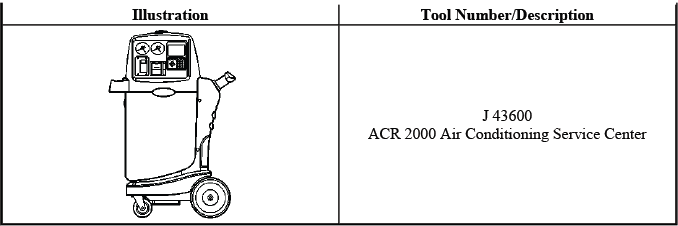
The special tools and equipment listed for this section support accurate HVAC and A/C service. Proper tools are needed for refrigerant recovery, evacuation, charging, leak checking, pressure measurement, electrical diagnosis, actuator inspection, and verification of system performance after repair.
Using the correct service equipment is especially important on A/C systems because refrigerant charge amount, pressure readings, and leak integrity directly affect cooling performance. Incorrect tools or improvised service methods can lead to inaccurate diagnosis, refrigerant loss, poor cooling, or damage to system components.