Buick Enclave: Description and Operation
PARK BRAKE SYSTEM DESCRIPTION AND OPERATION
System Component Description
The park brake system is a mechanical holding system designed to keep the vehicle stationary when parked. On the Buick Enclave, it works separately from normal hydraulic brake pressure and relies on the pedal assembly, release handle, cables, equalizer, apply levers, actuator/adjuster assemblies, and rear parking brake shoes to create holding force at the rear wheels.
The park brake system consists of the following:
Park Brake Pedal Assembly
The park brake pedal assembly receives the driver's apply force and transfers that force into the park brake cable system. When the pedal is depressed, it begins the mechanical chain of movement that eventually applies the parking brake shoes at the rear brake rotors. Smooth pedal travel is important because binding, excessive slack, or poor return can affect both holding performance and release quality.
Park Brake Release Handle Assembly
The park brake release handle assembly releases the applied park brake system when the handle is pulled. Pulling the handle disengages the pedal holding mechanism and allows cable tension to relax, so the rear parking brake shoes can move away from the drum-in-hat surface. If the release handle does not move freely, the system may remain partially applied even though the driver believes the brake has been released.
Park Brake Cables
The park brake cables transfer the input force from the park brake pedal through the park brake cable equalizer and then to the park brake apply levers. These cables must follow their intended routing and move smoothly inside their conduits. Corrosion, stretched cable strands, damaged conduit ends, or loose locking tabs can reduce the force that reaches the rear brake assemblies.
Park Brake Cable Equalizer
The park brake cable equalizer distributes the pedal input force between the left and right park brake units. Its job is to keep both sides working together so one rear brake does not apply harder than the other. On the Buick Enclave, equalizer position and cable adjustment have a direct effect on pedal travel, rear shoe movement, and how evenly the vehicle is held when parked.
Park Brake Apply Lever
The park brake apply lever receives cable movement and multiplies the input force before transferring it to the park brake actuator. This lever gives the system the mechanical advantage needed to expand the parking brake shoe with enough pressure against the inside of the rear rotor hat. A lever that is bent, seized, or restricted by rust can cause weak holding force or uneven application.
Park Brake Actuator/Adjuster
The park brake actuator/adjuster uses the multiplied input force from the apply lever to expand the park brake shoe toward the friction surface of the drum-in-hat portion of the rear brake rotor. This movement creates the contact needed to hold the rear tire and wheel assemblies from rotating.
Threaded park brake actuators are also used to control the clearance between the park brake shoe and the friction surface of the drum-in-hat portion of the rear brake rotor. Correct clearance is important: too much gap can lead to long pedal travel and poor holding power, while too little gap can cause drag, heat, noise, and premature lining wear.
Park Brake Shoe
The park brake shoe applies the mechanical output force from the park brake actuator to the friction surface inside the drum-in-hat portion of the rear brake rotor. The shoe lining must be clean, dry, and properly adjusted. If the lining is worn, cracked, glazed, or contaminated with oil or brake fluid, the parking brake may not hold securely even when the pedal and cables appear to operate normally.
System Operation
Park brake apply input force begins when the driver depresses the park brake pedal assembly. That force is transferred through the front cable, balanced through the park brake cable equalizer, and then delivered to the left and right rear park brake apply levers. The apply levers increase the mechanical force and send it into the park brake actuators, which expand the park brake shoes outward against the friction surface inside the drum-in-hat portion of the rear brake rotors.
Once the shoes contact the rotor hat surface, friction prevents the rear tire and wheel assemblies from rotating, helping the Buick Enclave remain stationary while parked. The system depends on proper cable tension, clean moving parts, correct shoe clearance, and even left-to-right operation. A weakness in any of these areas can show up as excessive pedal travel, poor holding ability, brake drag, uneven rear application, or a parking brake that does not fully release.
When the park brake release handle assembly is pulled rearward, the pedal holding mechanism is released and the cable tension is reduced. As tension drops, the apply levers and actuators return, allowing the park brake shoes to move away from the rotor friction surface. A complete release is just as important as strong application, because even light residual contact can create heat, lining wear, and noise during driving.
SPECIAL TOOLS AND EQUIPMENT
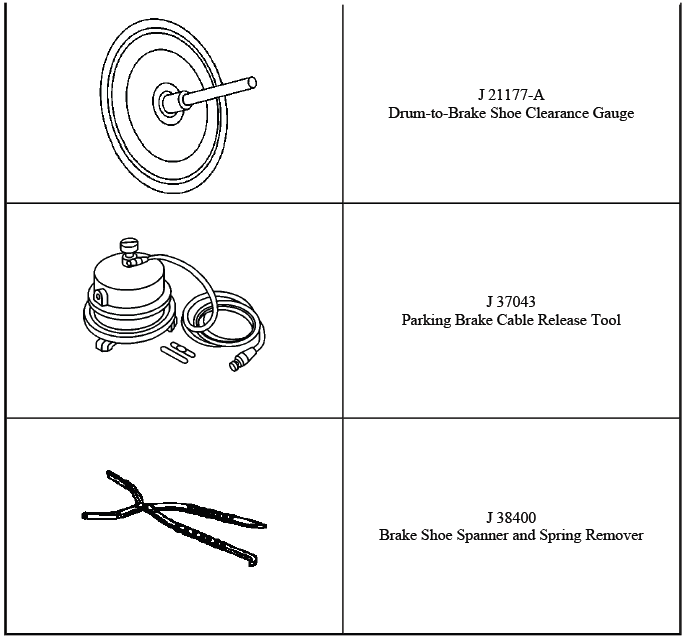
SPECIAL TOOLS
The following special tools are used when measuring, adjusting, or servicing the park brake system. Using the correct tool helps maintain accurate shoe-to-drum clearance and prevents unnecessary trial-and-error adjustment. For Buick Enclave park brake work, proper tooling is especially useful because the drum-in-hat design depends on precise internal shoe position.