Buick Enclave: Description and Operation
AIR DELIVERY DESCRIPTION AND OPERATION
The air delivery description and operation is divided into 7 main areas. Each area works together to control airflow volume, outlet selection, temperature balance, rear climate operation, and automatic comfort response inside the vehicle:
- HVAC Control Components
- Air Speed
- Auxiliary Air Speed
- Air Delivery
- Auxiliary Air Delivery
- Recirculation Operation
- Automatic Operation
Understanding these areas helps explain how the automatic HVAC system manages air movement through the cabin. On the Buick Enclave, air delivery is not controlled by one part alone; it depends on control modules, actuators, blower control logic, sensor input, serial data communication, duct design, and the selected front or rear climate settings.
HVAC Control Components
HVAC Control Module
The HVAC control module is a GMLAN device that acts as the communication and command center between the operator and the HVAC system. It interprets user selections, monitors climate-related inputs, commands actuators, manages blower requests, and helps maintain the selected air temperature and air distribution settings. The battery positive voltage circuit supplies power used for keep alive memory (KAM), allowing the module to retain stored HVAC settings and diagnostic information when the ignition is turned off.
If the battery positive voltage circuit loses power, all HVAC DTCs and stored settings in KAM will be erased. The body control module (BCM), which operates as the vehicle mode master, provides the device ON signal that allows the HVAC control module to wake and operate at the correct time. In the Buick Enclave automatic HVAC system, this module must communicate properly with other vehicle modules so blower operation, A/C requests, air door movement, and rear climate control functions can work as intended.
The control module supports the following features:

Auxiliary HVAC Control Module (without RSA)
The Auxiliary HVAC Control Module uses a set of three potentiometers to control rear fan speed, rear temperature, and rear mode settings. The auxiliary module receives a 5-volt reference and a low reference that are shared by all three potentiometers. Each potentiometer has a separate signal circuit that sends its selected position back to the HVAC control module.
As the rear controls are adjusted, the signal voltage changes. The HVAC control module interprets those voltage changes as rear blower, temperature, and mode requests. This design allows rear occupants to adjust comfort settings without relying completely on the front control panel, while still keeping the HVAC control module responsible for system logic and diagnostic monitoring.
Auxiliary HVAC Control Module (with RSA)
When the vehicle is equipped with RSA, the auxiliary HVAC control functions are integrated into the Rear Seat Entertainment Module. In this configuration, rear HVAC settings are communicated over serial data instead of being handled only through direct potentiometer signals. This allows the rear climate functions and rear seat control interface to operate through the vehicle communication network.
Auxiliary HVAC Control Functions
All auxiliary functions and DTCs are handled by the HVAC control module. Rear climate operation can be controlled in two ways, depending on whether the front HVAC control module or the auxiliary controls are being used.
Control from the HVAC control module: If the AUX button on the HVAC control module is pressed, the rear HVAC system is enabled. The rear settings will mirror the driver settings on the HVAC control module. This is useful when the driver wants to quickly bring the rear cabin area into the same general comfort range as the front cabin.
Control from the auxiliary HVAC control module: If any of the three auxiliary controls are adjusted, control of the rear HVAC system transfers to the auxiliary controls. If the AUX button is not currently enabled, adjusting the auxiliary controls will enable rear HVAC operation, even if the front system is OFF. This allows rear occupants to request airflow, temperature, or mode changes independently when rear controls are available.
For the Buick Enclave, this front-and-rear control strategy is important because the cabin is larger than a typical passenger car interior. Proper auxiliary HVAC operation helps maintain comfort in the second and third rows, especially during rapid heating, cooling, or defogging conditions.
Auxiliary Mode Actuator
The auxiliary mode actuator is a 5-wire bi-directional electric motor that incorporates a feedback potentiometer. The actuator uses a low reference circuit, a 5-volt reference circuit, a position signal circuit, and 2 control circuits to move and report the position of the rear air delivery door.
The control circuits use either a 0-volt or 12-volt value to coordinate actuator movement. When the actuator is at rest, both control circuits are at 0 volts. To move the actuator, the HVAC control module grounds one control circuit while applying 12 volts to the other. To move the actuator in the opposite direction, the module reverses the polarity of the control circuits.
As the actuator shaft rotates, the adjustable contact inside the feedback potentiometer changes the door position signal between 0-5 volts. The HVAC control module converts this voltage into a 0-255 count range, which it uses to identify actuator position. When the module commands a target position, it drives the actuator until the feedback signal matches the requested value. Once the actual position and commanded value match, the module removes power and ground from the control circuits to stop the actuator.
The auxiliary HVAC control module also uses a 0-255 count range to index actuator position. The door position signal voltage is converted into a count value so the module can track movement accurately. When the module sets a commanded value, the control signal changes to either 0 volts or 5 volts depending on the direction the actuator must rotate to reach the requested position.
As the actuator shaft turns, the changing position signal is sent back to the module. Once the position signal and commanded value are the same, the module changes the control signal to 2.5 volts. This neutral signal indicates that the actuator has reached its target and no further movement is required. Accurate actuator feedback is essential because incorrect rear mode door position can cause air to exit from the wrong rear vents or remain fixed in one outlet pattern.
Blower Motor Control Processor
The blower motor control processor controls blower motor speed by increasing or decreasing the voltage drop on the ground side of the blower motor. Instead of operating only at fixed speeds, the processor allows the HVAC system to vary blower output smoothly based on manual settings or automatic climate demands.
The HVAC control module sends a low-side pulse width modulated signal to the blower motor control processor through the blower motor speed control circuit. As requested blower speed increases, the HVAC control module increases the amount of time the speed signal is modulated to ground. As requested blower speed decreases, the module reduces the amount of time the signal is modulated to ground.
This pulse width modulated control allows the Buick Enclave HVAC system to adjust airflow gradually rather than relying only on abrupt speed changes. In automatic mode, the control module can increase blower speed during rapid heat-up or cool-down, then reduce blower output once the cabin approaches the selected temperature. Smooth blower control also helps reduce noise while maintaining airflow comfort.
Auxiliary Blower Motor Control Processor
The auxiliary blower motor control processor regulates rear blower motor speed by increasing or decreasing the voltage drop on the ground side of the auxiliary blower motor. Instead of using only fixed speed steps, the processor allows the rear blower to respond smoothly to control requests from the auxiliary HVAC system.
The auxiliary HVAC control module sends a low-side pulse width modulated signal to the auxiliary blower motor control processor through the auxiliary blower motor speed control circuit. When a higher rear blower speed is requested, the module increases the amount of time the speed signal is modulated toward ground. When a lower rear blower speed is requested, the module reduces the ground modulation time. This controlled signal lets the Buick Enclave rear climate system adjust airflow in a more gradual and comfortable way for second- and third-row passengers.
Air Speed - Front Control
The blower control switch is integrated into the HVAC control module. The 2 rocker-type switches allow the vehicle operator to select several blower speeds, and the HVAC control module uses a bar graph display to show the selected airflow level. This gives the driver a clear visual indication of current blower output.
The blower motor control processor supplies a 5-volt reference to the HVAC control module on the blower motor speed control circuit. The HVAC control module pulls the 5-volt reference low toward ground to create the blower motor speed signal. As the voltage decreases, blower speed increases. Power and ground are supplied to the blower motor control processor through the battery positive voltage and ground circuits.
When the HVAC control module is operating in AUTO mode, blower speed is controlled automatically. The system can raise blower output during rapid heating or cooling, then reduce airflow as the cabin approaches the selected temperature. If an OnStar call is initiated while the blower is operating at high speed, the system lowers blower speed to reduce background noise and improve voice clarity during the call. On the Buick Enclave, this automatic blower reduction helps maintain communication quality without requiring the driver to manually lower the fan setting.
Air Speed - Auxiliary
There are 2 separate operator control points for the auxiliary HVAC system: the front auxiliary HVAC control assembly and the rear seat audio (RSA) control module. If the front auxiliary blower motor switch is in the AUX position, the rear system operates from inputs to the front auxiliary HVAC control assembly. If the front auxiliary blower motor switch is in the OFF position, the RSA control module does not respond to rear passenger input.
The auxiliary HVAC control module cannot request A/C operation from the PCM. Instead, it controls rear airflow and rear comfort functions based on the available system conditions and front climate operation. A rocker-type switch on the RSA control module allows the rear operator to select several blower speeds when rear control is enabled.
The RSA control module uses a bar graph to display the selected rear blower speed. The auxiliary blower motor control processor supplies a 5-volt reference to the auxiliary HVAC control module on the auxiliary blower motor speed control circuit. The auxiliary HVAC control module pulls the 5-volt reference low toward ground to create the rear blower speed signal. As the voltage decreases, auxiliary blower speed increases. Power and ground are supplied to the auxiliary blower motor control processor through the battery positive voltage and ground circuits.
This design allows the rear blower to be adjusted separately from the front blower while still keeping the HVAC control strategy coordinated. In a larger cabin such as the Buick Enclave, separate auxiliary airflow control helps rear passengers receive more consistent heating, cooling, and ventilation instead of relying only on front outlet airflow.
Afterblow
Afterblow is a feature that dries the evaporator core by operating the blower motor after the engine is turned off. Moisture can remain on the evaporator after A/C operation, especially in humid conditions. By moving air across the evaporator after shutdown, the system helps reduce retained moisture inside the HVAC case.
This feature reduces the amount of microbial growth that can create undesirable odors from the vents. The vehicle does not come equipped with the afterblow feature turned on from the factory. If afterblow is needed because of an odor concern, it must be enabled with a scan tool.
The following conditions must be met for afterblow to operate:
- The A/C compressor operated during the prior key cycle.
- The system voltage is at least 11 volts to start and 10 volts to continue running.
- The ignition has been in the OFF position for at least 30 minutes.
Once the above conditions have been met, the following sequence of events will occur:
- The blower will run for a range of 2 minutes 30 seconds to 4 minutes.
- The recirculation door moves to the outside air position.
- The mode valve moves to the floor position.
This operating sequence helps move fresh air through the HVAC module and across the evaporator core without directing airflow toward the windshield or panel outlets unnecessarily. Afterblow should be considered a moisture-management feature, not a repair for refrigerant leaks, water intrusion, blocked drains, or contaminated cabin filters.
Air Distribution
The HVAC control module controls air distribution through the mode actuator. The mode actuator positions the mode door so air can be routed to the selected outlet pattern. The available modes include:
- Defrost
- Defog
- Panel
- BI-Level
- Floor
The mode actuator is connected to the mode door by a cam-type linkage system. Depending on door position, air is directed through the HVAC module and into the duct network leading to the instrument panel outlets, floor outlets, defrost outlets, or a combination of outlet paths. Correct linkage movement is important because a small actuator or cam misalignment can cause air to discharge from the wrong vents or reduce airflow in the selected mode.
If the HVAC control module detects a fault with the mode door, it will attempt to drive the actuator for a predetermined amount of time toward defrost, which is the default position for the mode door actuator. This default strategy helps preserve windshield clearing capability when the module cannot verify normal mode door operation.
When the mode switch is placed in the defrost or defog positions, the A/C is commanded ON and the recirculation door is moved to the outside air position to help reduce window fogging. A/C is available in all modes, while recirculation is available only in the panel and bi-level modes. This logic helps the Buick Enclave automatic HVAC system balance comfort, visibility, and moisture control during normal driving and changing weather conditions.
Mode Actuator
The mode actuator is a 5-wire bi-directional electric motor with an integrated feedback potentiometer. It uses a low reference circuit, a 5-volt reference circuit, a position signal circuit, and 2 control circuits to move the mode door and report its position back to the HVAC control module. This feedback allows the module to know where the air distribution door is located rather than simply assuming the actuator reached the requested position.
The control circuits operate with either a 0-volt or 12-volt value to coordinate actuator movement. When the actuator is at rest, both control circuits are held at 0 volts. To move the actuator, the HVAC control module grounds one control circuit while supplying 12 volts to the other. To move the actuator in the opposite direction, the module reverses polarity on the control circuits. This allows the Buick Enclave HVAC system to direct airflow accurately between panel, floor, defog, and defrost outlets.
As the actuator shaft rotates, the adjustable contact inside the potentiometer changes the door position signal between 0-5 volts. The HVAC control module converts this voltage into a 0-255 count range to index actuator position. When the module sets a commanded or target value, it drives the actuator until the changing feedback signal matches the requested count. Once the actual position and commanded value are the same, the module removes power and ground from the control circuits, stopping actuator movement.
Accurate mode actuator feedback is important for windshield clearing, cabin comfort, and correct air outlet selection. If the actuator binds, loses feedback, or fails to reach the requested position, the system may default toward a safer airflow strategy, commonly favoring defrost to help maintain visibility.
Front Defrost
When front defrost is selected, the A/C compressor is activated to help remove moisture from the air. The A/C compressor clutch will engage when ambient temperatures are above 3ºC (38ºF), provided the rest of the compressor enabling conditions are also satisfied. The blower motor is activated regardless of coolant temperature so airflow is available for windshield clearing as soon as defrost is requested.
The HVAC control module overrides the auxiliary HVAC control module so a high volume of air is delivered to the front defrost vents. This priority helps direct airflow where it is most important for visibility. The rear window defogger does not affect HVAC air delivery operation because it uses a separate electrical grid to heat the rear glass, while the front defrost function relies on air movement, temperature control, and moisture removal.
In the Buick Enclave, defrost operation is designed to reduce windshield fogging quickly by combining outside air, A/C dehumidification, and directed airflow toward the glass. A weak defrost complaint should be checked for airflow restriction, incorrect mode door movement, low blower output, moisture intrusion, and A/C system performance.
Air Distribution - Auxiliary Control
The auxiliary HVAC system provides ventilation for rear seat occupants. Rear passengers can control auxiliary air delivery modes, air speed, and air temperature settings when rear control is enabled. This separate rear control strategy helps maintain comfort throughout the larger cabin instead of relying only on front outlet airflow.
When the auxiliary mode switch is toggled, a signal is sent to the auxiliary mode actuator through the auxiliary mode door control circuit. Power and ground are supplied to the auxiliary mode actuator through the ignition 3 voltage and ground circuits. The actuator then moves the rear mode door to route air to the requested rear outlet position.
When the HVAC control module is ON, air delivered to the auxiliary HVAC system begins at low auxiliary blower speed. When the operator selects medium blower speed, power is delivered to the auxiliary blower motor through the auxiliary blower motor medium speed control circuit. This allows rear airflow to increase without affecting every front HVAC setting.
When the operator selects high blower speed, power is delivered to the auxiliary blower motor through the auxiliary blower motor high speed control circuit. Ground is provided to the blower motor through the ground circuit. Power and ground are also supplied to the auxiliary HVAC control module through the ignition 3 voltage and ground circuits. Proper rear blower operation depends on clean power feeds, a reliable ground path, responsive controls, and unobstructed rear ducting.
Recirculation Operation
The HVAC control module controls air intake through the recirculation actuator. When recirculation is selected, the recirculation door closes to circulate cabin air inside the vehicle. When outside air is selected, the recirculation door opens so fresh air can enter the HVAC module and move through the cabin.
Regardless of blower motor switch position, recirculation is available only in the panel and bi-level mode switch positions, including the OFF position. The mode switch must be placed in either the panel or bi-level position before the blower motor switch is placed in the OFF position. This logic prevents recirculation from being used in modes where outside air is needed for moisture control or windshield clearing.
To reduce windshield fogging, outside air is circulated when the mode switch is in the defrost or defog positions. If the recirculation switch is pressed ON while the mode switch is in an unavailable mode position, the recirculation switch LED will flash 3 times. This flash pattern informs the operator that recirculation has been requested but is not allowed in the current mode.
If the HVAC control module detects a fault with the recirculation door, it will attempt to drive the actuator for a predetermined amount of time toward outside air, which is the default position for the recirculation actuator. On the Buick Enclave automatic HVAC system, this default position helps reduce fogging risk and maintains fresh-air intake when the module cannot confirm proper recirculation door movement.
Automatic Operation
In automatic operation, the HVAC control module maintains the selected comfort level inside the vehicle by controlling the A/C compressor clutch, blower motor, air temperature actuators, mode actuator, and recirculation actuator. Instead of requiring constant manual adjustment, the system compares sensor input with the selected temperature and changes airflow, air delivery, and temperature blend as needed.
To place the HVAC system in Automatic mode, the following is required:
- The Auto switch must be activated.
- The air temperature switch must be in any position other than full hot or full cold.
Once the desired temperature is reached, blower motor speed, mode position, recirculation position, and temperature actuator positions are adjusted automatically to maintain the selected temperature. The system may use higher blower speed during rapid cabin temperature correction, then lower blower output once comfort is reached. It may also adjust outlet selection and recirculation strategy to balance comfort, visibility, and humidity control.
The HVAC control module performs the following functions to maintain the desired air temperature:
- Monitor the following sensors:
- Inside air temperature sensor
- Ambient Air Temperature Sensor
- Lower Left Air Temperature Sensor
- Lower Right Air Temperature Sensor
- Upper Left Air Temperature Sensor
- Upper Right Air Temperature Sensor
- Regulate blower motor speed.
- Position the air temperature actuator.
- Position the mode actuator.
- Position the recirculation actuator.
- Request A/C operation.
These inputs and outputs allow the Buick Enclave HVAC control module to react to cabin temperature, outside air temperature, duct outlet temperature, sunlight load, and driver-selected comfort settings. When automatic operation feels inaccurate, the diagnosis should consider sensor readings, actuator feedback, blower response, air distribution, refrigerant performance, and possible restrictions in the HVAC airflow path.
AIR TEMPERATURE DESCRIPTION AND OPERATION
The air temperature control system in the Buick Enclave is designed to manage cabin comfort by coordinating airflow temperature, air distribution, rear climate requests, actuator movement, coolant heat, and air conditioning operation. Instead of depending on one isolated control, the system brings several modules and feedback circuits together so every temperature request can be converted into accurate door movement and blower response.
The air temperature controls are divided into 7 main areas:
- HVAC Control Components
- Heating and A/C Operation
- Auxiliary Heating and A/C Operation
- Automatic Operation
- Auxiliary Automatic Operation
- Engine Coolant
- A/C Cycle
These sections work as one climate-control strategy. Driver input, rear passenger requests, actuator feedback, and system temperature demands are all interpreted together so the cabin does not simply receive hot or cold air, but a controlled blend matched to the selected setting.
HVAC Control Components
At the center of the system is the HVAC control module, a GMLAN device that serves as the communication link between the vehicle operator and the heating, ventilation, and air conditioning system. It reads temperature, mode, blower, and auxiliary climate selections, then uses that information to maintain the requested air temperature and airflow direction. In the Buick Enclave, this module also stores climate settings and diagnostic information through keep alive memory, commonly known as KAM.
For that memory to remain available, the battery positive voltage circuit supplies the power needed by the HVAC control module. If this circuit loses power, stored HVAC diagnostic trouble codes and saved climate settings are erased from KAM. The body control module, or BCM, acts as the vehicle mode master and provides the device on signal, allowing the HVAC control module to wake up and operate when the vehicle is in the proper power mode.
Once the module is active, it supports the following climate-control functions by receiving operator input, checking feedback signals, and commanding the necessary components to move or operate. This layered control helps the system respond in a measured way, avoiding rough temperature swings or poorly timed air-door movement.

Auxiliary HVAC Control Module (without RSA)
On vehicles without rear seat audio, the auxiliary HVAC control module uses three potentiometers to manage rear fan speed, rear temperature, and rear mode selection. Each potentiometer gives the rear occupants a direct way to request a change without relying only on the front climate panel.
To make those rear requests readable, the auxiliary HVAC control module receives a 5-volt reference and a low reference shared by all three potentiometers. Each control then sends its own signal circuit back to the HVAC control module. By watching the voltage level on each signal circuit, the module can identify the rear control positions and command the rear climate system accordingly.
Auxiliary HVAC Control Module (with RSA)
When the vehicle is equipped with rear seat audio, the auxiliary HVAC functions are built into the Rear Seat Entertainment Module. In this version, the rear climate requests are not handled only as separate analog inputs. The Rear Seat Entertainment Module sends rear HVAC settings over serial data, and the HVAC control module processes those requests electronically.
This design makes the rear climate system feel more integrated with the rest of the vehicle network. It also reduces the need for separate control hardware while still allowing rear passengers to adjust temperature, airflow mode, and fan operation from their own area of the cabin.
Auxiliary HVAC Control Functions
All auxiliary climate functions and related diagnostic trouble codes are managed by the HVAC control module. Rear HVAC operation can be controlled in two different ways, depending on whether the front module or the auxiliary controls have priority at that moment.
Control from the HVAC control module: When the AUX button on the HVAC control module is pressed, the rear HVAC system is enabled. In this operating state, the rear settings follow the driver settings selected at the front HVAC control module. This lets the driver quickly apply the same general comfort preference to the rear cabin without asking rear passengers to adjust their controls.
Control from the auxiliary HVAC control module: If any of the three auxiliary controls are adjusted, rear HVAC control transfers to the auxiliary controls. From that point, rear passengers can set their own fan speed, temperature, and air delivery mode. If the AUX button was not already enabled, moving one of the auxiliary controls will activate the rear system, even when the front HVAC system is turned off.
Because of this control logic, the rear climate zone remains flexible in daily use. The front occupants can manage rear comfort when needed, but the rear passengers can take over their own settings the moment one of the auxiliary controls is moved.
Air Temperature Actuators
The air temperature actuator is a 5-wire bi-directional electric motor with an internal feedback potentiometer. Its purpose is to move the air temperature door to the position requested by the HVAC control module. By shifting that door, the system blends heated and cooled airflow to produce the outlet temperature selected by the occupants.
The actuator operates through a low reference circuit, a 5-volt reference circuit, a position signal circuit, and two control circuits. The driver air temperature actuator is a reverse-polarity motor. Its control circuits use either 0 volts or 12 volts to direct actuator movement. When the actuator is not moving, both control circuits remain at 0 volts.
When movement is needed in one direction, the HVAC control module grounds one control circuit and applies 12 volts to the other. To move the actuator the opposite way, the module reverses polarity across the two control circuits. This allows the same motor to drive the air temperature door both ways without requiring a separate motor for each direction.
As the actuator shaft turns, the adjustable contact inside the feedback potentiometer changes the door position signal between 0 and 5 volts. The HVAC control module converts that voltage into a 0-255 count value. This gives the module a precise reference for actual door position instead of simply assuming that the actuator reached the requested point.
After the module sets a target value, it energizes the actuator and monitors the changing position signal while the shaft rotates. When the actual signal matches the commanded value, the module removes power and ground from the control circuits. The motor stops, and the air temperature door remains at the selected position.
From a diagnostic standpoint, this feedback is especially useful. The HVAC control module needs to see both movement and a believable return signal. A binding temperature door, open reference circuit, weak ground, shorted control circuit, or inaccurate feedback signal can keep the system from reaching the requested temperature even when the control panel appears to respond normally.
Auxiliary Air Temperature Actuator
The auxiliary air temperature actuator follows the same basic operating principle as the front air temperature actuator. It is also a 5-wire bi-directional electric motor with a feedback potentiometer, but its role is to position the rear air temperature door according to rear climate-control requests.
Its circuit layout includes a low reference, a 5-volt reference, a position signal, and two motor control circuits. Through these circuits, the HVAC control module can move the auxiliary temperature door and verify where the door actually is. The control circuits use 0 volts or 12 volts depending on the direction of travel required.
When the auxiliary actuator is at rest, both control circuits are held at 0 volts. To begin movement, the HVAC control module grounds one control circuit while applying 12 volts to the other. If movement in the opposite direction is needed, polarity is reversed. The motor then rotates the shaft until the rear temperature door reaches the calculated target position.
During that movement, the feedback potentiometer changes the position signal between 0 and 5 volts. The HVAC control module translates that signal into a 0-255 count range and uses it to track actuator position. The Buick Enclave relies on this feedback to prevent overshooting the requested rear temperature setting and to keep rear cabin comfort stable.
When a fault occurs in the auxiliary air temperature actuator circuit, the rear vents may stay too warm, too cold, or fail to respond to rear temperature changes. A complete check should include the 5-volt reference, low reference, control circuit response, and the changing position signal while the actuator is commanded through its travel range.
When the module sets a commanded or targeted value, one of the control circuits is grounded and the actuator begins moving toward the requested position. As the actuator shaft rotates, the changing position signal is sent back to the HVAC control module in real time. Once the position signal matches the commanded value, the module removes power and ground from the control circuits, stopping the actuator at the exact point needed for the selected air temperature.
This closed-loop movement is important because the system does not simply guess where the air door should be. It compares the requested position with the feedback signal, then stops the motor only when the actual door position agrees with the target value.
Air Temperature Sensor
The air temperature sensors used in the Buick Enclave are 2-wire negative temperature coefficient thermistors. Their resistance changes according to the air temperature around them, allowing the HVAC control module to calculate cabin, duct, and outside temperature conditions with a high level of accuracy. The vehicle uses the following air temperature sensors:
- Ambient Air Temperature Sensor
- Inside Air Temperature Sensor Assembly
- Upper Left Air Temperature Sensor
- Upper Right Air Temperature Sensor
- Lower Left Air Temperature Sensor
- Lower Right Air Temperature Sensor
Each sensor operates through a signal circuit and a low reference circuit. As the air temperature surrounding the sensor increases, sensor resistance decreases. As resistance drops, the sensor signal voltage also decreases. These sensors operate within a temperature range of -40 to +101ºC (-40 to +215ºF), with the signal varying between 0 and 5 volts.
Although the sensors share the same basic thermistor principle, the duct air temperature sensor inputs are interpreted differently from the ambient and inside air temperature sensor inputs. This distinction matters because duct sensors are used to monitor the temperature of air being delivered through specific outlets, while the ambient and inside sensors help the system understand the broader outside and cabin conditions.
The HVAC control module converts the sensor signal into a 0-255 count range. As air temperature increases, the count value decreases. If the HVAC control module or auxiliary HVAC control module detects a malfunctioning sensor, the control module software uses a default air temperature value so the climate system can continue operating in a limited but controlled manner.
The default value for the ambient and inside air temperature sensors can be displayed on a scan tool. The default value for the duct air temperature sensors is not displayed on the scan tool. Instead, the scan tool parameter for the duct air temperature sensors shows the actual state of the signal circuit. This fallback strategy helps the HVAC system keep the interior temperature near the desired setting until the fault is diagnosed and corrected.
From a service standpoint, sensor readings should be compared against actual air temperature before parts are replaced. A sensor circuit with poor contact, high resistance, a short to ground, or an open low reference can mislead the module and cause the system to overheat, overcool, or react slowly to climate-control changes.
Ambient Air Temperature Sensor
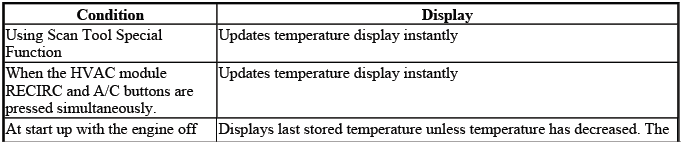
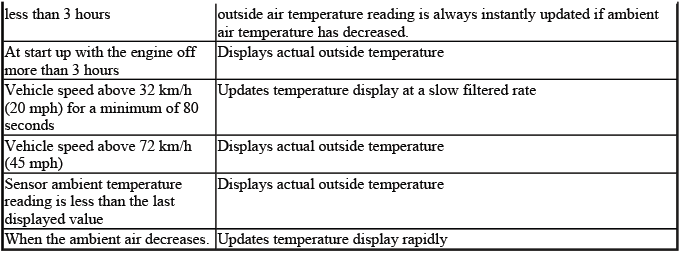
The ambient air temperature sensor is mounted under the hood and measures outside air temperature. Because of its location, the reading can be affected by city traffic, long idle periods, heat soak from a recently operated engine, and restarting the vehicle while the engine compartment is still hot. For that reason, the HVAC control module filters the ambient temperature value before using it for the temperature display and climate-control decisions.
In the Buick Enclave, this filtered outside air temperature value can also affect air conditioning compressor operation. If the ambient air temperature sensor reading drops below 2ºC (35ºF), the compressor clutch will be disabled. The compressor will remain disabled until the ignition has been off for more than 3 hours or an instant outside air temperature update is performed, even if the actual surrounding temperature has already increased. This happens because the HVAC control module continues to rely on the filtered value until it is updated.
The ambient air temperature value is updated under the following conditions:
Sunload Sensor Assembly
The sunload sensor is a 2-wire photo diode used to measure the intensity of sunlight entering the vehicle. The system uses left and right sunload sensors, and both are integrated into the sunload sensor assembly. These sensors allow the automatic HVAC system to react not only to air temperature, but also to solar heat load inside the cabin.
The sunload sensor operates through low reference and signal circuits. As the light shining on the sensor becomes brighter, sensor resistance increases. As resistance increases, the sensor signal decreases. The sensor operates across a range from complete darkness to bright sunlight, with the signal varying between 0 and 5 volts.
The HVAC control module converts the sunload signal into a 0-255 count range. This information gives the module a measurement of how much sunlight is striking the vehicle. Bright or high-intensity sunlight can raise the interior temperature even when the selected temperature setting has not changed. To compensate, the HVAC system may increase cooling output or direct additional cool air into the cabin.
If the HVAC control module detects a malfunctioning sunload sensor, the module software uses a default sunload value. This default value is not displayed on the scan tool. The scan tool parameter for the sunload sensor shows the actual state of the signal circuit. The default action allows the HVAC system to continue adjusting the inside air temperature close to the desired range until the fault is repaired.
A sunload sensor fault may not always feel like a complete HVAC failure. More often, it can show up as weak automatic temperature correction on sunny days, uneven comfort between the left and right sides, or cooling behavior that does not match the real cabin heat load.
Evaporator Temperature Sensor
The evaporator temperature sensor is a 2-wire negative temperature coefficient thermistor installed at the evaporator core. It monitors evaporator temperature so the HVAC system can protect the core from freezing during air conditioning operation.
This sensor operates within a temperature range of -40 to +85ºC (-40 to +185ºF). When the evaporator temperature drops below 3ºC (38ºF), the compressor is switched off to prevent ice from forming on the evaporator surface. Without this protection, airflow through the HVAC case could become restricted, cooling performance could drop, and water from condensation could freeze instead of draining properly.
In normal operation, the Buick Enclave uses the evaporator temperature sensor as a safeguard rather than a comfort setting. The sensor helps the system balance strong cooling performance with evaporator protection, especially during humid conditions or extended air conditioning use.
A/C Refrigerant Pressure Sensor
The A/C refrigerant pressure sensor used in the Buick Enclave is a 3-wire piezoelectric pressure transducer. It allows the system to monitor refrigerant pressure on the high side of the air conditioning circuit and helps the powertrain control module decide when compressor operation is safe. The sensor operates through a 5-volt reference circuit, a low reference circuit, and a signal circuit. Its pressure signal can vary between 0 and 5 volts, depending on the pressure inside the A/C system.
When refrigerant pressure is low, the sensor signal stays close to 0 volts. As refrigerant pressure rises, the signal voltage increases toward 5 volts. The powertrain control module, or PCM, reads that voltage and converts it into a pressure value, allowing the system to react to actual operating conditions rather than relying only on a basic on/off pressure switch.
This sensor also protects the air conditioning system from damage during an excessive high-pressure condition. If A/C refrigerant pressure rises above 2957 kPa (429 psi), the PCM disables the compressor clutch to stop the compressor from continuing to build pressure. This helps protect hoses, seals, the condenser, the compressor, and other refrigerant system components from unnecessary stress.
After pressure drops to a safer level, the PCM allows compressor operation to resume. The compressor clutch will be enabled again once refrigerant pressure decreases below 1578 kPa (229 psi). This pressure-based control strategy gives the A/C system a controlled recovery point instead of allowing the compressor to cycle back on too early.
Heating and A/C Operation
The purpose of the heating and A/C system is to supply heated, cooled, and dehumidified air to the passenger compartment. In addition to comfort, the air conditioning system removes moisture from the cabin air, which helps reduce windshield fogging and improves visibility in damp weather. In the Buick Enclave, the system combines driver input, passenger temperature offset, sensor readings, actuator positions, and compressor control to deliver the requested cabin temperature.
The vehicle operator can determine the main passenger compartment temperature by adjusting the air temperature switch. The front passenger can offset the passenger-side temperature by as much as 16.7ºC (30ºF), allowing different comfort preferences between the driver and passenger areas. However, even when the temperature setting is correct, several conditions can affect how quickly the HVAC system reaches the desired temperature:
- Recirculation actuator setting
- Difference between inside and desired temperature
- Difference between ambient and desired temperature
- Blower motor speed setting
- Mode setting
- Auxiliary HVAC settings
For example, a large difference between the current cabin temperature and the selected temperature will require more time for the system to stabilize. A low blower speed, a fresh-air setting in very hot or very cold weather, or rear auxiliary climate demand can also change how quickly the cabin responds.
When automatic operation is not selected and a manual air temperature setting is chosen, the control module adjusts the air temperature door according to the selected position. If the air temperature switch is placed in the warmest position, the module commands the air temperature door to route the maximum amount of air through the heater core. This produces the highest available outlet air temperature for the current engine coolant conditions.
When the air temperature switch is moved to the coldest position, the control module commands the air temperature door to bypass the heater core as much as possible. In this position, airflow is directed away from the heated path so the cabin receives the coolest air the system can provide under the current A/C operating conditions.
When the switch is set between the warmest and coldest positions, the system does not simply choose a fixed door angle. Instead, the control module monitors several sensor inputs and uses them to calculate the air temperature door position that will blend the correct amount of air through and around the heater core. This allows the system to fine-tune outlet temperature rather than switching abruptly between hot and cold airflow.
- Sunload
- Duct temperatures
- Ambient temperature
- Inside temperature
These inputs help the HVAC control module understand both the actual cabin condition and the heat load acting on the vehicle. Strong sunlight, low outside temperature, hot duct air, or a rapidly changing interior temperature can all influence how the air temperature door is positioned.
The A/C system can be engaged by pressing the A/C switch or through automatic operation. When compressor operation is requested, the HVAC control module sends a GMLAN message to the PCM. If all operating conditions are acceptable, the PCM grounds the A/C compressor relay, allowing the relay contacts to close and send battery voltage to the A/C compressor clutch coil.
The A/C compressor diode plays a protective role when the compressor is switched off. As the magnetic field in the clutch coil collapses, it can create a voltage spike. The diode helps prevent that spike from feeding back into the vehicle electrical system, protecting control modules and nearby electrical circuits from unwanted voltage surge.
The following conditions must be met in order for the A/C compressor clutch to turn on:
- Ambient air temperature above 2ºC (35ºF)
- A/C low pressure switch signal circuit is grounded
- A/C refrigerant pressure sensor parameter is less than 2957 kPa (429 psi)
- PCM receives an A/C request from the HVAC control module
- Engine coolant temperature (ECT) is less than 121ºC (250ºF)
- The engine RPM is more than 550 RPM
- The throttle position is less than 100 percent
Each of these conditions prevents compressor engagement when operation could be ineffective or harmful. Low ambient temperature can reduce the need for compressor operation, low refrigerant pressure may indicate an undercharged system, high refrigerant pressure can overload the system, and excessive engine coolant temperature may require the PCM to reduce engine load by disabling the A/C compressor.
The HVAC control module monitors the A/C low pressure switch signal circuit. If the voltage signal on this circuit shows no voltage drop, the module interprets the condition as low refrigerant pressure and disables the A/C request. This prevents the compressor from operating when the refrigerant charge may be too low to carry oil properly through the system.
The A/C low pressure switch opens its internal contacts at 151 kPa (22 psi). When pressure rises to 275 kPa (40 psi), the switch closes the contacts again and allows A/C operation to resume. This switch helps cycle the compressor and protects the compressor from running when the system has a low refrigerant level.
The PCM also monitors the A/C refrigerant pressure sensor signal circuit. The voltage on this circuit is proportional to the pressure inside the A/C high-side pressure line. As pressure increases, the signal voltage increases. If the pressure exceeds 2957 kPa (429 psi), the PCM disables the A/C compressor output. Once pressure drops to 1578 kPa (229 psi), the PCM enables compressor operation again.
During diagnosis on the Buick Enclave, it is important to compare scan tool pressure data with actual system pressure readings. A restricted condenser, inoperative cooling fan, overcharged refrigerant system, poor airflow, faulty pressure sensor, or wiring issue can all cause incorrect compressor cycling. Checking both the sensor signal and the physical refrigerant pressure helps separate an electrical fault from a true pressure problem.
In normal operation, this layered control gives the HVAC system a balance between comfort and component protection. The system can cool and dehumidify the cabin when conditions are correct, but it can also shut the compressor down when pressure, temperature, or engine operating conditions make compressor engagement unsafe or unnecessary.
The sensor information is used by the PCM to make several decisions related to compressor control, engine load management, and A/C system protection. In the Buick Enclave, this pressure data helps the PCM understand not only whether the air conditioning system can operate, but also how much demand the system is placing on the engine and condenser.
- The A/C high side pressure
- An A/C system load on the engine
- An excessive A/C high side pressure
- The heat load at the A/C condenser
Once the compressor clutch is engaged, the PCM can disengage it whenever operating conditions move outside the acceptable range. This protects the compressor, reduces unnecessary engine load, and prevents the A/C system from operating during conditions where cooling performance or component durability could be affected.
- Ambient air temperature is less than 4ºC (39ºF)
- Throttle position is 100 percent
- The A/C low pressure switch is open
- A/C high side pressure is more than 2957 kPa (429 psi)
- A/C low side pressure is less than 151 kPa (22 psi)
- Engine coolant temperature (ECT) is more than 121ºC (250ºF)
- Engine speed is more than 5500 RPM
- Transmission shift
- PCM detects excessive torque load
- PCM detects insufficient idle quality
- PCM detects a hard launch condition
These shutoff conditions show that compressor control is tied closely to both HVAC demand and powertrain protection. Wide-open throttle, high engine speed, poor idle quality, excessive torque load, or a hard launch condition can all cause the PCM to temporarily remove compressor operation so the engine and transmission can respond without the added load of the A/C clutch.
Automatic Operation
In automatic operation, the HVAC control module maintains the comfort level inside the vehicle by coordinating the A/C compressor clutch, blower motor, air temperature actuators, mode actuator, and recirculation actuator. Instead of requiring constant driver adjustment, the system compares the selected temperature with sensor feedback and then changes airflow, temperature blend, and air delivery strategy as needed.
To place the HVAC system in Automatic mode, the Auto switch must be activated, and the air temperature switch must be set somewhere other than the full hot or full cold position. This gives the control module enough range to adjust the system automatically rather than forcing the air temperature doors to one end of travel.
Once the desired temperature is reached, the blower motor, mode setting, recirculation position, and temperature actuators are automatically adjusted to maintain the selected comfort level. In the Buick Enclave, this helps reduce sudden temperature swings and allows the cabin to stay more consistent as sunlight, outside temperature, passenger load, and driving conditions change.
The HVAC control module performs the following functions to maintain the desired air temperature:
- Monitor the following sensors:
- Inside Air Temperature Sensor
- Ambient Air Temperature Sensor
- Lower Left Air Temperature Sensor
- Lower Right Air Temperature Sensor
- Upper Left Air Temperature Sensor
- Upper Right Air Temperature Sensor
- Regulate blower motor speed
- Position the air temperature actuator
- Position the mode actuator
- Position the recirculation actuator
- Request A/C operation
By monitoring these inputs and adjusting these outputs together, the control module can fine-tune cabin comfort instead of reacting with simple on-and-off commands. For example, it may increase blower speed during a strong cooling demand, shift mode doors to improve air delivery, or request A/C operation for dehumidification even when the driver is not manually pressing the A/C switch.
In automatic operation, the auxiliary HVAC control module maintains the comfort level in the rear portion of the vehicle by controlling the auxiliary blower motor, auxiliary air temperature actuator, and auxiliary mode actuator. This allows rear cabin airflow and temperature to be managed separately while still working within the overall HVAC strategy.
To place the auxiliary HVAC system in Automatic mode, the following conditions are required:
- The auxiliary blower motor switch on the front HVAC control assembly must be in the Auto position.
- The auxiliary mode switch on the front HVAC control assembly must be in the Auto position.
- The auxiliary air temperature switch must be in any other position other than full hot or full cold position.
When these conditions are met, the rear system can automatically adjust its own airflow and temperature blend. This is useful because the rear area of a larger cabin can heat up or cool down differently from the front, especially when passengers, sunload, or airflow demand are not the same in both zones.
Once the desired rear temperature is reached, the auxiliary blower motor, auxiliary mode actuator, and auxiliary temperature actuator are automatically adjusted to maintain the selected temperature. The auxiliary HVAC control module performs the following functions to maintain the desired rear air temperature:
- Upper Air Temperature Sensor - Auxiliary
- Lower Air Temperature Sensor - Auxiliary
- Regulate auxiliary blower motor speed
- Position the auxiliary air temperature actuator
- Position the auxiliary mode actuator
This rear automatic control helps the Buick Enclave provide more even comfort throughout the cabin. Rather than simply copying front airflow all the time, the auxiliary system can respond to rear temperature feedback and make smaller corrections that improve passenger comfort in the second and third rows.
Engine Coolant
Engine coolant is the essential heat source for the heating side of the HVAC system. The thermostat controls normal engine operating temperature and also creates a designed restriction in the cooling system. That restriction promotes positive coolant flow and helps reduce the possibility of cavitation, which can interfere with stable coolant circulation.
Coolant enters the heater core through the inlet heater hose while the system is pressurized. The heater core is located inside the HVAC module, where air drawn through the module passes across the hot core surface. As that air moves across the heater core, it absorbs heat from the coolant and carries that heat into the passenger compartment.
The amount of heat delivered to the cabin depends on air temperature door position. When the door routes more airflow through the heater core, outlet air temperature increases. When the door routes more air around the heater core, the delivered air is cooler. This blend-door control allows the system to adjust comfort without changing the engine coolant temperature itself.
After passing through the heater core, coolant exits through the return heater hose and circulates back into the engine cooling system. In normal operation, the heating system depends on steady coolant flow, correct engine temperature, and unrestricted airflow through the HVAC module. A restricted heater core, low coolant level, trapped air, thermostat concern, or blend-door issue can reduce heater performance even when the blower motor appears to operate correctly.
For the Buick Enclave, accurate heater diagnosis should consider both sides of the system: coolant movement through the heater core and air movement through the HVAC case. Warm inlet and outlet heater hoses usually indicate coolant flow, while poor outlet temperature with good coolant flow may point toward an air temperature door, actuator, or control issue.
SPECIAL TOOLS AND EQUIPMENT
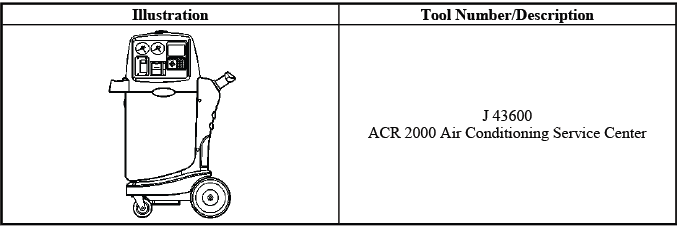
SPECIAL TOOLS