
Buick Enclave: Capacities and Specifications. Engine Drive Belt Routing
Capacities and Specifications
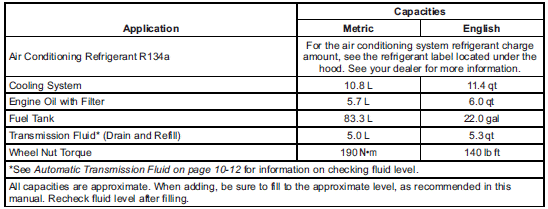
The following approximate capacities are provided in metric and English conversions. These values help identify the correct fill amounts for major vehicle systems during service. Actual service procedures may require checking the final level using the proper method, because some fluid capacity can vary depending on whether the system was completely drained, partially serviced, or filled after component replacement.
See Recommended Fluids and Lubricants for more information about approved fluids, specifications, and service products. The correct fluid type is just as important as the correct quantity. Using a fluid that does not meet the required specification can affect performance, durability, temperature control, lubrication, sealing, or system operation.
When servicing the Buick Enclave, capacities should be used as a guide, while final levels should be verified according to the proper service procedure. This helps avoid overfilling, underfilling, foaming, leaks, overheating, or reduced component life.
Engine Specifications
Engine specifications provide key technical details used for service, parts selection, and system identification. These details may include engine code, displacement, configuration, and other information needed to match the correct replacement parts. When there is any uncertainty, the VIN should be used together with the engine specification information to confirm the proper application.

Engine Drive Belt Routing
 Engine Drive Belt
Routing
Engine Drive Belt
Routing
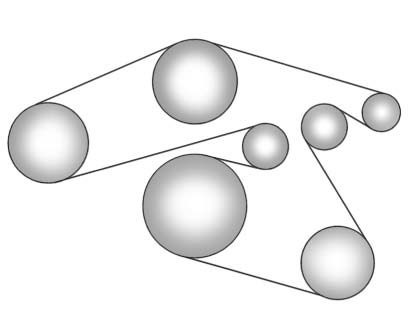
The engine drive belt routing diagram shows the correct path of the belt around the pulleys. Correct routing is essential because the belt must drive the required accessories in the proper direction and with the correct contact area. An incorrectly routed belt can cause noise, slipping, charging issues, overheating, air conditioning problems, or premature belt and pulley wear.
Before removing a belt, it is helpful to review the routing diagram and compare it with the belt path on the engine. After installation, confirm that the belt is seated fully in each pulley groove and that it is not twisted, misaligned, or riding on the edge of a pulley. If a belt repeatedly slips, squeaks, or wears unevenly, related components such as the tensioner, idler pulleys, or accessory pulleys should also be inspected.
